
Gaming
Xbox Disc-to-Digital Fixes the 2013 Mistake It Once Abandoned
Xbox Insiders can claim digital entitlements from physical One and Series X discs starting August 31.

Xbox Insiders can begin claiming digital entitlements from most Xbox One and Xbox Series X physical discs on August 31, turning thousands of game cases into full digital library entries that support Play Anywhere and Cloud Gaming where those features already exist. The physical disc keeps working exactly as before.
Jason Ronald, Xbox VP of next generation, framed the move in an Xbox Wire post by Jason Ronald as part of game preservation so libraries “move forward with players” across hardware changes.
The practical pitch is simple. A shelf of plastic cases stops being a console-only archive and starts acting like a portable rights wallet, without forcing anyone to throw the plastic away.
How a Disc Becomes a Digital Entitlement
Insert a supported disc into an Xbox One or Series X console that has a drive, launch the game, and the system claims one digital entitlement tied to that specific disc. After the claim, the title appears in your digital library. You can launch it with no disc present, stream it via Xbox Cloud Gaming if it is on the service and you hold the right subscription, or play it on PC or handheld through Xbox Play Anywhere when the title qualifies.
Family account members sharing the console get the same access while signed in. Microsoft says the disc itself is unchanged and continues to function for anyone who inserts it later.
- Supported platforms: Xbox One and Xbox Series X disc-based games only
- Launch window: Xbox Insider testing starts August 31, wider rollout in coming months
- Scale: Thousands of titles at the start, with more added over time
- Key limit: One revokable license per physical disc
Series S consoles lack disc drives, so owners need temporary access to a drive-equipped machine to perform the claim.
The claim step is a one-time handshake between the laser-readable disc data and the account signed into that console. Once it succeeds, the digital library entry behaves like any other store purchase for launch, streaming, and Play Anywhere paths that the title already supports. Nothing about the plastic changes. The disc remains a working key for the next person who picks it up.
That split matters for households that share hardware. One drive-equipped console can process claims for several family members over time, after which each person’s library holds the title even when the disc sits in a drawer or moves to another room.
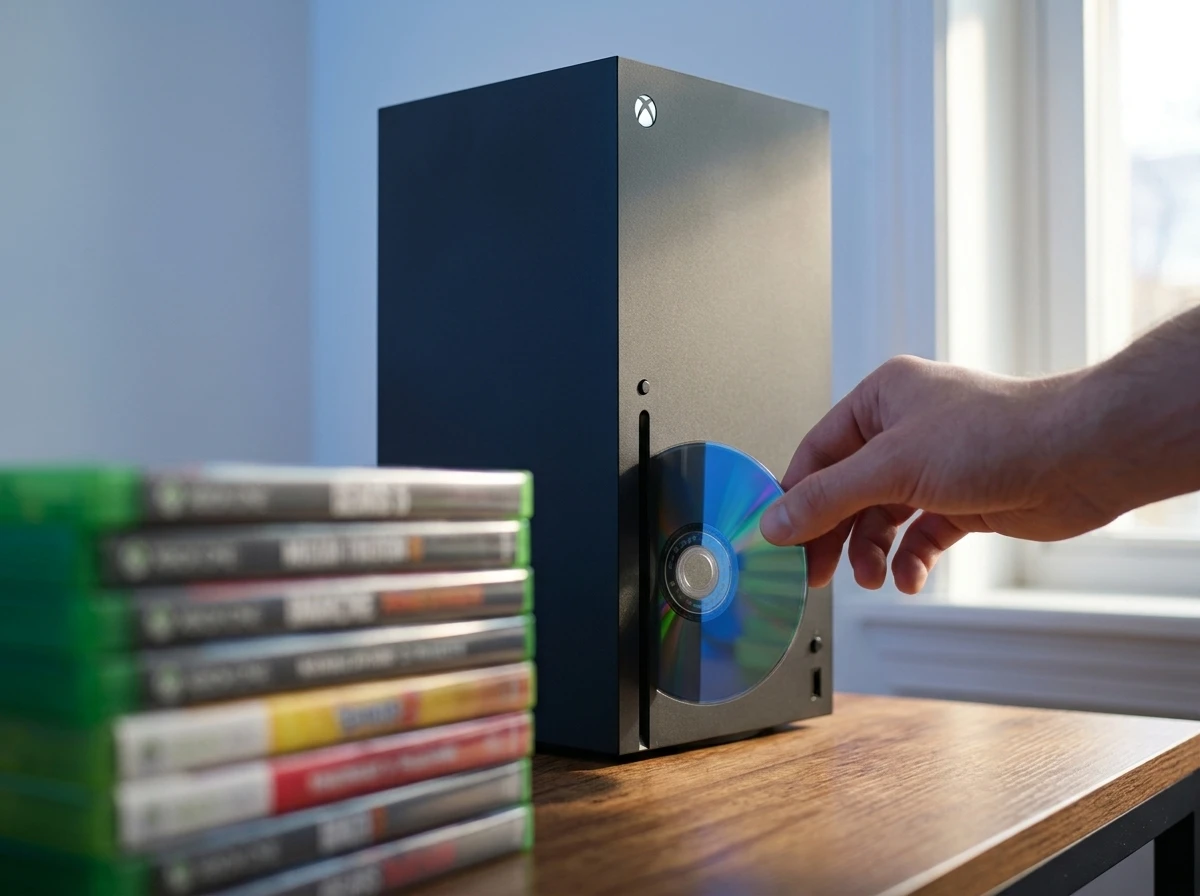
The License Travels With the Plastic
That single-license rule is the feature that keeps the used-game market alive. Sell or loan the disc and the next person who inserts it into their console and launches the game can claim the entitlement for their own account. The previous owner’s digital copy is revoked.
Digital Foundry noted the mechanism relies on unique identifiers lasered onto Xbox One and Series discs at manufacture, data that older original Xbox and Xbox 360 discs never carried. The transfer design deliberately avoids creating permanent duplicate digital copies that would kill second-hand sales.
On X, users quickly spotted the dual benefit: buy physical for the resale option and the permanent object, claim digital for convenience and multi-device play, then decide later whether to keep or flip the disc. One common observation rewrote as analysis is that the setup may actually push some buyers toward physical copies they previously skipped, because the digital perks no longer require a pure store purchase.
In practice the disc becomes both proof of purchase and the transfer token. Ownership of the digital entitlement is not permanent in the account sense. It lasts only while that account holds the claim on that specific piece of plastic. Hand the disc to a buyer, a friend, or a shop, and the next successful claim moves the entitlement with it.
- Keep the disc: digital convenience plus a physical backup you still control
- Sell or trade the disc: the buyer can claim; your digital copy drops away
- Loan the disc: temporary access for someone else, with the same revoke-on-claim rule
- Store the disc after claiming: shelf insurance if an account or console changes later
That loop is why the used market can keep pricing and moving One and Series X stock. The platform never mints a second lasting digital copy from a single pressed disc.
What Microsoft Tried and Abandoned in 2013
Thirteen years earlier the company tried a more aggressive version of the same idea and walked it back under heavy pressure. The original Xbox One licensing plan, detailed in a June 2013 original 2013 Xbox One licensing details post, treated every disc as the install vehicle for a digital license that lived on the account and in the cloud. Players could access their full library on any Xbox One once signed in. Used-game transfers required publisher opt-in and retailer participation; some early messaging suggested fees or restrictions. A 24-hour online check-in was also planned.
Community backlash was immediate and intense. On June 19, 2013 Microsoft reversed course completely. Disc games would work offline with no check-ins, and trade-in, lending, resale and gifting would function exactly as they had on Xbox 360, with no platform fees or limits.
The 2026 system keeps the digital convenience Microsoft wanted then but drops the always-online demand and the restrictions that killed used sales. The license now follows the disc rather than locking to one permanent owner account from the moment of first install.
- June 2013: Xbox One plan ties disc installs to account and cloud licenses, with publisher-controlled used transfers and a planned periodic check-in.
- June 19, 2013: Full reversal. Offline disc play restored; trade-in, lending, resale, and gifting return to Xbox 360 norms with no platform fees.
- August 31, 2026: Insider disc-to-digital claims begin, with one revokable entitlement per disc and no ongoing check-in requirement.
| Policy Point | 2013 Original Plan | 2026 Disc-to-Digital |
|---|---|---|
| License location | Account and cloud after install | Tied to specific disc, transferable |
| Used / loaned discs | Publisher-controlled, possible fees or blocks | Automatic transfer on next claim |
| Online requirement | Periodic check-in planned | None beyond initial claim |
| Older generations | N/A (new console) | One and Series X only; no 360 or original Xbox |
The historical parallel is clear to anyone who lived through the 2013 summer: Microsoft still wants physical media to feed a digital future, but it has learned which parts of the old design were radioactive.
Where the 2013 design locked rights to an account at first install, the 2026 design treats the pressed disc as the lasting authority. That single change is what lets resale, lending, and gifting survive without retailer or publisher gatekeeping at each handoff.
Who Gains From the Switch
Physical collectors keep their cases and artwork while unlocking cloud and PC play they previously lacked. Series S owners who still have access to a friend’s or relative’s disc drive can finally move their One-era libraries into higher-frame-rate FPS Boost versions without buying everything again digitally.
Play Anywhere titles become far more useful; a disc of Halo or Forza that once lived only on the console can now travel to a Windows PC or the Xbox Ally handheld under the same entitlement. Multi-disc sets and console-bundled games are included, along with any DLC the disc normally unlocks.
Publishers who opt in reactivate dormant physical SKUs without porting work. Xbox handles the engineering and certification. The leaked publisher memo described the lift as light: opt in, set any commercial terms, and keep full control of rights and branding.
Collectors gain without emptying the shelf. The art, manuals, and case still sit where they always did, while the same purchase now reaches devices that never took a disc. Series S households gain a path into libraries they already paid for, provided they can borrow a drive long enough to run the claim. Publishers gain a way to wake physical catalog stock without a new porting pass, because the platform side absorbs the certification work.
The Limits Publishers and Manufacturing Still Impose
Not every title arrives on day one. “Most” One and Series X discs are supported, but the exact list depends on publisher participation. A memo obtained earlier in August and reported by The Verge showed publishers must actively opt in. Some may charge for the conversion or simply decline.
Tom Warren’s July exclusive on testing also flagged manufacturing differences: certain early Xbox One discs lack the required data and will never work with the system. Original Xbox and Xbox 360 discs are out entirely for the same technical reason.
What We Know
- Thousands of titles at Insider launch
- License transfers cleanly with the disc
- Play Anywhere and Cloud Gaming unlock where already supported
What’s Unconfirmed
- Exact day-one title list and which major publishers opted in
- Whether any publishers will add a conversion fee
- Full public rollout date beyond “coming months”
Windows Central sources separately noted that manufacturing quirks, not just rights, will leave some discs incompatible.
Two gates sit in front of any given case on a shelf. Rights must clear publisher opt-in, and the disc must carry the unique manufacturing data the claim system reads. Fail either gate and that copy stays disc-only. Fail both and it never enters the program. Players will learn which of their cases clear the bar only as the supported list grows past the Insider window.
How Buyers Weigh Plastic Against Store Codes
The program changes the purchase math without erasing either path. A physical copy still costs shelf space and depends on a drive for the first claim, yet it returns resale value and a movable license. A pure digital purchase still skips the drive visit and the plastic, yet it never leaves the account in a form a buyer can hand to someone else.
| Buyer Goal | Physical Disc Plus Claim | Store Digital Purchase |
|---|---|---|
| Resale or lending | Yes, via disc handoff and new claim | No transferable token |
| Play Anywhere / cloud (when supported) | After claim on a drive console | Immediate on purchase |
| Keep working offline copy | Disc still functions as before | Depends on account and downloads |
| Series S without a drive at home | Needs borrowed drive once | No drive required |
Shoppers who once defaulted to the store for multi-device play now have a route that preserves a second-hand exit. Shoppers who once bought physical only for collecting can claim the same convenience features the store already sold. Neither path is erased. The disc path simply stops forcing a hard choice between object and flexibility.
The revoke-on-transfer rule keeps that balance honest. You cannot pocket the digital convenience and also pocket the cash from a sale. One disc still means one active entitlement at a time.
The Quiet Preparation for Whatever Comes After Series X
Microsoft has not confirmed whether the next console, still referred to in leaks as Project Helix, will ship with a built-in disc drive. Sourcing Blu-ray mechanisms is growing harder and disc pressing plants are fewer. The disc-to-digital program reads as a deliberate bridge: convert the installed base while drives still exist so libraries survive a potential all-digital or external-drive future.
Sony has taken a different path. It announced an end to physical PlayStation game production after January 2028, with no equivalent conversion system yet public. That contrast is already shaping conversation; Xbox’s move looks less like a pure digital surrender and more like an attempt to keep physical owners whole while the industry contracts the plastic supply chain. Readers tracking the broader shift can see the parallel in coverage of Sony’s decision to end PlayStation disc production.
On the ground the practical effect is immediate for anyone with a shelf of One and Series cases and a disc-drive console. Insert, launch, claim, then decide whether the plastic stays on the shelf as insurance or heads to a buyer who will restart the same cycle.
If future hardware ships without a built-in drive, the claims made while One and Series X machines are still common become the path that carries libraries forward. The plastic can remain a transfer token and a collectible even if everyday play moves to downloads, cloud sessions, or an external reader. The bridge only works if players run the claim step before drive-equipped consoles grow scarce.
What Stays the Same After You Claim
The headline features grab attention, yet the quiet continuity rules may matter more day to day. The disc still installs and runs for anyone who puts it in a compatible drive. Family members on the same console still share access while signed in. DLC that the disc already unlocked still follows that disc’s normal rules. Multi-disc sets still count as the titles they always were.
Revocation is narrow. It fires when another account successfully claims the same disc, not when you simply stop using the title or sign out. Until that next claim happens, the digital library entry remains yours to launch, stream where supported, and carry onto Play Anywhere devices the game already allows.
Microsoft’s preservation framing from Jason Ronald lands here in concrete form. Libraries move forward with players because the entitlement can outlive a single box, a single living-room setup, or even a single generation’s built-in drive, while the pressed disc keeps the used-market path open.
Insiders start the experiment on August 31. The rest of the Xbox base will follow once the bugs and the missing publisher titles are sorted.


NFL Three-Strike Safety Fouls Now Pull Coaches and Clubs In

Browns Fans Tape Protest Signs to Jim Brown Statue Over Watson

Amazon Pixel 11 Deal Erases the $100 Hike for One More Day

Elden Ring on Switch 2 Turns Its Own Worst Label Into a Portable Win

Ternus Takes the Stage With Apple’s Foldable Debut

Ikea Xbox Yxstaby Turns Controller Thumbstick Into Home Furniture

Pokémon Center Turns Past Worlds Wins Into Bundles and a Pikachu Coin

NFL Scraps Pro Bowl Game to Restore Pure Player Honor

New Twitter.now Bets the Brand Musk Left Behind

Bella Mir’s Famous First Loss Meets the Accountant Who Won

Double Fine Cuts 23 Jobs Weeks After Xbox Independence

Day-One Big Walk Lifts PS Plus August Beyond Recycled AAA

Curtis Mead’s Red Sox Debut Ends With Fractured Wrist

John Hight Exits Wizards After Digital Reckoning Hits

Red Sox Squander Hot Streak Chance in 4-3 Loss to Athletics

Moesch and Dressel Rewrite Night One at 2026 U.S. Nationals

Boutte’s Quiet Camp Takeover Forces Patriots Receiver Choices

Take-Two CEO Pushes Netflix Subs for GTA 6 Extended Look

Halo Campaign Evolved Skulls Meet Death Barriers That Kill the Hunt

Wildlands Free Update Hands Players the Tools They Already Invented
-

 TECHNOLOGY3 years ago
How to Adjust a Bulova Watch Band – An Easy Guide
-

 News3 years ago
Fred Pentland: Athletic Bilbao’s English mentor who changed the essence of Spanish football
-

 FINANCE3 years ago
Tax Planning for Every Season: Guide to Maximizing Your Tax Benefits
-

 Education3 years ago
African Ministers New Education Plan
-

 BUSINESS3 years ago
What is Entrepreneurial Operating System? A Comprehensive Guide to EOS
-

 Education3 years ago
Innovate Your Learning Journey with Technology and Enhance Education
-

 News3 years ago
Russians formally out of World Athletics Championships
-

 BUSINESS3 years ago
Top 9 Most Expensive American Cities to Rent an Apartment