
News
Sony’s PlayStation Disc Exit Repeats the Fight Xbox Lost in 2013
Sony will end PlayStation disc production by 2028. Unlike Xbox’s 2013 retreat, no rival offers gamers an escape from losing resale rights.

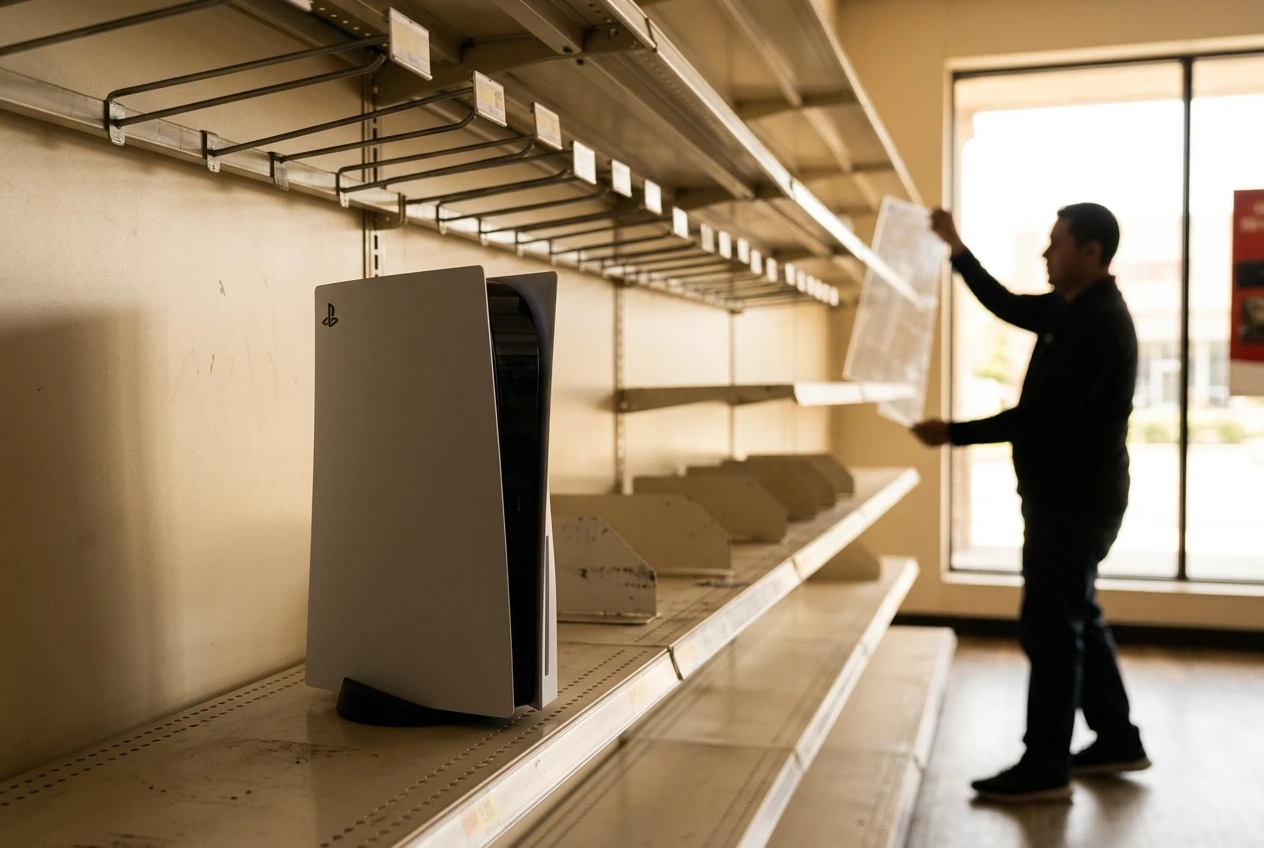
Sony will stop making PlayStation discs for new games after 2027, and no rival console maker is standing by to punish it for that the way Sony once punished Xbox. Starting in January 2028, every new PlayStation release goes digital only, sold through the PlayStation Store or in a box with nothing but a download code inside.
In 2013, Sony beat Xbox by promising gamers they would always keep the right to resell, lend and trade in a game disc. That promise is now the exact policy Sony is retiring, and there is no competing console left to make the old way look better by comparison.
A Standing Ovation Sony Can’t Recreate
The scene that started all of this played out at Sony’s E3 press conference in Los Angeles on June 10, 2013. Then Sony Computer Entertainment America president and CEO Jack Tretton stood on stage and drew a hard line against Microsoft’s incoming Xbox One restrictions.
“Trade in the game at retail. Sell it to another person. Lend it to a friend, or keep it forever,” Tretton told the crowd. “When a gamer buys a PS4 disc, they have the rights to use that copy of the game.”
The line drew a standing ovation. Sony had already put out a short video showing executive Shuhei Yoshida simply handing a disc to colleague Adam Boyes, a jab dressed up as a tutorial. It worked. Xbox owned the villain role for the rest of that console generation.
Nine Days From Backlash to Reversal
Microsoft’s original Xbox One plan, unveiled that May and defended at E3, required a once every 24 hour internet check in and capped game sharing to a defined “family” of up to ten people. Fans revolted immediately.
Nine days after Sony’s PS4 event, on June 19, 2013, Xbox chief Don Mattrick reversed course in a blog post. “Today I am announcing the following changes to Xbox One and how you can play, share, lend, and resell your games exactly as you do today on Xbox 360,” he wrote, adding that there would be no limitations to using and sharing games. Mattrick left Microsoft within about two weeks of writing that letter.
The gap between that outcome and today’s is the whole story.
| Detail | Xbox One, 2013 | PlayStation, 2026 to 2028 |
|---|---|---|
| Policy announced | 24 hour online check ins, capped used and shared discs | End of physical disc production for all new games |
| Rival with a cheaper option | Sony’s PS4, no restrictions, cheered at E3 | None; Xbox and Nintendo trend the same direction |
| Time from reveal to reversal | 9 days | None reported as of this writing |
| Executive fallout | Don Mattrick left the company within two weeks | None reported |
What Actually Changes in January 2028
Sony’s own announcement, posted to the PlayStation Blog on July 1, framed the shift as inevitable rather than punitive. The company said the move would align more closely with how most of the community prefers to access and play games today.
Games already released, or scheduled for release before the cutoff, keep their discs. Grand Theft Auto 6, Rockstar’s massive coming release from Take-Two Interactive, is expected to be among the first big titles sold as a box with a code inside rather than a disc.
- June 2013: Sony mocks Xbox’s used game restrictions on stage; Microsoft reverses its policy nine days later.
- July 1, 2026: Sony announces new PlayStation discs stop after 2027, alongside a separate plan to close the PS3 and PS Vita stores.
- Late 2026 into 2027: PlayStation Store access for PS3 and PS Vita winds down region by region.
- End of 2027: The last physical PlayStation discs roll off production.
- January 2028: Every new PlayStation game ships digital only.
Sony also removed more than 500 previously purchased StudioCanal movies and shows from customers’ libraries this year when a licensing deal expired, with no compensation offered. It is a preview of what a fully licensed library can do to something people thought they owned.
Why This Time There’s No Escape Hatch
Sony’s own numbers explain the confidence. In its full year 2025 results, revenue from PS4 and PS5 physical game sales ran roughly ten times lower than digital download revenue. The disc was already a rounding error before the announcement.
Xbox has spent years pushing its own digital storefront and Game Pass subscription. Nintendo still sells cartridges but has no incentive to make that a selling point against Sony’s much larger library. Nobody is positioned to run Sony’s own 2013 playbook against it.
The pattern is broader than discs. Sony spent this year pulling its single player exclusives off the PC release track, tightening where its biggest games can even be bought. Its Days of Play sale skipped console price cuts entirely this year, leaning on a bundle instead. Control over price and platform keeps consolidating in one direction.
This is an extremely anti-consumer decision that has no legitimate justification and communicates a disdain for players in their ecosystem.
Michael Futter, founder of video game industry consultancy F-Squared, told CNBC that framing applies specifically because consoles remain closed ecosystems that only the platform holder controls, unlike PC storefronts where Steam and the Epic Games Store compete for the same buyer.
Kazunori Ito, director of equity research at Morningstar, put it more simply: gamers are having a shift “effectively forced on them by taking away the alternative,” rather than choosing it because they see value in it.
The Copyright Law That Never Caught Up to Downloads
Part of why a download code can never behave like a disc traces back to copyright law, not just Sony’s terms of service. The first sale doctrine, rooted in a 1908 Supreme Court case establishing owners’ resale rights, lets someone who legally owns a physical copy of a copyrighted work resell, lend or give it away freely.
Digital transfers do not get the same treatment. Sending a file creates a new copy rather than moving the same object, which is the technical distinction regulators have used for two decades to keep the doctrine tied to physical media. Advocates have pushed back for years; one filing on the question argued extending the rule to downloads would narrow the divide between digital haves and have nots. Nothing has changed.
That legal gap is exactly what a disc could always paper over. A physical copy could still:
- Get resold at a used game store or online marketplace
- Get traded in for credit toward the next release
- Get lent to a friend or family member for free
- Keep working after a storefront shuts down for good
- Get gifted or donated once someone finished playing it
A download code tied to one account and one storefront cannot do any of that. Wedbush Securities managing director Michael Pachter told CNBC the shift saves Sony money but “there can be no question that the consumer pays the tax in terms of less optionality.”
Who Absorbs the $7 Billion Hit
Dataintelo estimates the global second hand game platform market, including pre owned games, consoles, accessories and peripherals, was worth $7.2 billion in 2025 and would grow to $13.8 billion by 2034 on the old trajectory. Sony’s move directly threatens that curve.
Pachter said roughly a third of games have historically sold used, with trade in credit doubling as currency gamers put toward buying something new. “Brick and mortar game retail is doomed,” he said.
The retail side is already buckling under its own weight. GameStop’s fiscal fourth quarter results, reported in March, showed revenue falling 14% year over year to $1.1 billion as shoppers kept shifting to digital downloads, even as the chain’s cash pile grew to roughly $9 billion. Ito expects the secondhand games market to keep shrinking and eventually disappear entirely, since older discs can still circulate after production stops but a download code never can.
Gamers have already dug up that 2013 Sony video of a disc changing hands. One comment on it reads like watching the wedding video after the divorce. Nobody is standing by this time to cheer the fallout.


Walmart’s $50 Million Opioid Settlement Closes Case Without Admission

California Sues Over $120 Million Morro Bay Wind Lease Buyout

Gilead Bixlenvo FDA Nod Opens Single Pill Path for Complex HIV Cases

Meta’s $18B Kids Deal Forever Shields Data Used to Spot Under-13s

Lettuce Outbreak Drove Record Cyclospora Spike Across 20 States

Amazon Shaves $20 Off M6 Mac Mini Before It Even Ships

SpaceX Louisiana Port Tests Debt Markets on Orbital AI Scale

Microsoft High Lifts Indexes as Small Caps Crack Support

Apple Replays 2015 Saturday Midnight Preorder for iPhone 18 Pro

Updated COVID Shots Clear FDA but Access Friction Hits High-Risk Groups

Take-Two CEO Pushes Netflix Subs for GTA 6 Extended Look

Wildlands Free Update Hands Players the Tools They Already Invented

Destiny 2 Fans Unlock Vaulted Maps After Live Service Ends

Quake Gets 19 Free Maps From MachineGames Quake Club

Quordle Monday Delivers Gavel Crush Speed Ethos Cleanly

Stripe Bid Shows PayPal Moat Cracked After Years of Slide

Tyson’s Five-Year Utah Plant Falls to Cattle Shortage Reckoning

Silver Lake Workday Talks Signal Private Floor for Software

Kennedy Lewis Takes Majority Control of The Greenbrier in $500M Deal

Best Buy Marks 60 Years With Sale That Echoes Its Audio Shop Roots
-

 TECHNOLOGY3 years ago
How to Adjust a Bulova Watch Band – An Easy Guide
-

 News3 years ago
Fred Pentland: Athletic Bilbao’s English mentor who changed the essence of Spanish football
-

 FINANCE3 years ago
Tax Planning for Every Season: Guide to Maximizing Your Tax Benefits
-

 Education3 years ago
African Ministers New Education Plan
-

 BUSINESS3 years ago
What is Entrepreneurial Operating System? A Comprehensive Guide to EOS
-

 Education3 years ago
Innovate Your Learning Journey with Technology and Enhance Education
-

 News3 years ago
Russians formally out of World Athletics Championships
-

 BUSINESS3 years ago
Top 9 Most Expensive American Cities to Rent an Apartment