
FINANCE
SpaceX IPO Date Locked for June 12 at $1.75 Trillion Valuation

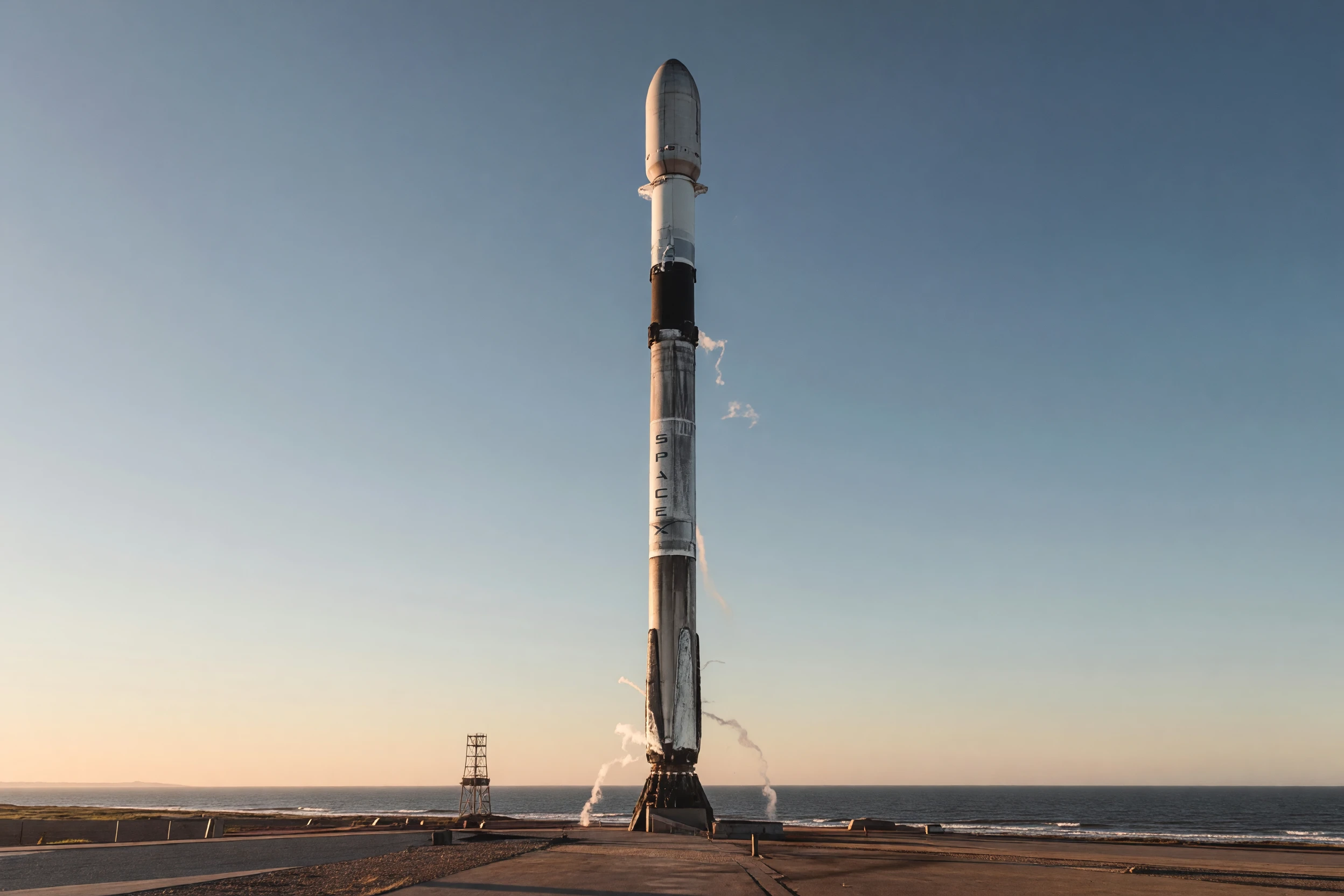
The SpaceX IPO is set for a June 12 Nasdaq debut under the ticker SPCX, with shares pricing the night of June 11 at a $1.75 trillion to $2 trillion valuation and a planned raise above $75 billion that would set the all-time fundraising record, according to The Wall Street Journal’s reporting on the listing plans.
The headline number carries a footnote. SpaceX posted a roughly $5 billion net loss on $18.5 billion of revenue in 2025, the consequence of folding xAI into the rocket and satellite parent at the start of February. Starlink is doing the heavy lifting, generating $11.4 billion in revenue at 63% adjusted EBITDA margins, but the AI burn is the line that turns a profitable satellite operator into a consolidated five-billion shortfall investors will buy at over 100 times trailing sales.
The Mechanics of the SPCX Listing
Reporting on the deal puts the roadshow start on June 4, with pricing the night of June 11 and the opening cross on Wednesday, June 12. Underwriters are aiming to release the S-1 registration statement within days; the document remains the single most-anticipated regulatory filing on Wall Street’s calendar this quarter.
The float will be tight. Pre-IPO reporting suggests only about 4% of the SpaceX corporate equity base will price into the deal, which keeps the valuation calculus closer to the secondary-market tender prices the company has used for years than to a traditional dilution model. At a $1.75 trillion to $2 trillion reference range, even that thin slice translates into the largest cash haul any listing has ever recorded.
Saudi Aramco set the previous bar in December 2019, listing 1.5% of its equity on the Tadawul exchange and pulling in $25.6 billion of primary capital, later topped up to roughly $29.4 billion by an over-allotment. The current target is roughly triple that on a primary basis.
| IPO | Year | Capital Raised | Listing Exchange |
|---|---|---|---|
| SpaceX (proposed) | 2026 | $75 billion+ | Nasdaq (SPCX) |
| Saudi Aramco | 2019 | $25.6 billion | Tadawul |
| Cerebras Systems | 2026 | $5.55 billion | Nasdaq (CBRS) |
Both prior deals share an unusual pattern with the upcoming one. The issuer is too large to price purely on traditional revenue multiples, so the order book becomes a referendum on the operating story rather than a discounted-cash-flow exercise. For the Saudi listing that meant Gulf retail demand and crude oil duration. For SPCX, it is Starlink’s subscriber arc against xAI’s cash burn.
The Starlink Engine and the xAI Burn
Starlink’s $7.2 Billion Adjusted EBITDA
The Starlink satellite broadband service reached 10 million subscribers in February 2026, double the user base it reported a year earlier, and the network has now crossed 10,296 active spacecraft in low-Earth orbit. Inside that subscriber growth sits the most attractive financial profile in the SpaceX consolidated picture: $11.4 billion of 2025 revenue, up about 50% year-over-year, at 63% adjusted EBITDA margins.
The margin profile is what underwriters will lean on hardest in the roadshow. EBITDA (earnings before interest, taxes, depreciation, and amortization, the cash-flow proxy equity analysts use to compare operating performance) sits at the 63% line because vertical integration cuts launch costs to near-marginal levels, and because business-to-business contracts in aviation, maritime, and government carry pricing power that residential broadband does not.
The xAI Burn Inside the Consolidated Print
The other side of the income statement is less flattering. xAI carried roughly $7.8 billion of operating expenses across the first nine months of 2025 alone, averaging $28 million a day on compute leases, chip development, model training, and the Memphis-area Colossus data-center buildout. The acquisition closed February 2, 2026, valuing the parent at $1 trillion and xAI at $250 billion in an all-stock structure that converted each xAI share into 0.1433 of a SpaceX share.
Folding those numbers into one income statement collapsed the parent’s stand-alone profitability. A company that posted an estimated $8 billion in operating profit on $15 to $16 billion of revenue in 2024 became a company carrying a five-billion consolidated loss on $18.5 billion of revenue a year later.
What the Combined Number Means at 108 Times Sales
- $11.4 billion in 2025 Starlink revenue, up roughly 50% year-over-year
- 63% adjusted EBITDA margin at Starlink, translating to about $7.2 billion of segment profitability
- $7.8 billion in xAI operating expenses across the first nine months of 2025
- 108 times trailing consolidated revenue at the high end of the IPO valuation
At $2 trillion of equity value against $18.5 billion of 2025 revenue, the listing prices in a future where Starlink scales toward $50 billion of revenue and the orbital data-center thesis works. Investors who buy SPCX at the top of the range are not buying current cash flow. They are buying a long-dated option on the merged entity’s 2030 footprint.
Why the Aramco Benchmark Looks Beatable
The 2019 Aramco listing remains the comparison Wall Street keeps returning to, and for good reason. Both deals ask the public market to price a national-asset-level business that has spent decades operating with strategic patience and selective disclosure.
- Aramco listed 1.5% of its float; the SPCX offer size puts roughly 4% on the table, more than twice the relative supply.
- The Saudi book was anchored by Gulf retail and quasi-sovereign buyers locked into a national listing. SPCX will pull on index-fund demand the moment Saudi Aramco’s investor relations record looks regional by comparison.
- The 2019 deal priced near the top of a narrow $1.6 to $1.7 trillion range built on petroleum cash flow; the current target is a 30% premium over NYU Stern’s published SpaceX valuation work, which lands at $1.22 trillion using an 8% cost of capital.
The mix matters because index-fund inclusion is the mechanism that converts a successful float into sustained passive demand. The 2019 Saudi deal never cracked the major US index families and trades thinly on a single exchange. SpaceX, listed on Nasdaq with a US tax domicile and a profile that overlaps mega-cap technology, will face a different curve. S&P 500 inclusion typically requires four consecutive quarters of GAAP (Generally Accepted Accounting Principles) profitability, so the date the merged entity flips back into the black becomes the trigger institutional flow waits on.
That timing question is also where the bear case lives. Cathie Wood’s ARK funds, the Public Investment Fund of Saudi Arabia, and Alphabet have all parked capital in the company over the past three years. Each will want to recycle a portion of it once the lock-up cuff falls off, and a 4% float cannot absorb their tender without price work.
What Cerebras Taught Day-One Buyers Last Week
The clearest tell on day-one risk just printed. Cerebras Systems’ S-1 filings on the SEC EDGAR database set a $115 to $125 indicative range before the underwriters lifted pricing to $185 per share on May 14. The opening cross hit $350. Within 90 minutes the stock peaked at $386, halted twice for volatility, then drifted back to close at $311.07, a 68% first-day gain that has since unwound to roughly $297 over the three trading sessions that followed.
The mechanics matter. Cerebras priced 30 million shares and raised $5.55 billion at IPO valuation, but day-one supply was a fraction of demand. Order books were reportedly oversubscribed by more than 20 times, which left allocated investors flipping immediately into a buyer pool that had no other entry point. SPCX has the same supply geometry but several multiples of the absolute demand profile.
Aswath Damodaran’s valuation framework gives the bear case its sharpest edge. His Monte Carlo simulation, run after the xAI close, produced a range from $660 billion to $2.8 trillion with a $1.28 trillion median; even his upper-decile outcome leaves the high end of the IPO range looking aspirational. Retail investors who chase a Cerebras-style opening pop into SPCX will be buying into the upper tail of that distribution.
The practical read from last Thursday: bid the open with caution, wait for the first post-IPO earnings print before adding, and watch what the underwriters do with the greenshoe overallotment. Cerebras’ bookrunners exercised theirs within 48 hours, which capped the squeeze. If Goldman Sachs and Morgan Stanley do the same with SPCX, the supply unlock arrives faster than the lock-up calendar.
The Lock-Up Clause Underwriters Are Quietly Rewriting
Standard IPO mechanics put insiders on a 180-day hold after the listing date. For a Wednesday-of-June debut, the cuff would push the first inside-shareholder sales window to roughly mid-December 2026, with the calendar landing inside tax-loss-selling season.
Bankers running the SPCX book have been considering something different. Reporting on the structure suggests the lead underwriters are exploring either a complete waiver of the cuff for early investors or a staggered release that would let pre-IPO holders monetize positions over the first 60 to 90 days. Each path solves a different problem. A scrap clears the way for Alphabet, the ARK funds, and the Saudi Public Investment Fund to begin distributing positions immediately, which reduces post-IPO sell-side overhang anxiety. A stagger meters supply against demand week by week.
Both options carry a cost. A waiver is the most efficient way to surface true equilibrium price, but it concentrates selling pressure into the first month of trading, when retail flow is heaviest. The American Federation of Teachers, which holds SpaceX exposure through pension funds, has already filed a public concern that the deal is being rushed without the disclosure standards a normal lock-up structure provides.
The S-1 will resolve the question. Pay attention to the exhibit list, because the underwriter lock-up agreement gets filed as a deal exhibit, and the wording on staggered release dates is where the actionable read lives.
Reading the S-1 When It Lands
Investors planning to participate in the opening or in any post-IPO accumulation should treat the registration statement as a four-section read.
The risk factors section will set the discussion. Watch for explicit language on Starship qualification risk, Starlink subscriber churn, FCC (Federal Communications Commission) spectrum disputes, and xAI compute commitments. Any reference to Musk’s outside commercial commitments at Tesla and X also belongs on the flag list.
The capitalization table is the second priority. Pre-IPO holders will be listed by class of stock; the conversion ratios on any dual-class structure and the voting concentration will determine whether the merged entity behaves more like a founder-controlled Tesla or a more diffuse Meta over the first three years of trading.
MD&A (Management Discussion and Analysis) will contain the cleanest split between Starlink, launch services, and xAI. Segment-level margin disclosure is what allows a sum-of-the-parts model. Without that split, the consolidated 108-times-revenue print is the only number retail can anchor on.
Last, the underwriter compensation and stabilization mechanics. Greenshoe size and the price-support window determine how the first 30 days trade. Cerebras’ bookrunners had a 4.5 million share over-allotment cap; the SPCX equivalent will be larger in absolute terms but, given the float math, smaller as a percentage. If the registration statement lands this week with a softened lock-up clause, day-one supply rises and the listing-day pop has less room to run. If the standard cuff stays, the squeeze plays into the cornerstone book and post-IPO price discovery becomes a December story.
Frequently Asked Questions
When Does SpaceX Go Public and Under What Ticker?
SpaceX is targeting June 12 for its Nasdaq listing, with pricing the night before, on June 11, under the proposed ticker SPCX. The roadshow begins June 4. Confirmation depends on the S-1 registration statement being filed and the SEC clearing the document within the expected window.
How Much Is the SpaceX IPO Trying to Raise?
Reports cite a target above $75 billion at a $1.75 trillion to $2 trillion valuation, which would top Saudi Aramco’s 2019 listing as the largest IPO on record. Final pricing and proceeds will be disclosed in the amended S-1 closer to the offer date, and the order book may price below the indicative range if institutional demand softens after the roadshow.
How Profitable Is Starlink as a Stand-Alone Business?
Starlink generated about $7.2 billion of adjusted EBITDA in 2025 on revenue that grew roughly 50% year-over-year, with operating margins above the 60% line. The satellite network passed 10 million subscribers in February 2026, with active spacecraft in low-Earth orbit crossing the 10,000 mark in the same window.
Can Retail Investors Buy Shares on Day One?
Yes, retail orders can be placed through standard brokerage accounts once SPCX begins regular-way trading on the Nasdaq, though allocations at the offer price will be limited and brokerage-dependent. Buying on the open exposes the order to first-day price discovery, which can swing wide intraday as the Cerebras debut illustrated.
What Is the Lock-Up Period for Company Insiders?
The default IPO structure is a 180-day lock-up, but bankers running the deal have been considering a complete waiver for pre-IPO holders or a staggered release that allows existing investors to begin selling within 60 to 90 days. The binding terms will appear in the underwriter lock-up agreement attached as an exhibit to the S-1.
Disclaimer: This article is for informational purposes only and does not constitute investment advice, a solicitation, or a recommendation to participate in any securities offering. Initial public offerings carry substantial risk, including the potential loss of capital, and price volatility around the listing date can be severe. Readers considering participation should consult a qualified financial advisor or registered broker. Figures cited are accurate as of publication on May 19, 2026.






SharePoint’s Fifth Exploited Flaw of 2026 Echoes Last July’s Hack

Claude Code Skips the Screen Takeover to Test iPhone Apps Live

Caitlin Clark Skips the WNBA 3-Point Contest for a Third Straight Year

Light Phone’s New Flip Runs Into the Same Chip Shortage as the iPhone

Apple’s $634 Million Masimo Verdict Stands, but Danaher Gets the Money

Rainout Gives Red Sox Two Shots at a Franchise-Record Win Streak

Apple Needed Four Tries to Truly Fix Its Hide My Email Leak

Samsung’s Record Chip Profits Are Shrinking Galaxy Z Fold 8 Deals

Sony’s PlayStation Disc Exit Repeats the Fight Xbox Lost in 2013

Samsung’s Record Chip Profits Are Quietly Pricing Its New Z Fold 8

Halo Studios Reverses PS Plus for Halo: Campaign Evolved on PS5

Black Ops 1 and 2 PS5 Ports: $40 Price Tag Has Fans Uneasy

Matt Brown Dismisses Rousey and Paul’s MVP MMA Ratings Win Over UFC

Star Wars: Galactic Racer Is a Roguelite Racer With a Podracing Skin

Julius Randle Traded to Nets as Wolves Reclaim Cap Space for Dosunmu

Sega’s $49.99 Sonic Classic and Modern Bundles Hit Switch in October

Colombia Edge DR Congo as Muñoz Books World Cup Knockout Place

Warriors Take Yaxel Lendeborg, the Oldest Pick in the 2026 NBA Draft

Douze Dixièmes Closes Five Months After MIO: Memories in Orbit

Warhammer Horus Heresy Super-Heavy Tanks Share a Plastic Chassis
-

 TECHNOLOGY3 years ago
How to Adjust a Bulova Watch Band – An Easy Guide
-

 News3 years ago
Fred Pentland: Athletic Bilbao’s English mentor who changed the essence of Spanish football
-

 FINANCE3 years ago
Tax Planning for Every Season: Guide to Maximizing Your Tax Benefits
-

 Education3 years ago
African Ministers New Education Plan
-

 BUSINESS3 years ago
What is Entrepreneurial Operating System? A Comprehensive Guide to EOS
-

 Education3 years ago
Innovate Your Learning Journey with Technology and Enhance Education
-

 News3 years ago
Russians formally out of World Athletics Championships
-

 BUSINESS3 years ago
Top 9 Most Expensive American Cities to Rent an Apartment