
ENTERTAINMENT
Inside Ghost of Yotei Legends Raid: Sucker Punch’s Farewell Boss Fight

Six hours. That is how long Lead Designer Darren Bridges and three friends spent grinding Chapter 2 of the Tale of Iyo, the Ghost of Tsushima Legends raid Sucker Punch Productions shipped in October 2020. The Ghost of Yōtei Legends Raid, live since April 10, 2026, was rebuilt so a fireteam would never have to block out that kind of evening again.
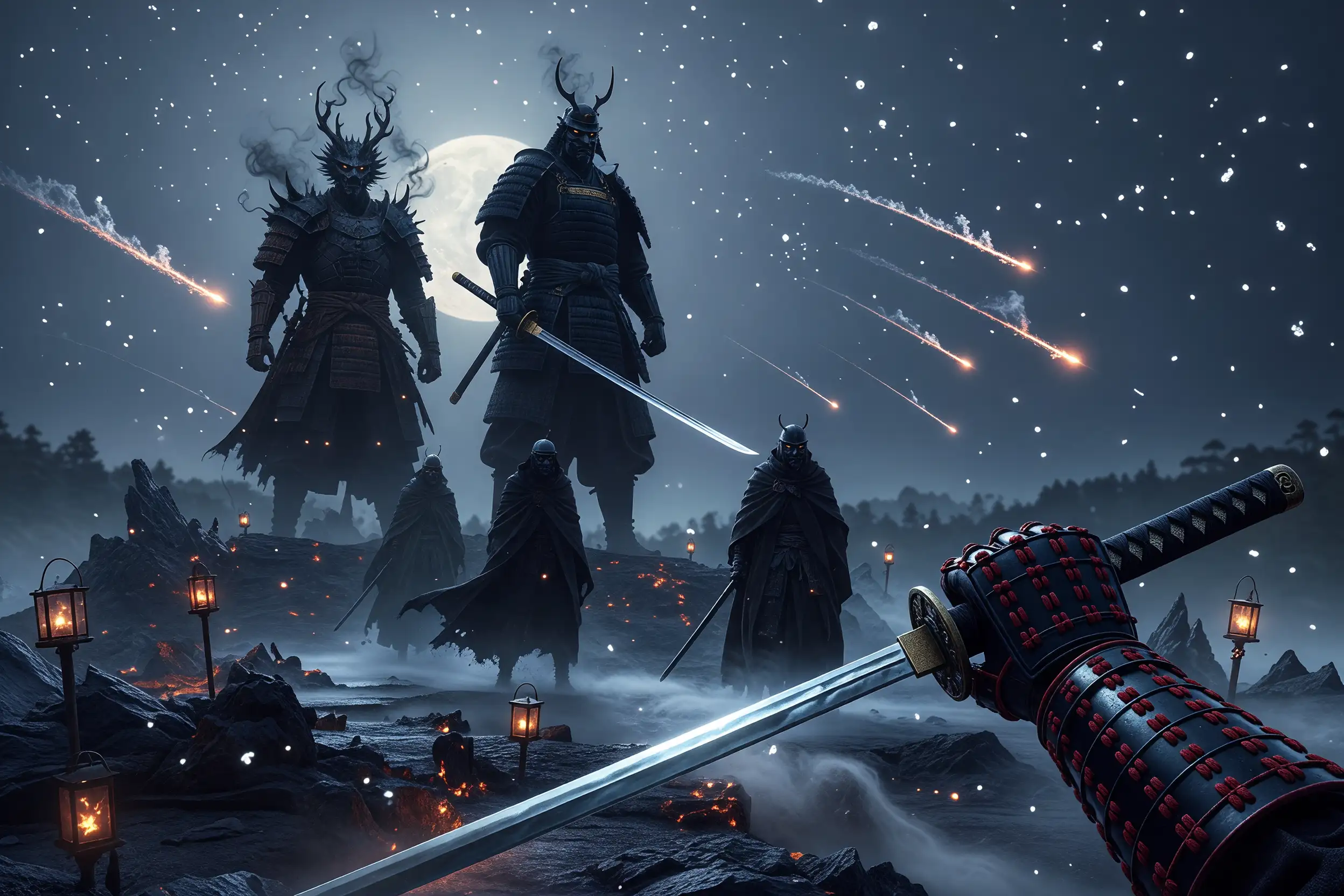
The new raid pits four players against the Dragon and Lord Saito, the last two members of the supernatural Yōtei Six, and arrives as the final major content drop the Bellevue studio plans for the multiplayer mode. A freshly published interview with Bridges, summarized below with spoilers, is the clearest window yet into what changed between the 2020 design and this one.
The Escape Room Pitch
“One of our original thoughts was: it’s like an escape room where people are trying to kill you,” Bridges said in a PlayStation Blog interview published May 15. That sentence is the entire design brief.
The Yōtei Raid is four-player, no matchmaking at launch, balanced around a fireteam that talks. Puzzle sections force coordination. Combat sections punish bad spacing. The reward loop is the group-flow moment co-op designers chase: no one clears it solo, and no one clears it without the others in sync.
What is different from the Tsushima precedent is the on-ramp. Missions leading up to a boss arena now telegraph the encounter mechanic. Players see the Dragon’s giant Bo-Hiya (a heavy fire arrow, here scaled into a sky-dropped missile) before they have to dodge a sky full of them, and the warlord’s mostly undodgeable sword sweep gets previewed in a smaller form. The combat vocabulary is taught before the test.
A reskinned filler section would have padded the run. The studio instead used it to lower the cognitive load on the boss itself, which is the kind of choice that only shows up when a designer has lived the alternative.
What Tale of Iyo Taught the Team
The 2020 Tale of Iyo was Sucker Punch’s first attempt at raid design, and Bridges is candid about the pacing. “It had a lot of successes,” he said. “But it was also kind of unbalanced in the pacing and the length of it. A lot of players weren’t able to play it.”
Two changes in the Yōtei build push back on the six-hour problem. Mission pacing is flatter, with chapters tuned to comparable lengths so a team can budget time honestly. And replay drops you straight at the boss: “If you replay it, you can play just the boss,” Bridges said. A team that cleared the puzzles last night can boot the next session straight into the Saito phase, tweak builds, die, retry, without redoing two hours of platforming.
For Tsushima Legends veterans, that is the biggest comfort-of-life shift in the mode. The hardcore difficulty stays in place while the time tax that locked half the audience out gets cut.
The Dragon and Lord Saito, Fought as a Pair
Sucker Punch has written the Dragon and the Spider as siblings since the base game, both children of the warlord. The Raid pairs the Dragon with Lord Saito as the closing two-boss arc, ending the Yōtei Six storyline inside Legends, and the encounter mechanics treat the two fights as a continuous exam rather than two separate checkpoints.
The Dragon fight introduces the bomb-drop sequence the design team calls the room’s signature mechanic. Bombs lock onto individual players, and crossing paths with a teammate at the wrong moment puts both down. The phase enforces spatial awareness on a team that, ten seconds earlier, was happily stacking up on a single target.
The warlord encounter is more melee-centric, built around perfect-parry windows against summoned Shadow Saito clones. The boss telegraphs his summons, but only the player who sees the wind-up can warn the others, which is why the fight effectively requires open voice.
Bridges described the call-out moment this way:
If one player sees the boss getting ready to summon you can call it out, and then everyone else can prepare and try to react in time.
That is the Lead Designer on the Shadow Saito phase, speaking to PlayStation Blog. Voice comms are not optional in this part of the encounter; they are the difference between a smooth run and a wipe at twenty percent boss health.
Build Loadouts Made to Solve the Room
The Raid sets a Gear Station at the start of the final boss arena. Every team wipe drops you back at it, and every team rebuild is an invitation to adjust class, weapons, and perks for the specific phase that just killed you.
That treats the encounter as a puzzle the build solves, not just a damage check. The four Legends classes each carry a different angle on the fight, and the Yōtei kit gives each one a clear lane.
| Class | Signature Weapon | Ultimate Role | Raid Lane |
|---|---|---|---|
| Samurai | Ōdachi | Melee burst across multiple targets | Front-line damage on Shadow Saito waves |
| Archer | Yari and bow | Chained simultaneous headshots | Long-range pressure, missile spotter on Dragon |
| Shinobi | Kusarigama | Stealth vanish and assassinate | Bomb-drop reset, stagger setups |
| Mercenary | Hybrid toolset | Thunderstrike and disarm | Utility, healing, crowd control |
A squad without a Shinobi can still clear the Dragon, but the bomb phase stretches into something punishing. A squad without a Mercenary can still parry the warlord, but somebody is absorbing damage the team usually heals through. The class spread is suggestion, not mandate.
Bridges is explicit that the studio wanted “ingenuity and theory” in how teams assemble, which is why the official Legends mode page still lists all four classes as fully viable inside the Raid rather than steering players toward a tank-DPS-support orthodoxy.
The Shinobi Vanish Move No One Designed
Some of the best Raid moments are accidents. The clearest example is what the Shinobi’s vanish ability does to the Dragon’s bomb phase: the bombs are supposed to track each living player, but a Shinobi who vanishes loses the lock, and a group vanish triggered near three teammates can skip the entire drop sequence.
“That was actually something that we didn’t plan for,” Bridges said. “But when we were testing it, we saw it, and we’re like, oh, that’s actually really awesome.” The team kept it in, and the same philosophy shows up in a handful of other Raid systems:
- Group Jump Rope mechanics, where the whole team executes one shared action on a beat or wipes
- Solo carry windows, where one player handles a phase the rest of the team survives through
- Player-emergent language, the unofficial naming fireteams invent for boss tells the game never labels
The last point is the one Bridges talks about with most affection. There is no on-screen label for half of what the bosses do, which means every team builds its own vocabulary. Watching streams, he said, feels like listening to a private language form in real time.
The World’s First Team Headshot Saito in Two Minutes
A team can spend three hours on the warlord fight, learning telegraphs and dying to the parry windows. Or they can do what the world’s first clear team did.
“The world’s first team beat Saito, I think, in like two minutes,” Bridges said. “And they had spent, I think, an hour or so leading up to that point. And so I thought, oh, you know, I was thinking, proportionally, it’ll probably be another half hour or something, and they just headshot him.”
That is the speedrun cohort, and the studio has been here before. The Tale of Iyo’s final boss got beaten in roughly six minutes inside a year of release. Bridges’ phrase for the gap between intended difficulty and speedrun reality: “it feels like building an obstacle course with your local team and then throwing Olympians at it.”
Most teams will not headshot the boss. The typical run, Bridges says, lands at two to three hours of practice and repeats. The Raid is designed for that median, with the elite ceiling treated as a feature rather than a bug.
What gets less attention in raid post-mortems is the developer side. “There’s not many times in game development where you actually get to release content and see how people react,” Bridges told PlayStation Blog. Fireteam mics on Twitch streams give the studio a near-real-time read on whether the encounter is parsing the way it was tuned, which for a one-shot raid release is rare data.
The Last Major Update for Legends
The Raid closes the chapter for Legends. Sucker Punch confirmed in early May that no further major content updates are planned for the multiplayer mode, ending the Yōtei Six storyline at the warlord’s fight.
That sunset reads against Sony’s wider first-party direction. SIE Studio Business Group CEO Hermen Hulst said in early 2026 that narrative single-player titles will stay exclusive to PlayStation hardware, a stance the base game already sits squarely inside. Sony’s pullback from porting marquee single-player games to PC reframes the Yōtei franchise as a console moat, and Legends, the free co-op layer, becomes the multiplayer hook that does not need to outgrow itself.
For the developer, ending here is a clean finish: a four-boss launch lineup in March, a Raid for endgame in April, a story closed in May. The base game has cleared roughly 5 million units since the October 2025 launch per Sony’s recent earnings disclosures, ahead of the Tsushima pace at the same milestone.
What sits unanswered is whether the team’s next project picks up the Legends framework or shelves four-player co-op for the kind of single-player blockbuster Sony is now publicly defending. The Raid is both the goodbye to one design experiment and the studio’s last visible public artifact before that question gets answered.
Frequently Asked Questions
Is the Ghost of Yōtei Legends Raid free?
Yes. The Raid arrived as part of the free Legends update bundled into Patch 1.5 for all Ghost of Yōtei owners on PlayStation 5. You do not buy it separately.
Do you need PS Plus to play the Raid?
Yes. PlayStation Plus (PS Plus, Sony’s paid online and game subscription) Essential, Extra, or Premium is required for any online play in Legends, including the Raid. The base Ghost of Yōtei single-player game does not need a subscription.
When did the Raid launch?
April 10, 2026, roughly one month after Legends itself went live on March 10. The interview with Lead Designer Darren Bridges that this piece draws on was published on PlayStation Blog on May 15.
Is matchmaking supported for the Raid?
Not at launch. The Raid requires a pre-formed fireteam of four. Sucker Punch has said matchmaking will be added in a later patch, with no firm date as of mid-May.
Will Sucker Punch keep updating Legends?
The Raid is the studio’s last planned major update for Legends. Smaller fixes and balance patches can still happen, but no new chapters, bosses, or class additions are scheduled.






Xbox Caps Game Pass Cloud Gaming at 15 Hours

Sony and Warner Sue Anthropic Over Torrented Song Lyrics

Microsoft 365 Auth Fault Took Down Exchange and Teams

OpenClaw 2.0 Ships a Team Workplace With Host-Trust Defaults

Honor’s Robot Phone Works, Then Prices Itself Out

Florida Cities Top Retirement Rankings the Scores Cannot Explain

Walmart’s $50 Million Opioid Settlement Closes Case Without Admission

California Sues Over $120 Million Morro Bay Wind Lease Buyout

Gilead Bixlenvo FDA Nod Opens Single Pill Path for Complex HIV Cases

Meta’s $18B Kids Deal Forever Shields Data Used to Spot Under-13s

Take-Two CEO Pushes Netflix Subs for GTA 6 Extended Look

Stripe Bid Shows PayPal Moat Cracked After Years of Slide

Quordle Monday Delivers Gavel Crush Speed Ethos Cleanly

Tyson’s Five-Year Utah Plant Falls to Cattle Shortage Reckoning

Kennedy Lewis Takes Majority Control of The Greenbrier in $500M Deal

Silver Lake Workday Talks Signal Private Floor for Software

Best Buy Marks 60 Years With Sale That Echoes Its Audio Shop Roots

AI forces Apple into third security drop in three weeks

FDA Class I Tag Hits Finished Egg Recall Weeks Later

Apple’s Labor Day Habit Locks iPhone 18 Pro September Dates
-

 TECHNOLOGY3 years ago
How to Adjust a Bulova Watch Band – An Easy Guide
-

 News3 years ago
Fred Pentland: Athletic Bilbao’s English mentor who changed the essence of Spanish football
-

 FINANCE3 years ago
Tax Planning for Every Season: Guide to Maximizing Your Tax Benefits
-

 Education3 years ago
African Ministers New Education Plan
-

 BUSINESS3 years ago
What is Entrepreneurial Operating System? A Comprehensive Guide to EOS
-

 Education3 years ago
Innovate Your Learning Journey with Technology and Enhance Education
-

 News3 years ago
Russians formally out of World Athletics Championships
-

 BUSINESS3 years ago
Top 9 Most Expensive American Cities to Rent an Apartment