
FINANCE
Oil’s Worst Month Since 2020 Powers Dow Past 51,000

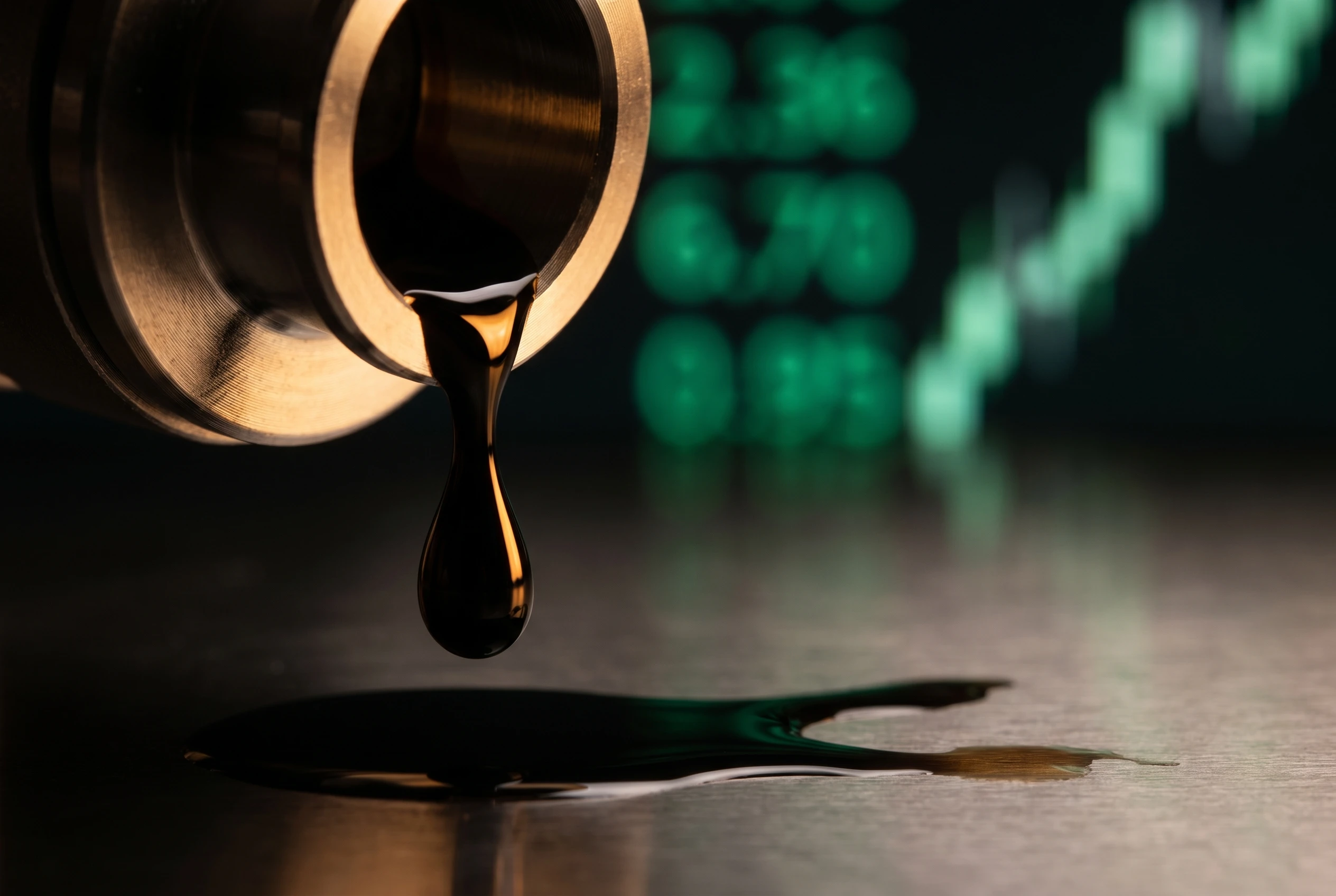
The Dow Jones Industrial Average punched through 51,000 for the first time on Friday, closing up 0.7%, while the S&P 500 and Nasdaq composite each rose 0.2% to fresh records. The number that will shape the next quarter, though, sits in the commodities pit. Brent crude futures slipped 1.7% to $92.05 a barrel and closed out a 19% monthly drop, the steepest fall for the global oil benchmark since March 2020, when the pandemic shut down economies.
Both moves trace back to the same Friday morning. President Trump wrote on Truth Social that he would meet his team to make a final determination on a peace deal with Iran, and traders read it as the beginning of the end for a war that had kept oil bid for months. Both moves also hinge on a deal that has not been signed.
Why a 19% Oil Drop Outweighs a Dow Record
Equity records grab the front page. The oil tape is the bigger macro tell. Crude prices feed straight into gasoline, diesel, freight, airfares and the cost of nearly everything that moves, which means a 19% monthly slide in Brent does more to the inflation outlook than another thousand points on a price-weighted stock index.
For most of this year the causation ran the other way. War in Iran and a choked Strait of Hormuz pushed crude up, fuel prices followed, and the Federal Reserve was boxed in. Friday flipped the sign on that chain. If the peace bet holds, the cheapest input in the consumer basket starts working for households again instead of against them.
- 19%: Brent’s decline in May, its worst month since March 2020
- $92.05: Friday’s close, down from levels above $100 during the heaviest fighting
- 8.4%: the Nasdaq composite’s gain for the month
- Nine: consecutive weekly gains for the S&P 500
That last figure matters because a nine-week winning streak is rarely built on earnings alone. It is built on the expectation that the cost of money is about to come down, and the oil chart is the clearest evidence that the conditions for cheaper money are falling into place.
What Sent Crude Down: An Unsigned Deal
Treasury Secretary Scott Bessent said this week that Washington and Tehran are within reach of an agreement to wind down the war. Trump has not signed off. The gap between those two statements is where the whole oil move lives.
The White House is asking Iran for three concrete commitments before any deal closes:
- Dispose of its highly enriched uranium
- Pledge never to seek a nuclear weapon
- Fully reopen the Strait of Hormuz to shipping
None of those boxes is ticked yet, and Iranian state media has said the terms are not final. Investors have grown used to this rhythm. Headlines about an imminent breakthrough have surfaced repeatedly as the conflict dragged on, faded when nothing was signed, and then returned. Each round still moves the price, just by a little less than the last. Friday’s version carried more weight because it came from the president directly rather than an unnamed official.
The Strait of Hormuz Math
To understand why a single Truth Social post can erase a fifth of crude’s value in a month, look at the waterway the deal would reopen. The Strait of Hormuz is the most important oil chokepoint on earth, and the war effectively sealed it.
| Indicator | During the oil shock (April / early May) | The peace bet (May 29) |
|---|---|---|
| Brent crude | Above $100 a barrel | $92.05, down 19% on the month |
| US retail gasoline | Near $4.30 a gallon | Forecast to fall about 6% across the year |
| Fed 2026 rate-cut odds | Roughly one-in-three for a single cut | Reopening as fuel pressure eases |
| Equity tone | Asian indices selling off on fresh strikes | Dow above 51,000, S&P at a record |
What the Chokepoint Carries
An average of about 20 million barrels a day of crude and refined products moved through the strait in 2025, roughly a quarter of the world’s seaborne oil trade and close to one-fifth of global oil and liquefied natural gas flows. There is no easy way around it. When the route is open, traders treat that volume as guaranteed. When it is shut, every barrel has to find a longer, costlier path, and the price reflects the friction. The promise of an unrestricted reopening is what let crude exhale.
Why a Reopening Runs Slow
The catch is that flipping the strait back on is not instant. Mines need clearing, damaged terminals need repair, and shut-in wells need restarting before pre-war volumes return. The US Energy Information Administration expects flows to begin resuming around late May or early June, with most pre-conflict production and trade patterns not back until late 2026 or early 2027, according to the agency’s Strait of Hormuz supply forecast.
Full restoration of flows will take months.
That warning came from Tristan Abbey, the EIA administrator, in the agency’s outlook. It is the reason the oil market is pricing relief rather than a flood. The bet is on the direction, not the speed.
The Rate-Cut Path the Oil Shock Closed
Here is the consequence that the Dow headline buries. The energy spike did not just lift pump prices, it rewired what the Federal Reserve could do. As recently as late April, with crude high and fuel costs feeding through, markets put only about a one-in-three chance on even a single rate cut this year, and the funds rate was widely expected to hold in its 3.5% to 3.75% range. Some policymakers had started talking about the risk of hikes rather than cuts.
A sustained drop in crude changes that arithmetic. The EIA already expects retail gasoline to fall roughly 6% across the year, about 20 cents a gallon, with crude on track for its lowest annual average since 2020, per the 2026 retail gasoline forecast. Cheaper fuel pulls headline inflation lower almost mechanically, and that is the disinflation the Fed needs to justify easing.
Bond traders have noticed. The setup is exactly the one strategist Ed Yardeni flagged when he argued that a peak in long-term Treasury yields would open a window to buy both stocks and bonds, a thesis laid out in our coverage of his call on a Treasury yield peak and buy window. Falling oil is one of the cleanest routes to that peak. The equity rally and the rate-cut revival are the same trade wearing two outfits.
Why One Headline Could Reverse the Whole Trade
The fragility is built into the structure. A market that rallied on an unsigned agreement can give it all back on a single contradicting line from Tehran or a missed demand from Washington. This is the unromantic half of a peace rally: the same headline sensitivity that drove crude down 19% can drive it back up just as fast.
We have seen the reverse playbook this year. When US forces struck inside Iran and Kuwait activated its air defenses, Asian markets buckled and oil jumped, as detailed in our report on the Asia market selloff after fresh US strikes on Iran. That episode is the template for what an unraveling looks like. Nothing about Friday’s optimism makes it immune.
The strait’s slow physical recovery adds a second trap. Even with a signed deal, traders expecting barrels to gush back may be disappointed by a reopening measured in months, and a supply recovery that lags could put a floor under prices well above Friday’s close. The market is pricing the best case on timing as well as on diplomacy.
For now the scoreboard reads clean: a record Dow, a nine-week win streak, and the cheapest oil in over a year. If Trump signs and the strait reopens on schedule, the disinflation trade and the rate-cut path both run through summer. If the deal stalls or Iran balks, the same screens that printed 88-point oil moves this month will print them in the other direction, and the Fed’s reopened window closes as quickly as it cracked.












Halo Campaign Evolved Skulls Meet Death Barriers That Kill the Hunt

Spotify Running Mode Returns After the 2015 Experiment Failed

Amazon AWS Hits Fastest Growth in Years as AI Spend Pays Off

Amazon Bets Platform Beats Models in the AI Race

Apple C2 Modem Edges Into iPhone 18 Pro After Qualcomm Drop

Google Earth Adds Nano Banana 2 to Reimagine Real Places

Apple Upgrade Turns Phones Into Monthly Utility Bills

Asha Sharma Bets Xbox Growth on Console and Four C’s

MacBook Ultra Design Follows Apple’s Familiar Cascade Path

TAG Heuer Carrera x Team Ikuzawa Revives 1970s Roadmaster Stopwatch DNA

Pokémon GO Developer Niantic Rebrands as Scopely Explore

Jaylen Brown Traded to 76ers for Paul George and Four Draft Picks

Doom Studio id Software Cuts Half Its Staff in Xbox Layoffs

Nintendo Switch Online Adds Four Classics and One Japan-Only Title

Jordan Henderson Hospitalized After Wrist Injury at the Azteca

Mexico’s World Cup Run Ends at Azteca as England Hold On 3-2

Meta’s Muse Image Lets Anyone Use Your Instagram Photos in AI

Louis Vuitton Beats Molly Tea in China, Triggers Cultural Backlash

Pink Bearista Cup Returns July 13 as Starbucks Pink Vibes Drops

Samsung Sets Galaxy Unpacked for July 22 in London With a Wider Fold
-

 TECHNOLOGY3 years ago
How to Adjust a Bulova Watch Band – An Easy Guide
-

 News3 years ago
Fred Pentland: Athletic Bilbao’s English mentor who changed the essence of Spanish football
-

 FINANCE3 years ago
Tax Planning for Every Season: Guide to Maximizing Your Tax Benefits
-

 Education3 years ago
African Ministers New Education Plan
-

 BUSINESS3 years ago
What is Entrepreneurial Operating System? A Comprehensive Guide to EOS
-

 Education3 years ago
Innovate Your Learning Journey with Technology and Enhance Education
-

 News3 years ago
Russians formally out of World Athletics Championships
-

 BUSINESS3 years ago
Top 9 Most Expensive American Cities to Rent an Apartment