
News
iPhone Ultra Liquid Metal Hinge Could Cash Apple’s 16-Year Bet
A leak says the foldable iPhone Ultra will use a liquid metal hinge, the payoff of a roughly $20 million alloy license Apple bought in 2010 and barely used.

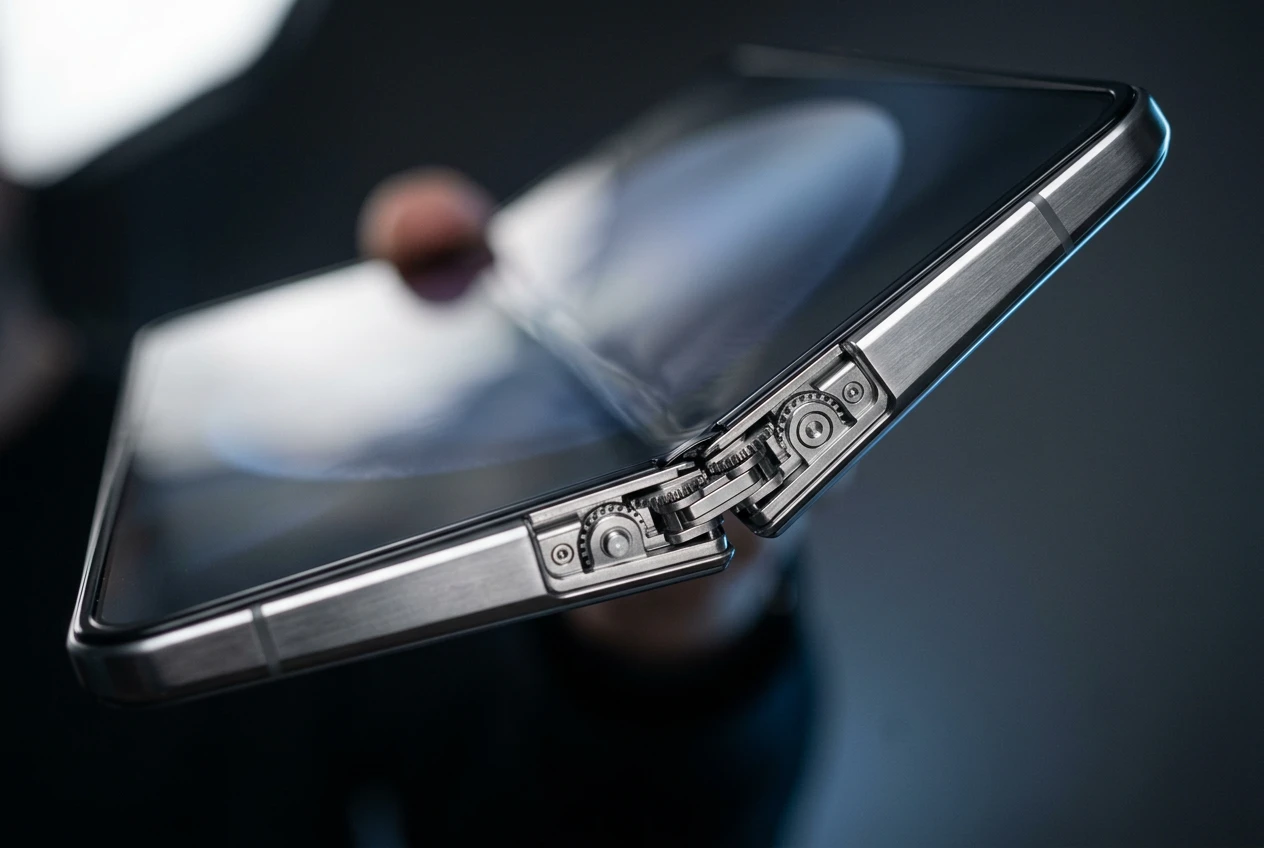
Apple’s first foldable phone, widely tagged the iPhone Ultra, is expected to ship this fall with a liquid metal hinge, and that one part links straight back to a deal the company signed in 2010. Apple paid roughly $20 million for exclusive rights to a strange family of alloys, used them for almost nothing, and renewed the arrangement year after year.
The catch: most of what we know rides on a single post from a Chinese leaker with a decent record, and Apple has confirmed none of it. Liquid metal has teased a thinner, tougher iPhone for over a decade and delivered a SIM tool. This time the timing and the product finally line up.
The $20 Million License Apple Almost Never Used
On August 5, 2010, a small materials firm called Liquidmetal Technologies signed over the keys to its best ideas. The company moved nearly all of its intellectual property into a holding entity, Crucible Intellectual Property, and handed Apple an exclusive, perpetual license to commercialize those alloys in consumer electronics. The fee, set out in the 2010 master transaction agreement Apple filed with the U.S. Securities and Exchange Commission (SEC, the agency that oversees public companies), was a one-time payment of about $20 million.
For a company Apple’s size, that was pocket change, and for years it looked like money parked and forgotten. The one shipping product anyone could point to was the small pin that pops the SIM (Subscriber Identity Module) tray out of an iPhone. Apple kept filing its own casting and surface patents through the period, all sitting on top of older patents covering high-strength amorphous metal alloys, and it kept extending the deal, with renewals reported through at least 2015. The alloys themselves mostly stayed on the shelf.
- 2010: Apple buys exclusive consumer-electronics rights to Liquidmetal’s alloys.
- 2010 to 2012: The only visible use is the iPhone’s SIM ejector tool.
- 2012 to 2015: Apple renews the license and stacks up casting patents.
- March 2025: Analyst Ming-Chi Kuo says the foldable’s hinge will use the alloy.
- June 2026: A leaker says the hinge design is locked and prototypes have shipped.
What Liquidmetal Is, and Why It Suits a Hinge
Strip the marketing and Liquidmetal is an amorphous metal, sometimes called a bulk metallic glass. Ordinary metals cool into a neat repeating grid of atoms. This stuff cools so fast the atoms freeze in a jumbled, glass-like arrangement, and that disorder is what gives it its odd mix of hardness and spring.
How It Gets Made
The base alloy, Vitreloy, was created by Caltech materials scientist William Johnson and is built mostly around zirconium. It can be heat-formed at around 760 degrees Fahrenheit, soft enough to mold like plastic, then set hard at room temperature. That lets a supplier die-cast a thin, complex hinge part in a single shot, holding tight tolerances without machining it out of a solid block.
Why a Hinge Is the Hard Part
A folding phone lives or dies on its hinge, the spot that bends hundreds of thousands of times over the life of the device. Per NASA’s account of how amorphous alloys outperform steel and titanium, the material resists permanent bending and springs back to its original shape, which is exactly what a hinge needs to keep the screen flat and slow the creasing that plagues early foldables. Here is how it stacks against the metals Apple already builds with.
| Material | Strength and hardness | Behavior under repeated flex |
|---|---|---|
| Liquidmetal (Vitreloy) | About 2.5x stronger than titanium alloy; about 1.5x harder than stainless steel | Springs back elastically, resists fatigue |
| Titanium alloy | The current benchmark for premium phone frames | Strong, but can take a permanent set over time |
| Stainless steel | Softer than Liquidmetal, heavier | More prone to wear over many cycles |
Where the Hinge Claim Comes From
The newest detail comes from Fixed Focus Digital, a leaker who posts Apple supply chain notes on the Chinese platform Weibo. In a recent message, translated from Chinese, the account said Apple had settled on the hinge approach and that test units were already out in the field.
Apple has chosen a liquid metal hinge solution for its foldable screen, and prototypes have already been sent to carriers worldwide for testing.
That second part is the tell. Shipping prototypes to carriers is the stage a phone reaches when it is close to done, because networks need lead time to certify a new device. The hinge claim is not brand new, either. Ming-Chi Kuo, a supply chain analyst at TF International Securities whose component calls have proven reliable, including his earlier read on the iPhone 18 camera supply chain, said in March 2025 that the foldable would use the alloy in its hinge bearings, with a Dongguan-based caster, EonTec, named as the supplier. A separate leak this week added that the phone will carry a vapor chamber for cooling.
The Phone Built Around the Fold
The hinge is the headline, but the rest of the rumored spec sheet has firmed up too. Reporting puts the foldable on a book-style design that opens to a 7.8-inch inner screen, backed by a 5.5-inch cover display for one-handed use. Inside is expected to be a version of the A20 chip, the same silicon family heading into the iPhone 18 Pro hardware leap it will launch beside.
- Displays: 7.8-inch inner foldable panel, 5.5-inch cover screen
- Chip: a variant of Apple’s A20
- Biometrics: Touch ID rather than Face ID
- Cameras: dual 48-megapixel rear sensors
- Starting price: around $1,999, with higher-storage models climbing well past $2,500
- Launch: this September, alongside the iPhone 18 Pro and Pro Max
At that price it would be the costliest iPhone Apple has ever sold, into a category that Samsung and others have worked for years. Rivals such as Samsung’s lighter Galaxy Z Fold 8 have already pushed foldable weight down near 200 grams, so Apple is arriving late to a market that has had time to settle.
Why the Payoff Took Sixteen Years
Sixteen years is a long stretch to hold an exclusive license and ship almost nothing with it. A lot of the answer is manufacturing. Casting amorphous metal in big, flat pieces is genuinely hard; if a part cools unevenly or runs too thick, the atoms start to crystallize and the special properties fade. That ruled out the thin, wraparound iPhone bodies the early rumors imagined.
A hinge is small, precise, and exactly the kind of part this casting process does well, which is why the alloy fits now in a way it never did for a chassis. The material also drags a long history of hype behind it, going back to the Caltech research behind Vitreloy alloys and the 2010 headlines that promised liquid-metal iPhones which never showed up.
None of this is official. The strongest version of the story still rests on a single Weibo post and an analyst note, against an Apple that has said nothing. Mass production is reportedly set for July and the launch for September; until those dates arrive, the toughest hinge Apple has ever planned is still a claim on a leaker’s feed.
Frequently Asked Questions
What is the liquid metal hinge in the iPhone Ultra?
It is a hinge cast from an amorphous metal alloy, marketed as Liquidmetal, that Apple has licensed since 2010. The disordered atomic structure makes it hard, corrosion resistant, and springy, so it can fold many times without taking a permanent bend, which suits a foldable screen.
Has Apple confirmed the iPhone Ultra liquid metal hinge?
No. The claim comes from leaker Fixed Focus Digital on Weibo, backed by an earlier March 2025 note from analyst Ming-Chi Kuo. Apple has not announced the device or its hinge material, so treat every spec as a rumor until a launch event.
How much will the foldable iPhone cost?
Rumors point to a starting price near $1,999, with 512GB and 1TB versions reported to run from roughly $2,199 up toward $2,900. That would make it the most expensive iPhone Apple has ever sold.
When will the foldable iPhone Ultra launch?
Bloomberg’s Mark Gurman has reported a September target, alongside the iPhone 18 Pro and iPhone 18 Pro Max, with mass production said to begin in July. The timing was described as not yet final.
Why is liquid metal good for a foldable hinge?
Because it resists permanent deformation and springs back to shape. Reports put it at around 2.5 times stronger than titanium alloy and 1.5 times harder than stainless steel, and it can be die-cast as a thin, precise part, which helps keep the folded screen flat and slows creasing.
What did Apple use Liquidmetal for before the foldable?
Almost nothing visible. The only confirmed product across more than a decade was the small metal pin that ejects the SIM tray on iPhones and iPads, despite Apple filing many patents on the technology.
Who supplies the liquid metal hinge?
Kuo named a Dongguan-based caster, EonTec, as the supplier of the alloy hinge components. Apple has not published a supplier list for the device, so the name comes from supply chain reporting rather than the company itself.






Halo Campaign Evolved Skulls Meet Death Barriers That Kill the Hunt

Spotify Running Mode Returns After the 2015 Experiment Failed

Amazon AWS Hits Fastest Growth in Years as AI Spend Pays Off

Amazon Bets Platform Beats Models in the AI Race

Apple C2 Modem Edges Into iPhone 18 Pro After Qualcomm Drop

Google Earth Adds Nano Banana 2 to Reimagine Real Places

Apple Upgrade Turns Phones Into Monthly Utility Bills

Asha Sharma Bets Xbox Growth on Console and Four C’s

MacBook Ultra Design Follows Apple’s Familiar Cascade Path

TAG Heuer Carrera x Team Ikuzawa Revives 1970s Roadmaster Stopwatch DNA

Pokémon GO Developer Niantic Rebrands as Scopely Explore

Jaylen Brown Traded to 76ers for Paul George and Four Draft Picks

Doom Studio id Software Cuts Half Its Staff in Xbox Layoffs

Nintendo Switch Online Adds Four Classics and One Japan-Only Title

Jordan Henderson Hospitalized After Wrist Injury at the Azteca

Mexico’s World Cup Run Ends at Azteca as England Hold On 3-2

Meta’s Muse Image Lets Anyone Use Your Instagram Photos in AI

Louis Vuitton Beats Molly Tea in China, Triggers Cultural Backlash

Pink Bearista Cup Returns July 13 as Starbucks Pink Vibes Drops

Samsung Sets Galaxy Unpacked for July 22 in London With a Wider Fold
-

 TECHNOLOGY3 years ago
How to Adjust a Bulova Watch Band – An Easy Guide
-

 News3 years ago
Fred Pentland: Athletic Bilbao’s English mentor who changed the essence of Spanish football
-

 FINANCE3 years ago
Tax Planning for Every Season: Guide to Maximizing Your Tax Benefits
-

 Education3 years ago
African Ministers New Education Plan
-

 BUSINESS3 years ago
What is Entrepreneurial Operating System? A Comprehensive Guide to EOS
-

 Education3 years ago
Innovate Your Learning Journey with Technology and Enhance Education
-

 News3 years ago
Russians formally out of World Athletics Championships
-

 BUSINESS3 years ago
Top 9 Most Expensive American Cities to Rent an Apartment