
News
Siri AI Compatible Devices: The Full List and the 12GB Catch
Siri AI launches this fall on the iPhone 15 Pro, iPhone 16, and iPhone 17 families, plus M1 Macs and newer iPads. The top tier needs 12GB of RAM.

Apple unveiled Siri AI on June 8, 2026, as the centerpiece of iOS 27, iPadOS 27, macOS 27, watchOS 27, and visionOS 27, with a public beta arriving this fall on a defined list of supported hardware. The catch lives one tier above that hardware list: Apple’s most capable on-device model needs 12GB of unified memory, a threshold the iPhone 17 Pro, iPhone 17 Pro Max, and iPhone Air are the only iPhones to clear.
The headline is the breadth of Siri AI, not its top tier. Personal context, onscreen awareness, web answers, the dedicated Siri app, Visual Intelligence, and Writing Tools all run on a device roster that is broader than Apple Intelligence’s original 2024 debut, and still narrower than iOS 27 itself. The richer Siri experience, with expressive voices and a higher-accuracy dictation engine, lives on a much shorter list, and Apple’s own iPhone 17 base sits outside it.
Siri AI Lands on a Narrower Roster Than Apple Intelligence
Siri AI is the new version of Siri, an overhaul Apple framed at WWDC 2026 as the centerpiece of its 2026 software line. The new assistant is gated to a published list of devices, narrower than the iOS 27 install base and narrower than the original Apple Intelligence roster.
Apple previewed Siri AI on June 8, 2026, in its WWDC 2026 announcement of the next-generation Apple Intelligence and Siri AI, alongside iOS 27, iPadOS 27, macOS 27, watchOS 27, and visionOS 27, with a public beta opening through the Apple Beta Software Program next month and a free general release arriving this fall. The features shipped to developers the same day, and the new assistant is part of the broader Apple Intelligence stack with Private Cloud Compute details Apple has been building since 2024. Six Colors’ WWDC 2026 recap of the AI overhaul and software changes traces the same arc.
Not every device that runs iOS 27 will run Siri AI. The base of the supported list is the iPhone 15 Pro, the entry point below which the assistant is the pre-2026 version. The top of the supported list, where the most capable on-device model lives, is a much smaller group, and only the iPhone 17 Pro, iPhone 17 Pro Max, and iPhone Air sit on it.
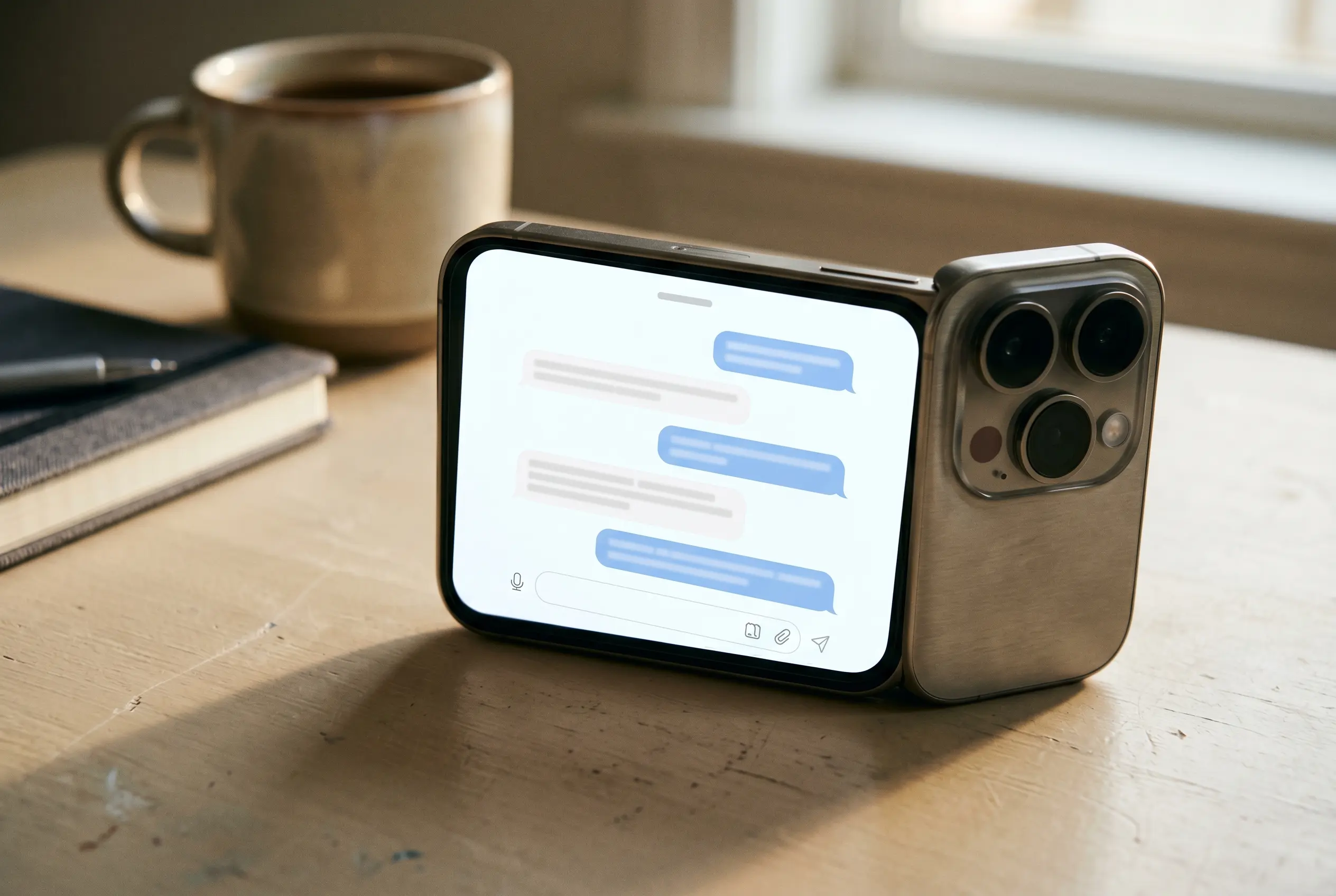
The Full List of Siri AI-Compatible Devices
Apple’s June 8 press release on the full Siri AI device list and the EU and China rollout is the canonical answer to the question of who gets Siri AI this fall. The new assistant works on iPhones, iPads, Macs, the Vision Pro, and a subset of Apple Watches, and Apple’s compatibility rules differ across those categories.
On iPhone, the floor is the iPhone 15 Pro and iPhone 15 Pro Max. iPad support covers the A17 Pro iPad mini and every iPad Pro and iPad Air with an M1 chip or later. Mac support covers every machine with M1 or later, plus the MacBook Neo with its A18 Pro chip. Every Apple Vision Pro supports Siri AI. Apple Watches, from the Series 9 and Ultra 2 onward plus the SE 3, support it only when paired with an Apple Intelligence-enabled iPhone nearby. iClarified’s iOS 27 supported devices list mirrors Apple’s published compatibility.
| Device | Siri AI (Base) | Top-Tier On-Device Model |
|---|---|---|
| iPhone 17 Pro, iPhone 17 Pro Max | Yes | Yes |
| iPhone Air | Yes | Yes |
| iPhone 17 (base) | Yes | No |
| iPhone 16 Pro, iPhone 16 Pro Max | Yes | No |
| iPhone 16, iPhone 16 Plus, iPhone 16e | Yes | No |
| iPhone 15 Pro, iPhone 15 Pro Max | Yes | No |
| iPad Pro (M1 and later) | Yes | M4 or later with 12GB of unified memory |
| iPad Air (M1 and later) | Yes | M4 or later with 12GB of unified memory |
| iPad mini (A17 Pro) | Yes | No |
| Mac with M1 or later | Yes | M3 or later with 12GB of unified memory |
| MacBook Neo (A18 Pro) | Yes | No |
| Apple Vision Pro | Yes | M5 only |
| Apple Watch SE 3, Series 9 and later, Ultra 2 and later | Yes (paired with an AI-enabled iPhone) | No |
How Siri AI Compatibility Breaks Down Into Three Tiers
Apple’s device map has three layers, and the boundaries between them are sharper than the WWDC keynote suggested. The first layer is iOS 27 itself, which runs on iPhones from the iPhone 11 onward. The second layer is Apple Intelligence and Siri AI, which starts at the iPhone 15 Pro. The third layer is Apple’s most powerful on-device model, the part of the assistant that can run fully on the device, and only the latest iPhones qualify for it.
Tier 1, iOS 27 without Siri AI, is the broadest tier. iPhone SE (2nd generation), the iPhone 11 family, iPhone 12 mini, iPhone 14 Plus, and every iPhone in between all install iOS 27 this fall. They run Apple’s 2026 software, with the perimenopause tracking in Health, the new Mail ranking, and the platform-wide speed gains Apple announced at WWDC 2026. The assistant on those devices is the pre-2026 Siri.
Tier 2, Siri AI on the broader Apple Intelligence model, is the published device list. It is the version of Siri AI most users will run, and it is the same list Apple has been promoting since the assistant was announced. Personal context, onscreen awareness, web answers, the dedicated Siri app, Visual Intelligence, and Writing Tools all run on the broader model. Macworld’s iOS 27 feature and compatibility guide covers the breadth of what the broader model unlocks. Lush Binary’s developer-focused WWDC 2026 and iOS 27 Siri guide works through the same territory for developers.
The three-tier map has a worked example in the iPhone 17 family. The iPhone 17 Pro, iPhone 17 Pro Max, and iPhone Air sit in Tier 3, with the most capable on-device model. The iPhone 17 sits in Tier 2, with Siri AI on the broader model. The iPhone 15 sits below the iPhone 15 Pro, in Tier 1, with iOS 27 and the older Siri.
- Tier 1 covers iOS 27 only and includes the iPhone SE (2nd generation) and iPhone 11 onward, plus the iPad and Mac equivalents that fall below the Apple Intelligence floor.
- Tier 2 adds Siri AI on the broader Apple Intelligence model and starts at the iPhone 15 Pro, with every iPhone 16 and iPhone 17 model, the iPhone 16e, the iPhone Air, the A17 Pro iPad mini, M1 iPad Pro and Air, every Mac with M1 or later, the MacBook Neo, every Apple Vision Pro, and the qualifying Apple Watches paired with an AI-enabled iPhone.
- Tier 3 is the most capable on-device model and is limited to the iPhone 17 Pro, iPhone 17 Pro Max, iPhone Air, iPad Pro and Air with M4 or later, Mac with M3 or later, and Apple Vision Pro with M5.
The 12GB Wall That Splits the iPhone 17 Lineup
The base iPhone 17 ships with 8GB of RAM, and that figure is the reason it sits outside the top tier. The 12GB wall is the first time Apple has raised the Apple Intelligence memory floor above the 8GB standard that has held since the platform launched in 2024.
Apple has put the new model behind its highest memory requirement. The on-device model powers two features the rest of the assistant does not. The first is expressive voices for the assistant, and the second is a major accuracy gain in systemwide dictation.
Our most powerful on-device model and the features it enables, like expressive voices and more advanced dictation, will be coming to our most capable iPhone, iPad, and Mac systems.
That was Craig Federighi, Apple’s senior vice president of software engineering, on the WWDC 2026 keynote stage in June, per Macworld’s coverage of the WWDC 2026 keynote and hardware needs. MacRumors’ reporting on the iPhone 17’s 8GB cap and lost Siri AI features lays out the hardware split in detail.
The iPhone 17 Pro, iPhone 17 Pro Max, and iPhone Air are the only iPhones that clear 12GB. Every other iPhone in the iPhone 17 family, and every iPhone 16 and iPhone 15 Pro, sits at 8GB and runs the new Siri AI on the broader model instead. Personal context, onscreen awareness, web answers, the dedicated Siri app, Visual Intelligence, and Writing Tools all work on those devices. On iPad and Mac, the 12GB wall sits at different chip generations depending on the device. An iPad Pro or iPad Air needs an M4 or later chip with at least 12GB of unified memory, and a Mac needs an M3 or later chip with at least 12GB. The MacBook Air (2024 and later), MacBook Pro (November 2023 and later), iMac (2023 and later), Mac mini (2024 and later), and Mac Studio (2025 and later) are the configurations Apple lists as eligible, contingent on the 12GB configuration.
- iPhone 17 base ships with 8GB of RAM
- Top-tier on-device model needs 12GB of unified memory
- iPhones clearing the 12GB bar: iPhone 17 Pro, iPhone 17 Pro Max, iPhone Air
- iPad threshold: M4 chip with at least 12GB
- Mac threshold: M3 chip with at least 12GB
What the Top-Tier Model Delivers
Apple’s most powerful on-device model does two things the rest of the assistant does not. The first is expressive voices, the assistant’s ability to adjust pace and expressivity to match what the user is asking. The second is a major accuracy gain in systemwide dictation, with capitalization, punctuation, and formatting handled on the device.
Expressive voices and the new dictation engine both run locally. The on-device model drives the speech synthesis for the new voice, with adjustable pace and expressivity that Apple has put behind the highest memory bar in its lineup. Dictation turns speech into polished text in real time, with improved speech understanding meant to cut down on errors, and the gain is the kind of thing that registers on first use for anyone who dictates messages and notes all day.
For everyone else, the gap between the older dictation engine and the new one is something they can happily live with. The trade-off is that the new voices and the better dictation are limited to a small group of devices, while the rest of the supported list runs the new assistant on the broader model.
Both features run locally. The cloud side of the assistant, for the requests the on-device model cannot handle, runs on Apple’s Private Cloud Compute setup, which the company describes in its Apple Intelligence product page as drawing on larger server-based models running on Apple silicon to handle more complex requests while protecting your privacy. The boundary between on-device and cloud is invisible to the user, and Apple described the setup in its Apple Intelligence newsroom update on everyday AI capabilities as built around a privacy-first architecture.
Where Siri AI Goes Dark at Launch
Siri AI’s launch map is not a single rectangle. Two large regions are out of the first wave: the European Union on Apple’s mobile and watch platforms, and China outright. Apple has framed both as regulatory work in progress.
Mac and Apple Vision Pro users in the EU will get Siri AI when they switch to a supported language. iPhone, iPad, and Apple Watch users in the EU will not, at least initially, with Apple saying it is working on a path that preserves privacy and security. The EU dispute over Siri AI’s mobile delay is a separate story playing out between Apple and Brussels.
The China wait, by contrast, is the more familiar regulatory story. Siri AI and the new Apple Intelligence features are not available at launch while Apple works through the approval process that has shaped iPhone launches in the country for years. Apple’s press release on the new Siri AI spells out the regional gap in the device-support section, and the launch will not be uniform even where the hardware is the same.
- EU: Mac and Apple Vision Pro get Siri AI at launch; iOS, iPadOS, and watchOS do not, per Apple’s June 8, 2026 press release.
- China: Siri AI and the new Apple Intelligence features are not available at launch, pending regulatory approval.
Siri AI’s Path to a Fall Release
Siri AI went live in the developer beta the same day Apple announced it. A public beta opens next month through the Apple Beta Software Program at beta.apple.com, and the general release arrives this fall as a free software update. The features ship to users as a labeled beta, with Apple describing the assistant in its press release as a beta and preview. The rollout covers iOS 27, iPadOS 27, macOS 27, watchOS 27, and visionOS 27, with tvOS 27 picking up the new design language and other platform features but not the new assistant. Fleet’s IT admin guide to WWDC 2026 covers the same rollout schedule for enterprise deployments.
At launch, the assistant will be available to users with a supported device set to English, with Apple saying it will quickly expand support to more languages. Apple Intelligence already supports Danish, Dutch, French, German, Italian, Norwegian, Portuguese, Spanish, Swedish, Turkish, Vietnamese, simplified and traditional Chinese, Japanese, and Korean, and Siri AI will inherit the same language list.
Siri AI on watchOS 27 will follow later. Apple said the new assistant is available for developer testing across iOS 27, iPadOS 27, macOS 27, and visionOS 27 starting June 8, 2026, with watchOS 27 support coming in a future beta. The new assistant’s reach on the wrist will be a step behind its reach on the phone and the desk. Apple has framed the watch as a dependent platform, with the iPhone doing the heavy lifting for the on-device model.
The wait for a Siri AI test drive is not long. Developers can install the iOS 27, iPadOS 27, macOS 27, and visionOS 27 betas through the Apple Developer Program, with the public beta opening through the Apple Beta Software Program next month and the full release arriving in the fall.
Frequently Asked Questions
Is the iPhone 15 compatible with Siri AI?
Only the iPhone 15 Pro and iPhone 15 Pro Max make the list. Apple’s device list starts at those two phones and adds the iPhone 16 and iPhone 17 families, the iPhone 16e, and the iPhone Air. The standard iPhone 15 and iPhone 15 Plus are not on the list and will run iOS 27 with the older Siri.
Will the iPhone 17 base model get Siri AI?
Yes, the iPhone 17 is on Apple’s list and will run the new assistant. The base iPhone 17 misses the most capable on-device model, the part that powers expressive voices and higher-accuracy dictation, because it ships with 8GB of RAM. The 12GB threshold is met only by the iPhone 17 Pro, iPhone 17 Pro Max, and iPhone Air. TechRadar’s rundown of the three iPhones that can run the best version of Siri AI confirms the same lineup.
What does the 12GB RAM requirement enable?
Two features, both running on the device. The first is expressive voices, with the assistant’s pace and expressivity adjustable on the fly. The second is a major accuracy gain in dictation, where the on-device model handles capitalization, punctuation, and formatting in real time. Personal context, onscreen awareness, the dedicated Siri app, and Writing Tools do not require the 12GB bar and run on the broader Apple Intelligence model.
Why is Siri AI delayed in the EU?
Apple’s press release spells out the EU and China gap. In the EU, Mac and Apple Vision Pro users get Siri AI on day one, while iPhone, iPad, and Apple Watch users wait while Apple works on what it calls a privacy and security path. In China, Siri AI and the rest of the new Apple Intelligence features are not available at launch because of regulatory requirements Apple has yet to work through.
When does Siri AI launch publicly?
Siri AI went into developer testing on June 8, 2026, the same day Apple announced it at WWDC. Apple has confirmed a public beta for the following month, with the public release scheduled for this fall as a free update to iOS 27, iPadOS 27, macOS 27, watchOS 27, and visionOS 27. Apple’s own label for the assistant is a beta and a preview, and that label will travel with the public launch.


Earliest Flickering Quasar Found 850 Million Years After the Big Bang

Birmingham Physicists Build a 24,000-Atom Mini-Universe to Test Time

Humans Have a Counterclockwise Walking Bias, and It Spans Cultures

Venus Flytrap Snap Solved: Cell Walls Soften, Not Water, Study Finds

The Former SpaceX Welder Whose $10,000 Stock Grant Became $1,046,175

Siri AI Compatible Devices: The Full List and the 12GB Catch

GameStop Pro Points End in 2026, But the $25 Fee Stays

Pokemon Go Player Scans Now Power Military Drone Navigation Tech

New Warhammer 40,000 Event Companions Lock In One Force Disposition

Xbox’s June Update Brings Five Features Beyond Its New Boot Animation

Subnautica 2 Studio Apologises, Holds Line on No-Kill Combat

Brent at $111 Hides the Hormuz Damage Hitting Fed and Asia

Shai Gilgeous-Alexander Wins Second Straight MVP With 83 of 100 First-Place Votes

Mitchell Matches Kobe in Game 7 Rout, Cavaliers Reach East Finals

Xperia 1 VIII Holds Price, Xiaomi 17 Max Loads Up: Week 20 Phone News

Colt Emerson Debuts, Mariners Get Swept by Padres in Vedder Cup

Rousey Finishes Carano in 17 Seconds and Hands Netflix Its MMA Opening

Samsung Strike Looms May 21 as Union Eyes SK Hynix Bonus Formula

LIRR Strike Hits Third Day as 250,000 Commuters Face a Tougher Manhattan Run

Jaylen Brown Calls Stephen A. Smith the Face of Clickbait Media
-

 TECHNOLOGY3 years ago
How to Adjust a Bulova Watch Band – An Easy Guide
-

 News3 years ago
Fred Pentland: Athletic Bilbao’s English mentor who changed the essence of Spanish football
-

 FINANCE3 years ago
Tax Planning for Every Season: Guide to Maximizing Your Tax Benefits
-

 Education3 years ago
African Ministers New Education Plan
-

 BUSINESS3 years ago
What is Entrepreneurial Operating System? A Comprehensive Guide to EOS
-

 Education3 years ago
Innovate Your Learning Journey with Technology and Enhance Education
-

 News3 years ago
Russians formally out of World Athletics Championships
-

 BUSINESS3 years ago
Top 9 Most Expensive American Cities to Rent an Apartment