
FINANCE
Oil Drops on US-Iran Deal as IEA Warns of 2027 Supply Glut
Oil fell Thursday after Trump and Iran’s president signed a deal to reopen Hormuz, while the IEA warned 2027 could bring a 5 million barrel-per-day overhang.

Oil prices fell for a second straight session on Thursday after President Donald Trump and Iranian President Masoud Pezeshkian signed a memorandum of understanding to end their war and reopen the Strait of Hormuz, with the International Energy Agency now forecasting a 2027 supply overhang of roughly 5 million barrels per day. Brent crude futures for August settled 2.83% lower at $77.30 a barrel, and West Texas Intermediate for July dropped 3.20% to $74.33.
The relief at the wholesale level has yet to reach American drivers. US gasoline averaged $4.06 a gallon on Monday, according to AAA, well above the $2.98 pump price on the day the war began, and analysts told Al Jazeera that pre-war pricing is unlikely to return before 2027. A 60-day negotiating clock, mine-clearing in the strait, and reluctant producers all sit between today’s drop and any glut the IEA is now modelling.
Trump and Pezeshkian Signed at Versailles
Trump signed the memorandum on Wednesday evening in the Palace of Versailles before a dinner with French President Emmanuel Macron at the G7 summit, Reuters reported. Pezeshkian signed in Tehran, and Iran’s foreign ministry said the agreement was already in effect as of Wednesday. Pakistani Prime Minister Shehbaz Sharif, who mediated the talks, called the deal the “Islamabad Memorandum of Understanding” and confirmed it would “enter into force with immediate effect.”
The 14-point agreement extends a tentative April ceasefire by another 60 days, with the goal of negotiating a permanent end to the war. It reopens the Strait of Hormuz to commercial traffic “with no charge” for that period, lifts the US naval blockade of Iranian ports, and waives a wide range of US sanctions, allowing Iran to sell its oil freely. Iran also agreed to on-site IAEA monitoring of the down-blending of its 60%-enriched uranium stockpile.
Within hours of the signing, Trump made clear that the deal could still unravel. “If I don’t like it, if they don’t behave, we’ll go right back to dropping bombs right smack in the middle of their head, OK?” he told reporters in Paris. At a later press conference, he added: “We’re going to bomb the hell out of them if they violate the agreement. I don’t want them to. I want them to honor the agreement.” Switzerland’s foreign ministry said initial implementation talks are still planned for Friday at Bürgenstock.
Crude Has Now Lost a Quarter of Its War Premium
Thursday’s drop extends a four-day slide that has erased most of the spike that followed the February 28 start of the US-Israel war on Iran. Brent has fallen from a war peak of roughly $126 a barrel to the mid-$70s; WTI has tracked it. Both benchmarks remain well above the pre-war range of the $60s, but the gap is closing fast.
The descent has been steady. On Friday June 12, with a deal still tentative, US crude closed at $84.88 and Brent at $87.33, down roughly 6% on the week. By Monday morning, after Trump’s first social-media confirmation, NPR reported Brent trading around $83 and WTI near $80, with futures down about 13% from the prior week. The slide echoed an earlier Brent’s earlier seven-week low after the April ceasefire, only deeper.
| Date | Brent | WTI |
|---|---|---|
| Feb 28 (war begins) | ~$70s | ~$60s |
| War peak | ~$126 | similar |
| June 12 (Fri) | $87.33 | $84.88 |
| June 14 (Mon) | ~$83 | ~$80 |
| June 18 (Thu) | $77.30 | $74.33 |
The mood is still cautious. US Vice President JD Vance warned that fake information was circulating about the deal’s terms, and Iranian hardliners released a draft agreement that the Trump administration said did not reflect what was actually negotiated.
IEA Maps a 5 Million Barrel-per-Day Overhang for 2027
The IEA’s latest monthly oil market report lays out why traders are looking past this week’s headlines. Global supply is projected to fall by 3.9 million barrels per day on average in 2026 to 102.4 mb/d as Middle Eastern flows remained constrained, then rebound by roughly 8 million barrels per day to 110.3 mb/d in 2027 once Iranian exports fully resume and Gulf production restarts, per the IEA’s monthly Oil Market Report. Demand, by contrast, is set to contract by 1.1 mb/d this year, a 700,000 barrel-per-day downgrade from May, before growing just 2 mb/d in 2027 to 105.3 mb/d.
The gap is what the agency is calling an overhang. “Our first look at 2027 balances shows a significant overhang emerging next year,” the IEA wrote. The numbers imply roughly 5 mb/d of excess supply in 2027, more than the entire current production of Iran. The slump in 2026 demand partly reflects China’s wartime crude import cuts, which the IEA is now assuming will unwind only slowly.
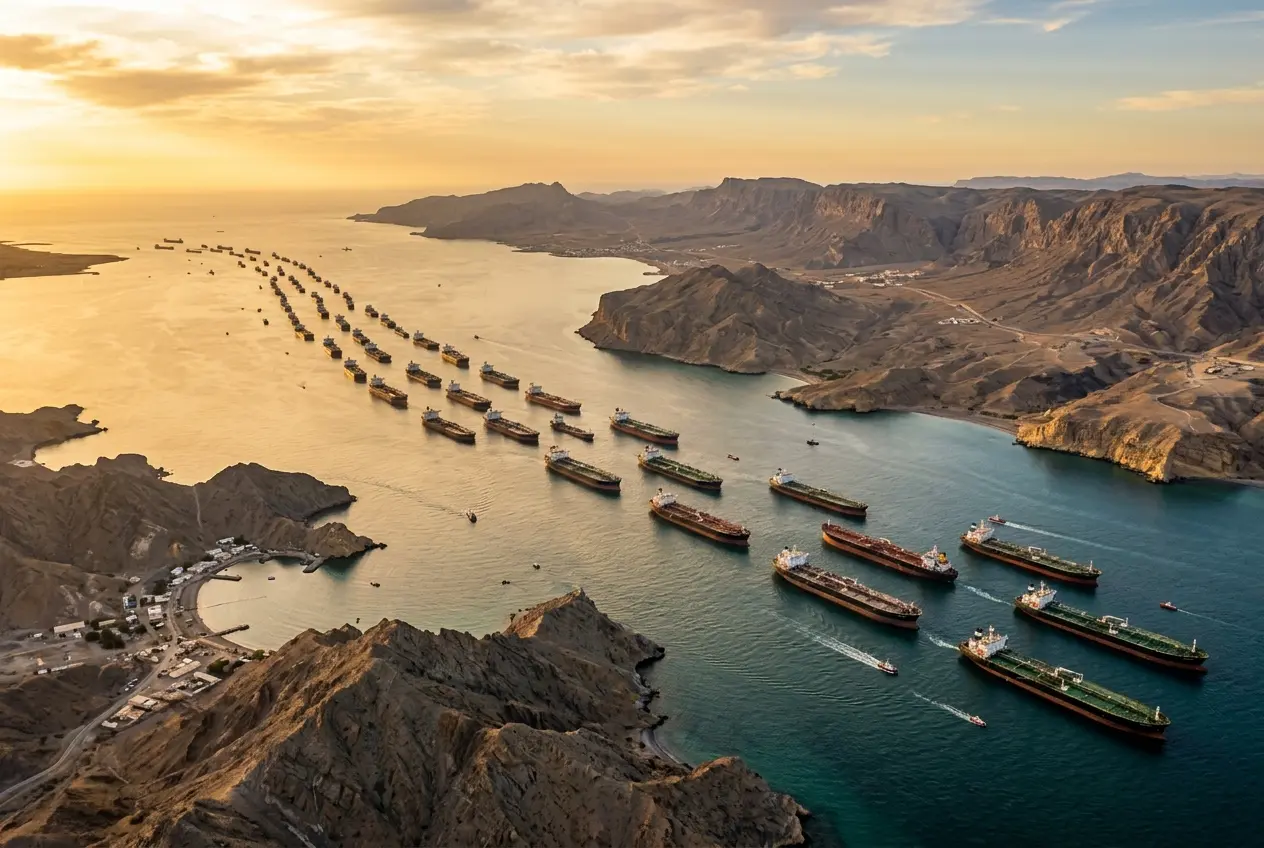
Strait traffic is already turning. Shipments through Hormuz were averaging just 9.6 mb/d in May, the IEA said, down sharply from pre-conflict levels. By early June, with ship-to-ship transfers in the Gulf of Oman, flows had risen to around 12 mb/d. Iranian exports can fully resume once the US blockade is lifted.
This may provide a welcome respite to the market and an opportunity to replenish depleted inventories, or to build new strategic reserves, as countries review their energy strategies and policies in response to the crisis.
Why Cheaper Crude Hasn’t Reached the Pump
US gasoline has barely budged. The national average stood at $4.06 a gallon on Monday, according to AAA, down from a wartime peak above $4.48 but still more than a dollar higher than the $2.98 average on February 28. Higher prices for tomatoes, lettuce, and ground beef show the war premium working its way through the broader economy.
Refineries shut as a precaution during the war can reach 95% capacity within 40 to 60 days, Bader Nooruddin, head of research at Vitol Bahrain, told Reuters. Producers are unlikely to move that fast. Mark Jones, a political scientist at Rice University, told Al Jazeera: “Many [producers] may be reluctant to restart production until they are convinced that the peace will hold, because the last thing they want to do is carry out the costly effort to restart production only to see the conflict revived and then have to shut it down once again.”
The buffer on the supply side is also depleted. US strategic reserves are at their lowest level since 1983, down 18% since the war began. More than 500 ships are still awaiting passage through the strait, and pre-war shipping patterns took 135 vessels through daily compared with an average of 10 during the conflict. New York Life Investment Management told clients this week that lower oil prices are not yet “an all-clear,” noting that oil remains above pre-conflict levels and that shipping normalisation and inventory rebuilds will take time.
What Has to Hold Before the Glut Lands
For the IEA’s 2027 projection to translate into reality, four conditions have to hold over the next two months.
- The 60-day negotiating period must run without collapse. Trump retained the right to walk away, and Iran has already rejected the idea of surrendering its enriched uranium stockpile abroad.
- The Strait of Hormuz has to be physically reopened. Mines laid during the conflict still need to be cleared, and shipping data from Kpler shows more than 500 vessels are waiting in queue.
- Refineries shut during the war must restart. The 40-to-60-day window for refineries shut as a precaution means output will only climb gradually through the third quarter.
- Producers must commit to bringing idled Gulf production back online. That decision turns on whether they believe the ceasefire will hold, and on port bottlenecks that could persist into autumn.
The IEA assumes a “lasting resolution” of the conflict. Anything shorter, and the rebound it forecasts for 2027 evaporates.
What Stays Open Even If the Deal Holds
The Versailles memorandum leaves two threads unresolved. Israel was not part of the negotiations, and Israeli Prime Minister Benjamin Netanyahu has distanced himself from the agreement. Lebanon’s state media reported fresh Israeli airstrikes on southern towns throughout Wednesday, with Hezbollah launching two drone attacks in response. The deal affirms Lebanon’s territorial integrity, but Israel has said it reserves the right to use force.
And on the energy side, the IEA’s glut depends on inventories being rebuilt, not just on supply returning. That rebuilding will keep a floor under prices for months, even if the IEA’s 2027 call proves accurate.
Frequently Asked Questions
What did Trump and Pezeshkian sign?
A 14-point memorandum of understanding that extends the April ceasefire by 60 days, reopens the Strait of Hormuz to commercial traffic with no charge during that period, lifts the US naval blockade of Iranian ports, and waives US sanctions so Iran can sell its oil freely. Iran also agreed to IAEA monitoring of the down-blending of its 60%-enriched uranium stockpile.
Why is oil still falling if the deal is signed?
Markets are pricing in two things at once: an immediate lift to Gulf supply once the strait reopens, and the larger 2027 surplus the IEA now projects once Iranian production fully resumes and demand stays weak.
What is the IEA’s 2027 oil glut forecast?
Global supply is projected to rebound to 110.3 million barrels per day in 2027, while demand grows only to 105.3 million barrels per day. The agency expects an overhang of roughly 5 million barrels per day, more than Iran’s pre-war production.
Why has gas at the pump not dropped?
Refineries need 40 to 60 days to restart, more than 500 ships are queued for the Strait of Hormuz, and US strategic reserves are at their lowest since 1983. Producers are also waiting to see if the ceasefire holds before bringing idled output back online.
Could the deal still fall apart?
Yes. Trump has said he could resume bombing if Iran violates the agreement. The 60-day negotiating period is meant to convert the memorandum into a final deal, and Switzerland is hosting implementation talks on Friday. Israel is not a party and has continued strikes in Lebanon.
Disclaimer: This article is for informational purposes only and does not constitute investment advice. Oil prices, analyst projections, and the IEA’s supply and demand forecasts are subject to change, and figures are accurate as of publication on June 18, 2026. Consult a qualified financial professional before making decisions based on this material.






Halo Campaign Evolved Skulls Meet Death Barriers That Kill the Hunt

Spotify Running Mode Returns After the 2015 Experiment Failed

Amazon AWS Hits Fastest Growth in Years as AI Spend Pays Off

Amazon Bets Platform Beats Models in the AI Race

Apple C2 Modem Edges Into iPhone 18 Pro After Qualcomm Drop

Google Earth Adds Nano Banana 2 to Reimagine Real Places

Apple Upgrade Turns Phones Into Monthly Utility Bills

Asha Sharma Bets Xbox Growth on Console and Four C’s

MacBook Ultra Design Follows Apple’s Familiar Cascade Path

TAG Heuer Carrera x Team Ikuzawa Revives 1970s Roadmaster Stopwatch DNA

Pokémon GO Developer Niantic Rebrands as Scopely Explore

Jaylen Brown Traded to 76ers for Paul George and Four Draft Picks

Doom Studio id Software Cuts Half Its Staff in Xbox Layoffs

Nintendo Switch Online Adds Four Classics and One Japan-Only Title

Jordan Henderson Hospitalized After Wrist Injury at the Azteca

Mexico’s World Cup Run Ends at Azteca as England Hold On 3-2

Meta’s Muse Image Lets Anyone Use Your Instagram Photos in AI

Louis Vuitton Beats Molly Tea in China, Triggers Cultural Backlash

Pink Bearista Cup Returns July 13 as Starbucks Pink Vibes Drops

Samsung Sets Galaxy Unpacked for July 22 in London With a Wider Fold
-

 TECHNOLOGY3 years ago
How to Adjust a Bulova Watch Band – An Easy Guide
-

 News3 years ago
Fred Pentland: Athletic Bilbao’s English mentor who changed the essence of Spanish football
-

 FINANCE3 years ago
Tax Planning for Every Season: Guide to Maximizing Your Tax Benefits
-

 Education3 years ago
African Ministers New Education Plan
-

 BUSINESS3 years ago
What is Entrepreneurial Operating System? A Comprehensive Guide to EOS
-

 Education3 years ago
Innovate Your Learning Journey with Technology and Enhance Education
-

 News3 years ago
Russians formally out of World Athletics Championships
-

 BUSINESS3 years ago
Top 9 Most Expensive American Cities to Rent an Apartment