
News
Moonshot’s Kimi K3 Stuns AI Rivals, and Cursor’s $60 Billion Deal Feels It
Moonshot’s Kimi K3 topped a leading coding benchmark and undercut Western pricing, complicating the $60 billion SpaceX deal to buy Cursor’s parent company.

Moonshot AI’s new Kimi K3 model debuted this week ranked No. 1 on a closely watched coding benchmark, undercutting Western rivals on price while beating some of their best results outright. The Beijing startup’s release landed hours before Chinese President Xi Jinping opened the country’s biggest AI showcase in Shanghai, and it caught much of Silicon Valley flat-footed.
The company with the most riding on that leap may not be Anthropic or OpenAI. It is Cursor, the coding tool Elon Musk’s SpaceX agreed to buy for $60 billion, whose own technology already leans on an earlier Moonshot model.
Kimi K3 Jumps to the Front of the Coding Charts
Moonshot AI describes Kimi K3 as its most capable model yet, a 2.8 trillion parameter system built for long coding sessions, tool use and multi-step agent work. It is currently reachable only through Moonshot’s website and API, with full open weights promised by July 27, 2026, letting outside developers download and run it themselves for the first time.
Arena, the platform that runs blind head-to-head model comparisons, put K3 in first place on its Frontend Code leaderboard at 1,679 points, ahead of Anthropic’s Claude Fable 5. a one million token context window lets it hold an entire large codebase in memory while it works, and Moonshot credits two architectural changes, called Kimi Delta Attention and Attention Residuals, with roughly doubling its computing efficiency over the prior model.
- 2.8 trillion parameters, more than double the size of Moonshot’s previous flagship, Kimi K2.6.
- $3 and $15 per million input and output tokens, Sonnet-class pricing that is the highest Moonshot has ever charged.
- No. 1 ranking on Arena’s Frontend Code leaderboard, ahead of Claude Fable 5 in blind developer testing.
- July 27, 2026 is the date Moonshot has promised for a full open-weight release.
Independent evaluators at Artificial Analysis calculated what it actually costs to finish a typical task on each model, a number that accounts for how much reasoning a model burns through along the way.
| Model | Maker | Cost per Completed Task |
|---|---|---|
| Kimi K3 | Moonshot AI | $0.94 |
| GPT-5.6 Sol | OpenAI | $1.04 |
| Claude Opus 4.8 | Anthropic | $1.80 |
Anastasios Angelopoulos, Arena’s co-founder and CEO, called K3 potentially the single biggest release of the year and said the results kept confirming its position at the top. Every one of those numbers still comes from Moonshot itself, and none of it can be independently verified until the weights actually ship on July 27.
Moonshot’s co-founder and chief executive, Yang Zhilin, earned his doctorate at Carnegie Mellon University in 2019 and is remembered there for a love of Pink Floyd as much as for his machine-learning work. His former adviser, Russ Salakhutdinov, once Apple’s director of AI research, wrote online that it felt like just yesterday Zhilin was graduating from his lab.
A $60 Billion Coding Bet Just Got More Complicated
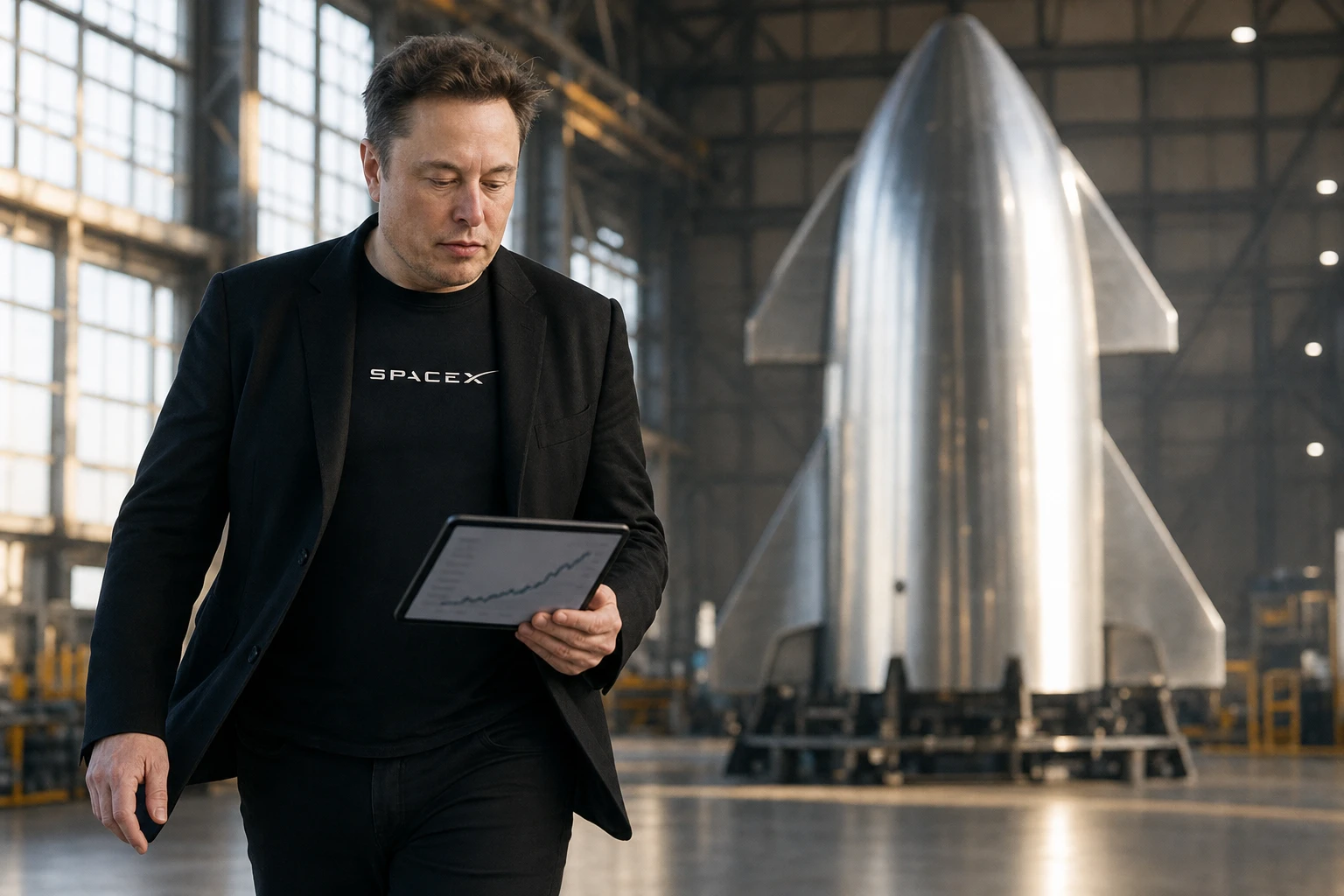
Six weeks before K3 arrived, SpaceX agreed to buy Anysphere, the maker of the AI coding tool Cursor, in an all-stock deal valued at $60 billion, a formal agreement disclosed in a Tuesday filing. The transaction traces back to an option SpaceX signed in April and is expected to close in the third quarter of 2026.
Cursor was not just any coding startup. Anysphere had acknowledged that one of Cursor’s top products was built on Moonshot’s earlier K2.5 model, according to the Associated Press. Around the time of the SpaceX announcement, Cursor chief executive Michael Truell said he was excited to scale up Composer, the in-house model his company has been racing to build out.
Cursor was also losing ground even as its revenue climbed. Annual recurring revenue ran from roughly $100 million in January 2025 past $2 billion by February 2026, yet Cursor’s share of corporate coding spend fell from 41% in June 2025 to about 26% by May 2026, with Anthropic capturing half that category, according to spending data from Ramp.
An independent coding tool moving inside a frontier-model competitor’s stack converts a model-agnostic layer into a captive one.
Mitch Ashley, vice president and practice lead for Software Lifecycle Engineering and AI-Native Software Engineering at The Futurum Group, made that assessment shortly after the deal was announced. Cursor’s appeal to big customers had rested on staying neutral across AI models and cloud providers, and Ashley argued the SpaceX deal removes that neutrality just as Moonshot proves it can still out-code the field. Cursor is far from alone in leaning on cut-rate Chinese models; the broader shift of American startups toward cheaper Chinese models has been building for months.
The Distillation Fight That Will Not Go Away
Anthropic accused Moonshot in February of a practice called distillation, training a cheaper model by learning from a stronger one’s outputs, alongside DeepSeek and a third Beijing-based lab, MiniMax. Anthropic said the labs used roughly 3.4 million Claude exchanges to help train their own systems.
Anthropic has been careful to say distillation itself is not inherently improper. The company’s objection is when rivals use it, in its words, to acquire powerful capabilities from other labs in a fraction of the time and cost it would take to build them independently. Beijing has called the entire accusation groundless.
K3 now benchmarks within a few points of the very models Anthropic named in its complaint, which has done nothing to quiet the argument. The irony, largely overlooked, is that the flow runs both directions: an American company, Cursor, has openly built one of its own flagship products on top of Moonshot’s technology, the same lab accused of copying from Anthropic. Anthropic has kept expanding its own coding lineup regardless, most recently pushing Claude Cowork’s default rollout across mobile and web as it defends the same enterprise coding market Cursor is fighting for.
Same Shockwave, Eighteen Months Later
Every part of this week’s reaction has a precedent. When DeepSeek released its R1 model in January 2025, Nvidia’s stock fell 17% in a single session, the single greatest one-day value wipeout ever recorded for a company at that point, erasing $589 billion in market capitalization.
Not everyone thinks K3 deserves the same panic. Tech analyst Patrick Moorhead called the response to K3 an overreaction shockingly similar to what followed DeepSeek, though he said it could still help parts of the broader AI industry while squeezing revenue at Anthropic and OpenAI. Angelopoulos, by contrast, framed K3 as a marker of open-source Chinese models overtaking closed American ones outright. Both readings can be true of the same release.
- January 27, 2025: DeepSeek’s R1 release wipes out $589 billion of Nvidia’s market value in a single day.
- February 2026: Anthropic accuses Moonshot, DeepSeek and MiniMax of distilling Claude’s outputs to train their own models.
- April 21, 2026: SpaceX signs an option to buy Cursor’s parent, Anysphere, for up to $60 billion.
- June 16, 2026: SpaceX exercises that option, confirming the $60 billion all-stock acquisition.
- July 16, 2026: Moonshot unveils Kimi K3 hours before Xi Jinping opens the World Artificial Intelligence Conference in Shanghai.
Zhipu, also known as Z.ai, had already previewed where this was heading. Its GLM-5.2 model, released last month, is already widely used by developers who say it performs almost as well as top American systems at a lower price.
Hardware Catches Up Behind the Software
K3’s software gains did not happen in a vacuum. At the same Shanghai conference, Huawei showed off its Atlas 950 SuperPoD, a computing system that links thousands of Ascend chips into what behaves like a single machine. Huawei says the setup can scale up to 8,192 NPUs per unit and claims 6.7 times the compute of Nvidia’s NVL144 system, a figure that has not been independently verified.
Moonshot has not said what hardware it used to build K3, though its own disclosures point to export-grade Nvidia H200 chips alongside an unnamed alternative GPU vendor, and the startup is a partner with Huawei. That combination reflects a broader pattern: years of American export restrictions have pushed Chinese labs to squeeze more out of the chips they can still legally buy, or to lean on homegrown alternatives like Huawei’s Ascend line.
Xi used his keynote to frame that effort in cooperative terms rather than competitive ones. He told the conference that AI development should not be a solo performance by any single country but rather a symphony of global cooperation, even as WAIC’s opening day saw 29 countries sign onto a China-backed AI governance framework positioned as an alternative to Western-led bodies.
What Happens When Kimi K3’s Weights Go Public
Moonshot has promised full open weights by July 27, 2026, a date that would let independent hosts, researchers and rival startups load K3 onto their own hardware and test Moonshot’s claims directly for the first time. Until then, every benchmark tied to K3 is a number Moonshot reported about itself.
That gap matters because it is exactly what happened with DeepSeek: initial claims triggered a market panic before independent researchers could confirm or challenge them. If K3’s self-reported results hold up once outside developers can run it themselves, Bank of America’s assessment, that large-scale pretraining combined with smarter architecture can still deliver step-change gains even under compute restrictions, gets harder for American labs to dismiss. If they do not hold up, the DeepSeek playbook of shock now, scrutiny later repeats itself almost exactly.
Cursor’s acquisition by SpaceX is still on track to close sometime in the third quarter of 2026, the same stretch of the calendar when Kimi K3’s full weights are due out for anyone to inspect.
Frequently Asked Questions
Is Kimi K3 open source yet?
Not fully. It is live now through Moonshot’s own website and API, but the underlying model weights, the files needed to run it independently, are not scheduled for public release until July 27, 2026.
How does Kimi K3’s price compare with ChatGPT and Claude?
Moonshot charges $3 per million input tokens and $15 per million output tokens for K3, in line with Anthropic’s Claude Sonnet tier. Bank of America analysts noted that price is still about half of what OpenAI charges for its GPT-5.6 Sol model.
What hardware was used to train Kimi K3?
Moonshot has not fully disclosed its training setup, but its own published benchmarks reference export-compliant Nvidia H200 chips as well as an unnamed alternative GPU vendor. Moonshot is also a partner of Huawei, though it has not confirmed using Huawei’s Ascend chips for K3 specifically.
Who ends up owning Cursor?
Cursor’s parent company, Anysphere, remains independent until SpaceX’s $60 billion all-stock acquisition closes, which both companies expect in the third quarter of 2026. After that, Cursor becomes a wholly owned SpaceX subsidiary, and Anysphere shareholders convert their stock into SpaceX Class A shares.
How big is Kimi K3 compared to Moonshot’s last model?
Kimi K3 runs 2.8 trillion parameters, more than double the scale of Kimi K2.6, Moonshot’s previous flagship, which priced at $0.95 per million input tokens and $4 per million output tokens before K3’s launch.


Redmi Battery Monsters Win the Week as Samsung Trims S27 Cameras

Moto G Max India Bet Puts 7000mAh Battery Ahead of Specs

Take-Two CEO Pushes Netflix Subs for GTA 6 Extended Look

Google Bets Tensor G6 Efficiency Fixes Pixel’s Old Flaws

Grok Image 2.0 Adds Pro Edits While Scandals Linger

Caviar Leather iPhone 18 Pro Editions Kill Wireless Charging for Status

Quordle Monday Delivers Gavel Crush Speed Ethos Cleanly

Goldmund Telos 9800 Mono Amp Costs More Than Most Ferraris

Gemini Plan Dropped the Race and Made Running Stick

Cloudflare Kitesurf Cracks Chromium Moat for AI Agents

SpaceX Preps Starship Flight 13 to Fix Its Booster Failure

PS5 Adds a Weekly Wrap-Up Widget While Recently Played Stays Broken

Tears of the Kingdom Fans Trap Ganondorf in a Never-Ending Hamster Wheel

ZA/UM Lays Off 32 Staff as Zero Parades Wins Reviews, Not Players

EA’s New In-Game Ad Platform Skips the Games That Need It Most

Wall Street’s SpaceX and Merger Fee Boom Comes With a Catch

Colorado’s New Law Makes Automakers Own Dead EV Batteries

Pentagon Suspends CMMC Phase 2, Relieving Small Firms, Straining Assessors

Mortgage Rates Climb to 6.55%, the Highest Level in Nearly a Year

Perseid Meteor Shower Begins This Week Under a Rare Earthshine Moon
-

 TECHNOLOGY3 years ago
How to Adjust a Bulova Watch Band – An Easy Guide
-

 News3 years ago
Fred Pentland: Athletic Bilbao’s English mentor who changed the essence of Spanish football
-

 FINANCE3 years ago
Tax Planning for Every Season: Guide to Maximizing Your Tax Benefits
-

 Education3 years ago
African Ministers New Education Plan
-

 BUSINESS3 years ago
What is Entrepreneurial Operating System? A Comprehensive Guide to EOS
-

 Education3 years ago
Innovate Your Learning Journey with Technology and Enhance Education
-

 BUSINESS3 years ago
Top 9 Most Expensive American Cities to Rent an Apartment
-

 News3 years ago
Russians formally out of World Athletics Championships