
News
Claude Cowork Expands to Mobile, Web, and Cloud by Default
Claude Cowork is on iPhone, iPad, Android, and the web, with cloud sessions that keep working after the laptop is closed. Beta opens to Max subscribers.

Anthropic’s Claude Cowork can now do its work from a phone, a browser, or nothing at all. On Tuesday, July 7, 2026, the AI productivity tool that previously required a desktop session began rolling out to iPhone, iPad, Android, and the web, with the agent’s tasks now running in Anthropic’s cloud by default. Beta access opens first to subscribers on Anthropic’s Max plan, with the rest of paid users to follow “in the coming weeks,” Anthropic said.
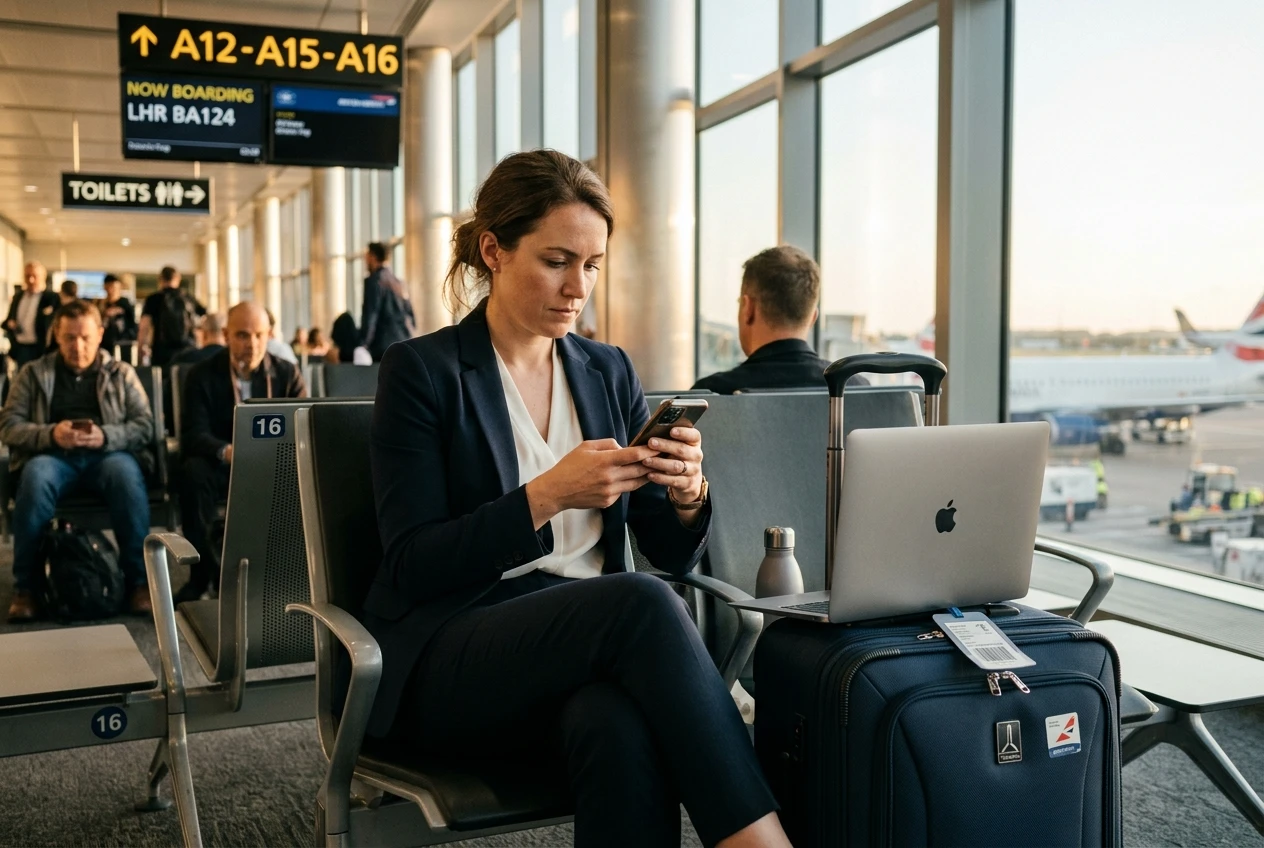
The shift removes the friction that kept Cowork parked in front of a single screen. Until now, asking Claude to assemble a Monday morning briefing or reconcile a folder of contracts meant leaving the desktop app open with the laptop awake. Cowork now runs on Anthropic’s servers in an isolated environment. A task can start at a desk, keep going while the user is in a meeting, and finish on a phone or browser, even when no device is online.
Three Things Change for Cowork Today
Anthropic’s announcement groups the update into three moves, each of which changes what users can hand off and when. Anthropic’s Claude Cowork product overview frames the change as Cowork meeting people where work already happens, on a phone, in a browser, or at the desk.
The first move is that a task can start on one surface and finish on another. The same Cowork session now opens from the Claude app on iPhone, iPad, and Android, or from claude.ai in a browser, with the same sidebar and the same search as the desktop app. Chat and Cowork now share one home tab on web and desktop. A single message box is where a user starts a conversation or hands Claude a task.
The second move is that the agent keeps working when no device is online. Scheduled Cowork tasks now run on Anthropic’s servers and do not need a computer to be awake or the desktop app open. The example Anthropic gives: set Monday client prep for 6 a.m., and Claude works through email threads, transcripts, and recent news, builds the briefing doc, and leaves the follow-up email drafted but unsent for review.
The third move is that approvals reach the user wherever they are. When Claude reaches a call it cannot make alone, the question is pushed to the user’s phone as a notification. Anthropic’s framing: “The decisions still come to you. When Claude reaches a call only you can make, it asks, and the question reaches your phone.”
- Sessions sync across desktop, web, and mobile with a shared sidebar and search
- Scheduled tasks run on Anthropic’s servers with no device online required
- Approval prompts reach the user’s phone when Claude needs a human decision
Desktop Stays, But the Rule Book Is Rewritten
The desktop app is not going anywhere, and on it Cowork remains the most fully featured surface. Local files, the local browser, and the Claude Desktop app’s ability to reach applications on the host computer all stay on the desktop. When a task needs something on the user’s computer, how Cowork’s cloud sessions and Dispatch work explains that Claude reaches it through the Claude Desktop app on that computer.
The rule that has changed is which surface is mandatory. Until this rollout, Anthropic’s Dispatch feature, the bridge that let users hand a task to Claude from their phone, ran the work on the desktop. WIRED quoted Anthropic’s own description of that setup: “Your computer must be awake, and the app must be open for Claude to work on tasks.” That requirement is what led some users to leave laptops open overnight just to keep agents running. That workaround no longer applies.
The laptop is now optional infrastructure. The machine on the desk no longer has to carry the whole system. What changed in Claude Cowork on Tuesday also notes that the web version opens Cowork to users who cannot install the desktop application, which is most large offices where IT controls what runs on a workstation.
What Cowork Users Actually Do (It Isn’t Mostly Coding)
Anthropic used Tuesday’s launch to publish its own usage data, drawn from 1.2 million anonymized Cowork sessions sampled between May 11 and May 31, 2026, across more than 600,000 organizations. The numbers undercut the assumption that the most valuable AI agent work is software engineering.
Business process and operations, the work of pulling scattered updates into a single report, building onboarding checklists, and reconciling spreadsheets, accounted for 33.4 percent of all sampled sessions. Content creation and copywriting, producing drafts, slide decks, posts, and proposals, came in second at 16.4 percent. Software development, by contrast, accounted for just 8.7 percent. A separate Anthropic statement carried by NDTV said more than 90 percent of Cowork usage sits outside software development, with business operations and content creation accounting for nearly half of all activity.
| Use case | Share of sessions |
|---|---|
| Business process and operations | 33.4% |
| Content creation and copywriting | 16.4% |
| Software development | 8.7% |
| DevOps and infrastructure | 7% |
| Research and intelligence | 6.4% |
| Data analysis and BI | 5.8% |
Anthropic calls this kind of work “the work around the work,” the connective tasks that move projects forward but rarely appear in anyone’s formal job description. The same report described lawyers using Cowork for document formatting and filing while reserving legal judgment for themselves, hiring managers using Cowork to synthesize interview feedback while spending more time on candidate conversations, and team leads using Cowork to produce slide decks that explain a decision while focusing on actually making it. Connective tasks are where the data puts the agent. Core expertise stays with the professional.
Why Anthropic Is Chasing the Non-Developer
The usage data and the mobile launch together sketch a two-track strategy. Claude Code, Anthropic’s terminal-based coding agent, holds its ground with software developers. Cowork is built for the much larger population of professionals whose work is creating, organizing, and communicating information. The pitch is that the agent handles the connective tissue. The core expertise stays with the professional.
Anthropic’s strategy is getting external validation. The Ramp AI Index published in May showed Anthropic pulling ahead of OpenAI in business adoption for the first time, with 34.4 percent of firms paying for Anthropic’s services compared with OpenAI’s 32.3 percent. Claude Code was identified as the driver. Cowork extends that seat-by-seat footprint to every knowledge worker with a laptop, a pile of spreadsheets, and a deck due by Friday.
The stack underneath Cowork also got a fresh coat. Anthropic launched Claude Sonnet 5 a week before Tuesday’s announcement, a new model that narrows the gap with the more expensive Opus class while keeping the price lower, at $2 per million input tokens through August 31, then $3 per million. Sonnet 5 serves as the engine underneath Cowork. Alongside Cowork sits Claude Tag, the Slack-native agent Anthropic released two weeks earlier, which is built as the multiplayer counterpart to the single-player Cowork, Chat, and Code trio. Claude Tag’s persistent Slack agent identity shows how Anthropic is stretching the same agent shape across surfaces and audiences.
- 33.4% of Cowork sessions are business process and operations
- 16.4% are content creation and copywriting
- 8.7% are software development
- 34.4% Anthropic share of paying firms (Ramp AI Index, May 2026)
- $2 per million input tokens for Sonnet 5 through August 31
The Always-On Agent Race
Tuesday’s release lands Anthropic inside a competitive pattern WIRED traced this week to a single viral moment in early 2026. The pattern began with OpenClaw, a homebrew agent with a lobster mascot that early adopters ran around the clock and handed control of their online lives. OpenAI hired OpenClaw’s creator and launched Codex, its adaptive agent. Google shipped Spark, its own always-on take. Anthropic’s answer is the Cowork expansion now in beta.
OpenAI moved first on remote control of desktop agents from a phone. Codex Remote arrived in June, and OpenAI added iOS-side task management to its app in July. Anthropic is taking it a step further with Tuesday’s release, merging the Claude chatbot interface and the Cowork agent in the browser and desktop versions and moving execution off the user’s machine.
The pattern underneath all of these launches is the same. The next phase of consumer AI is an agent that runs in the background of the apps people already have. Why Cowork no longer needs an open laptop puts the moment in plain language. The era of half-cracking a laptop to keep an AI agent running is closing.
For Anthropic, the differentiator is how much that assistant can do without the user typing anything at all. Cowork’s mobile and cloud rollout, with background scheduled tasks and phone-delivered approvals, is the company’s answer to that question. Anthropic’s Cowork usage data by category also shows that even developers, when they do use Cowork, apply it to status updates, documentation, and coordination. Programming sessions are a smaller share of developer Cowork usage.
The Security Question Travels With the Rollout
On July 1, six days before Tuesday’s launch, security firm Armadin, led by Mandiant founder Kevin Mandia, published research describing a full sandbox escape in Claude Cowork on Windows. The attack chain used DLL sideloading against the Claude desktop executable to gain trusted access to Cowork’s virtual machine service, then exploited undocumented parameters to reach root access and bypass network restrictions. Armadin’s broader concern was that running local virtual machines on non-technical users’ systems creates visibility gaps that endpoint security products struggle to monitor.
Anthropic’s position is that the issue does not qualify as a security vulnerability because exploiting it requires an attacker to already have local code execution on the host machine. The dispute is unresolved. The expansion changes the picture in two directions at once. The web and mobile versions run tasks server-side rather than in a local virtual machine, which eliminates the specific attack surface Armadin described, but raises new questions about how data is handled when scheduled tasks process email threads, calendar data, and documents without the user watching. Anthropic’s own help center is unusually blunt about what mobile Cowork can now reach: “Giving a mobile AI agent remote control of a desktop AI agent creates a chain where instructions from your phone can trigger real actions on your computer.”
What Cowork Costs and Who Gets In First
Beta access opens first to Max subscribers, with the rest of paid plans to follow “over the next several weeks,” Anthropic said. To ease the transition, Anthropic is extending doubled Cowork usage limits through August 5. Cowork comes bundled with every paid Claude tier.
Pro runs $17 per month with an annual subscription, $200 billed upfront, or $20 monthly, and Anthropic positions it for quick tasks like organizing a folder or pulling together a short report. Max 5x is $100 per month for longer tasks. Max 20x is $200 per month for power users who hand off work throughout the day. Team runs $20 per seat monthly for groups of 5 to 75, and includes the Slack connector. Enterprise adds admin controls, usage analytics, and OpenTelemetry observability, with Cowork activity not yet captured in audit logs or Compliance API.
For a customer already mid-project, the practical shift is small. Chat and Cowork share a single home tab on web and desktop, so users stop having to choose a surface to start a session. The work that started in a browser tab can now be reviewed from a phone, and the briefing that started on a phone can be reviewed from a desk. Anthropic has said the doubled limits stay in place through August 5, and the rest of the paid tiers get the same rollout in the weeks after that.
Frequently Asked Questions
When can I use Claude Cowork on my phone?
Beta access for Claude Cowork on iPhone, iPad, Android, and the web began July 7, 2026, rolling out first to Max subscribers. Anthropic says the rollout to additional paid plans will happen over the next several weeks.
Do I still need the Claude desktop app?
For the full Cowork experience, yes. Anthropic says the desktop app remains the most fully featured surface, with access to local files and the local browser. Web and mobile sessions reach local files and connected apps through the Claude Desktop app if it is open on a computer.
What plans get Cowork on mobile and web?
Cowork on mobile and web is rolling out first to Max subscribers, with Pro, Team, and Enterprise to follow. Anthropic has not announced a free tier.
Does the mobile app send my data to Anthropic’s servers?
Yes. Cowork sessions now run on Anthropic’s servers in an isolated environment by default. Work continues if you close your laptop, and the same session can be opened from any surface.
Why is Anthropic making Cowork run in the cloud by default?
Cowork runs in the cloud by default. Anthropic frames that as the foundation for the cross-device rollout. The desktop app remains the surface for local file access, and the cloud setup lets tasks continue with no device online, sync across surfaces, and surface approval prompts to the user’s phone.






Shelby’s $42.9 million Daytona Coupe cashes the bet that beat Ferrari

AI forces Apple into third security drop in three weeks

Lamborghini banks 2027 revenue with sold-out Revuelto SV

Apple’s Labor Day Habit Locks iPhone 18 Pro September Dates

Frogwares Ships Sinking City 2 After Years of Air Raids

AirTag 2 Hits Near Lows Just as Travel Season Peaks

McLaren Pop Art F1 GTR Hits $34.6 Million and Resets the Tier

Spotify Playlist Notes Bring Back Liner Notes for Streaming

AirPods Max 2 hit $429 and finally close the value gap

Star Citizen private demo of Siege of Orison still wiped the devs

Guardians Rout Twins With Seven Homers, Leave Joe Ryan One Shy of Record

Rainout Gives Red Sox Two Shots at a Franchise-Record Win Streak

Caitlin Clark Skips the WNBA 3-Point Contest for a Third Straight Year

Double Fine Cuts 23 Jobs Weeks After Xbox Independence

John Hight Exits Wizards After Digital Reckoning Hits

Day-One Big Walk Lifts PS Plus August Beyond Recycled AAA

Curtis Mead’s Red Sox Debut Ends With Fractured Wrist

Moesch and Dressel Rewrite Night One at 2026 U.S. Nationals

Red Sox Squander Hot Streak Chance in 4-3 Loss to Athletics

Boutte’s Quiet Camp Takeover Forces Patriots Receiver Choices
-

 TECHNOLOGY3 years ago
How to Adjust a Bulova Watch Band – An Easy Guide
-

 News3 years ago
Fred Pentland: Athletic Bilbao’s English mentor who changed the essence of Spanish football
-

 FINANCE3 years ago
Tax Planning for Every Season: Guide to Maximizing Your Tax Benefits
-

 Education3 years ago
African Ministers New Education Plan
-

 BUSINESS3 years ago
What is Entrepreneurial Operating System? A Comprehensive Guide to EOS
-

 Education3 years ago
Innovate Your Learning Journey with Technology and Enhance Education
-

 News3 years ago
Russians formally out of World Athletics Championships
-

 BUSINESS3 years ago
Top 9 Most Expensive American Cities to Rent an Apartment