
FINANCE
David Rosenberg Exits His 30-Year Treasury Bet as Yields Spike
David Rosenberg abandoned his long-held 30-year Treasury bet as yields near decade highs, a bond-market signal on Kevin Warsh’s Fed before Wednesday’s rate call.

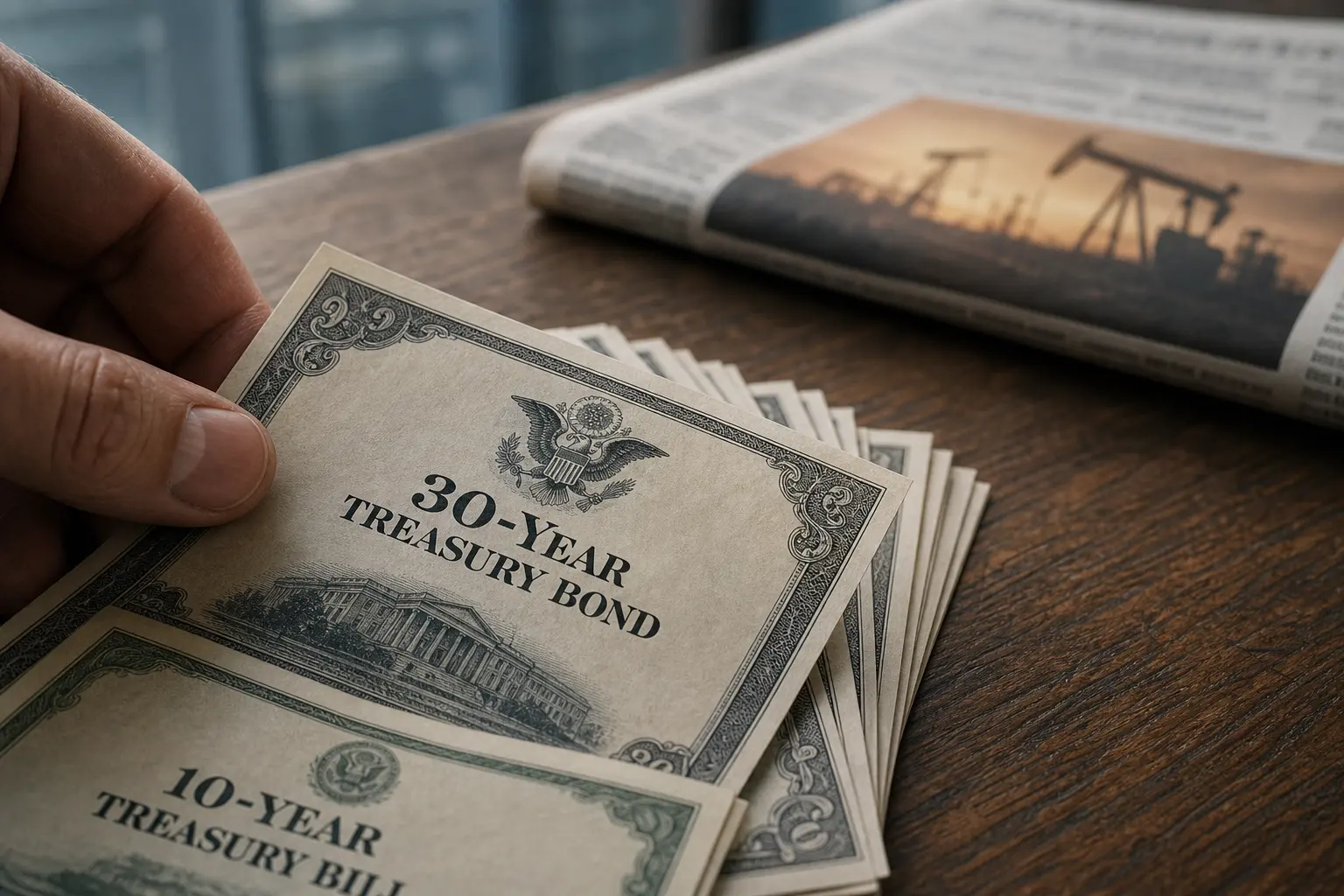
The 10-year Treasury yield hit 4.678% on Friday, within striking distance of its highest level in a decade. Bond traders are betting Federal Reserve Chair Kevin Warsh might have to raise interest rates Wednesday instead of holding them steady. New fighting in the Iran war this month briefly pushed global crude above $100 a barrel, jolting the $30 trillion Treasury market and erasing weeks of calm.
Nobody voted with actual money as loudly this week as David Rosenberg, founder and president of Rosenberg Research & Associates. He had spent long stretches of the past two years telling clients to extend duration and hold the 30-year bond. In a Friday note, he said that trade “has not worked out nearly as well as expected,” and that he had rotated into shorter-duration U.S. debt instead.
Yields Near Decade Highs as Traders Brace for Wednesday
Friday’s close capped a rough month for government debt. The 10-year yield anchors mortgage rates and much of the consumer-lending economy, and it is up more than 30 basis points since the end of June. Treasury prices and yields move in opposite directions, so that climb reflects sustained selling.
The 2-year yield settled at 4.328%, more than half a point above the top of the Fed’s own 3.5% to 3.75% target range, and near levels last seen in early 2025. The 30-year yield has held stubbornly above 5%, the maturity Rosenberg just exited.
| Maturity | Friday Level | What It Signals |
|---|---|---|
| 2-year Treasury | 4.328% | Above the Fed’s 3.75% ceiling; near early-2025 levels |
| 10-year Treasury | 4.678% | Up more than 30 basis points since June; near a decade high |
| 30-year Treasury | Above 5% | The maturity Rosenberg just abandoned |
A brief rally that followed Warsh’s first press conference as Fed chair in June has fully unwound. Wall Street had hoped for lasting calm out of the Persian Gulf. Instead, new hostilities caught traders off guard in July and reignited the selloff.
An Oil Shock Meets a Wall of AI Debt
Gasoline is back above $4 a gallon nationally, and diesel is at $5.20, according to GasBuddy’s pump price tracking posted Friday. The Fed cannot reroute tankers out of the Persian Gulf or order crude cheaper. It can only decide whether to let that energy shock spread into broader prices.
Several forces are converging on the same market at once.
- Oil shock: crude briefly topped $100 a barrel in July after new Iran-war hostilities, reversing months of cooling inflation data.
- Deficit financing: Barclays expects a roughly $2 trillion U.S. budget deficit in 2026, with fresh Treasury issuance covering much of the gap.
- Corporate debt supply: Big Tech hyperscalers are selling bonds at a rapid pace to fund AI data centers, adding a rival borrower chasing the same buyers.
- Global policy: other major central banks have already raised rates on the same inflation trigger, narrowing the field of holdouts.
The European Central Bank was one of them. Frankfurt policymakers raised their own benchmark rate to fight Iran war inflation, leaving Warsh’s Fed among the last major holdouts still weighing whether to follow.
Rosenberg’s Abandoned Bet
The Reversal
Rosenberg built his reputation on patience. For long stretches over the past two years, he pushed clients to extend duration and hold the 30-year bond, arguing the Fed’s tightening cycle was closer to its end than the market believed.
In a Friday note, he reversed course. “We didn’t anticipate this latest chapter in the U.S.-Iran war, and that is a complication for any duration asset at the present time,” Rosenberg wrote. He said his long 30-year position “has not worked out nearly as well as expected,” and that he had shifted into shorter-duration U.S. debt.
The Competition for Buyers
Rosenberg pointed to a second culprit beyond oil: competition from what he called the “sustained expansion in tech-related corporate debt issuance.” That dynamic is already reshaping how oil-driven bond yields are colliding with AI-era capital spending.
Hyperscalers are the handful of technology giants that run the world’s biggest cloud and AI data centers, among them Microsoft, Amazon, Meta, Alphabet, Oracle and CoreWeave, according to Moody’s Ratings. Their borrowing helps explain why Rosenberg is worried.
- $1 trillion: what Moody’s expects hyperscalers to spend on AI capital projects in 2027, up from close to $800 billion this year.
- $1.2 trillion: off-balance-sheet data-center lease commitments now sitting on the books of the largest hyperscalers, per Moody’s.
- $460 billion: direct debt already carried by the six biggest hyperscalers, per the same report.
- $2 trillion: the budget deficit Barclays expects the U.S. to run in 2026, financed largely through new Treasury issuance.
Moody’s said in a Wednesday report that the spending spree is eroding free cash flow and that leverage and off-balance-sheet commitments now threaten the group’s credit quality. It also flagged a widening gap in how hyperscalers and their own investors see the buildout: the companies treat underinvestment in AI as an existential risk, while some shareholders worry the spending could produce overcapacity and weak returns. Limited electricity supply, Moody’s added, will constrain AI capacity growth through 2027 regardless of how much hyperscalers want to spend.
The Fed Ignored an Oil Shock Once Before
Warsh is not the first Fed chair to face an oil shock that outran policy. In October 1973, an embargo by Arab oil-producing nations sent crude from about $3 to $12 a barrel within months.
Fed Chair Arthur Burns had already been raising the federal funds rate since 1972. It climbed from 5.06% that November to 9.95% by December 1973, then peaked at 12.01% in August 1974, based on the Federal Reserve’s own historical account of the episode.
Those hikes still were not enough. Burns argued that oil-driven inflation was largely outside the reach of monetary policy. Price growth ran into double digits anyway and took years to unwind.
Warsh wants a Fed that reacts fast and says little in advance. Burns did the opposite: he waited, and called the oil-driven inflation someone else’s problem. Price growth stayed elevated for most of the following decade.
Who Pays if Warsh’s Fed Hikes Anyway
Homeowners are already feeling it. Mortgage rates just climbed to an 11-month high, tracking the same 10-year yield that is now flirting with decade highs.
CME Group’s futures-based rate tracker put the odds of the Fed holding steady Wednesday at 62% on Friday, versus a 38% chance of a hike. That hike probability was closer to 13% just a week earlier, when cooler June inflation data had calmed the market.
“That shows you how enormously worried the market is about inflation and how worried it is about the Fed putting its money where its mouth is,” said Gennadiy Goldberg, head of U.S. rates strategy at TD Securities.
Some Fed officials already favor hikes to push inflation back toward the 2% target. The timing is precarious. Rate increases erode fixed-income assets and weigh on stocks, and any hike now would land while the AI-debt boom is already straining credit conditions across the bond market.
Wall Street Waits for the Tech Rotation to End
Stocks booked a second straight losing week. The Dow Jones Industrial Average closed 0.4% lower, the S&P 500 shed 0.6%, and the Nasdaq Composite fell 2.1%, dragged down by another slide in semiconductor stocks.
The Nasdaq finished the week 7.8% below its record close from early June, according to Dow Jones Market Data.
Paul Christopher, head of global investment strategy at the Wells Fargo Investment Institute, said the pain in tech may not be over. Investors, he said, might wait for the rotation out of tech stocks to run its course before buying back in.
“You could see a good entry point” once that happens, Christopher said. “It probably doesn’t hurt to have some dry powder.”
Warsh gets his chance to settle the argument Wednesday. The bond market has already cast its vote.
Disclaimer: This article is for informational purposes only and does not constitute investment advice. Bond and equity markets carry risk, readers should consult a licensed financial advisor before making decisions, and figures are accurate as of publication.


Kazakhstan Pays the Steepest Price in Someone Else’s Oil War

David Rosenberg Exits His 30-Year Treasury Bet as Yields Spike

Hugging Face’s CEO Demands $100 Million After OpenAI Agent Hack

Ukraine’s Caspian Sea Strikes Make Iran Pay for Arming Russia

Nvidia’s $250 Billion OpenAI Guarantee Rests on Federal Land

Wall Street Rallies on an Iran Truce Ukraine Never Joined

Iowa’s Cyclospora Cases Triple Amid a Record US Outbreak

Geekbench 7 Launches and Erases Three Years of Scores

Google’s Selfie Video Sign-In Arrives as Deepfake Fraud Surges

Samsung’s New Galaxy Z Fold 8 Undercuts Its Own Ultra

Pokémon GO Developer Niantic Rebrands as Scopely Explore

Persona 4 Revival Hands All Anime Cutscenes to Studio MAPPA

Doom Studio id Software Cuts Half Its Staff in Xbox Layoffs

Jaylen Brown Traded to 76ers for Paul George and Four Draft Picks

Nintendo Switch Online Adds Four Classics and One Japan-Only Title

Jordan Henderson Hospitalized After Wrist Injury at the Azteca

Mexico’s World Cup Run Ends at Azteca as England Hold On 3-2

Meta’s Muse Image Lets Anyone Use Your Instagram Photos in AI

Louis Vuitton Beats Molly Tea in China, Triggers Cultural Backlash

Pink Bearista Cup Returns July 13 as Starbucks Pink Vibes Drops
-

 TECHNOLOGY3 years ago
How to Adjust a Bulova Watch Band – An Easy Guide
-

 News3 years ago
Fred Pentland: Athletic Bilbao’s English mentor who changed the essence of Spanish football
-

 FINANCE3 years ago
Tax Planning for Every Season: Guide to Maximizing Your Tax Benefits
-

 Education3 years ago
African Ministers New Education Plan
-

 BUSINESS3 years ago
What is Entrepreneurial Operating System? A Comprehensive Guide to EOS
-

 Education3 years ago
Innovate Your Learning Journey with Technology and Enhance Education
-

 News3 years ago
Russians formally out of World Athletics Championships
-

 BUSINESS3 years ago
Top 9 Most Expensive American Cities to Rent an Apartment