
News
Google’s Selfie Video Sign-In Arrives as Deepfake Fraud Surges
Google’s new selfie video sign-in aims to beat deepfakes, but Microsoft’s own researchers say synthetic faces already fool liveness checks like it.

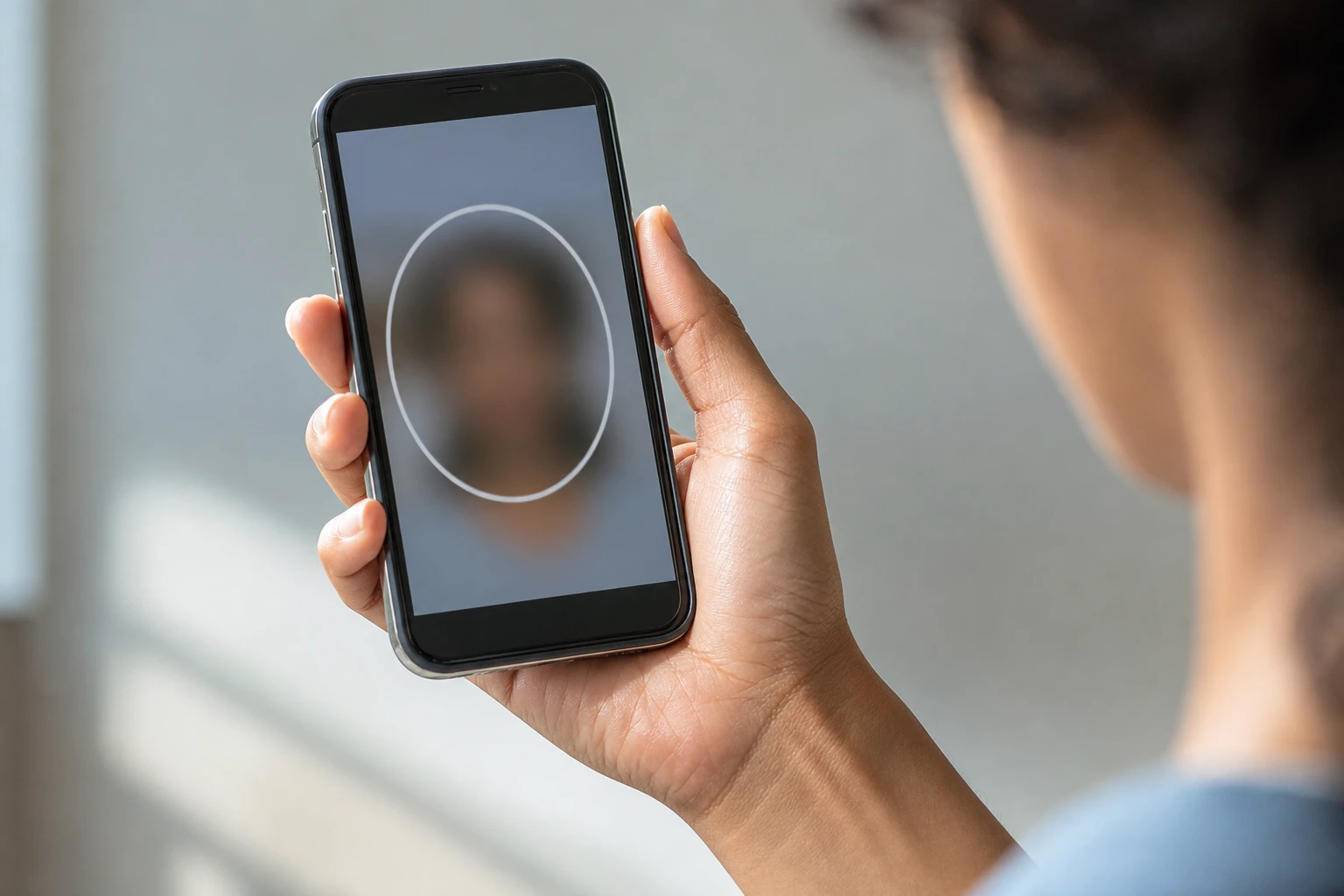
Google switched on a new selfie video sign-in option this week, letting locked-out users unlock their account by filming a few seconds of guided head turns instead of digging up a password. Google said the system uses multiple security checks, including liveness detection, to confirm the video is being recorded by a real person and to detect impersonation attempts such as AI-generated deepfakes. Anyone curious can check eligibility and set up the feature today.
Microsoft’s Digital Defense Report 2025 found that AI-driven identity forgeries are already convincing enough to defeat selfie checks and liveness tests. Federal fraud trackers logged 22,364 reports and $893.35 million in adjusted losses tied to AI-enabled fraud in the United States in 2025, the first year the FBI counted it as its own category.
Setting Up Your Face as a Backup Login
Enrollment takes a couple of minutes inside Google Account settings. Setup involves looking into a device camera and completing a few guided head movements that capture the face from multiple angles. Anyone at a computer without a built-in camera can finish the same steps on a phone instead.
Recovery works the same way in reverse. The video is stored, and if users later have trouble signing in, they record fresh selfies that Google compares against the enrolled version to confirm identity and restore access. Google also makes users pull quick moves like blinking or turning their head to prove they are actually there, rather than simply holding up a photo.
- Open Google Account settings and select Security and sign-in.
- Scroll to the “How you sign in to Google” section and choose Selfie video.
- Click continue on the Add selfie for sign-in page.
- Keep it as a fallback for the moments most likely to lock people out, like a lost or stolen phone, a forgotten password, or a sign-in attempt on a borrowed device.
Google frames all of this in its own words. In a blog post announcing the feature, the company explained its safeguards directly.
When you use a selfie to sign in, we use multiple layers of security to help prevent impersonation attempts like fake photos and videos, i.e., deep fakes. We match your video against your saved selfie and require you to perform simple movements to prove it’s a live video. We also use our standard security practices to detect and help prevent suspicious sign-in attempts.
Google wrote that language in the blog post announcing the feature.
Deepfake Fraud Is Outrunning the Defenses Meant to Stop It
The numbers behind that promise are not comforting. Four independent trackers point the same direction, and none of them is small.
- $893 million in adjusted 2025 losses tied to AI-enabled fraud, logged by the FBI in its first year counting AI complaints as a distinct category.
- 1 in 5 biometric fraud attempts worldwide now involve a deepfake, according to Entrust’s 2026 Identity Fraud Report, which drew on more than 1 billion identity verifications across 195 countries.
- $40 billion in projected US generative AI fraud losses by 2027, up from $12.3 billion in 2023, a 32% compound annual growth rate, per Deloitte’s Center for Financial Services.
- 30% of enterprises expected to stop trusting standalone identity checks by 2026 because of AI-generated deepfakes, according to Gartner.
Deepfake fraud caused more than $1.5 billion in reported losses worldwide in the first nine months of 2025 alone, according to Veriff’s own tracking. Digitally presented media was 300% more likely to be either entirely AI-generated or otherwise altered in 2025 compared with 2024, and impersonation fraud accounted for more than 85% of all fraudulent verification attempts Veriff observed.
Do Liveness Checks Even Work Anymore?
Independent researchers say not reliably. Microsoft, iProov and Veriff each found that generative AI has closed most of the gap between a real face and a synthetic one, the exact gap Google’s new recovery tool depends on staying open.
Humans do not do much better on their own. iProov’s Threat Intelligence Report 2025 found just 0.1% of participants could reliably distinguish real from AI-generated content. A separate study from Veriff and Kantar scored human visual detection at 0.07 to 0.08 on a scale where zero represents chance.
Fraud rings do not even need many faces to run attacks at scale. Smile ID traced more than 160,000 fraudulent verification attempts in one month to only 100 facial identities. Shufti’s own research points the same way: a roughly 500% increase over 2025 in AI-driven identity attacks is on the company’s books for this year.
- Liveness detection – a check that confirms a video feed comes from a real, present person rather than a photo, recording, or AI clone, usually by demanding an unpredictable movement like a blink or a head turn.
Google’s Other Product Clones the Same Face
Google is not a neutral referee here. Its own Vids product already lets people clone their face and voice into AI-generated video, output built from exactly the kind of biometric signal this sign-in method is now trying to verify as real.
Google is joining a growing wave of tech companies betting that biometrics, not passwords, are the future of identity verification online. TechCrunch reported that as AI-generated video gets more convincing, liveness checks are becoming a baseline requirement for any company handling logins, payments or sensitive data.
Security researchers are already watching for the obvious next step. Bypass techniques such as deepfake-based spoofing or replay attacks are likely to draw close monitoring, particularly as generative AI capabilities continue to evolve.
Where Selfie Video Fits Among Google’s Recovery Options
Google began supporting passkeys for personal accounts in 2023 and said in 2024 that its systems had surpassed 1 billion passkey authentications. Last year, the company introduced Recovery Contacts, letting users designate a trusted friend or family member to verify their identity if they get locked out. Selfie video is the third leg of that stool.
| Recovery Method | Introduced | How It Confirms You | Best Fit |
|---|---|---|---|
| Passkeys | 2023 | Device biometric or screen lock tied to a cryptographic key | Fast, phishing-resistant everyday sign-in |
| Recovery Contacts | 2025 | A trusted friend or family member vouches for your identity | Losing every device at once |
| Selfie Video | 2026 | Live head-turn video matched against an enrolled reference clip | No phone, passkey, or contact available |
Google is presenting the selfie as an addition to existing sign-in methods, not a replacement, and has long urged account holders to set up more than one way in.
Illinois Already Made Google Rethink Face Data
Google’s popular Art Selfie feature was never available in Illinois or Texas. Matthew Kugler, a Northwestern University law professor who has studied Illinois’ biometric privacy laws, told NPR in 2018 that Google had intentionally disabled that functionality in Illinois and Texas in response to state biometric privacy laws.
Selfie video sign-in arrives with its own guardrails, likely for the same reason. The setup is opt-in twice over: once to use the feature at all, and again if a user wants their footage used to improve Google’s verification systems, an area of biometric collection that stays more heavily regulated in some states than others. Continued scrutiny from privacy advocates and regulators regarding biometric data storage and potential misuse is likely, given the heightened sensitivity around facial recognition generally.
Account recovery is also where attackers already concentrate their effort. It is the account-recovery stage that attackers increasingly target as a weaker link than primary login security, a pattern that predates any single company’s fix. A Brazilian gamer’s hacked Xbox account lawsuit earlier this year was a reminder of how costly a broken recovery dispute gets once a company and a user disagree about who actually owns an account.
Frequently Asked Questions
Who cannot use selfie video sign-in yet?
The feature is not available on Workspace accounts, child accounts, or accounts enrolled in the Advanced Protection Program. Those users will not see the option even after checking eligibility.
Can I finish setup entirely from a desktop computer?
Yes. Anyone who would rather complete setup on desktop can go to myaccount.google.com/video-verification and follow the same steps as on mobile.
Is this the same as Android’s face unlock?
No. It has long been possible to log into Google using a face through a phone’s face unlock or a passkey that relies on biometrics. Selfie video is a separate, standalone path meant specifically for moments when a phone, passkey or password is not available at all.
What did Google account recovery rely on before this?
Account recovery has typically relied on trusted devices, registered phone numbers, recovery contacts and two-factor authentication. Google still recommends combining several of these rather than depending on any single method.
What is the clearest real-world case of deepfake video fraud?
The largest publicly documented deepfake fraud loss remains a $25.6 million Hong Kong incident from February 2024, in which a finance worker authorized 15 wire transfers after a video call populated entirely by synthetic colleagues. Hong Kong police confirmed the loss.


Stripe Bid Shows PayPal Moat Cracked After Years of Slide

FDA Class I Tag Hits Finished Egg Recall Weeks Later

Berkshire’s Alphabet Surge Marks Abel’s Cash Deployment Shift

Aston Martin Bets 150 Valen V12s Will Print the Cash

Walmart Took Most of the Recalled Lettuce Behind Cyclospora Wave

Silver Lake Workday Talks Signal Private Floor for Software

Zuckerberg’s AI Letter Joins a Wave of Tech Manifestos

Pixel 11 Takes Battery Edge as Galaxy S26 Keeps the Power Lead

Trump Economy Faces Reckoning as Sentiment and Sales Slide

Apple’s 15% External Cut Still Faces Its Own Zero Admission

ZA/UM Lays Off 32 Staff as Zero Parades Wins Reviews, Not Players

EA’s New In-Game Ad Platform Skips the Games That Need It Most

Mortgage Rates Climb to 6.55%, the Highest Level in Nearly a Year

Colby Covington Stuns Tsarukyan as Askren Retires in Tears at RAF 11

Spain’s Diaspora-Rooted Squad Wins Over New York Ahead of the Final

NHL’s Monday Matinee Push Puts Capitals Fans on the Clock

DeChambeau’s Two-Shot Penalty Rewrites the Open’s Weekend Draw

Guardians Rout Twins With Seven Homers, Leave Joe Ryan One Shy of Record

England Beats France 6-4 to Claim World Cup Bronze Medal

Rainout Gives Red Sox Two Shots at a Franchise-Record Win Streak
-

 TECHNOLOGY3 years ago
How to Adjust a Bulova Watch Band – An Easy Guide
-

 News3 years ago
Fred Pentland: Athletic Bilbao’s English mentor who changed the essence of Spanish football
-

 FINANCE3 years ago
Tax Planning for Every Season: Guide to Maximizing Your Tax Benefits
-

 Education3 years ago
African Ministers New Education Plan
-

 BUSINESS3 years ago
What is Entrepreneurial Operating System? A Comprehensive Guide to EOS
-

 Education3 years ago
Innovate Your Learning Journey with Technology and Enhance Education
-

 News3 years ago
Russians formally out of World Athletics Championships
-

 BUSINESS3 years ago
Top 9 Most Expensive American Cities to Rent an Apartment