
News
Geekbench 7 Launches and Erases Three Years of Scores
Geekbench 7’s redesigned tests erase three years of comparable scores and reveal Nvidia GPUs were undercounted for years without CUDA support.

Primate Labs shipped Geekbench 7 on Thursday, and the update that makes the benchmark more honest also makes every score it ever produced before this week useless for comparison. The company rebuilt its multi-core math, rewired the GPU test around machine learning, and let Nvidia’s CUDA back into a cross-platform benchmark for the first time in years.
None of those changes are cosmetic. Together they reset the scoring baseline that reviewers, PC builders and phone shoppers have used since February 2023, and they retroactively expose how much performance Nvidia’s cards were losing on paper simply because the benchmark wouldn’t run their native software.
Geekbench 7 Rewrites the Multi-Core Playbook
The headline technical change is how Geekbench 7 builds its multi-core score. Geekbench 7’s redesigned multi-core benchmark is meant to better represent how applications work in the real world, and a workload only runs in multi-threaded mode if the task it models runs multi-threaded in real applications. Primate Labs says the result is a multi-core score that is a more relevant measure of how a device performs when doing actual work.
Macworld’s breakdown of the change points to a concrete example. Primate Labs cites the HTML5 Browser test, since web browsers and the tasks they run are typically highly dependent on single-thread performance, so it is not included in the multi-threaded tests. Older versions forced every workload into a multi-threaded bucket regardless of how real software actually behaves, which inflated scores for chips with lots of cores and little else.
The GPU Test Goes AI-Native
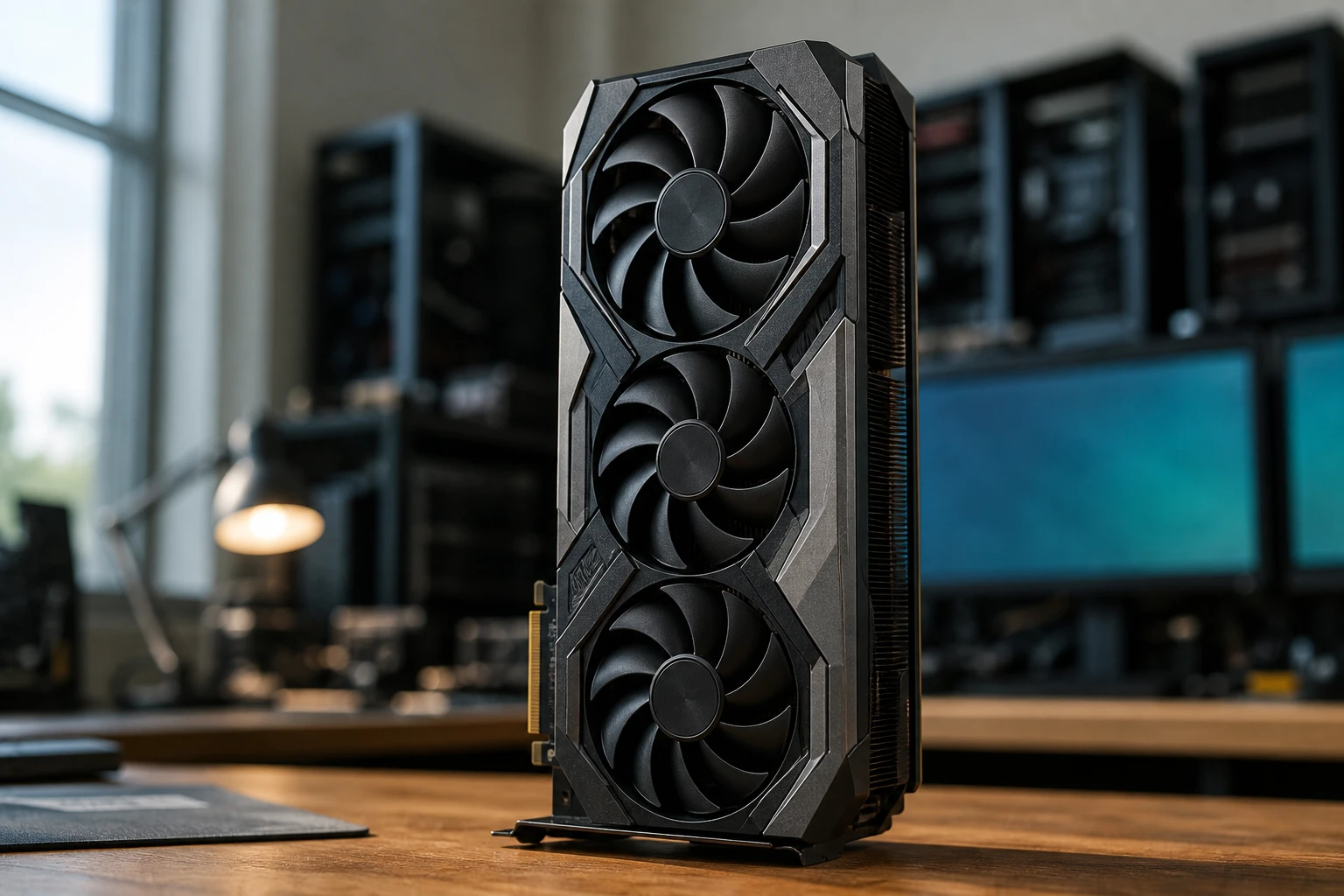
The GPU benchmark changed even more. Along with updates to multi-core testing, a revamped GPU benchmark focuses on machine learning and content creation to reflect how GPUs are used today. The new suite reads like a checklist of what people actually open a laptop or phone to do in 2026.
- Machine learning workloads: tests that track faces and apply real-time filter effects to video, modeling the face filters in social media apps; upscale images with machine learning, modeling super resolution features in content creation apps; and blur backgrounds in video conferencing streams, modeling virtual background features in video conferencing apps.
- Creation workloads: new GPU image editing and synthesis tests including RAW image processing, LUT-based video color grading, path tracing, and fluid simulation.
- Media workloads: AV1 and Opus encoding for video calls and screen sharing, plus decoding audio and video while generating live captions using OpenAI’s Whisper speech-recognition model.
- Game Physics: a workload that uses the Jolt Physics engine used by popular video games.
- Photo tools: an expanded Photo Editor test with a richer set of real-world edits, and a Photo Library workload that supports importing and processing image formats like JPEG XL and DNG.
Data sets got heavier too. Primate Labs says the File Compression and PDF Viewer workloads now handle bigger, messier files, and the developer and image-processing tests draw on more assets and formats than before, closer to what a real workstation chews through daily.
Nvidia’s Three-Year Discount, Corrected
The quieter but bigger story sits in the GPU compute APIs. Geekbench 7 adds Nvidia’s CUDA to its list of supported GPU APIs, alongside OpenCL, Vulkan, and Metal. For three years, anyone benchmarking a GeForce card on Geekbench was stuck testing it through APIs that don’t reflect how creative and AI software actually talks to Nvidia silicon.
Early numbers Primate Labs published show exactly how large that gap was. A GeForce RTX 4070 averages around 236,094 points using CUDA, versus 163,749 with OpenCL and 170,245 with Vulkan. An RTX 4090 produces an even larger variance, scoring approximately 444,438 points under CUDA versus 252,318 with OpenCL.
| Graphics Card | Compute API | Geekbench 7 Score |
|---|---|---|
| GeForce RTX 4070 | CUDA | 236,094 |
| GeForce RTX 4070 | OpenCL | 163,749 |
| GeForce RTX 4090 | CUDA | 444,438 |
| GeForce RTX 4090 | OpenCL | 252,318 |
Do the math and the RTX 4070 scores about 44 percent higher on CUDA than on OpenCL. The RTX 4090 scores roughly 76 percent higher. Every chart built on the old APIs alone was quietly shortchanging Nvidia’s actual GPU compute performance by that much, and nobody testing cross-platform on Geekbench could see it until this week.
Why Can’t You Compare Geekbench 7 to Geekbench 6?
Because the yardstick itself moved. Geekbench recalibrates every score against a reference machine set to exactly 2,500 points, and Geekbench 7 swapped that reference computer, changed the workloads, and changed how multi-core scores get calculated, so a score from one version tells you nothing next to a score from another.
Geekbench calibrates every score against a reference system pegged at exactly 2,500 points, and that reference has moved from a Dell Precision 3460 with Intel’s Core i7-12700 to a Lenovo Legion running an AMD Ryzen 7 7700. A 5,000 score under the new baseline simply means double the performance of that Ryzen machine, nothing more, and it says nothing about how a device would have scored under the old Intel-based reference.
Primate Labs has been explicit about this for years. Its own support documentation states plainly that the updates in Geekbench 6 and the change to its baseline score make it impossible to compare scores between the major versions, and a score of 1000 in Geekbench 6 and a score of 1000 in Geekbench 5 do not represent the same performance. The same logic applies to Geekbench 7 against Geekbench 6 now. AppleInsider put it bluntly: Geekbench scores can look like a universal measurement of processor performance, but the numbers only have meaning within the version of the benchmark that produced them.
Fresh numbers are already landing on the new scale. Early M5 MacBook Air results show 3,608 single-core and 17,470 multi-core CPU scores, though Geekbench 7 scores aren’t comparable to previous versions. Anyone holding an M4 or M3 Mac has no clean way to line their old score up against that number until they rerun the test themselves.
A Reset Primate Labs Has Run Before
This is not the first time Primate Labs has pulled the rug out from under its own scoreboard. Founder John Poole told Android Authority ahead of the Geekbench 6 launch in 2023 that the pattern goes back years.
In the past, 3.0 wasn’t comparable with 3.1, and 4.0 wasn’t comparable with 4.1.
Poole made that comment while discussing why Geekbench 6 couldn’t be measured against Geekbench 5, a jump where you cannot directly compare Geekbench 5 and Geekbench 6 scores because the two use different test suites. Geekbench 7 arrives almost three-and-a-half years after the launch of Geekbench 6, which is a longer gap than the roughly three years between Geekbench 5 and 6. Anyone who wants to keep testing on the old scale can still find installers on Primate Labs’ own legacy versions archive going back to Geekbench 2, since, as the company puts it plainly, you cannot compare Geekbench scores from different Geekbench versions.
An Odd Way to End an Embargo
The launch itself did not go the way Primate Labs apparently planned it. Hardware enthusiast outlet Hardware Busters, citing VideoCardz, reported an unusual sequence around the rollout.
- What We Know
- Primate Labs offered press materials under embargo but never actually sent them to reporters, then published the installers, documentation and public results on its own servers anyway, effectively un-embargoing itself, per Hardware Busters’ account of VideoCardz’s reporting.
- Enthusiasts pulled the build immediately once it appeared, so the public Geekbench Browser is already filling with Apple silicon, AMD and Intel numbers even though no formal press briefing took place.
- What’s Unconfirmed
- Whether the early publish was a deliberate decision or a missed step in Primate Labs’ own press process.
- How the company plans to handle embargoed access for reviewers going forward, if at all.
There is a strange symmetry to it. The Geekbench Browser is usually where new chips leak weeks before launch, and this time the benchmark tool itself leaked its own release before the announcement caught up.
The Timing Lines Up With a New Hardware Wave
Geekbench 7’s arrival is not happening in a vacuum. Apple is midway through a broad Mac refresh, driven in part by users leaning on their machines for demanding, agent-based AI workloads, and the iPhone 18 Pro is roughly two months from launch. Every one of those devices will post its first public scores on a benchmark that just changed its own math.
The AI-heavy workloads Geekbench 7 now tests did not appear out of nowhere. AMD’s own Ryzen AI Halo desktop chip already booted a local AI model in nine minutes and 38 seconds in an early developer test, the exact kind of on-device inference Geekbench’s new GPU tests are built to measure. Nvidia, meanwhile, is pushing compute well past graphics cards, with its Vera CPU debuting into a server market still owned by AMD and Intel, adding another front where independent, cross-platform numbers matter to how the company gets judged. And Qualcomm’s confirmed Snapdragon-powered Googlebook for a fall launch means Arm-based Windows machines will be posting first-generation Geekbench 7 scores right alongside Apple silicon and x86 chips, on a scale nobody has three years of history with yet.
Every chipmaker chasing an AI performance claim this year will now make it against a scoreboard reset to zero.
Frequently Asked Questions
Will my old Geekbench 6 results still work after installing Geekbench 7?
Your Geekbench 6 scores remain stored and viewable, but they cannot be lined up against anything produced by Geekbench 7. If you need year-over-year continuity on the old scale, Primate Labs keeps legacy installers available separately rather than folding old results into the new app.
Do you need Nvidia’s CUDA drivers to get a Geekbench 7 GPU score?
No. OpenCL and Vulkan still work on Nvidia hardware, and Metal remains the default on Apple devices. CUDA is an added option specifically for Nvidia GPUs, not a requirement, and Geekbench only shows the APIs actually available on your system.
Does Geekbench 7 run on Arm-based Windows PCs like upcoming Snapdragon devices?
Yes. Geekbench has been cross-platform across Windows, macOS, Linux, Android and iOS for years, and that includes Arm-based Windows machines, a category about to expand with devices like Qualcomm’s Snapdragon-powered Googlebook.
What does a Geekbench baseline score of 2,500 actually mean?
It is a calibration anchor, not a target. Primate Labs sets its current reference machine, a Lenovo Legion running an AMD Ryzen 7 7700, to exactly 2,500 points, and every other score is measured relative to that one system. A 5,000 score means twice that reference machine’s performance, nothing else.


Stripe Bid Shows PayPal Moat Cracked After Years of Slide

FDA Class I Tag Hits Finished Egg Recall Weeks Later

Berkshire’s Alphabet Surge Marks Abel’s Cash Deployment Shift

Aston Martin Bets 150 Valen V12s Will Print the Cash

Walmart Took Most of the Recalled Lettuce Behind Cyclospora Wave

Silver Lake Workday Talks Signal Private Floor for Software

Zuckerberg’s AI Letter Joins a Wave of Tech Manifestos

Pixel 11 Takes Battery Edge as Galaxy S26 Keeps the Power Lead

Trump Economy Faces Reckoning as Sentiment and Sales Slide

Apple’s 15% External Cut Still Faces Its Own Zero Admission

ZA/UM Lays Off 32 Staff as Zero Parades Wins Reviews, Not Players

EA’s New In-Game Ad Platform Skips the Games That Need It Most

Mortgage Rates Climb to 6.55%, the Highest Level in Nearly a Year

Colby Covington Stuns Tsarukyan as Askren Retires in Tears at RAF 11

Spain’s Diaspora-Rooted Squad Wins Over New York Ahead of the Final

NHL’s Monday Matinee Push Puts Capitals Fans on the Clock

DeChambeau’s Two-Shot Penalty Rewrites the Open’s Weekend Draw

Guardians Rout Twins With Seven Homers, Leave Joe Ryan One Shy of Record

England Beats France 6-4 to Claim World Cup Bronze Medal

Rainout Gives Red Sox Two Shots at a Franchise-Record Win Streak
-

 TECHNOLOGY3 years ago
How to Adjust a Bulova Watch Band – An Easy Guide
-

 News3 years ago
Fred Pentland: Athletic Bilbao’s English mentor who changed the essence of Spanish football
-

 FINANCE3 years ago
Tax Planning for Every Season: Guide to Maximizing Your Tax Benefits
-

 Education3 years ago
African Ministers New Education Plan
-

 BUSINESS3 years ago
What is Entrepreneurial Operating System? A Comprehensive Guide to EOS
-

 Education3 years ago
Innovate Your Learning Journey with Technology and Enhance Education
-

 News3 years ago
Russians formally out of World Athletics Championships
-

 BUSINESS3 years ago
Top 9 Most Expensive American Cities to Rent an Apartment