
BUSINESS
J&J’s $5.5 Billion Talc Deal Follows Three Failed Bankruptcy Bids
Johnson & Johnson will pay $5.5 billion to end most US talc lawsuits, a smaller deal than the bankruptcy plans courts already rejected twice.

Johnson & Johnson has agreed to pay $5.5 billion to settle nearly all of its outstanding talc lawsuits in the United States. The deal covers about 69,000 cases in federal and state courts, or 99.75 percent of the claims still active against the company, and it needs sign off from 95 percent of claimants before it becomes final.
J&J itself once offered more to make this go away. Three separate bankruptcy bids by a company subsidiary, the largest worth $8.9 billion, were thrown out by federal courts over the past five years. The deal that finally stuck buys less. It covers claims already filed. Future claims are excluded, and so is the case brought by more than 7,100 people suing J&J in Britain.
What the $5.5 Billion Settlement Covers
The cases resolve claims that J&J’s talc based baby powder caused ovarian cancer, filed by women and families across US federal and state courts. Most of the federal cases are consolidated in a multidistrict litigation proceeding in New Jersey. J&J said Monday’s offer accounts for 99.75 percent of all outstanding talc claims in the country.
The company has not sold talc based Baby Powder in the US since 2020, when it switched to a cornstarch formula, and pulled the talc version from shelves worldwide by 2023. J&J still says the science does not support a link between its product and cancer. Erik Haas, the company’s litigation head, said the settlement lets J&J “put this matter behind it.” Lawyers for the plaintiffs called it a fair resolution to a fight that has run for a decade.
That fight started with a jury verdict in 2016, when a US court ordered J&J to pay $72 million to the family of a woman who died of ovarian cancer. An appeals court threw out that verdict a year later, but the case opened the door to thousands more, and juries have split between the two sides ever since.
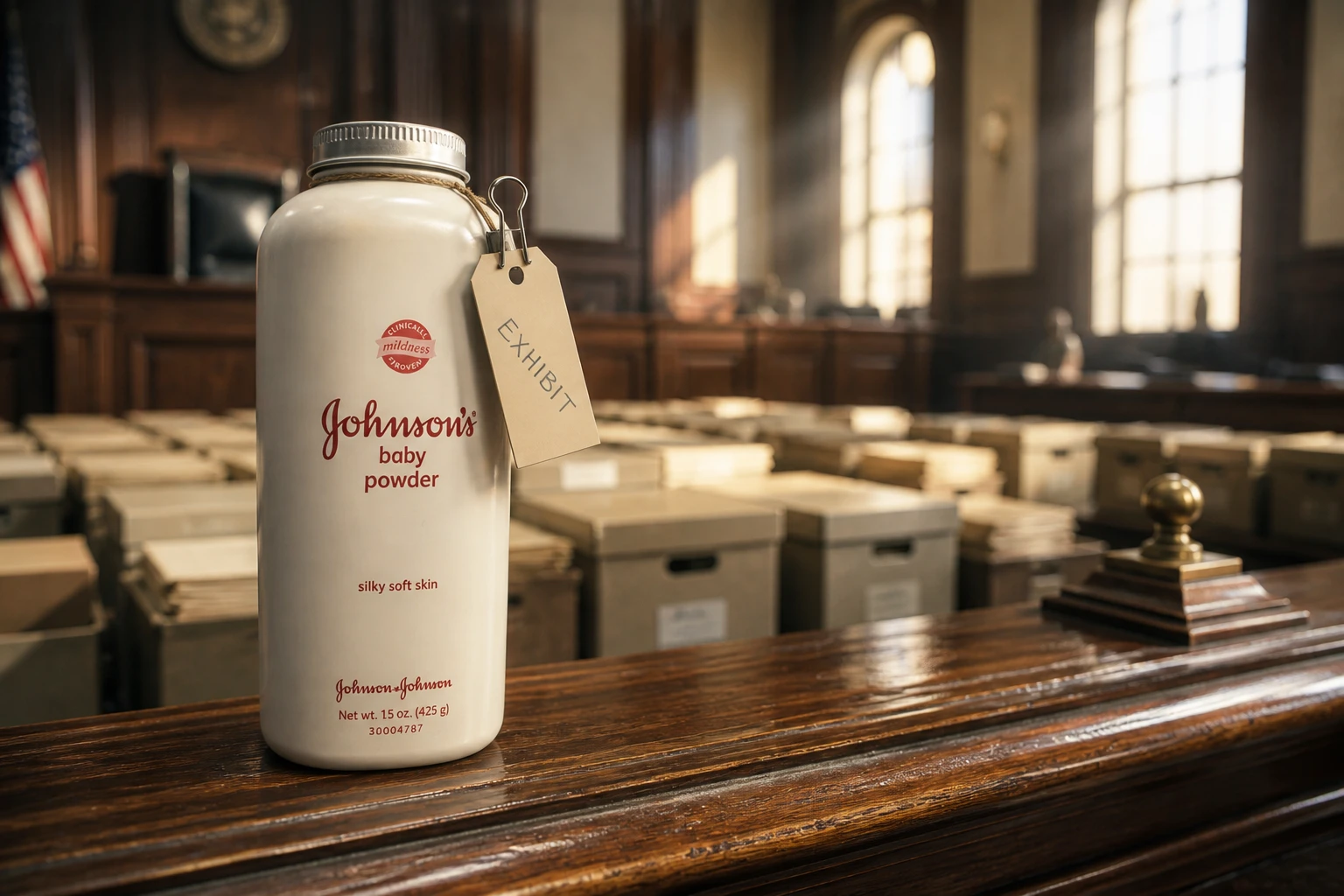
Three Bankruptcies, Three Dismissals
Rather than litigate 69,000 individual cases, J&J tried a different route: pushing its talc liability into a shell company and letting that company alone declare bankruptcy. The maneuver, known as the Texas two-step, creates a new subsidiary through a divisional merger under Texas law, hands it the lawsuits, and leaves the parent company’s other assets untouched.
J&J used this approach three times, and courts rejected it three times. The subsidiary, LTL Management, first filed for Chapter 11 in 2021 and was dismissed by the Third Circuit Court of Appeals in early 2023. LTL refiled in April 2023 with claimant backing and pitched a $8.9 billion prepackaged reorganization plan payable over 25 years, backed by more than 60,000 claimants at the time. The Third Circuit upheld the dismissal on appeal in June 2024, again on the grounds that J&J had not shown genuine financial distress.
| Attempt | Filed | Proposed Value | Outcome |
|---|---|---|---|
| First Chapter 11 (LTL I) | 2021 | Backed by a funding pledge worth up to $61.5 billion | Dismissed by the Third Circuit in early 2023 for bad faith |
| Second Chapter 11 (LTL II) | April 2023 | $8.9 billion over 25 years | Dismissal affirmed by the Third Circuit in June 2024 |
| Third prepackaged plan | 2024 | About $6.5 billion | Collapsed before confirmation; full litigation resumed March 2025 |
| Direct settlement | July 2026 | $5.5 billion, existing US claims only | Pending acceptance by 95 percent of claimants |
Judges kept landing on the same problem. LTL had been given the right to demand up to $61.5 billion from J&J’s consumer health division to cover talc costs, which courts said proved the subsidiary was never actually broke, just a legal shell built to force claimants into bankruptcy court instead of a jury trial. By May 2024, J&J was already lining up a third attempt, asking claimants to back a reduced, roughly $6.5 billion prepackaged plan. That effort also collapsed, and the underlying lawsuits went back to open litigation in March 2025 for the first time in more than three years.
What Changed the Calculus in 2024?
Two things shifted the ground under J&J. In July 2024, the World Health Organization’s (WHO) cancer research arm reclassified talc, undercutting the company’s public position that no reliable evidence linked the mineral to cancer. And in March 2025, after three straight bankruptcy defeats, the underlying talc lawsuits returned to active litigation, putting J&J back in front of juries that had already awarded plaintiffs hundreds of millions of dollars in individual verdicts.
The International Agency for Research on Cancer (IARC), the WHO body that evaluates carcinogens, classified talc as probably carcinogenic to humans, moving it up from a lower hazard category. The finding, reached by 29 scientists from 13 countries, cited limited evidence of ovarian cancer in humans, sufficient evidence in animal studies, and mechanistic evidence tying talc to known cancer pathways. It carries no legal force on its own, but it gave plaintiffs’ lawyers a fresh scientific citation just as J&J’s bankruptcy strategy ran out of road.
The Record Case J&J Still Cannot Settle
None of the $5.5 billion touches the United Kingdom, where J&J faces the largest product liability case in British history. More than 7,100 claimants are now part of a Group Litigation Order approved by the UK High Court, Britain’s closest equivalent to a US class action.
Filed in October 2025, the case alleges J&J knew for decades that its talc contained asbestos and cancer causing fibers but sold it anyway, covering conduct dating back to 1965. Unlike the US settlement, which resolves ovarian cancer claims, the UK case also covers mesothelioma, a cancer linked specifically to asbestos exposure. Claimants are seeking more than £1 billion in compensation. J&J denies the allegations, and the case is proceeding through the High Court with no trial date yet set.
What the Deal Leaves Exposed
Even once finalized, the US settlement does not close the book on J&J’s talc liability. Three gaps remain open:
- Future US claims – anyone diagnosed after the settlement’s cutoff has to pursue J&J separately; the trust only pays out cases already filed.
- The UK case – more than 7,100 claimants proceed on their own timeline in London, entirely separate from the US number.
- The 95 percent threshold – the deal is not binding until enough claimants sign on; fall short, and the agreement does not take effect.
The settlement’s status is still moving, and not every detail is locked down yet.
What We Know:
- Confirmed: J&J will pay $5.5 billion covering roughly 69,000 US cases, or 99.75 percent of active claims.
- Confirmed: The company stopped selling talc baby powder in the US in 2020 and worldwide by 2023.
What’s Unconfirmed:
- Unclear: How individual payouts will be calculated once the trust is funded.
- Unclear: Whether the 95 percent claimant threshold will be reached, or by when.
For now, J&J’s US legal bill is set. Its UK bill is still being written.
Frequently Asked Questions
What Is the Texas Two-Step Bankruptcy Strategy J&J Used?
It is a maneuver under Texas law that lets a company split in two through a divisional merger. J&J used it to create LTL Management, a new subsidiary that inherited the talc liabilities while a sister entity kept the operating business. LTL then filed for Chapter 11 alone, arguing it could not otherwise pay claimants. Courts rejected the approach because J&J had pledged LTL a funding backstop worth up to $61.5 billion, which judges said proved the subsidiary was not actually in financial distress.
Does the Settlement Mean J&J Admits Talc Causes Cancer?
No. J&J continues to say there is no reliable evidence that talc causes cancer, and the settlement does not require the company to admit fault. It resolves claims by paying to end the litigation rather than by proving or disproving causation case by case. The World Health Organization’s cancer research arm reached a different conclusion in 2024, classifying talc as probably carcinogenic to humans, but that finding carries no legal weight inside the settlement itself.
What Happens If Fewer Than 95 Percent of Claimants Accept the Deal?
The agreement does not take effect. J&J built the settlement around that threshold, and if enough claimants opt out, the company goes back to litigating and negotiating cases individually instead of through the collective trust. Plaintiffs’ lawyers who negotiated the deal are now working to bring outstanding claimants on board before any court sets a final deadline.
How Does the UK Case Differ From the US Settlement?
The legal mechanism is different. The US deal is a trust that pays out ovarian cancer claims already filed and verified. The UK case is a Group Litigation Order, the English courts’ equivalent of a class action, and it has not produced a settlement or a verdict. No trial date has been set, so British claimants are likely years away from any payout, if the case succeeds at all.


MapLight Stock Plunges After Schizophrenia Trial Splits on Dosage

Starship Survives Its Splashdown, Clearing SpaceX’s Path to a Historic Catch

Red Cross Declares Second-Ever Blood Crisis as Donors Age Out

FDA Advisers Back Six Peptides but Gray Market Endures

Sandisk and ASML Shares Sink as China Ships Chip Tools

Maple Leaf Bacon Recall Exposes a Border Checkpoint Pattern

Mamdani’s 30% Grocery Discount Plan Alarms NYC’s Bodega Owners

Levothyroxine Recall Leaves Millions to Catch the Risk Themselves

Cyclospora Fears Push Americans Toward the Processed Foods RFK Jr. Opposes

Ford’s Custom Garage Push Bets Big on Owning the Aftermarket

Pokémon GO Developer Niantic Rebrands as Scopely Explore

Persona 4 Revival Hands All Anime Cutscenes to Studio MAPPA

Jaylen Brown Traded to 76ers for Paul George and Four Draft Picks

Doom Studio id Software Cuts Half Its Staff in Xbox Layoffs

Nintendo Switch Online Adds Four Classics and One Japan-Only Title

Jordan Henderson Hospitalized After Wrist Injury at the Azteca

Mexico’s World Cup Run Ends at Azteca as England Hold On 3-2

Meta’s Muse Image Lets Anyone Use Your Instagram Photos in AI

Louis Vuitton Beats Molly Tea in China, Triggers Cultural Backlash

Pink Bearista Cup Returns July 13 as Starbucks Pink Vibes Drops
-

 TECHNOLOGY3 years ago
How to Adjust a Bulova Watch Band – An Easy Guide
-

 News3 years ago
Fred Pentland: Athletic Bilbao’s English mentor who changed the essence of Spanish football
-

 FINANCE3 years ago
Tax Planning for Every Season: Guide to Maximizing Your Tax Benefits
-

 Education3 years ago
African Ministers New Education Plan
-

 BUSINESS3 years ago
What is Entrepreneurial Operating System? A Comprehensive Guide to EOS
-

 Education3 years ago
Innovate Your Learning Journey with Technology and Enhance Education
-

 News3 years ago
Russians formally out of World Athletics Championships
-

 BUSINESS3 years ago
Top 9 Most Expensive American Cities to Rent an Apartment