
BUSINESS
Maple Leaf Bacon Recall Exposes a Border Checkpoint Pattern
A second Canadian shipment missed the same US border check within a day of Maple Leaf’s bacon recall, weeks before 50% tariffs begin.

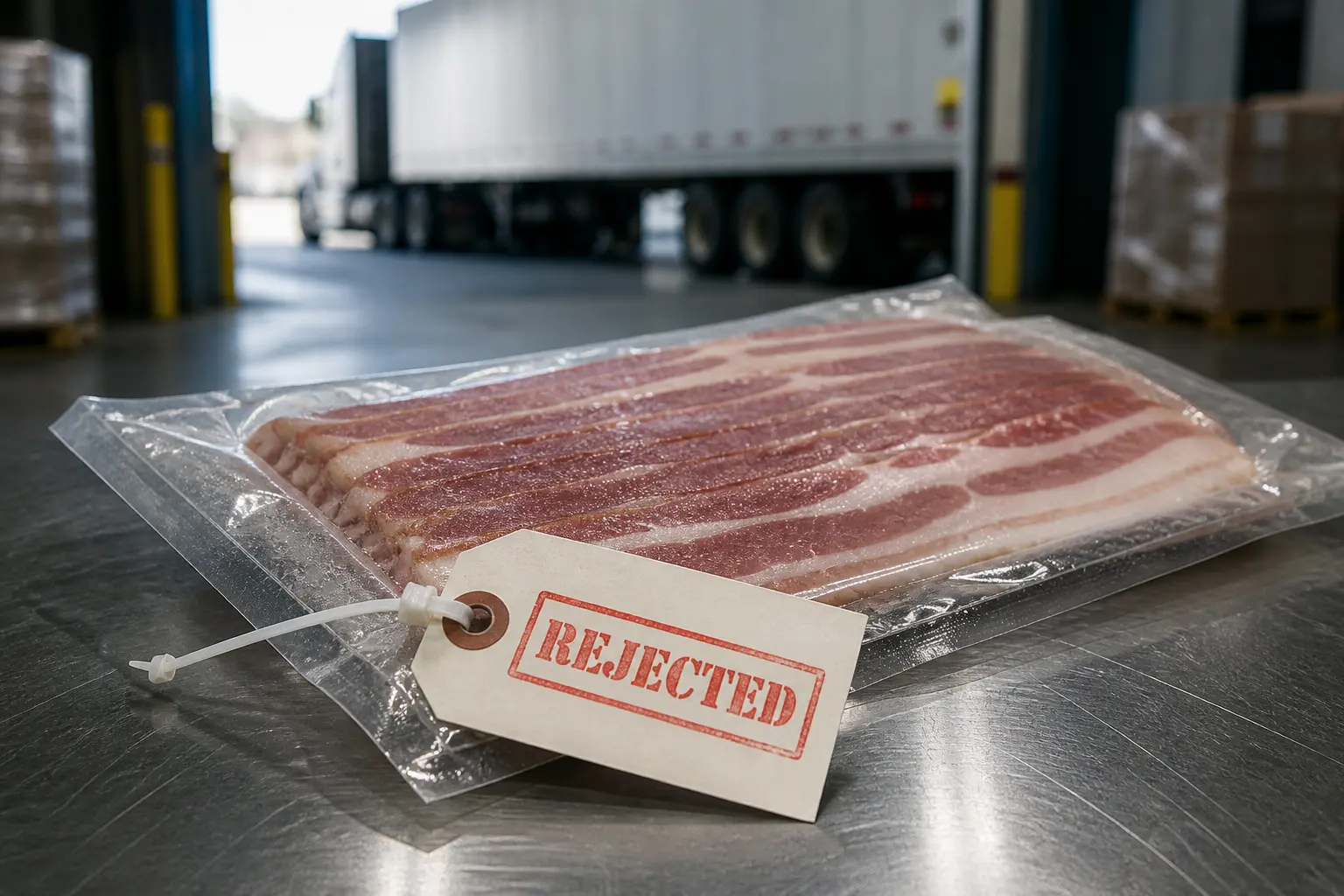
Maple Leaf Foods, a major Canadian meat processor, pulled about 12,036 pounds of smoked bacon from Idaho, Oregon and Washington shelves after the shipment skipped a required US border check. The Department of Agriculture’s Food Safety and Inspection Service (FSIS) made the recall public in a notice dated July 24. No illnesses have been linked to the bacon, sold under the Royale and Top Valu labels at Grocery Outlet stores.
One day earlier, a different Canadian company recalled chicken noodle soup for the identical violation. That makes two cross-border shipments in 24 hours that skipped the same US checkpoint, landing three weeks before Washington’s 50% tariff on other Canadian goods takes effect.
Two Products, Five Production Dates
The recalled items are Royale Natural Applewood Smoked All Natural Uncured Bacon and Top Valu Uncured Hardwood Smoked Bacon, both labeled Product of Canada and sold in 12-ounce vacuum packages.
FSIS listed five production dates: June 9, 10, 12, 13 and 15. Every package also carries “EST. 1” printed on the side, the code inspectors use to trace a shipment back to its plant of origin.
| Product | Package Size | Sell-By Dates |
|---|---|---|
| Royale Natural Applewood Smoked Uncured Bacon | 12 oz vacuum pack | Sept. 1 and Sept. 7, 2026 |
| Top Valu Uncured Hardwood Smoked Bacon | 12 oz vacuum pack | Sept. 1, 2, 4, 5 and 7, 2026 |
FSIS said the bacon reached Grocery Outlet distributors and retailers across the three states, and that a complete store list will be posted to the agency’s website once it is finalized. Inspectors caught the problem during routine surveillance, not a consumer complaint, after the shipment bypassed mandatory US import recheck.
One Day Earlier, a Second Shipment Missed the Same Checkpoint
BCI Foods, an importer based in Saint-Hyacinthe, Quebec, recalled roughly 4,300 pounds of canned chicken noodle soup on July 23, a day before Maple Leaf’s bacon notice. FSIS cited the identical reason: the product had not been presented for import reinspection.
The soup, sold under the Tasty Kitchen brand, went to food banks and food pantries in Oklahoma rather than retail shelves. Different product, different state, different company. Same paperwork failure, one day apart.
Why Does This Keep Happening?
Because the checkpoint runs on paperwork as much as product quality. Federal law requires foreign meat and poultry plants to be certified equivalent to US standards, but every individual shipment must still clear a second US inspection at the border covering labeling, condition and documentation before it reaches a store shelf.
A shipment that bypasses that second check has not been certified against US rules, even if Canadian officials already cleared it at the plant. That is a process failure, not evidence the food itself is contaminated.
The violation is not new. FSIS has cited it against Canadian shippers periodically for more than a decade, though rarely twice in two days.
- 2014: Santa Maria Foods Corporation recalls about 8,895 pounds of various meat products imported without full USDA inspection.
- July 2020: JBS Food Canada ULC recalls about 38,406 pounds of boneless beef head meat after FSIS surveillance finds it bypassed import reinspection.
- May 2023: Eastern Meat Solutions recalls about 40,763 pounds of raw boneless pork not presented for import reinspection.
- July 23, 2026: BCI Foods recalls about 4,300 pounds of chicken noodle soup for the same violation.
- July 24, 2026: Maple Leaf Foods recalls about 12,036 pounds of smoked bacon, the second such recall in as many days.
Two of those five cases landed one day apart this July.
Tariffs Land Three Weeks After Both Recalls
The recalls themselves have no legal connection to the tariffs. Both land about three weeks before a separate trade action takes effect.
President Donald Trump signed three Section 338 proclamations on July 20, adding a 50% duty on Canadian dairy, alcohol and motor vehicles. Section 338 is a rarely used trade law provision that lets a president impose tariffs on a country accused of discriminating against US commerce. The new rates are scheduled to take effect Aug. 19.
Pork and prepared meats are not on that list. Energy, potash, critical minerals, fish and goods already covered by separate Section 232 tariffs are also exempt.
The White House said the tariffs answer Canadian provinces that stopped buying and selling American alcohol after an earlier round of Trump tariffs. Canadian Prime Minister Mark Carney has pushed back publicly while keeping the door open to a deal.
I spoke this morning with the U.S. president and we agreed to deepen and speed up our negotiations over the next few weeks.
Carney said July 21, a day after the tariffs were announced. He has since said Canada is ready to respond if the tariffs proceed as scheduled, though the final rate and scope could still shift before Aug. 19.
Maple Leaf’s Bet on the US Market
Maple Leaf has told investors that roughly 7.5% of its total sales come from Canadian exports into the US. The cross-border piece amounts to somewhere between C$350 million and C$400 million of about C$500 million in relevant revenue, split about evenly between pork and prepared meats such as bacon and deli meat.
Company executives have said tariffs are not an “existential threat” and that its pork business is global enough to redirect volume elsewhere if needed. That guidance predates the current 50% tariff order, which targets dairy, alcohol and autos rather than meat, but it shows a company already rehearsing contingency plans before this recall added a separate compliance problem.
Grocery Outlet runs on a different model than a typical supermarket chain. The company buys closeout and overstock inventory from suppliers worldwide and resells it 40% to 70% below conventional retail prices, through 563 stores across 16 states, each run by an independent local operator who splits profit with the company. That sourcing model means inventory and paperwork trails change constantly from shipment to shipment.
Cost pressure in food retail tends to land hardest on the smallest operator in the chain, not the parent company. A similar dynamic showed up when Domino’s franchisees absorbed rising costs while the parent company’s profit climbed. Grocery Outlet’s independent operators, not the corporate office, typically carry the loss when a shipment like this gets pulled.
If You Bought This Bacon
FSIS says the recalled bacon may still be sitting in refrigerators or freezers across the Pacific Northwest. Its instructions are simple: do not eat it.
Consumers who bought Royale or Top Valu bacon matching the sell-by dates above should throw the package away or return it to the Grocery Outlet where they bought it for a refund. Shoppers who are unsure can check three details: the brand name, the “EST. 1” mark on the side of the package, and the sell-by date printed near it.
Frequently Asked Questions
What Does “Without the Benefit of Import Reinspection” Mean?
It means the shipment reached the US border without stopping for the second, mandatory FSIS check every foreign meat and poultry shipment needs before sale. Canadian plants that export to the US are certified as equivalent to American standards, but each individual shipment still has to clear a US port-of-entry inspection covering everything from label accuracy to physical condition. Skipping that step is a process failure, not proof the food itself is contaminated.
Is the Recalled Bacon Unsafe to Eat?
No illnesses have been reported, and FSIS has not said the bacon is contaminated. The agency still tells consumers not to eat it, because the import recheck is what confirms a foreign shipment meets US labeling and safety rules. Without it, nobody has certified the product for the American market, even though Canadian inspectors already cleared it at the plant.
Are Other Grocery Outlet Products Part of This Recall?
No. FSIS limited the recall to two smoked bacon products, Royale Natural Applewood Smoked Uncured Bacon and Top Valu Uncured Hardwood Smoked Bacon, both in 12-ounce vacuum packages. Other Grocery Outlet inventory, including different bacon brands, is not affected.
Will the New 50% Tariffs Make Bacon More Expensive?
Not directly. Trump’s Section 338 tariffs, set to begin Aug. 19, apply to Canadian dairy, alcohol and motor vehicles, not pork or prepared meats. Maple Leaf has told investors it could redirect pork exports to markets outside the US if trade tensions escalate further, a separate decision from this recall.
Has This Kind of Recall Happened Before?
Yes, though not usually two in one week. FSIS has cited Canadian shippers for skipping import reinspection periodically since at least 2014, including a 38,406-pound beef recall in 2020 and a 40,763-pound pork recall in 2023. The back-to-back recalls of BCI Foods’ soup and Maple Leaf’s bacon in July 2026 mark the closest two cases have landed together on the agency’s log.


MapLight Stock Plunges After Schizophrenia Trial Splits on Dosage

Starship Survives Its Splashdown, Clearing SpaceX’s Path to a Historic Catch

Red Cross Declares Second-Ever Blood Crisis as Donors Age Out

FDA Advisers Back Six Peptides but Gray Market Endures

Sandisk and ASML Shares Sink as China Ships Chip Tools

Maple Leaf Bacon Recall Exposes a Border Checkpoint Pattern

Mamdani’s 30% Grocery Discount Plan Alarms NYC’s Bodega Owners

Levothyroxine Recall Leaves Millions to Catch the Risk Themselves

Cyclospora Fears Push Americans Toward the Processed Foods RFK Jr. Opposes

Ford’s Custom Garage Push Bets Big on Owning the Aftermarket

Pokémon GO Developer Niantic Rebrands as Scopely Explore

Persona 4 Revival Hands All Anime Cutscenes to Studio MAPPA

Jaylen Brown Traded to 76ers for Paul George and Four Draft Picks

Doom Studio id Software Cuts Half Its Staff in Xbox Layoffs

Nintendo Switch Online Adds Four Classics and One Japan-Only Title

Jordan Henderson Hospitalized After Wrist Injury at the Azteca

Mexico’s World Cup Run Ends at Azteca as England Hold On 3-2

Meta’s Muse Image Lets Anyone Use Your Instagram Photos in AI

Louis Vuitton Beats Molly Tea in China, Triggers Cultural Backlash

Pink Bearista Cup Returns July 13 as Starbucks Pink Vibes Drops
-

 TECHNOLOGY3 years ago
How to Adjust a Bulova Watch Band – An Easy Guide
-

 News3 years ago
Fred Pentland: Athletic Bilbao’s English mentor who changed the essence of Spanish football
-

 FINANCE3 years ago
Tax Planning for Every Season: Guide to Maximizing Your Tax Benefits
-

 Education3 years ago
African Ministers New Education Plan
-

 BUSINESS3 years ago
What is Entrepreneurial Operating System? A Comprehensive Guide to EOS
-

 Education3 years ago
Innovate Your Learning Journey with Technology and Enhance Education
-

 News3 years ago
Russians formally out of World Athletics Championships
-

 BUSINESS3 years ago
Top 9 Most Expensive American Cities to Rent an Apartment