
BUSINESS
Kennedy Lewis Takes Majority Control of The Greenbrier in $500M Deal
New York firm Kennedy Lewis takes majority ownership and board chair of The Greenbrier as the Justice family ends solo control after years of debt fights.

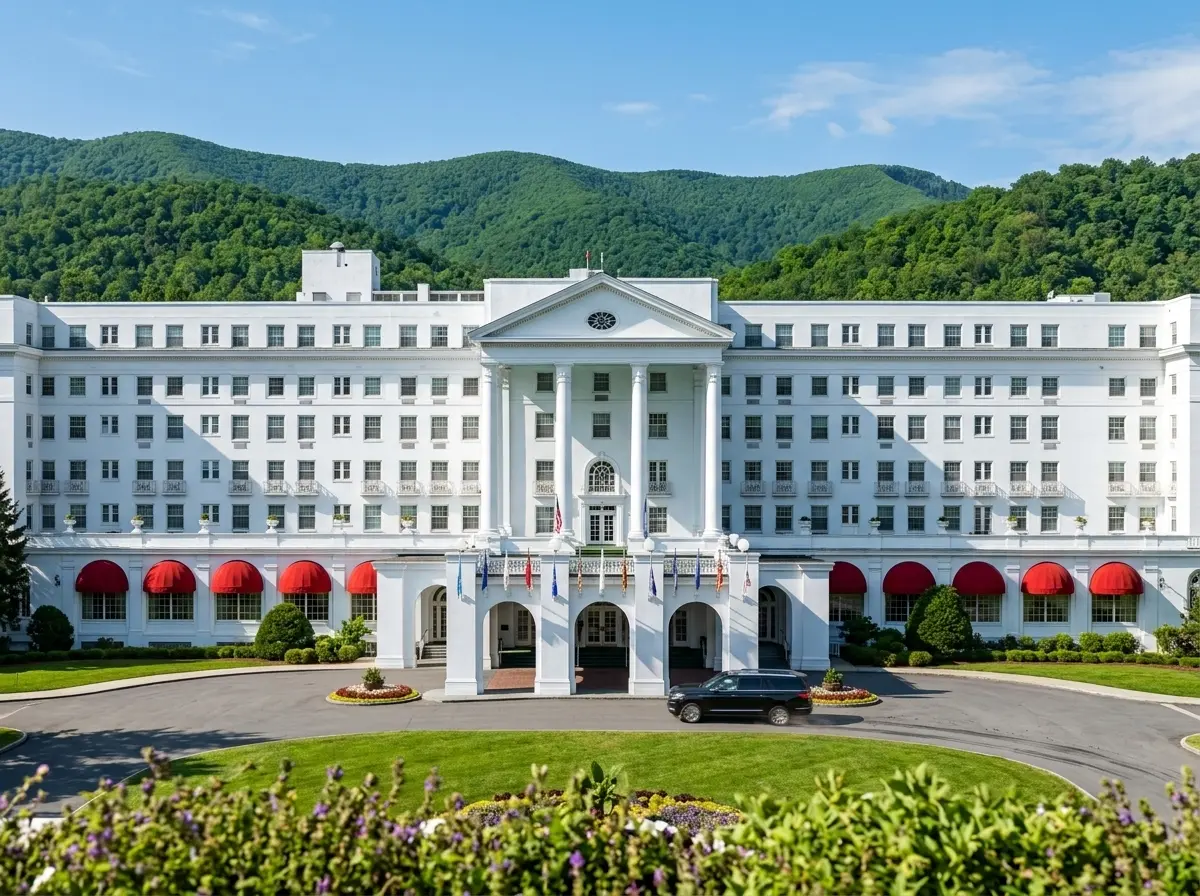
Senator Jim Justice’s family and Kennedy Lewis Investment Management closed a $500 million joint venture on August 14 that hands the New York firm 51 percent control of The Greenbrier and the chairmanship of its board. The deal ends a bitter receivership fight over roughly $289 million to $300 million in resort debt while the Justice family keeps a minority stake and deep operational roots.
The 710-room White Sulphur Springs resort stays open, reservations hold, and casino operations continue under an interim Lottery arrangement. Control, capital and political optics all shifted in one afternoon.
Kennedy Lewis Takes the Chair and 51 Percent
In the official joint venture completion announcement, the Justice Family Group and Kennedy Lewis described a partnership built for long-term investment in facilities and guest experience. Kennedy Lewis named Lloyd Nathan chairman of the new board. Nathan spent nearly a decade at MGM Resorts and brings hospitality, gaming and large-scale development experience.
David Chene, managing partner at Kennedy Lewis, called the property “a truly unique American institution” and said the combination of the firm’s resources, Nathan’s oversight and the Justice family’s local roots creates “a powerful platform to invest in the property’s long-term future.” Jill Justice, the senator’s daughter and Greenbrier president, said the collaboration supplies “the financial strength, expertise and long-term investment needed to protect everything that makes The Greenbrier special.”
West Virginia Lottery correspondence confirmed the Kennedy Lewis side acquires 51 percent control. A five-member board of managers includes James C. “Jay” Justice III in one seat; three new key persons form the majority. Final qualification of those members still requires a properly noticed Lottery Commission vote.
That board math is the mechanism of control. Three of five seats give Kennedy Lewis the ability to set strategy, approve major capital plans and hire or replace senior operators once the Lottery clears the nominees. The family’s single confirmed seat preserves a voice and a veto only where the joint-venture documents still require supermajority consent, terms that filings left heavily redacted.
Kennedy Lewis is a private credit platform specializing in non-sponsor lending founded in 2017 by David Kennedy Chene and Darren Lewis Richman. It targets middle-market companies facing cyclical, secular or regulatory pressure and regularly structures joint ventures and opportunistic capital. The Greenbrier fit that pattern: a trophy asset under secured-debt stress, open to a partner that could retire the first lien and fund reinvestment without a full sale.
The Debt Fight That Forced the Door Open
Carter Bank & Trust held long-running loans on the resort. Earlier this year the bank sold roughly $289 million in outstanding Greenbrier-related debt to White Sulphur Springs Holdings, an affiliate of Omni Hotels parent TRT Holdings. That sale triggered federal and state lawsuits.
- Early 2026, White Sulphur Springs Holdings buys the Carter debt and seeks a federal receivership, accusing the Justices of default and revenue diversion.
- Spring-summer 2026, Justice lawyers float the Kennedy Lewis joint venture as the path to pay the debt plus fund improvements; Judge Frank Volk pauses the case repeatedly to allow closing.
- July-August 2026, Term sheets, governance negotiations and Lottery review of the casino license move in public filings; deadlines slip past August 7.
- August 14, 2026, Deal closes, White Sulphur Springs Holdings files a stipulation of voluntary dismissal with prejudice, ending the receivership fight permanently.
The Justices had argued the $500 million package would clear the White Sulphur Springs Holdings claim and leave capital for upkeep. The dismissal confirms that path succeeded for the hotel creditors who held the first-lien fight.
Judge Volk’s repeated pauses mattered. Each continuance kept a receiver from taking the keys while term sheets, governance seats and Lottery filings caught up. When the stipulation landed with prejudice, White Sulphur Springs Holdings gave up both the debt claim and any residual path to operate the resort. The courtroom track closed because the capital track closed first.
Who Gains Control and Who Steps Back
The numbers and seats make the zero-sum clear.
| Party | Position after close | What changed |
|---|---|---|
| Kennedy Lewis | 51% control, board chair (Lloyd Nathan) | Gains majority vote and strategic lead on a trophy asset |
| Justice family | Minority stake, operational continuity, one confirmed board seat | Ends sole ownership held since 2009; keeps roots and Jill Justice’s role |
| White Sulphur Springs Holdings / Omni | Debt paid, case dismissed with prejudice | Loses receivership bid and any path to full takeover |
| Casino key-person nominees | Pending Lottery approval | Must stay walled off from casino operations until Commission vote |
Jim Justice framed the outcome as validation of nearly two decades of family risk. “For nearly two decades, our family has put our own money, our hearts and our lives into The Greenbrier and into West Virginia,” he said. “Our new partners bring tremendous experience and fresh ideas, while Jill and our family bring deep West Virginia roots.” The family still guarantees certain obligations and retains influence, yet the majority vote now sits with the New York firm.
Operational continuity softens the ownership break. Jill Justice remains president. Local management stays in place for guest services, golf, spa and meetings. The shift is at the board and capital layer, not a wholesale purge of the people who run the floors.
Casino Stays Open Under Temporary Wall
Lawyers for the Greenbrier had warned earlier in the week that Lottery delays could force a casino shutdown. By closing day the tone cooled. Acting Lottery Director David Bradley wrote that the casino could operate if unapproved new board members exert no authority over casino operations until the Commission meets.
“You will be in compliance with the law so long as the unapproved board members of the holding company exert no authority over the operations of the casino,” Bradley stated. The next regular Lottery Commission meeting is set for August 26. Greenbrier representatives said they welcome the flexibility and that casino operations continue without interruption. About 90 workers and their benefits hung in the balance during the uncertainty.
The wall is procedural, not physical. Unapproved key persons may hold economic interests and non-casino board roles, yet they cannot direct gaming floors, cages, surveillance or licensing paperwork until the Commission votes. That split let the joint venture close on August 14 without freezing tables or cutting shifts.
The West Virginia Democratic Party called the episode the product of long financial mismanagement. Chairman Mike Pushkin said those employees “shouldn’t become collateral damage because the Justice family’s financial house is in chaos.”
Debts the Half-Billion Deal Left Behind
The joint venture cleared the resort’s central secured debt. Separate claims remain.
- First Guaranty Bank, pandemic-relief loan originally $35 million, now past $47 million with daily interest and late charges against Greenbrier Hotel Corp.
- West Virginia DEP, nearly $3 million in unpaid and delinquent environmental penalties against Bluestone Coal Corporation; Bradley expressed deep disappointment the Greenbrier deal left these untouched.
- New London Tobacco Market and Fivemile Energy, roughly $35 million Kentucky judgment from a 2012 mineral-rights case; they sought to intervene in the Greenbrier receivership to protect collection rights and were blocked.
Snapshot of lingering exposure
- ~$47M+ First Guaranty pandemic loan and charges
- ~$3M DEP environmental penalties on Bluestone Coal
- ~$35M outstanding Kentucky coal judgment
Bradley wrote that “the same people that currently own the Greenbrier allegedly owe millions of dollars of mining-related fines to the State of West Virginia, and these fines have apparently been left unpaid for years.” The hotel balance sheet improved; the broader Justice-linked ledger did not fully clear.
Creditors outside the first-lien circle watched the receivership as a rare pressure point. Once White Sulphur Springs Holdings dismissed with prejudice, that lever vanished. The Kentucky judgment holders had already been blocked from intervening. The DEP penalties sit on Bluestone Coal, a separate entity, so the hotel joint venture had no contractual duty to retire them.
From Bankruptcy Buy to Shared Authority
The Justice family bought The Greenbrier out of bankruptcy in May 2009. The property had been a mineral-springs destination since 1778, hosted 28 U.S. presidents, and still contains the declassified Cold War bunker known as Project Greek Island, built to shelter Congress. Today it sits on roughly 11,000 acres with four golf courses, a private casino, spa, extensive meeting space and the full amenities of a National Historic Landmark.
Readers can trace the full resort history from mineral springs to bunker on the property’s own site. The 2009 purchase became central to Jim Justice’s public identity as the West Virginia businessman who refused to let the landmark fail. Seventeen years later the same family accepted a majority partner and a professional chairman to keep it solvent and investable.
| Marker | 2009 buy | 2026 joint venture |
|---|---|---|
| Transaction type | Out-of-bankruptcy purchase | $500 million joint venture |
| Ownership | Sole family control | Kennedy Lewis 51%, family minority |
| Board leadership | Family-directed | Lloyd Nathan as chair; Jill Justice remains president |
| Secured resort debt | Legacy bankruptcy exit financing | Carter-linked claim paid; receivership dismissed |
Corporate filings already reflect the shift: Greenbrier Hotel Corporation became Greenbrier Hotel, LLC; a new holding structure (Greenbrier TopCo) sits above the assets; equity pledges and personal guarantees secure the financing. Waterfall and distribution terms remain heavily redacted as sensitive commercial information.
The rebrand from corporation to LLC and the TopCo layer are standard private-credit architecture. They ring-fence resort cash flows for lenders and partners, separate gaming licensing from parent liabilities, and make future equity or debt raises easier to document. Guarantees keep the family economically tied even after surrendering the majority vote.
Morrisey Welcomes New Partners While Rivals Watch
Governor Patrick Morrisey, a Republican rival to Justice, moved quickly on social media.
West Virginia’s iconic Greenbrier Hotel is now under the majority ownership and controlling interest of Kennedy Lewis, a New York-based private credit and opportunistic asset firm. With Kennedy Lewis now officially controlling the resort, I welcome them to West Virginia.
The full Morrisey statement welcoming the new majority owners added that he had asked the Lottery Commission to protect employees and that he hoped the new team would “restore the beauty of the resort to its former glory.” The post drew thousands of views and replies that mixed relief for the property with skepticism about unpaid state fines and New York capital flowing into West Virginia.
Rep. Riley Moore congratulated the Justice family and called the investment a bright future for the workers. Local observers noted that the end of the receivership distraction frees Justice politically while Morrisey stakes a protector role over Greenbrier County jobs. The Democratic Party kept the focus on the 90 casino employees and the pattern of unpaid obligations.
Those three tracks (executive welcome, congressional congratulations, party criticism) will share the same facts and still talk past one another. Jobs and the open resort favor the congratulatory line. Unpaid DEP penalties and the First Guaranty balance favor the critics. Kennedy Lewis inherits the asset story; the family still owns the broader ledger story.
Why the Deal Still Leaves Open Questions
Closing day answered the receivership question and the majority-control question. It left a short list of unfinished items that will shape how clean the handoff looks.
- August 26 Lottery vote on key-person qualification for the new board majority
- Interim casino wall that bars unapproved managers from gaming authority until that vote
- Personal guarantees and redacted waterfalls that still bind family economics to resort performance
- Separate non-resort claims (First Guaranty, DEP, Kentucky judgment) outside the joint-venture perimeter
None of those items reopens the dismissed federal case. They do decide whether casino staffing stays seamless, how loud state-fine criticism remains, and how much day-to-day latitude Nathan’s board holds in its first quarters. Capital solved the first-lien emergency. Process and politics still frame the aftermath.
Guests See Continuity While Ownership Resets
For visitors the practical picture is simpler than the cap table. The 710 rooms remain bookable. Golf, spa, meetings and the historic grounds operate on the same campus footprint of roughly 11,000 acres. The private casino’s interim arrangement was written to avoid a lights-out scenario for the roughly 90 workers tied to that license.
Nathan’s MGM background and the firm’s stated focus on facilities and guest experience point to reinvestment rather than a stripped holding pattern, matching the language both sides used in the completion announcement. Jill Justice’s continuing presidency supplies the local face guests and employees already know. Shared authority changes who approves the capital plan; it does not, on closing day, change the front gate.
The Greenbrier itself is open, the largest secured claim is resolved, and a new majority owner with hospitality experience now holds the gavel. The remaining private and public debts, the August 26 Lottery vote, and the political calendar will decide how clean the new chapter actually feels.


Stripe Bid Shows PayPal Moat Cracked After Years of Slide

FDA Class I Tag Hits Finished Egg Recall Weeks Later

Berkshire’s Alphabet Surge Marks Abel’s Cash Deployment Shift

Aston Martin Bets 150 Valen V12s Will Print the Cash

Walmart Took Most of the Recalled Lettuce Behind Cyclospora Wave

Silver Lake Workday Talks Signal Private Floor for Software

Zuckerberg’s AI Letter Joins a Wave of Tech Manifestos

Pixel 11 Takes Battery Edge as Galaxy S26 Keeps the Power Lead

Trump Economy Faces Reckoning as Sentiment and Sales Slide

Apple’s 15% External Cut Still Faces Its Own Zero Admission

ZA/UM Lays Off 32 Staff as Zero Parades Wins Reviews, Not Players

EA’s New In-Game Ad Platform Skips the Games That Need It Most

Mortgage Rates Climb to 6.55%, the Highest Level in Nearly a Year

Colby Covington Stuns Tsarukyan as Askren Retires in Tears at RAF 11

Netflix Heads Into Earnings With Its 2022 Playbook Already Spent

Spain’s Diaspora-Rooted Squad Wins Over New York Ahead of the Final

NHL’s Monday Matinee Push Puts Capitals Fans on the Clock

DeChambeau’s Two-Shot Penalty Rewrites the Open’s Weekend Draw

Guardians Rout Twins With Seven Homers, Leave Joe Ryan One Shy of Record

England Beats France 6-4 to Claim World Cup Bronze Medal
-

 TECHNOLOGY3 years ago
How to Adjust a Bulova Watch Band – An Easy Guide
-

 News3 years ago
Fred Pentland: Athletic Bilbao’s English mentor who changed the essence of Spanish football
-

 FINANCE3 years ago
Tax Planning for Every Season: Guide to Maximizing Your Tax Benefits
-

 Education3 years ago
African Ministers New Education Plan
-

 BUSINESS3 years ago
What is Entrepreneurial Operating System? A Comprehensive Guide to EOS
-

 Education3 years ago
Innovate Your Learning Journey with Technology and Enhance Education
-

 News3 years ago
Russians formally out of World Athletics Championships
-

 BUSINESS3 years ago
Top 9 Most Expensive American Cities to Rent an Apartment