
Health
Walmart Took Most of the Recalled Lettuce Behind Cyclospora Wave
Taylor Farms iceberg lettuce linked to 9,481 outbreak cases went mostly to Walmart Marketside, not Taco Bell, as total U.S. cases top 13,000 with two deaths.

The Taylor Farms iceberg lettuce outbreak linked to cyclosporiasis now counts 9,481 illnesses reported from 17 states, with 398 hospitalizations and two deaths in Michigan. Overall U.S. lab-confirmed cases since May 1 stand at 13,895, plus more than 10,000 additional reports still under review.
Most of the 236,192 recalled cases never reached the Taco Bell counters that first made national headlines. Nearly half went to Walmart under the Marketside brand.
Case Counts Keep Rising Weeks After Shelves Cleared
The Centers for Disease Control and Prevention updated its outbreak page on August 13. Illnesses began as early as June 14 and the latest onset sat at August 3. Best-by dates on the recalled product have passed. The lettuce should no longer be in stores or restaurants.
Yet confirmed numbers still climb. CDC estimates a six-week lag between someone falling ill and the case reaching national tallies. Many people recover without tests. Others get tested late. Multiple separate clusters remain under investigation with no shared source identified yet.
- Outbreak-linked: 9,481 confirmed cases, 17 states, 398 hospitalizations, 2 deaths
- National lab-confirmed (May 1-Aug 10): 13,895 cases, 740 hospitalizations, 2 deaths, 47 states plus D.C. and Puerto Rico
- Additional reports: at least 10,455 cases still being sorted, many from Michigan
- 2025 comparison: only 1,180 cases in the full May-August window last year
| Window | Lab-confirmed cases |
|---|---|
| May-August 2025 (full period) | 1,180 |
| May 1-Aug 10 2026 (national) | 13,895 |
| Outbreak-linked subset (17 states) | 9,481 |
The year-over-year gap is large even before the 10,455 reports still under review are sorted. Michigan’s health department has logged far higher local figures that include probable cases. Ohio also sits near the top of state lists. The true national toll sits higher than any published number because mild cases never enter the system.
That undercount is built into how cyclosporiasis is found. A patient who recovers at home never generates a lab record. A clinician who orders a routine stool panel without a specific cyclospora request may still miss the parasite. Those gaps keep the published curves incomplete long after the product left the market.
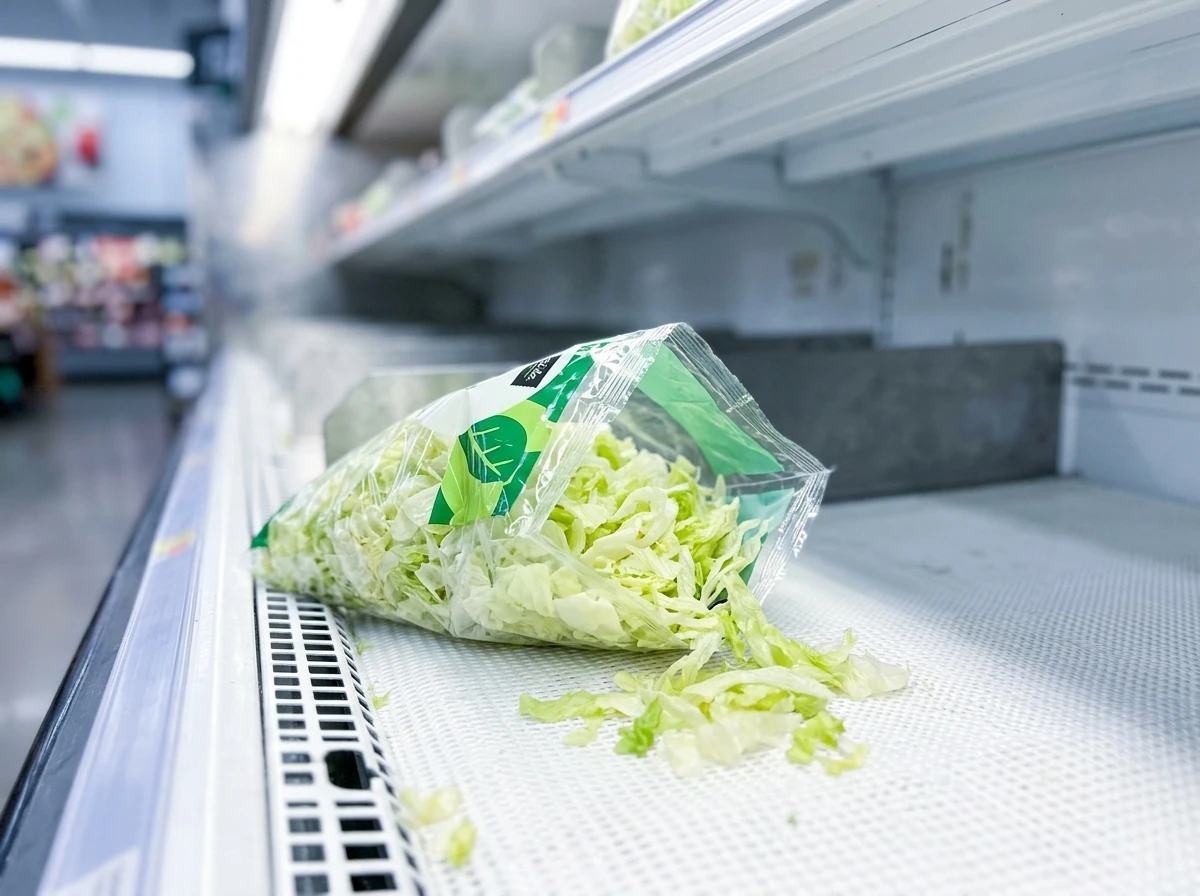
Where the Recalled Lettuce Landed
An FDA enforcement report finally listed the volumes. Taylor Farms recalled 236,192 cases of iceberg lettuce and related mixes from its central Mexico operations. Yum! Brands, parent of Taco Bell, received just 5,900 cases, under 2.5 percent.
| Recipient | Cases | Share |
|---|---|---|
| Walmart Marketside | 109,476 | ~46% |
| Taylor Farms own brand | 68,897 | ~29% |
| Cross Valley Farms (US Foods) | 19,016 | ~8% |
| Sysco | 11,519 | ~4.9% |
| Subway | 8,075 | ~3.4% |
| Markon | 7,459 | ~3.2% |
| Yum! Brands (Taco Bell etc.) | 5,900 | ~2.5% |
| Jack in the Box | 5,130 | ~2.2% |
| Peak Fresh Produce | 720 | ~0.3% |
Retail bags of Marketside Iceberg Salad and Shredded Lettuce reached select Walmart stores in more than a dozen states. Foodservice packs went to restaurants, cafeterias and distributors across a wider footprint that the company first listed at 27 states and later expanded in notes. The early public focus on Taco Bell made sense from the first patient interviews. Ingredient analysis showed iceberg lettuce as the common item. Traceback then landed on one supplier. The volume data arrived later and quietly rewrote the distribution story.
Walmart’s Marketside share alone outweighs every restaurant chain on the list combined. Taylor Farms own brand and the two large foodservice distributors add another wide institutional path. The recall therefore touched grocery coolers, quick-service counters and kitchens that never appear in a brand-level headline.
Why This Parasite Resists Fast Answers
Cyclospora cayetanensis does not behave like E. coli or Listeria. It needs one to two weeks outside a human host before it can infect someone new. Fresh stool is not immediately dangerous. Contaminated irrigation water, soil or hands on a farm can seed produce that looks and smells normal.
Standard genetic fingerprinting tools that link bacterial outbreaks do not work the same way here. Investigators rely on patient interviews, purchase records and limited molecular markers. Incubation averages about a week but stretches from two to 14 days. Symptoms can remit and relapse for weeks. Lab detection itself requires specific requests; ordinary ova-and-parasite exams often miss it.
These traits explain both the size of the 2026 wave and the slow drip of new confirmations. FDA and Mexican officials inspected the Guanajuato facility. Border screening increased. Product samples produced at least one false positive that was later withdrawn. Epidemiologic links remain the backbone of the investigation.
The same biology also stretches the calendar of public reporting. A person infected near the end of product life may not feel sick for two weeks. Another week or more can pass before a targeted test is ordered. Only then does the six-week national lag begin to close. That sequence is why August 13 totals still moved after best-by dates had expired and shelves were clear.
Michigan Carried the Heaviest Load
Michigan reported the first two deaths. Both patients had significant underlying conditions. Officials said cyclosporiasis and dehydration may have contributed. The state has also posted the highest local case tallies, including thousands of probable illnesses that push its public numbers well above the lab-confirmed national subset.
Early interviews in Michigan, Ohio, Kentucky, Indiana and West Virginia pointed strongly at Taco Bell meals. That signal drove the first public warnings on July 17. Later data broadened the picture to any exposure to the recalled Taylor Farms product, whether at restaurants or from retail bags. Maine and Massachusetts joined the outbreak roster in the August 13 update, bringing the total to 17 states: Arkansas, Iowa, Illinois, Indiana, Kansas, Kentucky, Massachusetts, Maine, Michigan, Missouri, Nebraska, New Hampshire, North Carolina, Ohio, Oklahoma, Pennsylvania and West Virginia.
- July 17, 2026: Taylor Farms recalls all central Mexico iceberg lettuce; Taco Bell and others pull product.
- July 18-24: Case counts and state list expand; Marketside retail products named.
- August 3-5: Deaths acknowledged; outbreak total climbs past 6,000.
- August 13: Total reaches 9,481 cases in 17 states; product long gone from commerce.
Hospitalization rates sit near 4 percent among outbreak cases. The parasite rarely kills healthy people. It can still dehydrate vulnerable patients severely.
Michigan’s dual role, first deaths and highest local tallies, kept the state at the center of media coverage even as the map filled in. The addition of Maine and Massachusetts on August 13 showed the footprint was still widening on paper after the lettuce itself was gone. Probable-case counting at the state level will keep local dashboards higher than the narrower lab-confirmed national set for some time.
A Familiar Name on the Supply Chain
Taylor Farms is one of the largest fresh-cut produce suppliers in North America. The same Guanajuato region and company name appeared in a 2013 cyclosporiasis outbreak tied to salad mix served at Olive Garden and Red Lobster. Later incidents involved other pathogens, including an E. coli event linked to onions. The company invests heavily in food safety systems, third-party audits and its own testing methods. It says it spends more than $200 million a year on those controls.
After the 2026 link emerged, Taylor Farms voluntarily suspended all iceberg lettuce sourcing and production from central Mexico. It commissioned an independent review of the facility and halted all output there temporarily. The firm maintains that no confirmed positive product tests have been verified as of mid-August and that it followed FDA-approved recall protocols. Class-action suits have already been filed. FDA continues its onsite work with Mexican counterparts.
Import dependence for winter and spring leafy greens remains structural. Central Mexico supplies a large share of U.S. iceberg during key months. Any contamination event at that scale travels far and fast through national distribution.
The 2013 salad-mix episode and the later onion-linked E. coli event show that a single large shipper can appear in more than one pathogen story across a decade. Heavy annual spending on controls does not erase that pattern from public memory once a new recall lands. The independent review and the temporary halt at the Guanajuato site are the company’s attempt to break the cycle for this commodity line.
Shoppers Step Back From the Produce Aisle
Recalled bags are gone. New cases still appear because of the lag. That combination has left a mark on everyday buying. Online conversation and early surveys picked up a clear pullback: roughly 40 percent of adults reported buying less fresh produce after the headlines. Nearly half expressed little or no confidence in the FDA’s ability to keep contaminated food off shelves.
The irony sits in plain sight. A fast-food chain that handled a sliver of the volume absorbed most of the early public anger. The largest single share sat in ordinary grocery coolers under a private label many shoppers grab without a second glance. Foodservice packs moved through Sysco, US Foods brands and other distributors into institutional kitchens that never made the evening news.
Cyclosporiasis is treatable. The usual course is trimethoprim-sulfamethoxazole as standard treatment for one to two weeks. Fluids and rest matter while diarrhea runs its course. People with sulfa allergies need alternatives. Most recover fully. The lasting public-health question is whether one large, hard-to-trace produce outbreak will permanently change how Americans view bagged greens and imported lettuce.
Early Warnings Tracked Meals Before Retail Bags
Patient interviews set the first public frame. Meals at Taco Bell in a band of Midwest and Appalachian states gave investigators a repeated menu item to chase. Iceberg lettuce emerged as the shared ingredient. Traceback then fixed on Taylor Farms product from central Mexico, and the July 17 recall followed.
Only after that sequence did the enforcement report lay out the full case volumes. Marketside retail bags and Taylor Farms own brand together accounted for most of the 236,192 cases. Subway, Jack in the Box and Yum! Brands were smaller lines on the same sheet. The interview-led path was rational given the tools available for this parasite. It also left the grocery channel under-discussed in the first wave of coverage.
- First signal: repeated Taco Bell exposure in early state interviews
- Common ingredient: iceberg lettuce across those meals
- Traceback result: one supplier in central Mexico
- Later volume picture: Walmart Marketside as the largest single recipient
That order of discovery still shapes residual blame. Brand names from the first warnings remain easier to remember than a private-label bag or a distributor code. The distribution table does not erase the early restaurant cluster. It does show how much exposure moved through channels that never led the evening news.
Import Routes Keep Winter Greens on U.S. Shelves
Central Mexico’s role in the U.S. iceberg supply is a seasonal fact, not a one-off sourcing choice. Winter and spring demand still pulls large volumes across the border when domestic harvests are thin. A contamination event at a major fresh-cut operation therefore has a ready national pipeline.
The 27-state foodservice footprint, later expanded in company notes, and the dozen-plus states that received Marketside bags illustrate how quickly that pipeline fans out. Sysco and Cross Valley Farms packs enter cafeterias and institutional kitchens that shoppers never see. Retail bags enter ordinary coolers under a label many buyers treat as generic.
Border screening did increase after the link emerged. Facility inspections with Mexican officials went forward. Those steps address the current event. They do not change the underlying seasonal dependence that will bring central Mexico iceberg back into the same distribution web in future seasons. The open question is how much extra scrutiny that web will carry after 9,481 outbreak-linked illnesses and a recall of this size.
CDC continues to track 13,895 laboratory-confirmed cases since May 1 and the remaining unlinked clusters. FDA lists the product as off the market and the investigation ongoing. The recalled iceberg lettuce sourced from central Mexico has finished its commercial life. The case counts have not.


Sony and Warner Sue Anthropic Over Torrented Song Lyrics

Microsoft 365 Auth Fault Took Down Exchange and Teams

Honor’s Robot Phone Works, Then Prices Itself Out

Florida Cities Top Retirement Rankings the Scores Cannot Explain

Walmart’s $50 Million Opioid Settlement Closes Case Without Admission

California Sues Over $120 Million Morro Bay Wind Lease Buyout

Gilead Bixlenvo FDA Nod Opens Single Pill Path for Complex HIV Cases

Meta’s $18B Kids Deal Forever Shields Data Used to Spot Under-13s

Lettuce Outbreak Drove Record Cyclospora Spike Across 20 States

Amazon Shaves $20 Off M6 Mac Mini Before It Even Ships

Take-Two CEO Pushes Netflix Subs for GTA 6 Extended Look

Quake Gets 19 Free Maps From MachineGames Quake Club

Destiny 2 Fans Unlock Vaulted Maps After Live Service Ends

Wildlands Free Update Hands Players the Tools They Already Invented

Stripe Bid Shows PayPal Moat Cracked After Years of Slide

Quordle Monday Delivers Gavel Crush Speed Ethos Cleanly

Tyson’s Five-Year Utah Plant Falls to Cattle Shortage Reckoning

Silver Lake Workday Talks Signal Private Floor for Software

Kennedy Lewis Takes Majority Control of The Greenbrier in $500M Deal

Best Buy Marks 60 Years With Sale That Echoes Its Audio Shop Roots
-

 TECHNOLOGY3 years ago
How to Adjust a Bulova Watch Band – An Easy Guide
-

 News3 years ago
Fred Pentland: Athletic Bilbao’s English mentor who changed the essence of Spanish football
-

 FINANCE3 years ago
Tax Planning for Every Season: Guide to Maximizing Your Tax Benefits
-

 Education3 years ago
African Ministers New Education Plan
-

 BUSINESS3 years ago
What is Entrepreneurial Operating System? A Comprehensive Guide to EOS
-

 Education3 years ago
Innovate Your Learning Journey with Technology and Enhance Education
-

 News3 years ago
Russians formally out of World Athletics Championships
-

 BUSINESS3 years ago
Top 9 Most Expensive American Cities to Rent an Apartment