
FINANCE
DOE Commits $17.5B in Loans to Speed 10 New U.S. Nuclear Reactors
The Department of Energy committed $17.5 billion in conditional loans to finance five projects building 10 new AP1000 nuclear reactors across the U.S. by 2030.

The Department of Energy on Tuesday committed $17.5 billion in conditional loans to finance five projects that would build 10 new Westinghouse AP1000 nuclear reactors across the United States by 2030, the largest federal push to restart commercial nuclear construction in decades. Energy Secretary Chris Wright called the package a step toward reviving the U.S. nuclear industrial base and helping to “unleash the next American nuclear renaissance,” language the Trump administration has tied to an executive order signed in May 2025. The loans flow through the Energy Department’s Office of Energy Dominance Financing, with each of the five projects eligible for up to $3.5 billion in debt.
Westinghouse and the utility partner on each project must put up roughly $1 billion in equity before they can access the loan money, and final site selections from seven candidates are still pending, Wright told reporters on a call Tuesday. The bet is that running five projects in parallel will stand up a domestic supply chain that the last U.S. nuclear build, Georgia Power Co.’s Plant Vogtle, never had. The two Vogtle reactors were completed years late and billions of dollars over budget, an outcome the new program is explicitly designed to avoid. Wright said the timing and cost of the new plants will “well outperform what was done on Vogtle.”
The DOE Deal Puts $17.5 Billion Behind 10 New Reactors
The Energy Department’s Office of Energy Dominance Financing said it has conditionally committed $17.5 billion in loan facilities, formally called the American Supply Chain Loans, to support investment in U.S. nuclear reactors. Up to five loans would each support two AP1000 reactors built by Westinghouse, the only large reactor design licensed to operate in the United States. Westinghouse will partner with up to five eligible utilities or energy companies on the projects, and the partners must satisfy technical, legal, environmental, and financial conditions before the DOE enters definitive financing documents and funds the loans. Shares of Westinghouse’s parent company, Cameco Corp., rose more than 1% after the DOE announcement, per reporting on Tuesday’s $17.5 billion loan package. The program is the largest federal push to restart commercial nuclear construction in decades.
Per-project financing will run up to $3.5 billion in debt, paired with nearly $1 billion in equity from Westinghouse and the utility partner, according to the Energy Department and Greg Beard, who heads the loan office. Across five projects, sponsor equity totals about $5 billion. Loans will fund long-lead items such as reactor vessels and steam generators, the complex components that typically take the most time to manufacture and deliver, and are not construction loans themselves.
- $17.5 billion in conditional DOE loan facilities
- 10 AP1000 reactors across 5 project sites, 2 per site
- $3.5 billion loan ceiling per project
- ~$1 billion equity floor per project, split between Westinghouse and utility partner
- 1.1 gigawatts per AP1000 reactor, enough power for 800,000+ homes
- 7 letters of intent from utility and energy company candidates
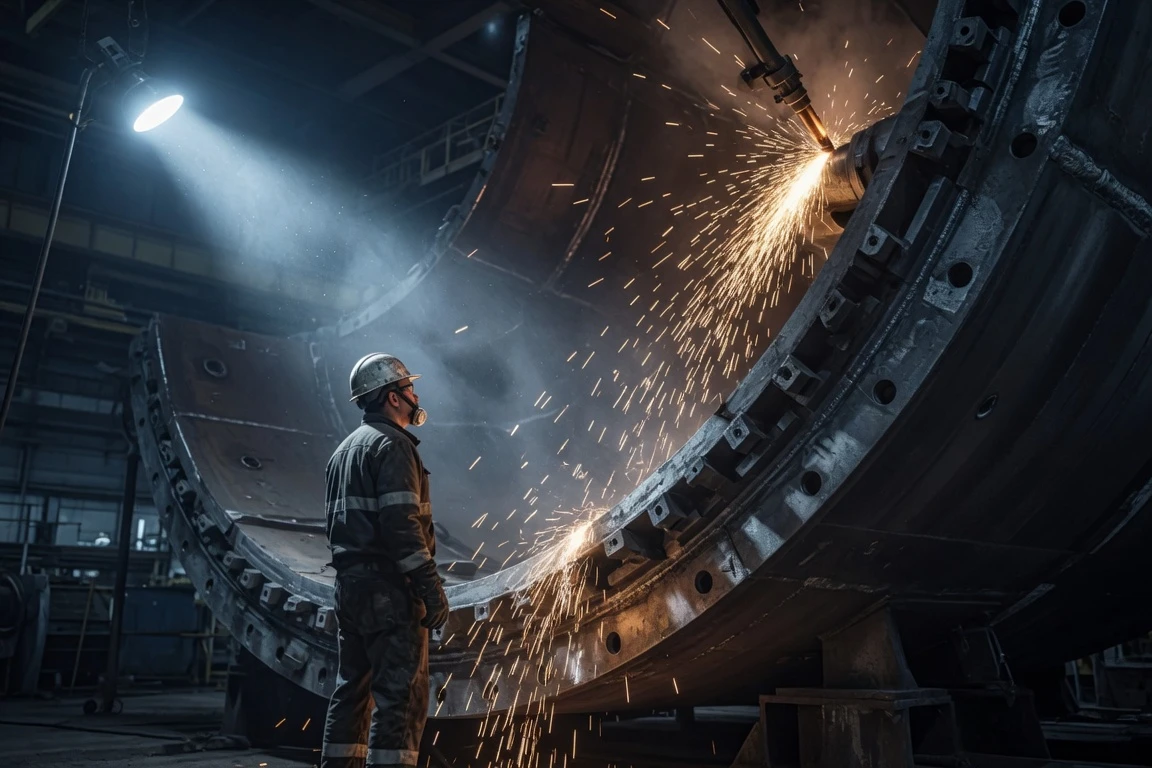
How the Loan Money Actually Moves
The loans will not go directly to Westinghouse, said Greg Beard, who heads DOE’s loan office. Instead, the financing will go to five special purpose vehicles, Beard said on the call. Each SPV ties a Westinghouse entity to one utility or energy company partner, with both sides required to fully commit project equity up front. Westinghouse and the utility or energy company partner will jointly own the two reactors at each project site.
The decision to fund equipment rather than construction itself is a deliberate schedule play. By financing the bottleneck components first, the program aims to cut up to three years off the timeline for getting new reactors under construction. Brookfield CEO Connor Teskey, whose firm owns 51% of Westinghouse alongside Cameco Corporation’s 49%, said the loan facilities “serve as a catalyst for nuclear, providing the certainty needed to enhance the domestic nuclear supply chain,” according to the press release on the $17.5 billion financing. Westinghouse had already committed to meeting the executive order goal of having 10 large reactors under construction by 2030. The conditional structure is the lever the DOE is using to force that commitment at fleet scale.
Wright said the conditional loan structure is intended to lower construction costs and shorten timelines. He added that seven utilities and energy companies have signed letters of intent identifying candidate sites, with the Energy Department planning to pick five. Locations and partner names remain undisclosed, with Wright calling disclosure “premature” until selections are finalized.
- Westinghouse and a utility partner form a special purpose vehicle (SPV) for one two-reactor project site.
- Each partner commits $500 million in equity to the SPV, totaling about $1 billion per project.
- The SPV uses the DOE loan, up to $3.5 billion per project, to purchase long-lead items from Westinghouse at fixed prices.
- Long-lead items include reactor vessels and steam generators, components that take the most time to manufacture and deliver.
- Once procurement is locked, construction proceeds at the project site, with the reactors jointly owned by Westinghouse and the utility partner.
The AP1000 Bet and the Vogtle Hangover
Every reactor funded by the new program will use the same design: Westinghouse’s AP1000, the only large reactor design licensed to operate in the United States. That monopoly shapes the whole architecture: any utility that takes DOE money under the program is taking Westinghouse. Westinghouse is jointly owned by Brookfield Asset Management and its institutional partners, with 51%, and Cameco Corporation, with 49%. The two owners run the company through a joint venture headquartered in the United States.
The AP1000 has exactly one prior U.S. track record. Only two new large reactors have been built from scratch in the United States in recent decades, and those two reactors, at Georgia Power Co.’s Plant Vogtle, were completed years late and billions of dollars over budget, per reporting on the DOE loan program. The new program bets that doing five projects in parallel, with the same equipment supplier on each, will produce something the Vogtle build could not: a working domestic supply chain. The bet is industrial policy at fleet scale, with 10 reactors moving through the same manufacturing pipeline. Wright called the AP1000 design “robust and sound” on a call with reporters.
By building in volume and at multiple locations, we think we will create and stand up a large supply chain and build a lot of construction expertise. We expect the timing and cost of these plants to well outperform what was done on Vogtle.
Wright said Vogtle’s failures stemmed from bad planning, supply chain problems, and the COVID-19 pandemic, with the AP1000 itself working as designed. Five projects buying long-lead items at the same time lets Westinghouse amortize manufacturing setup across 10 reactors instead of two. Asked whether he expects more projects after this first wave, Wright said he would be “very surprised if there were not” dozens more of these built going forward.
The Energy Department framed the structure as “very, very low risk to the American taxpayers,” in Wright’s words. The loans are structured as debt, and the DOE only funds projects after they hit technical, legal, environmental, and financial milestones. Westinghouse plus the utility partner must put up roughly $1 billion per project in cash first. The risk that survives that filter is the one that took Vogtle years late and billions over budget: cost overruns on a reactor type the U.S. has built only once.
Data Centers Are Pulling Nuclear Policy
The DOE tied the loan announcement to the AI build-out. Data centers used 4% to 5% of the nation’s total electricity in 2024, a share that could nearly triple by 2028 according to government estimates cited in the rollout. Wright said the loans attracted “tremendous interest” from data center developers, utilities, and energy companies. The department expects hyperscalers to sign long-term power purchase agreements with the projects to support construction of the reactors. Wright said the DOE is confident the projects will be economic for utility shareholders, ratepayers, and hyperscalers.
The hyperscaler angle is already visible at plants being restarted rather than built new. Microsoft has signed an agreement to support the restart of Three Mile Island in Pennsylvania, and Alphabet’s Google has signed one for Duane Arnold in Iowa. Three shuttered plants, including Palisades in Michigan, are on track to return to operation in the coming years, but the tech sector has not yet signed a deal that supports the construction of a new big plant, per CNBC.
Where the Program Could Slip
Even with $17.5 billion committed, the program has multiple choke points. The DOE has 7 letters of intent but only 5 project slots, meaning two candidates will walk away with planning costs and no financing. Wright said final decisions have not yet been made on which sites will receive funding, and sites are “geographically spread across the country.” The Energy Department declined to give a timeline for making the selections.
The Vogtle comparison is unavoidable. Wright’s confidence that fleet scale will outperform a single build rests on a domestic supply chain that has not yet been demonstrated for AP1000 components at this volume. Most U.S. nuclear power plants were built between 1970 and 1990, and the last two from-scratch reactors, at Vogtle, were the only real test of the design in modern U.S. construction conditions. Critics of building more nuclear reactors say they remain too expensive and riskier than other low-carbon energy sources. The Energy Department did not directly address that critique in Tuesday’s announcement.
The deal structure leaves the federal government holding the residual risk on cost overruns. The loans are debt with $1 billion per project in sponsor equity, but if construction costs spiral the way they did at Vogtle, the federal loans are the next dollar at risk after sponsor equity is wiped out. The first reactor is not expected to come online until the mid-2030s, per Wright, so the program’s progress will show up in procurement milestones rather than generation.
- Vogtle precedent: the only recent U.S. AP1000 build came in late and billions over budget.
- Long-lead manufacturing has to scale up before the first reactor vessel is forged.
- Two of seven candidate sites will be dropped after planning work is already done.
- Hyperscaler PPAs are expected but not yet signed for any new build.
- Federal loans are conditional, so legal, environmental, and financial milestones can still kill a deal.
The Conditions Still Standing Between Loans and Steel
After the site selections, Westinghouse and the utility partners have to lock long-lead procurement contracts under the loan facilities and sign definitive financing documents with the DOE. Until then, the $17.5 billion loan ceiling remains a commitment, not a draw. Beard said Westinghouse, its owners, and its partners must satisfy technical, legal, environmental, and financial conditions before DOE enters definitive financing documents and funds the loans. Brookfield’s press release on the program carried the same language verbatim.
Wright said the nuclear plants could begin construction by 2030 and become operational in the mid-2030s, a span that lines up with the executive order’s 10-reactors-by-2030 goal. The DOE expects the timing and cost of these plants to “well outperform what was done on Vogtle,” Wright told reporters. In the meantime, the program’s near-term milestones are entirely procurement-side: long-lead contracts signed, reactor vessels ordered, supply chain stood up. Each of those milestones must be met for the federal money to convert into actual spending on construction, and until the first reactor vessel is forged under one of those contracts, every announcement remains conditional.
Frequently Asked Questions
Here are the questions readers most often bring to a federal nuclear loan announcement of this size.
What is the Westinghouse AP1000?
The AP1000 is a pressurized water reactor designed by Westinghouse that can generate 1.1 gigawatts of electricity, enough power for more than 800,000 homes. It is the only large reactor design licensed to operate in the United States today, which is why every project funded under the new DOE loan program uses it.
Who owns Westinghouse?
Westinghouse Electric Company is jointly owned by Brookfield Asset Management and its institutional partners, holding 51%, and Cameco Corporation, holding 49%, according to Brookfield’s June 23, 2026 press release. Brookfield is a New York-headquartered alternative asset manager with over $1 trillion in assets under management.
How is this different from Plant Vogtle?
Vogtle Units 3 and 4 in Georgia are the only two new large reactors built from scratch in the U.S. in recent decades, and they were completed years late and billions of dollars over budget. The DOE argues that building five projects in parallel, with the same equipment supplier buying long-lead items at fixed prices, will stand up a domestic supply chain that Vogtle never had. Wright said he expects the new plants’ timing and cost to “well outperform what was done on Vogtle.”
When will the new reactors generate electricity?
Wright said the plants could begin construction by 2030 and become operational in the mid-2030s, in line with President Trump’s May 2025 executive order calling for 10 large nuclear reactors to be under construction by 2030. Until the first reactor vessel is forged under one of the new procurement contracts, no electricity will flow from the program.
Why are data centers involved?
Data centers used 4% to 5% of U.S. electricity in 2024, a share that could nearly triple by 2028, according to government estimates cited in the DOE announcement. Wright said hyperscalers running cloud and computing infrastructure for AI have shown “tremendous interest” in buying power from the new reactors, and the Trump administration expects them to sign long-term power purchase agreements to support construction.
Disclaimer: This article discusses U.S. federal energy policy and the financing structure of a conditional loan program. Forward-looking statements about construction timelines, costs, and operational dates are subject to regulatory, financial, and supply chain conditions and may not materialize. Figures are accurate as of the publication date. Consult official Department of Energy sources and qualified energy policy analysts for current status.





Spotify Running Mode hits Android and revives its old tempo experiment

Galaxy Tab S12 Ultra Renders Keep the Notch Fans Hate

Novato Spinning Round House Sells With Six Neighbors for $3.3 Million

Crop Tour Finds Indiana and Nebraska Corn Yields Lagging 2025

Best Buy 60th sale brings Android deals back to its roots

American Airlines reverses seatback screen bet years too late

Iran Hormuz Strikes Force Gulf Oil Onto Costlier Paths

Plague Tale Prequel Day One Joins Game Pass Wave 2 as Witcher Exits

NBA 2K27 opens The City to everyone and rewrites career eras

iOS 26.6.1 Patches 29 Flaws as AI Forces Faster Apple Updates

Double Fine Cuts 23 Jobs Weeks After Xbox Independence

Day-One Big Walk Lifts PS Plus August Beyond Recycled AAA

John Hight Exits Wizards After Digital Reckoning Hits

Curtis Mead’s Red Sox Debut Ends With Fractured Wrist

Red Sox Squander Hot Streak Chance in 4-3 Loss to Athletics

Moesch and Dressel Rewrite Night One at 2026 U.S. Nationals

Boutte’s Quiet Camp Takeover Forces Patriots Receiver Choices

Take-Two CEO Pushes Netflix Subs for GTA 6 Extended Look

Halo Campaign Evolved Skulls Meet Death Barriers That Kill the Hunt

Wildlands Free Update Hands Players the Tools They Already Invented
-

 TECHNOLOGY3 years ago
How to Adjust a Bulova Watch Band – An Easy Guide
-

 News3 years ago
Fred Pentland: Athletic Bilbao’s English mentor who changed the essence of Spanish football
-

 FINANCE3 years ago
Tax Planning for Every Season: Guide to Maximizing Your Tax Benefits
-

 Education3 years ago
African Ministers New Education Plan
-

 BUSINESS3 years ago
What is Entrepreneurial Operating System? A Comprehensive Guide to EOS
-

 Education3 years ago
Innovate Your Learning Journey with Technology and Enhance Education
-

 News3 years ago
Russians formally out of World Athletics Championships
-

 BUSINESS3 years ago
Top 9 Most Expensive American Cities to Rent an Apartment