
BUSINESS
DOJ’s Retreat From Corporate Crime Leaves No One Facing Charges
DOJ prosecutors believed executives at Abbott, Alibaba and EagleBank broke the law, then charged no one at all, exposing a widening accountability gap.

The Justice Department spent years building evidence against Abbott Laboratories, Alibaba and EagleBank. Prosecutors on each case believed executives or managers had a hand in the wrongdoing under investigation. Nobody was charged. Not the companies. Not one individual.
Letting a company settle while pursuing the people who ran it used to be the fallback position at Main Justice, the compromise that kept at least one side of the ledger accountable. In these three matters, that fallback never triggered. All three closed within weeks of each other this summer with fines, civil settlements or no penalty at all, and prosecutors who worked the cases have told colleagues they believed the evidence supported charges against specific people.
Three Investigations, Zero Defendants
Each case ran through a different part of the government and involved a different industry. The outcome landed in the same place every time.
| Company | Alleged Conduct | DOJ Resolution | Individuals Charged |
|---|---|---|---|
| Abbott Laboratories | Cronobacter contamination at a Sturgis, Michigan infant formula plant tied to a 2022 shortage and infant illnesses | Criminal case closed; civil settlement with an unspecified penalty officials call significant | None |
| Alibaba | Evidence the platform let dangerous, unapproved drugs reach U.S. consumers | Scaled back settlement, no criminal prosecution | None |
| EagleBank | A check kiting scheme that ran for more than a decade after executives allegedly overrode compliance staff | One year non-prosecution agreement, about $9.8 million | None |
The Alibaba matter grew out of a probe into counterfeit and unapproved pharmaceuticals moving through the company’s marketplace to American buyers. Instead of criminal charges, the company reached a scaled back settlement. Officials pointed to a White House executive order from last year that discourages criminal prosecutions over regulatory violations, a directive that specifically labels strict liability offenses as “generally disfavored.” A separate probe into Philips over similar allegations remains open, for now.
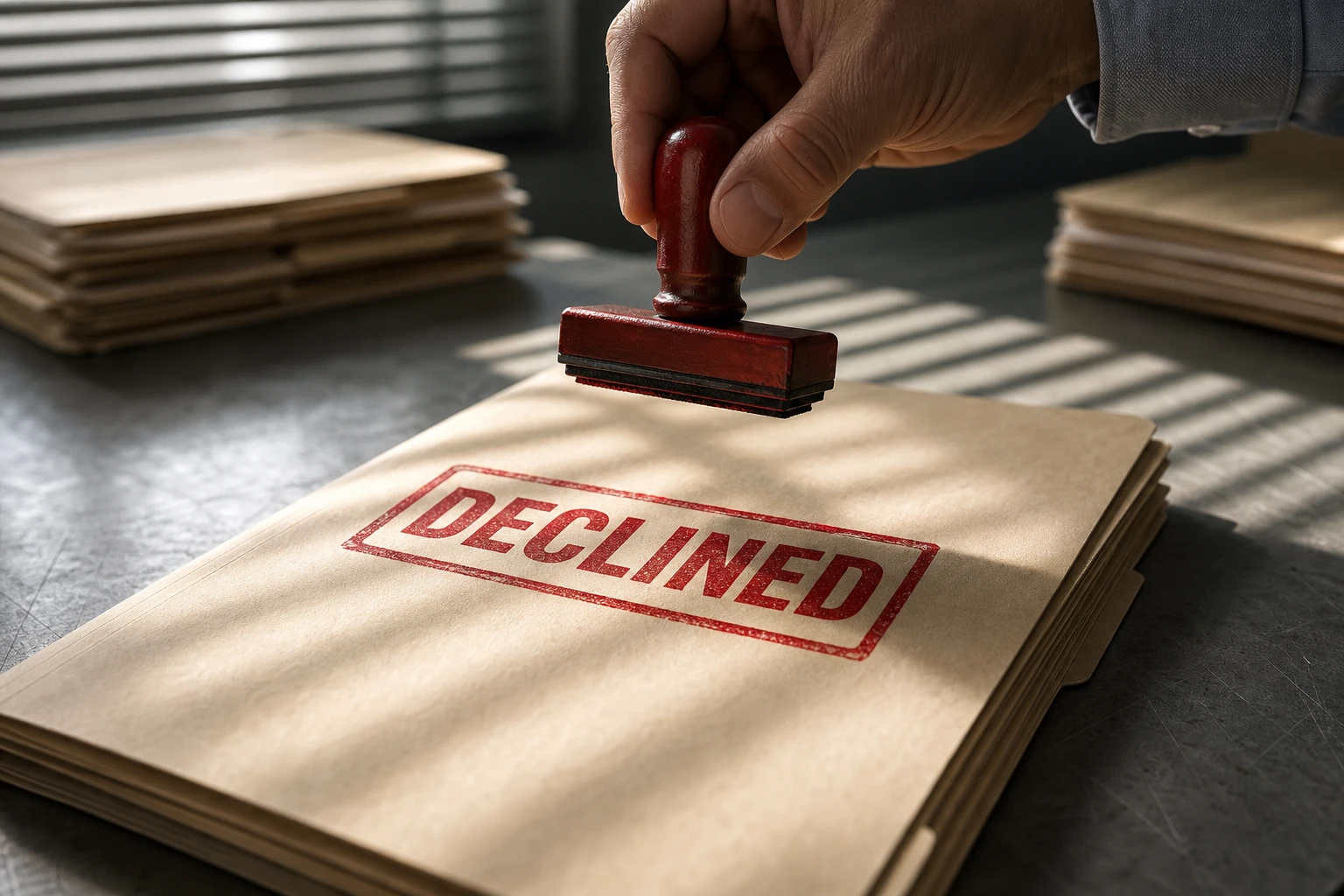
How the Abbott Baby Formula Case Fell Apart
Federal prosecutors spent more than three years examining Abbott’s plant in Sturgis, Michigan, the same facility tied to a 2022 Cronobacter contamination scare that coincided with infant deaths and a nationwide formula shortage. Prosecutors built what they considered a strong case. A team drafted a formal prosecution memo over a Thanksgiving weekend late last year, laying out evidence they believed supported felony charges against the company and several executives.
Tysen Duva, the Justice Department’s Criminal Division chief, reviewed the case favorably while awaiting Senate confirmation to lead the division, and his team saw Abbott as a strong opportunity to hold individuals accountable. The deputy attorney general’s office, then run by Todd Blanche, overruled that push and ended the criminal investigation earlier this year in favor of a civil resolution. Blanche has since become acting attorney general and faces a Senate confirmation hearing to hold the job permanently.
A senior Justice Department official told CBS News the department believed a civil False Claims Act resolution was “the best mechanism to achieve accountability, deterrence and protection of the public,” and said the agreement in principle with Abbott includes a monetary penalty described only as significant. A DOJ spokeswoman separately said criminal charges “would have been heavy handed.”
Senator Adam Schiff, a California Democrat on the Judiciary Committee, opened a formal inquiry into who closed the case, demanding Blanche explain his personal role in overruling career prosecutors and Trump’s own political appointees who had endorsed pursuing charges.
Under your management, DOJ does not consider a case involving deadly risks to medically sensitive infants, after a recommendation of a felony charge, to be worthy of criminal prosecution.
Schiff wrote that line in his letter to Blanche, adding that if cases involving “risk of injuries or death to premature infants” don’t count as a priority, he has questions about what does.
What we know:
- Abbott gave $500,000 to President Trump’s inauguration committee, one of 58 corporations under federal investigation that together contributed roughly $50 million, according to an April 2025 Public Citizen analysis
- Criminal Division prosecutors drafted a memo recommending charges against Abbott and its executives before the deputy attorney general’s office overruled them
What remains unconfirmed:
- Whether the donation had any bearing on the charging decision; the White House and Abbott have not responded to reporters’ requests for comment, and a DOJ official said the company’s plans for a new Ohio facility played no role
- The final size of the civil penalty, which officials describe only as significant
A Decade of Overridden Warnings at EagleBank
EagleBank’s case involved a different kind of failure. The Maryland based lender and its parent, Eagle Bancorp, admitted that between 2010 and 2021 it willfully failed to maintain an anti money laundering program required under the Bank Secrecy Act.
Investigators found that a father and son operated a check kiting scheme for more than a decade using EagleBank accounts, a scheme that caused nearly $6.3 million in losses to another financial institution. Compliance staff repeatedly flagged the accounts for closure. Senior bank executives overrode them each time, according to the signed agreement’s statement of facts.
“For more than a decade, EagleBank knowingly allowed favored clients to operate a check kiting scheme, even as compliance personnel repeatedly tried to stop it,” Duva said in announcing the resolution. He added that banks “must be gatekeepers, not gateways,” for criminal activity, and that the department would ensure they are held accountable. EagleBank agreed to a one year non-prosecution agreement and a payment of about $9.8 million, made up of a $9.06 million fine and $736,515 in forfeiture tied to overdraft fees the bank collected on the scheme’s accounts. No individual was charged.
The father involved in the scheme was a business partner of EagleBank’s former chairman and chief executive, Ronald D. Paul, who resigned in 2019. Paul has faced consequences before, just not from this case. In 2022, regulators found he had directed nearly $100 million in undisclosed loans to entities he controlled, and a parallel Federal Reserve action barred him from the banking industry over that separate matter. The decade long kiting scheme resolved this summer produced no comparable individual consequence.
The Galeotti Memo Behind the Pattern
All three outcomes trace back to a policy rewrite that began in May 2025. Matthew Galeotti, then head of the Criminal Division, issued a memo built around focus, fairness and efficiency that reshaped how the department handles corporate wrongdoing. Galeotti said the division was “turning a new page on white-collar and corporate enforcement,” arguing that “law-abiding companies are key to a prosperous America.”
The memo upgraded the Corporate Enforcement Policy from a presumption of leniency to a guarantee. Companies that voluntarily disclose misconduct, cooperate fully, and remediate appropriately now “will” receive a declination rather than merely a likely one, so long as no aggravating circumstances apply. A new “near miss” category extends similar benefits, including a non-prosecution agreement and reduced penalties, to companies that fall just short of those requirements. Deputy Attorney General Blanche has separately said individual accountability remains the department’s “primary goal” and its “strongest deterrent” against future misconduct, more effective than a large fine paid years after an investigation starts.
The numbers from last year show how far the balance has shifted toward leniency for companies.
- 21 guilty pleas compared with just five declinations among the corporate criminal matters DOJ resolved in 2025, according to a year end tally from Paul, Weiss
- 5 non-prosecution agreements and three deferred prosecution agreements rounded out that same year
- Roughly half of the Foreign Corrupt Practices Act investigative docket was terminated during a department wide enforcement pause
- $54.4 million customs fraud settlement, the largest of its kind, shows enforcement still runs hot in trade cases even as it cools elsewhere
The retreat has not stayed confined to consumer health and banking. Several other marquee corporate cases have quietly ended the same way.
- Cognizant Technology Solutions, an FCPA bribery investigation was shuttered at President Trump’s request
- Gautam Adani, the FCPA case against the Indian billionaire was closed
- Glencore, its FCPA and market manipulation monitorship was terminated early last year
- The DOJ’s National Cryptocurrency Team, disbanded as the department ended what it called regulation by prosecution
Washington Has Rewritten This Rule Before
Corporate leniency policy has swung on a pendulum for a decade, but always with one constant: someone, somewhere, was still supposed to answer.
The Corporate Enforcement Policy began life as the FCPA Pilot Program near the end of the Obama administration. The first Trump administration formalized it into a standing policy and created a presumption that cooperating companies would receive a declination. In between, Deputy Attorney General Sally Yates issued a memo in September 2015 demanding that companies identify culpable individuals before receiving any cooperation credit at all, a principle later carried forward in the Biden era Monaco Memo.
What changed in May 2025 was the shift from presumption to guarantee, and in March of this year the department rolled out its first ever policy applying those same terms across every U.S. Attorney’s office in the country, not just Main Justice. Each version of the policy, across four administrations, kept individual prosecution as its stated first priority. The three cases resolved this summer did not produce one.
Who Fills the Gap When Prosecutors Step Back?
When federal prosecutors decline to bring a case, the misconduct does not necessarily go unaddressed. It just moves to a different venue, with a different set of rules and a different set of people driving it.
Private whistleblowers pursuing False Claims Act cases have taken on a larger share of financial crime enforcement as the federal government has pulled back, with recoveries climbing even as new DOJ prosecutions slow. Foreign regulators have stepped into some of the space the department vacated on bribery cases, coordinating more closely with each other as Washington’s own FCPA docket shrank. Congress has its own lever in Schiff’s inquiry, though a Senate minority request carries no power to compel action on its own.
Inside the department, at least one prosecutor is still pushing the other direction. David Metcalf, the U.S. Attorney for the Eastern District of Pennsylvania, has privately told colleagues he intends to keep the Philips investigation alive despite the lack of support from Washington, according to people familiar with the matter. Whether that holds is, for now, an open question with no answer on the calendar.
Frequently Asked Questions
What Is the Difference Between a Declination, an NPA and a DPA?
A declination means DOJ closes its investigation with no penalty, no charge and no public admission of guilt beyond what the company itself discloses. A non-prosecution agreement, the outcome in EagleBank’s case, requires a fine or forfeiture and a period of DOJ monitoring, but no charge is ever filed. A deferred prosecution agreement goes a step further: prosecutors file an actual charge but agree to dismiss it if the company meets specific conditions over a set term, typically longer and more heavily monitored than an NPA.
What Happens to Corporate Whistleblowers Under DOJ’s New Policy?
The revised policy still rewards a company for self-disclosing, even after an employee has already reported misconduct internally. A company keeps its shot at a declination if it self-reports to DOJ within 120 days of receiving an employee’s internal whistleblower complaint and before the department learns of it independently. Mishandling that internal report, however, can cost a company its eligibility entirely.
Is the Justice Department Still Prosecuting Any Corporate Crime Cases?
Yes. The same consumer protection unit that built the Abbott case is still pursuing other companies and individuals over mislabeling alkyl nitrates, sold as “poppers,” as cleaning products. The department has also emphasized procurement fraud, trade and customs fraud, and cases tied to cartels or sanctioned entities as continuing priorities, alongside record recoveries under the False Claims Act.
What Is Sen. Schiff Asking the Justice Department to Explain?
Schiff’s letter to Acting Attorney General Blanche asks who specifically made the decision to close the Abbott investigation, what personal role Blanche played in overruling the recommendation from career prosecutors and Trump’s own appointees, and why a case involving risk to infants was not treated as a prosecution priority.
Why Does the Justice Department Say It Changed Its Approach?
Officials describe the shift as fairness and efficiency rather than leniency, arguing that not all corporate misconduct warrants a criminal charge when civil or administrative remedies exist. Galeotti has framed the goal as rewarding law-abiding companies and avoiding what he called unnecessary burdens on American enterprise, while insisting individual prosecution remains the department’s top priority.


Walmart’s $50 Million Opioid Settlement Closes Case Without Admission

California Sues Over $120 Million Morro Bay Wind Lease Buyout

Gilead Bixlenvo FDA Nod Opens Single Pill Path for Complex HIV Cases

Meta’s $18B Kids Deal Forever Shields Data Used to Spot Under-13s

Lettuce Outbreak Drove Record Cyclospora Spike Across 20 States

Amazon Shaves $20 Off M6 Mac Mini Before It Even Ships

SpaceX Louisiana Port Tests Debt Markets on Orbital AI Scale

Microsoft High Lifts Indexes as Small Caps Crack Support

Apple Replays 2015 Saturday Midnight Preorder for iPhone 18 Pro

Updated COVID Shots Clear FDA but Access Friction Hits High-Risk Groups

Take-Two CEO Pushes Netflix Subs for GTA 6 Extended Look

Wildlands Free Update Hands Players the Tools They Already Invented

Destiny 2 Fans Unlock Vaulted Maps After Live Service Ends

Quake Gets 19 Free Maps From MachineGames Quake Club

Quordle Monday Delivers Gavel Crush Speed Ethos Cleanly

Stripe Bid Shows PayPal Moat Cracked After Years of Slide

Tyson’s Five-Year Utah Plant Falls to Cattle Shortage Reckoning

Silver Lake Workday Talks Signal Private Floor for Software

Kennedy Lewis Takes Majority Control of The Greenbrier in $500M Deal

Best Buy Marks 60 Years With Sale That Echoes Its Audio Shop Roots
-

 TECHNOLOGY3 years ago
How to Adjust a Bulova Watch Band – An Easy Guide
-

 News3 years ago
Fred Pentland: Athletic Bilbao’s English mentor who changed the essence of Spanish football
-

 FINANCE3 years ago
Tax Planning for Every Season: Guide to Maximizing Your Tax Benefits
-

 Education3 years ago
African Ministers New Education Plan
-

 BUSINESS3 years ago
What is Entrepreneurial Operating System? A Comprehensive Guide to EOS
-

 Education3 years ago
Innovate Your Learning Journey with Technology and Enhance Education
-

 News3 years ago
Russians formally out of World Athletics Championships
-

 BUSINESS3 years ago
Top 9 Most Expensive American Cities to Rent an Apartment