
News
PG&E’s Glitch Told 120,000 San Franciscans They Lost Power
A PG&E substation procedure cut power to 9,400 San Francisco homes, but a glitch told 120,000 they’d lost electricity, pausing Waymo’s robotaxis again.

A routine equipment procedure at two Pacific Gas and Electric Company (PG&E) substations cut power to about 9,400 San Francisco customers Saturday morning. PG&E’s own alert system told nearly 13 times that many, upward of 120,000 people, that they had lost electricity too. The utility fixed the notification error within about 30 minutes, but not before Waymo pulled its robotaxi fleet off San Francisco streets, the third time in seven months that some kind of citywide breakdown has grounded the fleet.
The blackout itself was minor and resolved within hours. Saturday did nothing to prove San Francisco’s grid and its driverless car fleet have learned to coexist.
9,400 Customers Lose Power in Richmond and Golden Gate Park
The outage began around 9:45 a.m. Saturday when a protective device on the electrical system activated during the substation procedure, PG&E said. Customers in the Richmond District and near Golden Gate Park went dark first.
PG&E’s outage map showed where the damage landed hardest across the city.
| Area | Customers Affected |
|---|---|
| Richmond District | 500 to 4,999 |
| Near San Jose Avenue | 50 to 499 |
| Scattered citywide | Fewer than 50 |
By noon, about 2,500 customers still had no power while crews worked and operators rerouted service onto other circuits. PG&E pushed its restoration estimate from 12:30 p.m. to 2:30 p.m. By 4:02 p.m., the utility said every affected customer’s power was back on.
The Phantom 120,000
Because two electrical circuits were involved in the fault, PG&E’s notification system mistakenly rolled the event up to a larger protective device, generating an outage estimate far beyond the real total. The system told customers across San Francisco that 120,000 of them had lost power.
“120,000 customers were never out of power,” said Edgar Hopida, a PG&E spokesman, in a statement to The California Post. Operators caught the error and corrected the customer count to roughly 9,400 within about 30 minutes.
Customers who would rather not rely on the outage map can text “Status” to 97503 for a real-time check on their own address.
What we know:
- PG&E confirmed 9,400 customers actually lost power, not 120,000.
- The inflated figure came from the notification system rolling two affected circuits up to a larger protective device.
- All customers had power restored by 4:02 p.m. Saturday.
What’s unconfirmed:
- What exactly triggered the protective device during Saturday’s routine substation work.
- Whether the same rollup logic has inflated past outage counts without drawing attention.
- Whether PG&E will change how its alert system displays multi-circuit outages going forward.
Waymo Pulls Its Robotaxis Off the Road, Again
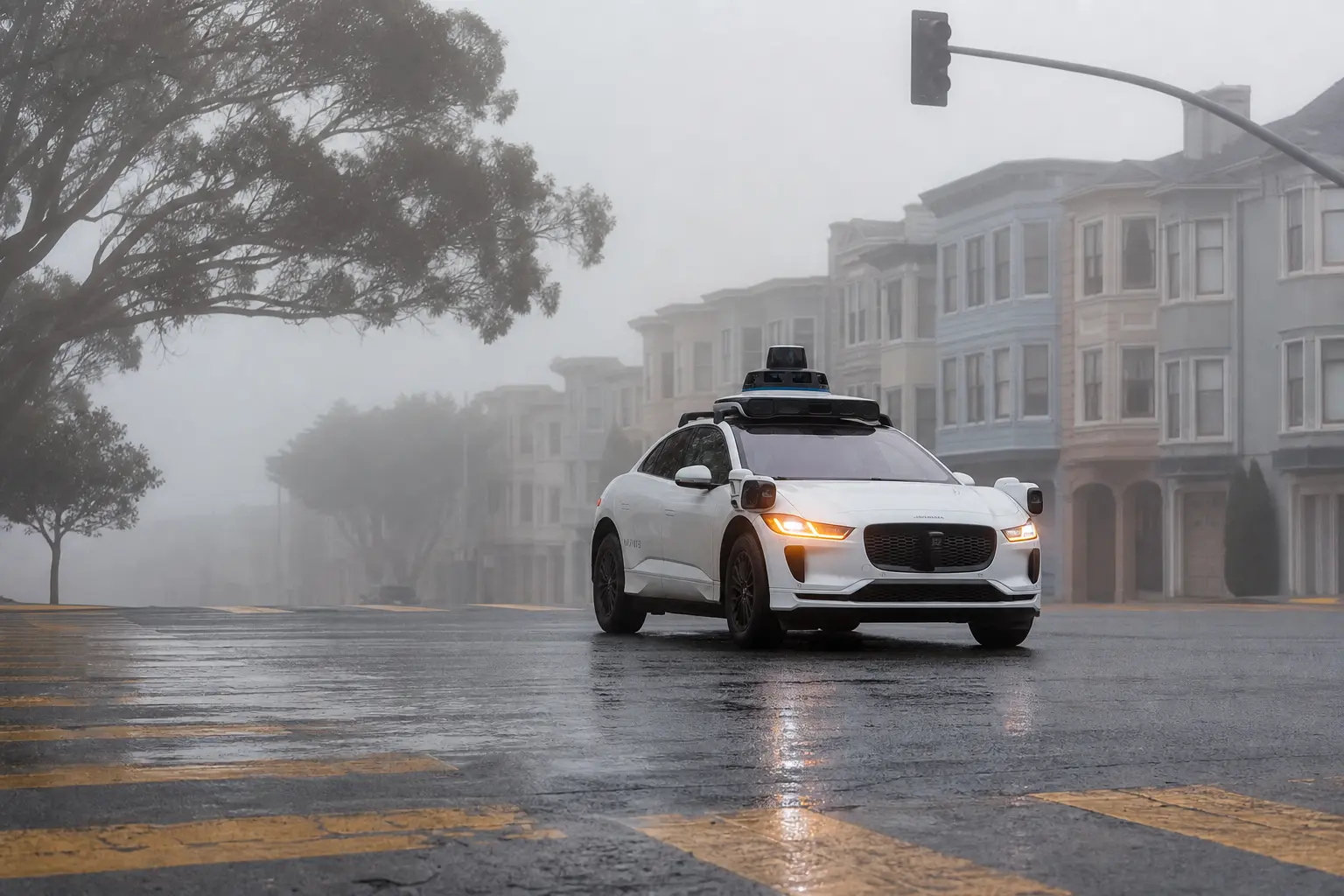
Alphabet-owned Waymo temporarily paused its ride-hailing service in San Francisco on Saturday once the outage knocked out traffic signals in the affected neighborhoods. The company did not say how many vehicles it pulled or for how long.
The San Francisco Standard reported in December that Waymo runs more vehicles in the city than in any other market it serves, which means an outage here carries outsized weight for the company’s robotaxi business.
Waymo’s cars are designed to treat a dead intersection as a four way stop, but getting a stalled vehicle moving again usually requires a remote human operator to sign off, since the car cannot make that judgment call alone. That design turned December’s blackout into a citywide standstill. This time, Waymo skipped straight to pausing the whole service before cars could get stuck at all.
Waymo’s Third San Francisco Breakdown Since December
Saturday’s pause was the latest entry in a rough seven months for Waymo in San Francisco, and not every one of the three incidents shared the same root cause.
| Incident | Date | Cause | What Happened to Waymo |
|---|---|---|---|
| Substation fire blackout | Dec. 20, 2025 | Fire at a PG&E substation | Over 1,500 robotaxis stalled at dark intersections; 63 needed manual retrieval |
| Fourth of July gridlock | July 4 to 5, 2026 | Fireworks crowds, road closures | Vehicles ran out of charge and blocked streets; one drove through a firework |
| Substation procedure outage | July 18, 2026 | Routine maintenance, protective device trip | Service paused proactively before cars became stranded |
December’s blackout was the big one. A fire at a PG&E substation cut power to roughly 30% of San Francisco, and the over 1,500 robotaxis stalled at dark intersections that night eventually forced Waymo to suspend service entirely. Sixty three of those cars needed to be manually retrieved, and San Francisco Mayor Daniel Lurie personally called Waymo’s leadership to get the vehicles moved.
Supervisors held a hearing on March 2 to press the company for answers. District 5 Supervisor Bilal Mahmood, who called the session, compared Waymo’s fleet to a fairy tale carriage.
Just like in the fairy tale, we can now see that those carriages can turn into pumpkins at the drop of a hat.
Mahmood said that at the Land Use and Transportation Committee hearing, where Waymo’s program manager of incident response, Sam Cooper, took responsibility for the communication failures. The company outlined the changes it had made since.
- Fleet-wide blackout alerts: Waymo can now push a regional outage warning to every vehicle at once, according to Chinmay Jain, the company’s director of product management.
- Faster dark-intersection handling: cars no longer wait on remote assistance before treating a dead signal as a four way stop.
- First responder training: Waymo says it has trained 1,000 San Francisco first responders on how to interact with a stopped robotaxi.
Those fixes faced a different test two weeks before Saturday’s outage. Robotaxis ran out of charge and blocked streets during the city’s Fourth of July fireworks crowds, with one vehicle appearing to drive through an exploding firework in the Mission. Waymo said “extreme traffic congestion in northern San Francisco disrupted normal operations,” not a grid failure this time, but the image of stranded cars looked familiar.
Firefighters Keep Filing Reports on Stalled Robotaxis
December’s blackout was not an isolated black eye. San Francisco firefighters have filed at least 31 internal reports since April 2025 documenting Waymos and other robotaxis obstructing emergency operations, delays and blockages now drawing scrutiny from regulators at both the state and local level.
Waymo counters that the reports are a rounding error against its overall footprint. The company says its cars interact with 50,000 emergency vehicles a week across California without incident, and that most flagged encounters involve delays of five minutes or less.
Saturday’s proactive pause suggests the company would rather absorb a service gap than risk adding to that report count. Whether that instinct holds up during a bigger blackout has not been tested since December.
Can San Francisco Customers Switch Away From PG&E?
No. PG&E holds a state-sanctioned monopoly across Northern California and San Francisco, with no competing electric utility for residents to choose instead. State regulators, not market competition, decide whether the company’s rates and practices are reasonable, and they have historically approved most of what PG&E has requested.
Those regulators are currently weighing a request that would raise bills further. PG&E’s pending 2027 rate case asks the California Public Utilities Commission (CPUC) for an 8% revenue increase worth $1.24 billion over 2026 authorized levels. If approved as filed, a typical combined residential bill would rise again in 2027.
After December’s blackout, the CPUC’s public response was thin. “We have staff looking into both incidents,” said Terrie Prosper, a CPUC spokesperson, without answering questions about penalties for either PG&E or Waymo.
PG&E is doing both at once. The company says it has cut CARE program rates by 23% for its most vulnerable customers since January 2024, even as it asks the CPUC for billions more in future revenue.
Regulators elsewhere are making similar calls. Oregon just approved a 29.7% data center rate hike for Portland General Electric, a separate utility whose acronym is easy to confuse with PG&E’s, under the state’s new POWER Act.
PG&E said Saturday it would investigate what caused the protective device to trip. By evening, the utility still had not released a cause, and the 120,000 phantom customers had long since stopped calling in.
Frequently Asked Questions
Was Saturday’s outage the same event as December’s San Francisco blackout?
No. Saturday’s outage traced back to a routine substation procedure that tripped a protective device and affected roughly 9,400 real customers. December’s blackout came from a fire at a PG&E substation that cut power to about 30% of the city and stranded more than 1,500 Waymo robotaxis. The two events happened seven months apart with different causes, even though Saturday’s mistaken alert briefly suggested a similarly large event.
What is a protective device, and why did it cause an outage?
A protective device is a safety mechanism built into the electrical grid that automatically cuts power to a circuit when it senses a fault, preventing damage to equipment or a larger failure down the line. PG&E said one of these devices activated during Saturday’s routine substation work, which is what cut power to the Richmond District and Golden Gate Park area in the first place.
Does PG&E have to report notification errors like Saturday’s to regulators?
PG&E already files a post event report with the CPUC after every Public Safety Power Shutoff, including a section covering notification failures and false communications. Saturday’s outage was not a planned safety shutoff, though, so it is unclear whether that same formal reporting requirement applies to a rollup error during routine maintenance.
How many robotaxis does Waymo run in San Francisco?
Waymo has not published a fleet count tied to Saturday’s pause specifically, but reporting from December put the number of Waymo vehicles circulating San Francisco at 800 to 1,000 on a given day, more than in any other city where the company operates.


Walmart’s $50 Million Opioid Settlement Closes Case Without Admission

California Sues Over $120 Million Morro Bay Wind Lease Buyout

Gilead Bixlenvo FDA Nod Opens Single Pill Path for Complex HIV Cases

Meta’s $18B Kids Deal Forever Shields Data Used to Spot Under-13s

Lettuce Outbreak Drove Record Cyclospora Spike Across 20 States

Amazon Shaves $20 Off M6 Mac Mini Before It Even Ships

SpaceX Louisiana Port Tests Debt Markets on Orbital AI Scale

Microsoft High Lifts Indexes as Small Caps Crack Support

Apple Replays 2015 Saturday Midnight Preorder for iPhone 18 Pro

Updated COVID Shots Clear FDA but Access Friction Hits High-Risk Groups

Take-Two CEO Pushes Netflix Subs for GTA 6 Extended Look

Wildlands Free Update Hands Players the Tools They Already Invented

Destiny 2 Fans Unlock Vaulted Maps After Live Service Ends

Quake Gets 19 Free Maps From MachineGames Quake Club

Quordle Monday Delivers Gavel Crush Speed Ethos Cleanly

Stripe Bid Shows PayPal Moat Cracked After Years of Slide

Tyson’s Five-Year Utah Plant Falls to Cattle Shortage Reckoning

Silver Lake Workday Talks Signal Private Floor for Software

Kennedy Lewis Takes Majority Control of The Greenbrier in $500M Deal

Best Buy Marks 60 Years With Sale That Echoes Its Audio Shop Roots
-

 TECHNOLOGY3 years ago
How to Adjust a Bulova Watch Band – An Easy Guide
-

 News3 years ago
Fred Pentland: Athletic Bilbao’s English mentor who changed the essence of Spanish football
-

 FINANCE3 years ago
Tax Planning for Every Season: Guide to Maximizing Your Tax Benefits
-

 Education3 years ago
African Ministers New Education Plan
-

 BUSINESS3 years ago
What is Entrepreneurial Operating System? A Comprehensive Guide to EOS
-

 Education3 years ago
Innovate Your Learning Journey with Technology and Enhance Education
-

 News3 years ago
Russians formally out of World Athletics Championships
-

 BUSINESS3 years ago
Top 9 Most Expensive American Cities to Rent an Apartment