
BUSINESS
Ford City Mall Closes Monday Under Court Order Over Fire System Failures
Ford City Mall on Chicago’s Southwest Side shuts at noon Monday under a court order that found a ‘riddled’ fire suppression system, ending a six-decade run.

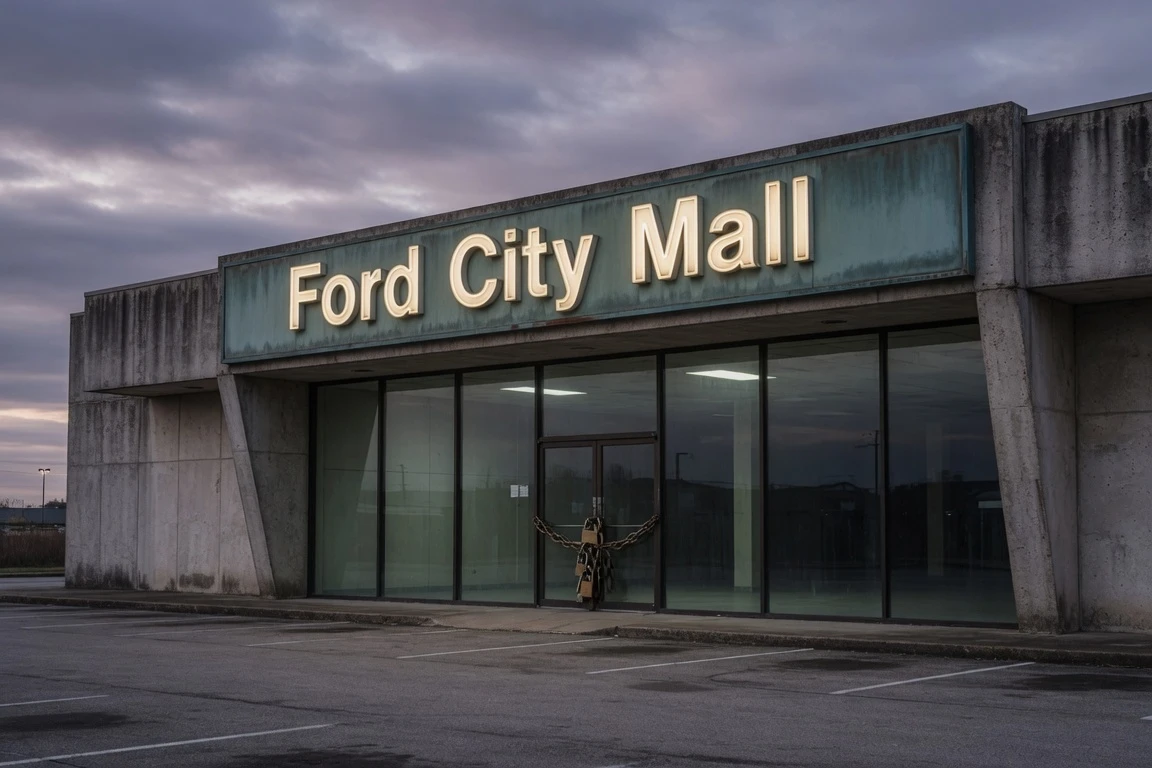
The main building at Ford City Mall on Chicago’s Southwest Side shuts down for good at noon Monday under a court order that found a two-year-old fire suppression failure posed an “imminent danger” to tenants and shoppers.
Cook County Circuit Judge Leonard Murray signed the order in May after the city and owner Namdar Realty Group agreed to a June 22 shutdown, ending a six-decade run for what was once Chicago’s largest shopping mall outside of downtown.
The Order That Shut Ford City Mall
The City of Chicago’s Department of Law filed an emergency motion to vacate on April 10. The motion cited a fire suppression system that “has been riddled with leaks and has not been functioning properly for that past two years.” The system serves the entire property, including the North Mall and surrounding outbuildings.
In a statement quoted in court filings, the department warned that the system, “in the event of a fire, could result in severe death and/or injury.” The motion also flagged “still unidentified leaks” that “could potentially undermine the stability of the soil supporting the Mall, and lead to the creation of a sinkhole and catastrophic structural failure of portions of the Mall itself.” The system has been failing for years, the city alleged, and the unidentified leaks have already drained thousands of gallons of water into the surrounding soil. The motion asked the court to vacate the building immediately to protect the public.
We could have a portion of the mall collapse into a great sinkhole.
The warning came from Chicago Fire Department Lt. Robert Steffens at an April court hearing. At a brief hearing on May 15, Greg Janes, an assistant corporation counsel for the city, told Judge Murray that all parties had agreed to the June 22 shutdown. The order covers about two dozen retailers inside the main building, including the mall’s last anchor tenant, JCPenney.
Why the City Pushed for a Forced Shutdown
City inspectors described the indoor mall in an April 10 court filing as a place of “large vacant spaces, flooding, open wiring, dirty conditions and poor lighting.” They listed “huge water leaks, burst sprinkler heads, and blown booster pumps” among the specific hazards. The conditions, the city argued, made the property unsafe for the public. Several of those conditions had reportedly persisted for years.
The city’s complaint stretches back to May 2024, when the Chicago Fire Department first tried to work with Namdar to restore the system, and the city filed suit a year later. After the April emergency motion, Judge Murray gave the building’s occupants seven days to come up with a plan or prepare to vacate. He told them he wanted to “spare the tragic consequence that might come to both the individual business owners and their employees and the neighbors and consumers.”
The fire suppression system was briefly restored in late April, and the judge allowed the mall to stay open. Within weeks, conditions deteriorated again.
The city’s posture has hardened throughout the case. Spokesperson Kristen Cabanban said the fire suppression failures could “result in severe death and/or injury.” Judge Murray cited that language in siding with the city, with another hearing scheduled for June 29 to address the North Mall tenants.
What Stays Open Next Door
The closure order does not extend to the rest of the 60-acre property. The North Mall, an outdoor strip of stores connected to the main building by a tunnel once known as Peacock Alley, stays open, and so do the surrounding outparcels, including the AMC Ford City 14 movie theater, Planet Fitness and IHOP. Janes told the court the order requires Namdar to keep the fire suppression system that serves the North Mall functional. The city has been working with the North Mall tenants to make sure the transition goes smoothly.
The next hearing, scheduled for June 29, will check that the shutdown happens safely and without disrupting those neighbors, and the court has required the fire suppression system serving the North Mall to stay functional. As Janes put it, “I don’t want to say that everything is great going forward.” The case, he added, “remains pending.”
From a 2019 Sale to a Court-Ordered Shutdown
By 2019, when Namdar bought the property for $16.6 million, the mall was already dealing with years of declining sales. Most of its stores had closed, and the rest were operating on short-term leases.
Ald. Derrick Curtis, whose 18th Ward includes the site, has called Namdar “slumlords” who have not invested “one quarter” in the property. He said the firm specializes in buying distressed malls across the country and letting them deteriorate. “If you Google Namdar’s properties, all over the country, they’re doing the same thing, just sucking everything out,” Curtis told Block Club Chicago.
The alderman has separately called the mall a “death trap” and “waiting to cave in at any given time.” The pipes under the building, he said, are leaking thousands of gallons of water.
Namdar’s Mason Asset Management affiliate handles day-to-day operations. In a previous statement, a Namdar representative said owners “have worked since buying the mall to bring the fire suppression system into compliance.” The representative added that ownership is “actively engaged with engineers, contractors, and City officials.”
Sixteen Tenants and the Last JCPenney in Chicago
Sixteen tenants remain in the main building, JCPenney among them, the last anchor store standing. JCPenney had recently signed a five-year lease with Namdar, and the store is the last JCPenney left in the city of Chicago. The store had fought to stay open through the spring, telling the court a quick shutdown would not give retailers enough time to wind down their businesses in an orderly manner. The court rejected the request.
In a statement, a JCPenney spokesperson said the company would close its Ford City location to the public on June 21. The closure, the spokesperson said, is “a result of the city of Chicago’s motion to vacate the property due to safety concerns not addressed by the landlord.”
| Closes Monday | Stays Open |
|---|---|
| The main indoor mall (noon) | The North Mall outdoor strip |
| JCPenney (closes to public June 21) | Planet Fitness |
| About two dozen retailers inside | AMC Ford City 14 theater |
| Sixteen tenants in the main building | IHOP |
Where the 60 Acres Go From Here
Kurv Industrial, a Chicago-based developer, has a separate plan to redevelop the 60-acre site. The company, formerly Bridge Industrial, has proposed buying the site at 7601 S. Cicero Ave. and the adjacent 7400-7600 S. Kostner Ave. and replacing it with a “modern, master-planned industrial campus” of four warehouses.
The plan, first floated in July 2025, was estimated by Ald. Curtis at more than $150 million, and Block Club Chicago reported the developer’s total spending on the project at nearly $200 million. The four warehouses would range from 110,000 square feet to 300,000 square feet and stand 40 feet tall, housing small- and medium-sized businesses. Construction is tentatively scheduled to begin in the fall of 2026, with operations starting in 2028. The plan would convert the city’s largest out-of-downtown mall into an industrial campus.
The proposal still needs city approval, including a rezoning of the roughly 60-acre parcel from a shopping district category to an Industrial Planned Development. Both the Chicago Plan Commission and the full City Council would have to sign off. Ald. Curtis has said he supports the redevelopment.
Neighborhood groups are pushing back. Adolfo Castrejon, president and founder of the West Lawn Conservation Club, said residents would prefer housing, a public park, an open-air mall and a small museum commemorating the site’s role in World War II, and the South West Area Neighbors share those concerns.
Six Decades on a Defense Plant
The 60-acre site at 7601 S. Cicero Ave. was a defense plant long before it was a mall, and the property has a defense-plant history dating to 1942 that continued through the 1950s. Construction started in 1942 on the Dodge Chicago Plant, which tested aircraft engines for B-29 bombers through the end of World War II. The plant covered about 6 million square feet when it operated.
The building was later retrofitted for Tucker’s postwar automobile venture, which produced 51 cars before closing under pressure from Ford, Chrysler and General Motors. The site returned to engine production for the Korean War under a Ford contract, then shut for good in 1959, and developer Harry Chaddick acquired it in 1961, opening it as Ford City shopping center in 1965.
The mall’s anchors in its heyday were Sears, Carsons and Montgomery Ward, and a popular arcade called Peacock Alley ran between the enclosed and strip portions. The number of stores has since fallen from more than 100 to 16, with the rest of the indoor corridors largely empty. General Growth Properties managed the mall until 2008, and Namdar bought it in 2019 for $16.6 million.
Frequently Asked Questions
When does Ford City Mall close?
The main building is set to close at noon on Monday, June 22, 2026, by court order. JCPenney, the last anchor tenant, will close to the public one day earlier, on June 21, after the retailer agreed to wind down operations before the deadline.
What is causing the closure?
The City of Chicago’s Department of Law cited a fire suppression system that has not functioned properly for two years, with leaks the city warned could lead to a sinkhole and “catastrophic structural failure.” The Chicago Fire Department told the court the underground water pipes date to the 1960s, raising concerns that millions of gallons of water may have leaked into the soil.
What parts of the property will remain open?
The North Mall strip, Planet Fitness, the AMC Ford City 14 movie theater and IHOP will stay open, and the court order requires the fire suppression system that serves the North Mall to remain functional. The next hearing, scheduled for June 29, will address the safety of those tenants.
What will replace Ford City Mall?
Kurv Industrial has proposed a nearly $200 million plan to demolish the mall and build four warehouses on the roughly 60-acre site. Construction is tentatively scheduled to begin in the fall of 2026, with the first warehouses operating by 2028, and the proposal still needs approval from the Chicago Plan Commission and the City Council.
Who owns Ford City Mall?
Namdar Realty Group, a Great Neck, New York-based firm that specializes in distressed retail, bought the property in 2019 for $16.6 million. The alderman whose ward includes the site has called Namdar “slumlords” for not investing “one quarter” in the property since the purchase, a claim the firm has disputed.







Spotify Running Mode hits Android and revives its old tempo experiment

Galaxy Tab S12 Ultra Renders Keep the Notch Fans Hate

Novato Spinning Round House Sells With Six Neighbors for $3.3 Million

Crop Tour Finds Indiana and Nebraska Corn Yields Lagging 2025

Best Buy 60th sale brings Android deals back to its roots

American Airlines reverses seatback screen bet years too late

Iran Hormuz Strikes Force Gulf Oil Onto Costlier Paths

Plague Tale Prequel Day One Joins Game Pass Wave 2 as Witcher Exits

NBA 2K27 opens The City to everyone and rewrites career eras

iOS 26.6.1 Patches 29 Flaws as AI Forces Faster Apple Updates

Double Fine Cuts 23 Jobs Weeks After Xbox Independence

Day-One Big Walk Lifts PS Plus August Beyond Recycled AAA

John Hight Exits Wizards After Digital Reckoning Hits

Curtis Mead’s Red Sox Debut Ends With Fractured Wrist

Red Sox Squander Hot Streak Chance in 4-3 Loss to Athletics

Moesch and Dressel Rewrite Night One at 2026 U.S. Nationals

Boutte’s Quiet Camp Takeover Forces Patriots Receiver Choices

Take-Two CEO Pushes Netflix Subs for GTA 6 Extended Look

Halo Campaign Evolved Skulls Meet Death Barriers That Kill the Hunt

Wildlands Free Update Hands Players the Tools They Already Invented
-

 TECHNOLOGY3 years ago
How to Adjust a Bulova Watch Band – An Easy Guide
-

 News3 years ago
Fred Pentland: Athletic Bilbao’s English mentor who changed the essence of Spanish football
-

 FINANCE3 years ago
Tax Planning for Every Season: Guide to Maximizing Your Tax Benefits
-

 Education3 years ago
African Ministers New Education Plan
-

 BUSINESS3 years ago
What is Entrepreneurial Operating System? A Comprehensive Guide to EOS
-

 Education3 years ago
Innovate Your Learning Journey with Technology and Enhance Education
-

 News3 years ago
Russians formally out of World Athletics Championships
-

 BUSINESS3 years ago
Top 9 Most Expensive American Cities to Rent an Apartment