
News
Google Play Must Open to Rival App Stores After Epic Deal Collapses
Google lost its bid to soften a court order forcing rival app stores into Google Play from July 22, and it will still charge them to enter.

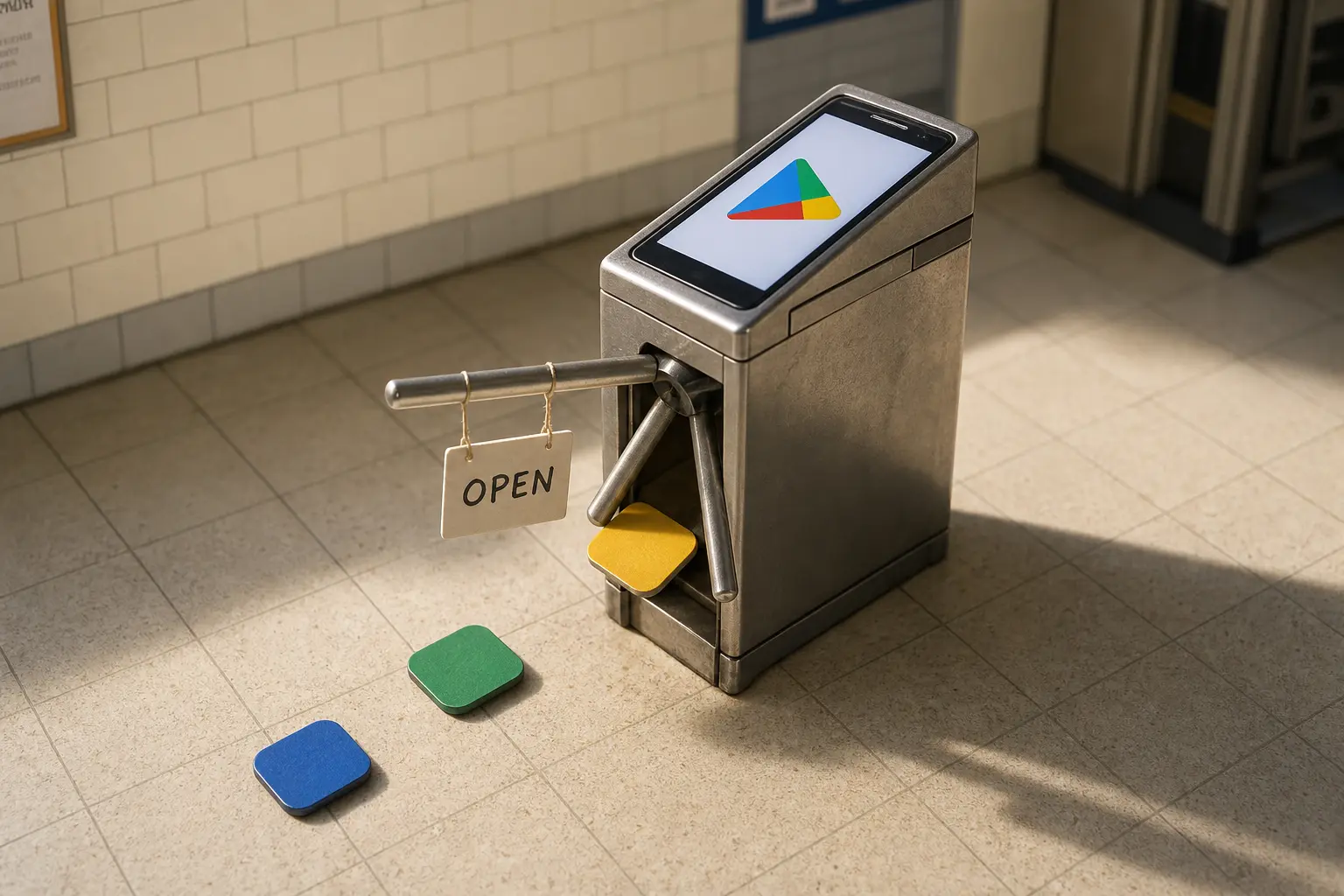
Google will let rival app stores move directly into Google Play starting July 22, ending a fight the company spent more than a year trying to settle on softer terms. Google and Epic Games jointly withdrew their bid to modify a 2024 antitrust injunction on July 15, one day before both sides were due back in court, leaving the original, tougher order as the only rule left on the table.
Every rival store that walks through that new door will still pay Google an annual fee to get in, and Google still collects its cut on whatever they sell. Android is opening to competitors. Google keeps its hand on the register the whole time.
A New Door Opens Inside Google Play
Starting July 22, 2026, Android users in the United States will be able to download rival app stores straight from inside Google Play, the same way they download any other app. That replaces sideloading, the old workaround where users had to track down an installer file and click past a security warning to get software Google did not sell itself.
Google is opening its full Play Store catalog to competing stores through a new enrollment system called the Play Catalog Access Program. Developers who did not opt out by July 22 will have their app listings shared automatically with any third-party store that signs up, according to Google’s own developer guidance.
The October 2024 injunction behind all of this also outlaws the specific tactics Google used to keep rivals out for years. Under the order, Google cannot:
- Share app store revenue with anyone who distributes or plans to distribute a rival Android app store
- Require an app to launch first, or exclusively, on Google Play in exchange for payments or better placement
- Condition payments or access on a developer skipping a rival app store or shipping a different version of its app
- Pay device makers to preinstall Google Play exclusively, crowding out room for a competing store
That list targets conduct a jury heard evidence about in 2023, including a program called Project Hug that paid roughly twenty mobile publishers to stay on Play, and a separate arrangement known as Project Banyan aimed at weakening Samsung’s competing Galaxy Store.
The Deal Google Wanted Didn’t Survive an Economist’s Review
Google and Epic were scheduled to appear before U.S. District Judge James Donato on July 16 to argue for a modified settlement, one that would have let Google run a single worldwide Registered App Stores program instead of building a stricter, separate system just for the United States. They never made that argument. On July 15, both sides withdrew the motion.
Dan Jackson, Google’s trust and reputation communications lead, said the company decided the fight was not worth prolonging. “We’ve agreed with Epic to withdraw our motion to modify the US Court’s injunction rather than prolonging this process which creates uncertainty for the ecosystem,” Jackson said in a statement.
The retreat followed months of pressure from a court-appointed referee. Judge Donato brought in Nancy Rose, an MIT economist and independent expert appointed to evaluate the settlement changes, to check whether Google and Epic’s proposed modifications actually held up. Rose testified in January 2026 that the changes could strip out competitive protections built into the original injunction. In a declaration filed July 12, she wrote that three sets of proposed changes did not appear to be backed by the evidence the court had asked for, according to the legal news outlet MLex. Ars Technica separately reported that Rose warned the settlement was unlikely to let Google Play’s potential competitors overcome their long-standing network disadvantage in time to matter.
Epic Games CEO Tim Sweeney has cast the years of litigation as the only thing that actually worked.
This is what real platform competition looks like. Google had every opportunity to open up Android voluntarily. Instead, it took a jury verdict and a federal judge to force them to compete fairly.
Sweeney told TechCrunch that in an interview last month, a sharper tone than the gratitude he showed Google only a few months earlier over a separate agreement.
Two Settlements, One Survived
It helps to separate what actually fell apart from what is still standing. Epic and Google have not gone back to war over fees. They reached a business settlement, alongside an $800 million partnership, that already cut Google’s commission on Epic titles and brought Fortnite back to Google Play worldwide in March. What died on July 15 was narrower: a joint request to soften how rival stores get distributed inside the US specifically.
| Agreement | Status | What It Covers |
|---|---|---|
| Business settlement and fee deal | Completed, in effect since March 2026 | Google’s cut on Epic titles falls to 20% or less; Fortnite returned to Play worldwide; Sweeney pledged not to attack Google’s store policies through 2032 |
| Injunction modification motion | Withdrawn July 15, 2026 | Would have let Google run one global Registered App Stores program instead of a stricter, separate US system |
| Original October 2024 injunction | Now the governing order | Forces Google to host rival stores inside Play in the US through the Play Catalog Access Program, starting July 22 |
The distinction explains how Sweeney could publicly thank Google for opening up Android and delivering, in his words, a better deal for developers back in March, then watch Google’s own bid for a softer distribution mandate collapse four months later. Those were always two different negotiations on two different tracks.
Rival Stores Still Pay Google to Enter
Getting inside Google Play does not mean getting inside for free. Google has confirmed that the agreement ending the settlement does not exempt alternative stores, or the apps sold through them, from its usual fees.
- $5,000 a year is what Google will charge each alternative store for what it describes as a security and policy review, according to Android Authority’s reporting on the rollout.
- Under 1% of install attempts is the malware ceiling a rival store has to stay below to keep its access.
- United States only, for now. Google says a separate Registered App Stores program for markets outside the US is still coming later this year.
- Google’s service fee still applies. Downloads and purchases routed through a rival store still clear through Google’s own systems, and Google still collects.
That structure does not break the injunction. Judge Donato’s order stops Google from blocking rivals outright or paying partners to freeze them out. It does not stop Google from charging a toll at its own front door.
Six Years From a Deleted Game to a Court Order
The fight started as a stunt. In August 2020, Epic added a direct payment option to Fortnite, deliberately breaking Apple’s and Google’s payment rules and getting the game pulled from both stores the same day. Sweeney later celebrated an appeals court ruling upholding the injunction as a total victory, one stop on a much longer road.
- August 2020: Epic forces Fortnite off Google Play and the App Store over payment rules, triggering both lawsuits.
- December 2023: A California jury rules unanimously that Google illegally monopolized Android app distribution and billing.
- October 2024: Judge Donato issues a permanent injunction ordering Google to host rival app stores inside Google Play in the US.
- 2025: The Ninth Circuit affirms the injunction on appeal, and the Supreme Court declines to intervene that October.
- November 2025 to March 2026: Epic and Google strike a separate business settlement, cutting fees and reviving Fortnite on Play worldwide.
- July 15, 2026: The companies jointly withdraw their bid to soften the in-Play hosting requirement.
- July 22, 2026: Rival app stores become downloadable directly inside Google Play in the United States.
The ban on paying developers for exclusivity runs three years from that October 2024 order, a window that stretches into 2027.
Which Companies Walk Through First?
The mobile app market generates roughly $120 billion a year, with Google and Apple splitting most of it through commission rates that have run between 15% and 30%. Opening that door invites specific, deep-pocketed rivals, not just Epic.
Amazon already runs its own Android app store for Fire tablets and could now distribute that same catalog to hundreds of millions of additional Android phones. Microsoft has pushed for years to launch a mobile Xbox storefront and finally has a distribution path it did not have before, one that could carry Call of Duty Mobile and other titles without Google standing in the way. Samsung’s Galaxy Store, already built for its own phones, gains a route onto every other Android device running Google Play.
So far, no rival has confirmed a launch date inside the new program, though the field is now open to all three.
Why Apple Isn’t Getting the Same Order
Epic sued Apple and Google on the same day in August 2020, and the two cases produced opposite results. Apple’s case went to a bench trial decided by a judge alone, and Apple won on nearly every claim except a requirement to allow payment link-outs. Google’s case went to a jury, which found a full illegal monopoly, giving Judge Donato a much broader foundation for remedies that reach distribution itself, not just payment links.
Apple still faces pressure from a different direction. The European Union’s Digital Markets Act already forces Apple to allow alternative app marketplaces and sideloading across the EU, and regulators there fined Apple 500 million euros in 2025 over anti-steering violations. In the US, Apple was ordered to allow link-outs and alternative payment options back in 2021, compliance problems later triggered a contempt ruling, and Apple has now appealed that fight to the Supreme Court, with arguments expected in late 2026 or early 2027.
Frequently Asked Questions
Does this change anything for iPhone users?
No. The Play Catalog Access Program only touches Android and Google Play. Apple’s separate fight with Epic produced a narrower US court order limited to payment link-outs, though the EU’s Digital Markets Act separately forces Apple to allow alternative app stores across Europe.
Can a developer keep its app out of rival stores?
Yes. Google’s developer guidance says apps are shared with enrolled third-party stores by default unless a developer explicitly opts out, a choice that had to be made by July 22, 2026 to take effect at launch.
How long is Google bound by this injunction?
The core restrictions, including the ban on paying developers for exclusivity, run three years from the October 2024 order. A three-person compliance committee made up of employees from both companies oversees how Google carries out the changes.
Is Google still planning a global version of this program?
Yes. Google has said its Registered App Stores program, aimed at markets outside the United States, is still coming later in 2026, separate from the US-only Play Catalog Access Program launching July 22.
Who is Nancy Rose, and why did her opinion matter?
Rose is an MIT economist the court brought in as a neutral referee, not a witness for either side. She previously served as the Justice Department’s deputy assistant attorney general for economic analysis, and testified before the Senate Judiciary Committee on competition policy years before this case, giving Judge Donato a credentialed second opinion neither company could simply dismiss.


Walmart’s $50 Million Opioid Settlement Closes Case Without Admission

California Sues Over $120 Million Morro Bay Wind Lease Buyout

Gilead Bixlenvo FDA Nod Opens Single Pill Path for Complex HIV Cases

Meta’s $18B Kids Deal Forever Shields Data Used to Spot Under-13s

Lettuce Outbreak Drove Record Cyclospora Spike Across 20 States

Amazon Shaves $20 Off M6 Mac Mini Before It Even Ships

SpaceX Louisiana Port Tests Debt Markets on Orbital AI Scale

Microsoft High Lifts Indexes as Small Caps Crack Support

Apple Replays 2015 Saturday Midnight Preorder for iPhone 18 Pro

Updated COVID Shots Clear FDA but Access Friction Hits High-Risk Groups

Take-Two CEO Pushes Netflix Subs for GTA 6 Extended Look

Destiny 2 Fans Unlock Vaulted Maps After Live Service Ends

Wildlands Free Update Hands Players the Tools They Already Invented

Quake Gets 19 Free Maps From MachineGames Quake Club

Quordle Monday Delivers Gavel Crush Speed Ethos Cleanly

Stripe Bid Shows PayPal Moat Cracked After Years of Slide

Tyson’s Five-Year Utah Plant Falls to Cattle Shortage Reckoning

Silver Lake Workday Talks Signal Private Floor for Software

Kennedy Lewis Takes Majority Control of The Greenbrier in $500M Deal

Best Buy Marks 60 Years With Sale That Echoes Its Audio Shop Roots
-

 TECHNOLOGY3 years ago
How to Adjust a Bulova Watch Band – An Easy Guide
-

 News3 years ago
Fred Pentland: Athletic Bilbao’s English mentor who changed the essence of Spanish football
-

 FINANCE3 years ago
Tax Planning for Every Season: Guide to Maximizing Your Tax Benefits
-

 Education3 years ago
African Ministers New Education Plan
-

 BUSINESS3 years ago
What is Entrepreneurial Operating System? A Comprehensive Guide to EOS
-

 Education3 years ago
Innovate Your Learning Journey with Technology and Enhance Education
-

 News3 years ago
Russians formally out of World Athletics Championships
-

 BUSINESS3 years ago
Top 9 Most Expensive American Cities to Rent an Apartment