
News
Grand Junction Smashes Heat Records as Drought Deepens

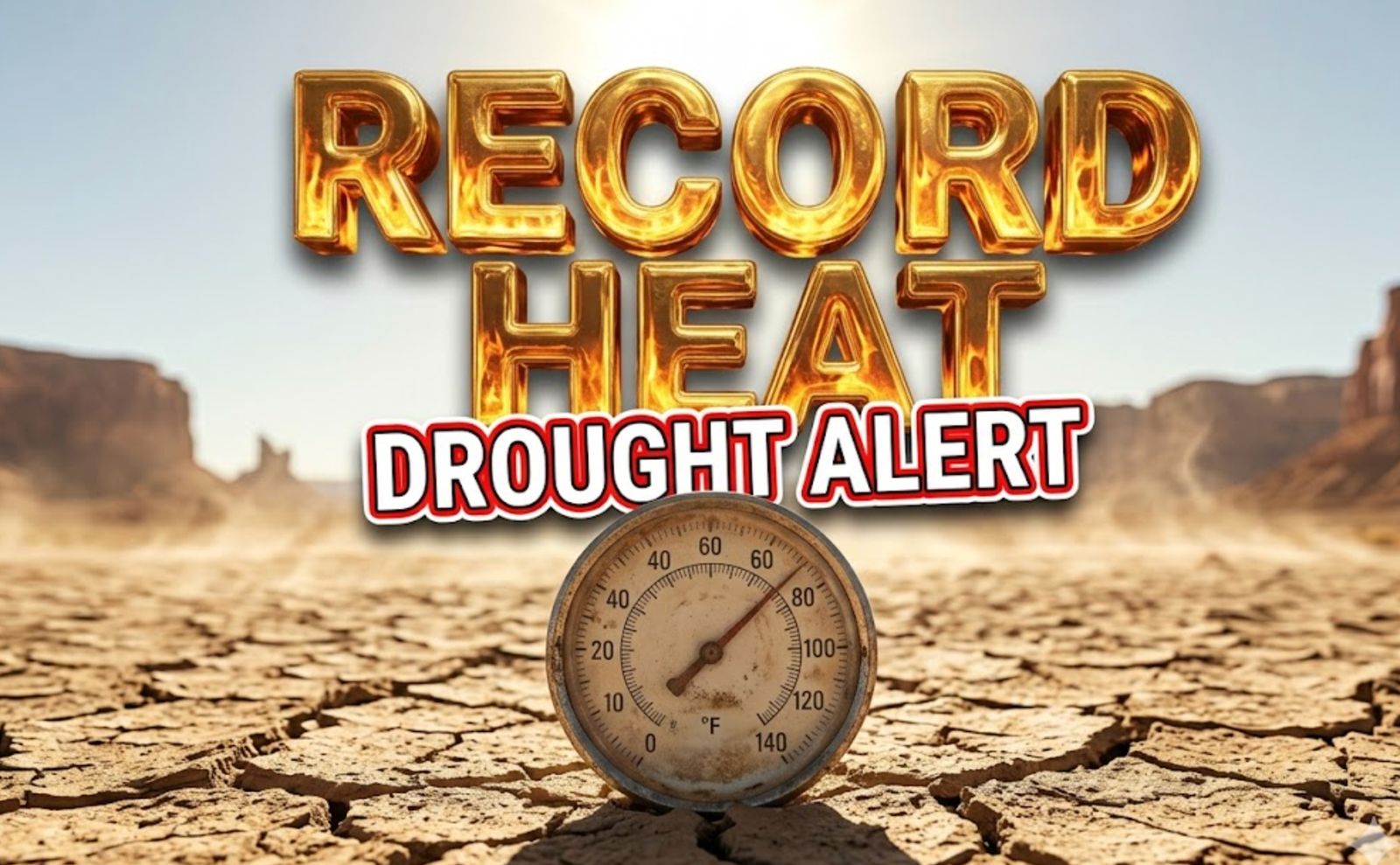
Western Colorado is sweltering under an unprecedented March heat wave that has rewritten the history books for eight consecutive days. Grand Junction shattered yet another temperature record Thursday as the mercury climbed to a staggering 84 degrees. While forecasters predict a slight dip today, the reprieve will be brief. This relentless warmth is fueling a rapidly expanding drought crisis that now threatens the entire region.
Relentless Heat Rewrites History
Grand Junction is officially in uncharted territory. The city broke heat records for both the daily high and the daily low temperature on Thursday for the second day in a row. The official reading at Grand Junction Regional Airport topped out at 84 degrees. This crushed the previous record of 79 degrees which was set back in 1971. It is rare to beat a standing record by five full degrees.
The heat did not stop when the sun went down. The overnight low temperature only dropped to 55 degrees. This beat the previous warmest low record of 54 degrees set in 1940. Meteorologists track warm overnight lows closely because they prevent vegetation and snowpack from recovering. This marks the eighth straight day of record-breaking heat for the Grand Valley.
Residents are feeling the impact of this unseasonal weather pattern. March is typically a time for light jackets and variable spring showers. Instead, locals are breaking out air conditioners and summer wardrobes weeks ahead of schedule.3 The consistent high pressure ridge parked over the Southwest United States is acting like a lid. It traps warm air and blocks cooling storms from entering the region.
Weekend Outlook Threatens More Records
Friday offers a very small break from the extreme heat. The expected high of 77 degrees will likely fall just short of the standing record of 80 degrees. However, this pause is temporary. The heat dome will reassert itself over the weekend. Saturday is forecast to hit 80 degrees which would break the current record of 77. Sunday looks even hotter with a forecast of 81 degrees. That would topple the existing record of 79 degrees.
The start of next week brings uncertainty but continued warmth. Monday will see highs hovering near the record of 80 degrees. Meteorologists say the record is definitely in jeopardy depending on cloud cover and wind timing.
Forecast vs. Record Highs
| Day | Forecast High | Record High | Status |
|---|---|---|---|
| Friday | 77°F | 80°F | Near Record |
| Saturday | 80°F | 77°F | Record Break Likely |
| Sunday | 81°F | 79°F | Record Break Likely |
| Monday | 80°F | 80°F | Potential Tie/Break |
Forecasters advise residents to stay hydrated. Heat exhaustion is possible even in temperatures in the 80s if the body is not acclaimed. Most bodies are still adjusted to winter temperatures this time of year.
Drought Crisis Intensifies Across Western Slope
The record heat is having a tangible negative effect on the landscape. The latest U.S. Drought Monitor report released this week confirms what many farmers feared. The drought has worsened significantly amid this dry spell. The moderate drought classification is almost gone. It has been replaced by more severe categories.
Severe Drought (D2) has taken over large swathes of land along and south of Highway 50. This level of drought typically leads to likely crop or pasture losses. It also indicates a very high fire risk. Local agricultural leaders are watching these numbers closely. The Grand Valley is famous for its peaches and vineyards. These crops rely heavily on early season moisture which is currently absent.
The situation is even more dire in the central and northern mountains. Exceptional (D4) and Extreme (D3) drought conditions have grown increasingly widespread in Northwest Colorado. Exceptional drought is the most intense category on the scale. It indicates widespread crop and pasture losses. It also suggests shortages of water in reservoirs, streams, and wells creating water emergencies.
This intensification is happening at a critical time. Mountain snowpack usually peaks in April. The current heat wave is likely causing premature melting. If the snow melts too fast, it runs off before it can soak into the soil. This leaves the ground dry and prone to wildfires later in the summer.
Winds Fade Before Next Cold Front
The weather pattern is also generating gusty conditions. Wind gusts of 20 to 30 mph have been reported across Western Colorado. Some localized areas have seen gusts exceeding 30 mph. These winds combined with the dry heat create dangerous fire weather conditions. A stray spark could easily ignite the dry vegetation.
The good news is that the winds will subside overnight. They are expected to diminish quickly between midnight and sunrise. Friday will start calm before the next weather system approaches.
A weak cold front is passing through Colorado tonight. This is the primary driver for the current gusty winds. This front will push the hot high pressure system to the south temporarily. Cooler high pressure will then build into Colorado from the northwest. This is why Friday will be slightly cooler than Thursday.
A more significant change is on the horizon for next week. Another stronger cold front will move ashore over the Pacific Northwest on Saturday. It will arrive in Colorado by Monday afternoon. This system finally brings a return to more seasonal temperatures. Tuesday will be noticeably cooler with highs dropping into the lower 70s around Grand Junction. Areas outside the Grand Valley will see highs in the upper 60s. This cooldown will feel much more like typical spring weather.
Summary
Western Colorado is enduring a historic heat wave that has shattered records for eight consecutive days. Grand Junction reached a sweltering 84 degrees on Thursday. The heat is driving a rapid expansion of severe and exceptional drought conditions across the region. While a brief cooldown arrives Tuesday, the weekend promises more broken records and heightened fire risks due to dry winds.
What are your thoughts on this early heat wave? Are you worried about the summer fire season? Share your local temperature readings and photos on social media using #GJWeather and let us know how you are staying cool.










Spotify Running Mode hits Android and revives its old tempo experiment

Galaxy Tab S12 Ultra Renders Keep the Notch Fans Hate

Novato Spinning Round House Sells With Six Neighbors for $3.3 Million

Crop Tour Finds Indiana and Nebraska Corn Yields Lagging 2025

Best Buy 60th sale brings Android deals back to its roots

American Airlines reverses seatback screen bet years too late

Iran Hormuz Strikes Force Gulf Oil Onto Costlier Paths

Plague Tale Prequel Day One Joins Game Pass Wave 2 as Witcher Exits

NBA 2K27 opens The City to everyone and rewrites career eras

iOS 26.6.1 Patches 29 Flaws as AI Forces Faster Apple Updates

Double Fine Cuts 23 Jobs Weeks After Xbox Independence

Day-One Big Walk Lifts PS Plus August Beyond Recycled AAA

John Hight Exits Wizards After Digital Reckoning Hits

Curtis Mead’s Red Sox Debut Ends With Fractured Wrist

Moesch and Dressel Rewrite Night One at 2026 U.S. Nationals

Red Sox Squander Hot Streak Chance in 4-3 Loss to Athletics

Boutte’s Quiet Camp Takeover Forces Patriots Receiver Choices

Take-Two CEO Pushes Netflix Subs for GTA 6 Extended Look

Halo Campaign Evolved Skulls Meet Death Barriers That Kill the Hunt

Wildlands Free Update Hands Players the Tools They Already Invented
-

 TECHNOLOGY3 years ago
How to Adjust a Bulova Watch Band – An Easy Guide
-

 News3 years ago
Fred Pentland: Athletic Bilbao’s English mentor who changed the essence of Spanish football
-

 FINANCE3 years ago
Tax Planning for Every Season: Guide to Maximizing Your Tax Benefits
-

 Education3 years ago
African Ministers New Education Plan
-

 BUSINESS3 years ago
What is Entrepreneurial Operating System? A Comprehensive Guide to EOS
-

 Education3 years ago
Innovate Your Learning Journey with Technology and Enhance Education
-

 News3 years ago
Russians formally out of World Athletics Championships
-

 BUSINESS3 years ago
Top 9 Most Expensive American Cities to Rent an Apartment