
News
Iowa Teen Stumbles on 34,000-Year-Old Mastodon Jaw in Creek Bed — Scientists Say It’s a “Miracle Find”

What began as a casual walk to hunt for arrowheads turned into one of the most important paleontological discoveries in Iowa in decades.
A teenager, whose name has not been disclosed, was exploring a friend’s private farmland near a creek when he noticed something large and unusual jutting out from the soil. What he initially thought might be a rock turned out to be the jawbone of a juvenile mastodon — a prehistoric cousin of the elephant that roamed North America tens of thousands of years ago.
The jawbone, measuring 30 inches in length, is believed to be around 34,000 years old, and scientists say the fossil was found just in time. If it had remained exposed for a few more days, the delicate bone would likely have dried out in the sun and crumbled into dust.
A Prehistoric Surprise on the Plains
The teen was walking near a creek on the property when he spotted the large, heavy fossilized bone. According to Tiffany Adrain, special collections manager at the University of Iowa’s Paleontology Repository, the teen cradled the bone in his arms and carried it back to the farmhouse.
“The landowners already knew what to do,” said Adrain in an interview with VICE. “They wrapped it up in plastic to keep it wet and sent us an email right away.”
The jawbone, incredibly well preserved, was likely buried until very recently. Experts believe recent weather or erosion might have dislodged it from the soil and exposed it — briefly — to open air.
“We were incredibly lucky,” Adrain emphasized. “This fossil hadn’t been exposed for long. It’s a miracle find.”
Now secured in the university’s Trowbridge Hall, the jaw has been cataloged, kept moist, and stored away with other rare fossil specimens.
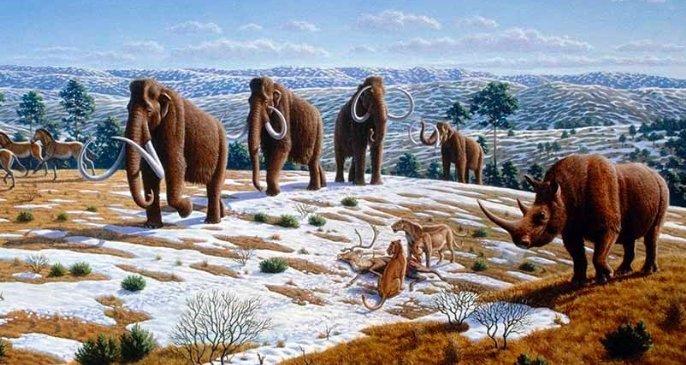
What Is a Mastodon, Exactly?
Mastodons are often confused with woolly mammoths, but they’re a distinct species with a longer evolutionary lineage and different dietary habits.
-
Scientific Name: Mammut americanum
-
Lived: ~27 million to 10,000 years ago
-
Habitat: Forested regions of North and Central America
-
Size: Adult males could reach 9+ feet in height with 16-foot tusks
-
Diet: Browsers — fed primarily on leaves, twigs, and shrubs
Unlike mammoths, which were grazers adapted to cold tundra climates, mastodons were more at home in woodlands and wetlands, much like the Iowa farmland where this jawbone surfaced.
Their extinction around 10,000 years ago is thought to have been caused by a mix of climate change and overhunting by early human populations.
A Fossil Saved in the Nick of Time
The biggest risk after such a find isn’t theft — it’s nature itself. Fossils that are exposed to the sun and air after millennia underground can rapidly dry out, causing them to fracture, flake, or simply disintegrate.
Thanks to quick action by both the teen and the landowners, the jawbone was kept hydrated and properly transferred to paleontologists. The university team is now preserving the specimen with plans to scan, study, and possibly display it.
“It’s still very much a bone,” said Adrain. “It hasn’t fully fossilized into stone, which is part of why it’s so fragile — and so fascinating.”
Not Their First Fossil Rodeo
Incredibly, this isn’t the first time the landowners have had a brush with the Ice Age.
Roughly 30 years ago, they reportedly uncovered other mastodon remains while fishing on the same property, though those earlier finds were not as complete. The family has chosen to remain anonymous to discourage fossil hunters from trespassing or damaging the land in search of buried prehistoric treasures.
Iowa: A Graveyard of Giants
Long before cornfields and tractors, prehistoric Iowa was a diverse and thriving ecosystem filled with megafauna.
Fossils found across the state have included:
-
Giant beavers the size of black bears
-
Short-faced bears with powerful limbs and huge jaws
-
Ground sloths the size of small cars
-
Ancient camels and horses
-
Giant bison roaming in herds across open plains
Mastodon bones are among the more dramatic finds — not just because of their size, but because of what they reveal about the region’s past. Each discovery offers a new clue about how early ecosystems functioned and what may have led to their collapse.
What’s Next for the Jawbone?
While the fossil will not be on public display immediately, researchers say the teenage discoverer may be invited to assist or visit the lab as scientists begin cleaning and analyzing the jaw.
Adrain and her colleagues plan to conduct CT scans and isotopic analysis to determine more about the animal’s age, diet, and even the season of its death.
“This was a young mastodon, maybe about seven feet tall,” said Adrain. “It’s possible the rest of the skeleton is still nearby — and if it is, that would be an extraordinary discovery.”
For now, the find serves as both a scientific windfall and a reminder that beneath Iowa’s modern agricultural fields lies a forgotten wilderness, filled with stories from an Earth that existed before human memory.













Walmart’s $50 Million Opioid Settlement Closes Case Without Admission

California Sues Over $120 Million Morro Bay Wind Lease Buyout

Gilead Bixlenvo FDA Nod Opens Single Pill Path for Complex HIV Cases

Meta’s $18B Kids Deal Forever Shields Data Used to Spot Under-13s

Lettuce Outbreak Drove Record Cyclospora Spike Across 20 States

Amazon Shaves $20 Off M6 Mac Mini Before It Even Ships

SpaceX Louisiana Port Tests Debt Markets on Orbital AI Scale

Microsoft High Lifts Indexes as Small Caps Crack Support

Apple Replays 2015 Saturday Midnight Preorder for iPhone 18 Pro

Updated COVID Shots Clear FDA but Access Friction Hits High-Risk Groups

Take-Two CEO Pushes Netflix Subs for GTA 6 Extended Look

Halo Campaign Evolved Skulls Meet Death Barriers That Kill the Hunt

Wildlands Free Update Hands Players the Tools They Already Invented

Destiny 2 Fans Unlock Vaulted Maps After Live Service Ends

Quake Gets 19 Free Maps From MachineGames Quake Club

Quordle Monday Delivers Gavel Crush Speed Ethos Cleanly

Stripe Bid Shows PayPal Moat Cracked After Years of Slide

Tyson’s Five-Year Utah Plant Falls to Cattle Shortage Reckoning

Silver Lake Workday Talks Signal Private Floor for Software

Kennedy Lewis Takes Majority Control of The Greenbrier in $500M Deal
-

 TECHNOLOGY3 years ago
How to Adjust a Bulova Watch Band – An Easy Guide
-

 News3 years ago
Fred Pentland: Athletic Bilbao’s English mentor who changed the essence of Spanish football
-

 FINANCE3 years ago
Tax Planning for Every Season: Guide to Maximizing Your Tax Benefits
-

 Education3 years ago
African Ministers New Education Plan
-

 BUSINESS3 years ago
What is Entrepreneurial Operating System? A Comprehensive Guide to EOS
-

 Education3 years ago
Innovate Your Learning Journey with Technology and Enhance Education
-

 News3 years ago
Russians formally out of World Athletics Championships
-

 BUSINESS3 years ago
Top 9 Most Expensive American Cities to Rent an Apartment