
FINANCE
Iran Attack Kills Two US Troops as Wall Street Braces for AI Earnings
Iranian missiles killed two US troops in Jordan Friday. Futures open Sunday as Alphabet, Tesla and GE Vernova earnings become Wall Street’s real test.

An Iranian ballistic missile attack killed two American service members in Jordan on Friday and left one more missing. Dow, S&P 500 and Nasdaq futures open Sunday evening into a market that has run this exact play twice already this month.
Oil jumped, futures wobbled, and investors turned back to artificial intelligence stocks both times. This week tests that pattern harder than either of the last two, with Alphabet, Tesla, GE Vernova and AMD all reporting earnings or holding major events inside the same 48 hours.
Two Troops Killed, One Still Missing, in Jordan
Iranian ballistic missiles and drones struck the Muwaffaq Salti Air Base in Jordan on July 17, a facility that hosts American troops and fighter jets, according to US Central Command.
“On July 17, two U.S. service members in Jordan were killed in action as U.S. Central Command and partner forces defended against Iranian ballistic missile and drone attacks,” CENTCOM said in a statement. Four more troops were medically evacuated to Jordanian hospitals and have since been discharged. One service member remains missing in action.
The strike landed during what Al Jazeera counted as a seventh straight night of exchanges between the two countries; CBS News put the tally at eight. The US answered within a day with new airstrikes aimed at Iranian targets.
Iran’s Supreme Leader, Mojtaba Khamenei, who succeeded his father after the February strike that killed Iran’s Supreme Leader, called President Trump’s signature “worthless and invalid” in a written statement, accusing Washington of “repeated breaches of agreements” with Tehran.
The Path from February to Friday’s Strike
Friday’s strike did not happen in a vacuum. The war has moved through ceasefires, broken truces and widening strikes since late February.
- Feb. 28, 2026: US and Israeli airstrikes kill Iran’s Supreme Leader Ali Khamenei and several other officials, starting the war.
- March 1: An Iranian drone attack near Camp Arifjan in Kuwait kills six US Army Reserve soldiers assigned to the 103rd Expeditionary Sustainment Command.
- April: The US, Israel and Iran agree to a ceasefire.
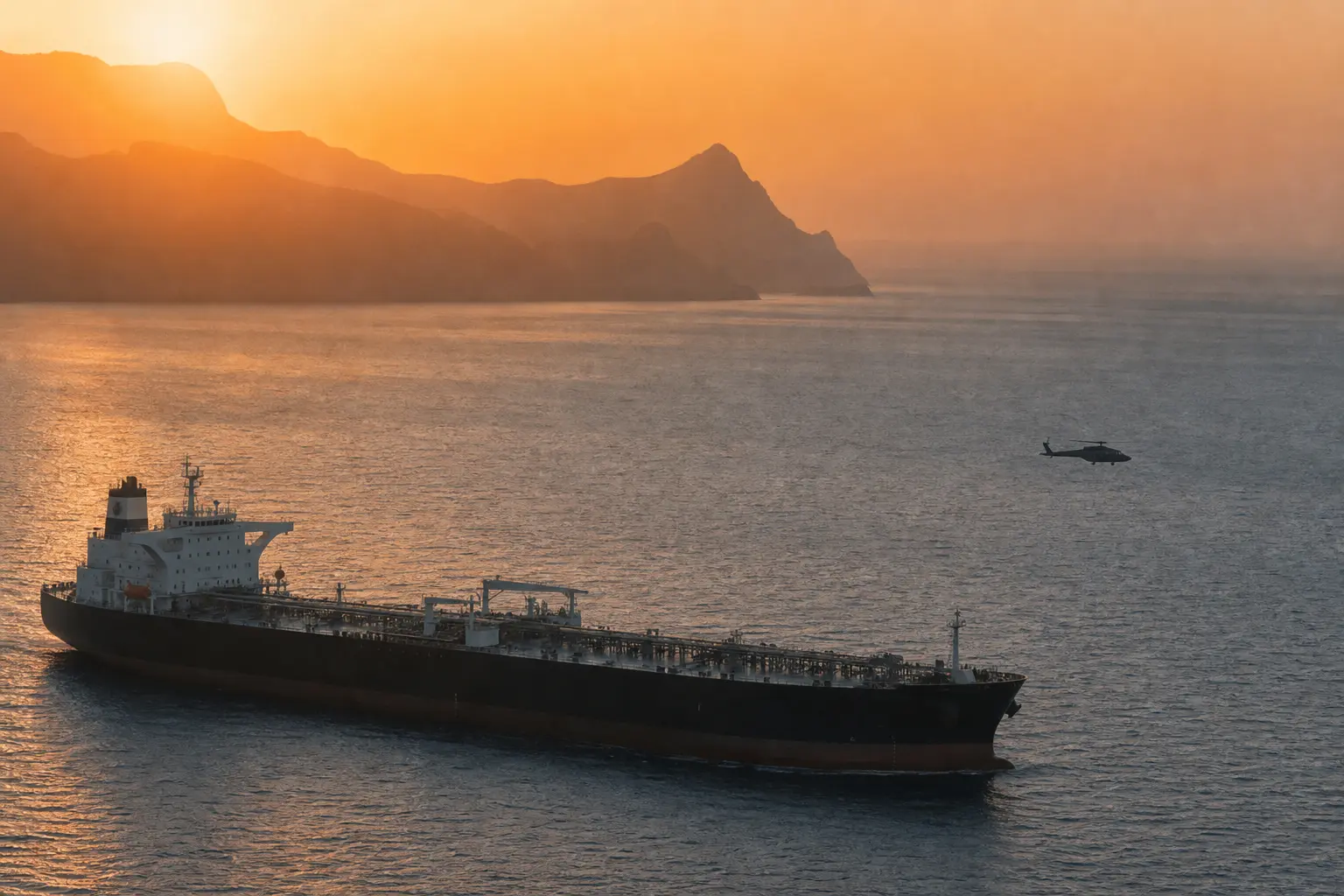
- July 8: President Trump declares the ceasefire agreement over, accusing Iran of striking targets in the Strait of Hormuz.
- July 12: Iran hits a commercial vessel in the strait; the US strikes roughly 140 Iranian targets in response; oil jumps and Dow futures slide.
- July 16: US airstrikes hit bridges in Iran’s Hormozgan province; Iranian state media report at least eight people killed.
- July 17: Iranian missiles kill two US troops and wound four at a Jordanian air base; one service member is still missing.
A Washington Post satellite imagery review later found damage to at least 228 structures or pieces of equipment at US bases across the Persian Gulf, more than the administration had publicly acknowledged. A nearly identical scenario played out at a Jordan base in 2024, when an Iran-backed drone strike killed three US troops, and President Biden vowed retaliation. The base and the president changed. The playbook did not.
Wall Street Has Stopped Flinching at Missiles
This is not the first time this month the war has tried to rattle markets, and each time the market has recovered fast.
On Sunday, July 12, after Iran struck a commercial vessel in the Strait of Hormuz and a separate US strike on Iran that same week hit roughly 140 targets, Dow futures fell about 170 points, or 0.3%, late that evening. West Texas Intermediate crude jumped roughly 4% to above $74 a barrel, and Brent crude rose a similar amount to above $79. Bitcoin slipped below $64,000.
By Monday, oil kept climbing. Brent futures advanced as much as 9.6% intraday to above $83 a barrel. Chip stocks took the worst of it: SK Hynix’s US-listed shares fell 9% just days after a 13% Nasdaq debut pop, Sandisk dropped 12%, Intel fell 6%, Seagate lost 5%, and Micron and AMD each slid 4%.
Strategists said the reaction had less to do with fear of war and more to do with math.
The cross-asset message is straightforward: investors are trading the inflationary consequences of the escalation rather than the missiles themselves.
Stephen Innes, managing partner at SPI Asset Management, wrote that in a note the same Sunday, adding that oil prices still reflected confidence that neither Washington nor Tehran wants a full regional war. Rob Almeida, global investment strategist at MFS Investment Management, told MarketWatch that investor attention had shifted “decisively away from headline geopolitics” toward the AI capital spending cycle that has driven the market higher all year.
Wednesday’s $180 Billion Question
Four of the market’s biggest AI-spending stories land within the same 48 hours. Alphabet and Tesla report after the close on Wednesday, July 22. GE Vernova reports before the open that same morning. AMD holds its Advancing AI event in San Francisco on July 22 and 23. Interactive Brokers reports the same week, adding to a packed earnings calendar that FactSet expects to show 23% profit growth overall.
| Company | Reports | What Wall Street Wants to Hear |
|---|---|---|
| Alphabet (GOOGL) | Wed., July 22, after the close | Whether 2026 capex guidance moves past its current $180 billion to $190 billion range |
| Tesla (TSLA) | Wed., July 22, after the close | Progress on the capex forecast it raised from $20 billion to more than $25 billion |
| GE Vernova (GEV) | Wed., July 22, before the open | Whether EPS beats the $3.17 estimate, up from $1.86 a year earlier |
| AMD (AMD) | Advancing AI event, July 22 to 23 | Instinct MI450 shipment timing and Helios rack progress |
| Intel (INTC) | Thu., July 23 | Signs of share gains back from AMD and Nvidia |
Alphabet already raised its full year 2026 capital expenditure guidance to a range of $180 billion to $190 billion and has told investors 2027 spending will climb significantly higher still. Its Google Cloud backlog has nearly doubled to $462 billion, and the stock remains about 12% below its 52 week high of $408.61 even after a 14% year to date gain. The market is still digesting Alphabet’s $80 billion stock offering in June, a sign of how sensitive investors have become to every capex signal.
Tesla’s spending is rising just as fast. The company recently lifted its 2026 capital expenditure forecast from $20 billion to more than $25 billion, aimed largely at the data centers and computing power behind its self driving software and robotaxi network.
GE Vernova has become the market’s proxy for the power side of the AI boom. The company plans to commit $11 billion combined to capex and R&D through 2028, and its shares are up 70.3% in 2026 as gas turbine demand outruns supply. Analysts expect second quarter revenue of $10.77 billion, an 18.2% jump from a year earlier.
AMD is using its own event to press its advantage. The company’s own announcement claims a 1,000 times leap in AI performance for its next Instinct MI500 chips over 2023’s MI300X, part of a yearly cadence meant to keep pace with Nvidia.
The Oil Price Is Doing the Talking
Charles Schwab’s trading desk expects earnings across the S&P 500 to climb 23% year over year this quarter. Expectations, in other words, are already high heading into Wednesday.
But the setup is more fragile than that number suggests. The same analysts warned that a rise in oil prices and uncertainty around AI economics have already put stocks, especially in technology, on track for weekly losses. One line from the note stood out: “the tail risk is getting fatter.”
The strait’s risk now extends to shipping crews, too. An Indian seafarer aboard the MV GFS Galaxy died after the vessel was struck near the Strait of Hormuz, and India has since ordered shipowners to keep Indian sailors off vessels transiting the strait, a workforce that supplies more than 300,000 sailors worldwide.
Here is what is confirmed and what is not, as futures prepare to open.
- Confirmed: Two US troops died and one is missing after the July 17 strike on the Jordan base, per CENTCOM.
- Confirmed: Alphabet, Tesla and GE Vernova report Wednesday, July 22, with AMD’s Advancing AI event running the same two days.
- Confirmed: Oil rose roughly 4% during the comparable flare up on July 12, and chip stocks led the resulting sell-off.
- Unconfirmed: The location and condition of the missing service member.
- Unconfirmed: Whether the Strait of Hormuz is genuinely obstructed. Iran, which also objects to shipping lanes running through Oman’s territorial waters, claims it is closed; CENTCOM says traffic is flowing.
- Unconfirmed: Whether the administration’s damage assessments match what independent satellite reviews have found.
What Wednesday Will Decide
The last two flare-ups this month followed the same script: strikes, an oil spike, a shaky open, then a quick return to the AI trade. Friday’s deaths in Jordan are the first American combat fatalities of this specific stretch of strikes, and they land four days before the heaviest AI earnings of the year.
Survivors of the March attack that killed six US troops in Kuwait later said commanders had ignored earlier warnings, according to the Washington Post. One general reportedly shouted “Get out!” to a soldier as a drone struck his unit’s operations center. Wall Street barely paused after that attack either.
More than 50,000 US troops remain spread across the Middle East, CENTCOM has said, inside a war that has already cost the US 39 aircraft by lawmakers’ own count. That toll has not moved the Nasdaq the way a single word from Alphabet’s earnings call can.
By Thursday morning, Wall Street will know whether trillion dollar AI budgets can keep climbing through a war that shows no sign of stopping.
Frequently Asked Questions
How Many US Troops Have Died in the Iran War?
At least nine American service members have died since the war began in late February, based on individual incidents confirmed by the US military: six soldiers killed in a March 1 drone attack near Camp Arifjan in Kuwait, one Marine who died in a non-hostile incident in Saudi Arabia days later, and two service members killed in the July 17 missile strike on Jordan. A tenth service member remains missing.
Is the Strait of Hormuz Closed to Oil Tankers?
Iran claims the strait is closed and has also objected to shipping lanes running through Oman’s territorial waters nearby. US Central Command disputes the closure claim entirely, saying commercial traffic continues to flow through the waterway despite the surrounding strikes.
What Is AMD’s Advancing AI 2026 Event?
AMD holds its Advancing AI event July 22 and 23 at the Moscone Center in San Francisco, an annual showcase similar in scope to Nvidia’s GTC conference. This year’s focus is the Instinct MI450 accelerator lineup and the Zen 6 based EPYC Venice server chips that will pair with it.
Could the Iran War Delay Interest Rate Cuts?
Strategists have not ruled it out. Analysts at SPI Asset Management and Charles Schwab have both flagged that a sustained rise in oil prices could feed inflation just as markets are pricing in rate cuts later this year, though both note the current oil price still reflects bets that the conflict stays contained.
Disclaimer: This article is for informational purposes only and does not constitute investment advice. Stock prices, earnings estimates and oil prices change quickly, figures here are accurate as of publication, and readers should consult a licensed financial professional before making investment decisions.


Walmart’s $50 Million Opioid Settlement Closes Case Without Admission

California Sues Over $120 Million Morro Bay Wind Lease Buyout

Gilead Bixlenvo FDA Nod Opens Single Pill Path for Complex HIV Cases

Meta’s $18B Kids Deal Forever Shields Data Used to Spot Under-13s

Lettuce Outbreak Drove Record Cyclospora Spike Across 20 States

Amazon Shaves $20 Off M6 Mac Mini Before It Even Ships

SpaceX Louisiana Port Tests Debt Markets on Orbital AI Scale

Microsoft High Lifts Indexes as Small Caps Crack Support

Apple Replays 2015 Saturday Midnight Preorder for iPhone 18 Pro

Updated COVID Shots Clear FDA but Access Friction Hits High-Risk Groups

Take-Two CEO Pushes Netflix Subs for GTA 6 Extended Look

Destiny 2 Fans Unlock Vaulted Maps After Live Service Ends

Wildlands Free Update Hands Players the Tools They Already Invented

Quake Gets 19 Free Maps From MachineGames Quake Club

Quordle Monday Delivers Gavel Crush Speed Ethos Cleanly

Stripe Bid Shows PayPal Moat Cracked After Years of Slide

Tyson’s Five-Year Utah Plant Falls to Cattle Shortage Reckoning

Silver Lake Workday Talks Signal Private Floor for Software

Kennedy Lewis Takes Majority Control of The Greenbrier in $500M Deal

Best Buy Marks 60 Years With Sale That Echoes Its Audio Shop Roots
-

 TECHNOLOGY3 years ago
How to Adjust a Bulova Watch Band – An Easy Guide
-

 News3 years ago
Fred Pentland: Athletic Bilbao’s English mentor who changed the essence of Spanish football
-

 FINANCE3 years ago
Tax Planning for Every Season: Guide to Maximizing Your Tax Benefits
-

 Education3 years ago
African Ministers New Education Plan
-

 BUSINESS3 years ago
What is Entrepreneurial Operating System? A Comprehensive Guide to EOS
-

 Education3 years ago
Innovate Your Learning Journey with Technology and Enhance Education
-

 News3 years ago
Russians formally out of World Athletics Championships
-

 BUSINESS3 years ago
Top 9 Most Expensive American Cities to Rent an Apartment