
News
KeySmart SmartCard Pro Doubles Find Hub Wallet Tracker Battery Life

The wallet tracker category just got a new battery-life leader. KeySmart’s SmartCard Pro, released Tuesday at $49.99, claims 24 months of runtime on a single charge, roughly double the figure shipping on Chipolo’s latest card and a full six months past the Pebblebee Card 5. KeySmart is pairing the longer battery with Qi wireless recharging and the new Atlas Gen 3 chipset, which the company says delivers 50% faster compute than the prior generation.
The headline number is impressive on its own. The quieter story is what surrounds it: the SmartCard Pro is the third Find Hub wallet tracker to ship in eight weeks, after Motorola’s Moto Tag 2 in late May and Pebblebee’s refreshed Heatwave colorways in April. Android owners spent two years watching AirTag wallet inserts dominate the category. That gap is closing fast.
Atlas Gen 3 Powers the SmartCard Pro
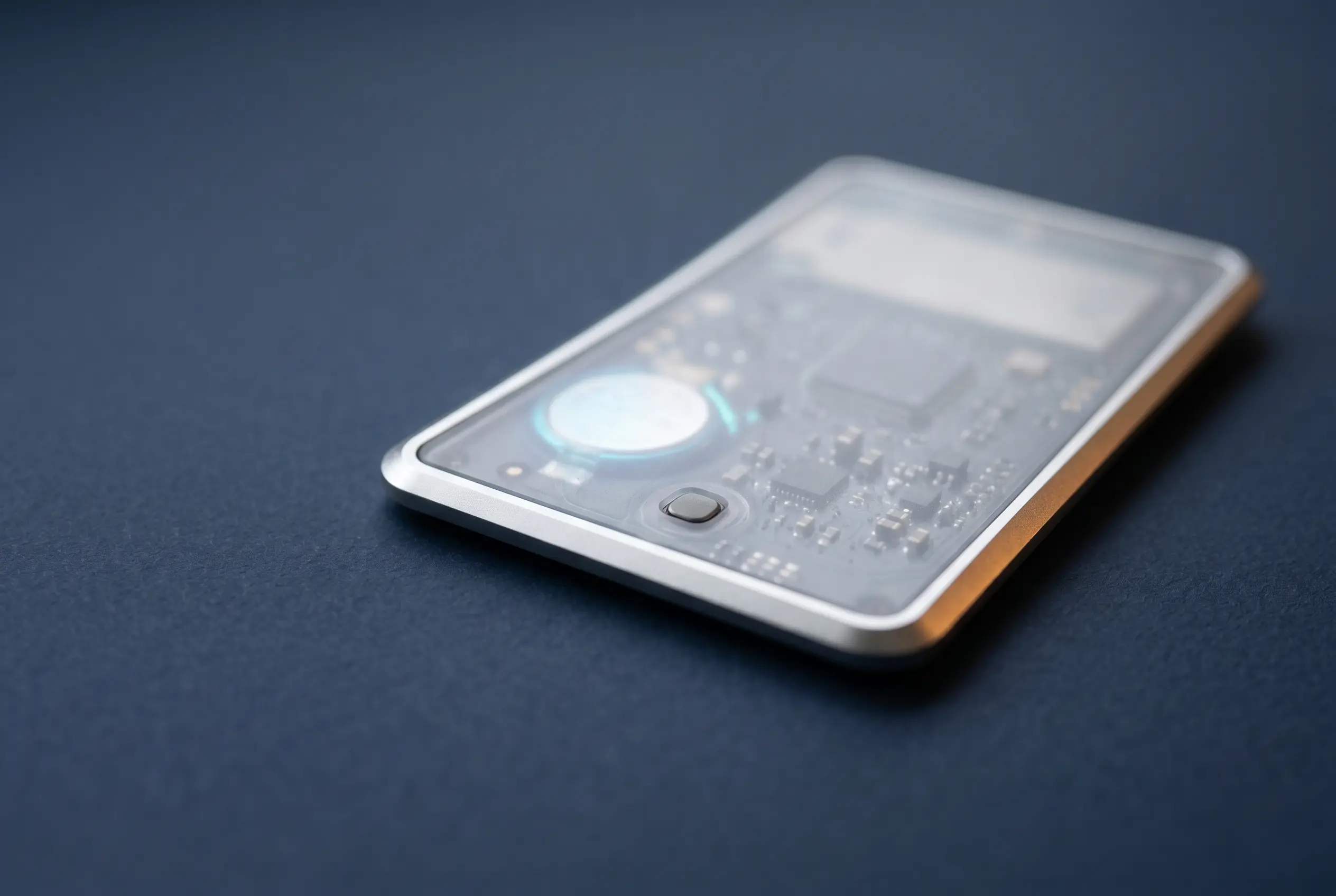
The SmartCard Pro keeps the form factor that defined the standard SmartCard earlier this year, then upgrades nearly everything inside. The transparent polycarbonate shell sits in a polished aluminum frame, a noticeable jump from the plastic-only Gen 3 card. KeySmart lists the tracker at 2.4mm thick and roughly 19.6g, fractionally heavier than the Gen 3’s 1.8mm chassis but still comfortably under credit-card thickness for a wallet slot.
Inside, the Atlas Gen 3 chipset handles the Bluetooth handshake with nearby Android and iPhone devices. KeySmart claims a 90% connection success rate with the Atlas silicon, alongside the 50% compute uplift that translates, in practical use, to quicker chimes when the user taps the find-my-card button and faster pings when the card is summoned from a passing phone.
The card is rated IPX8, meaning it survives full submersion, a useful spec for a piece of plastic that lives in a back-pocket wallet. Wireless Qi charging carries over from the Gen 3 card. KeySmart does not include a dedicated charging pad in the box, but any standard Qi pad works.
How KeySmart Reached the 24-Month Mark
Two engineering choices drive the doubled runtime. The first is a larger 350 mAh cell, up meaningfully from the Gen 3 card’s smaller pack. The second is a 30% improvement in power efficiency, which KeySmart attributes to the Atlas Gen 3’s lower idle draw and smarter duty cycling between location pings.
Stack those gains and the 11-month Gen 3 figure roughly doubles. The company markets the result as the longest-lasting rechargeable wallet card on either Apple’s or Google’s network.
- 350 mAh battery, up from the smaller pack on the Gen 3 card
- 30% lower power draw credited to the Atlas Gen 3 chipset
- 24 months of rated runtime, versus 11 months on the prior model
- Qi wireless recharge retained, no proprietary dock required
The trade-off worth flagging: longer-lasting trackers in this category have historically used non-rechargeable batteries, forcing owners to toss and replace the unit. KeySmart’s pitch is that buyers get the runtime of a disposable card with the recharge cycle of a phone accessory.
How Find Hub Wallet Trackers Stack Up
Battery life, thickness, and dual-network support are the three specs that decide which card wins a wallet slot. The latest entries from KeySmart, Chipolo, Pebblebee, Nomad, and Motorola sit at meaningfully different points on each axis.
| Tracker | Rated Battery | Thickness | Recharge | Networks | Price |
|---|---|---|---|---|---|
| KeySmart SmartCard Pro | 24 months | 2.4mm | Qi wireless | Find My or Find Hub | $49.99 |
| Pebblebee Card 5 | 18 months | 1.74mm | Qi wireless | Find My or Find Hub | $35 |
| Chipolo Card | 12 months | 2.5mm | Qi wireless | Find Hub only | $39 |
| Nomad Tracking Card Air | 7 months | 1.7mm | Qi wireless | Find Hub only | $29 |
| Motorola Moto Tag 2 | 12 months (rated) | Keychain, not card | USB-C | Find Hub only | $29 |
Two patterns jump out. The dual-network cards, KeySmart and Pebblebee, both come in pricier than the Find Hub-only options, which is the cost of carrying two stacks of certification. The Moto Tag 2 is the only entry with ultra-wideband for precision finding, but it is a keychain disc, not a card, and field reports from owners suggest the rated runtime is generous compared with actual use.
Dual-Network, but One Network at a Time
The most common misread on dual-network trackers is assuming they ping both networks simultaneously. They do not. A single SmartCard Pro is registered to either Apple’s Find My network or Google’s Find Hub, picked during setup, and switching between them requires resetting the card.
For households running mixed devices, that means the card travels with whichever account it was paired to. A wallet primarily carried by an iPhone owner registers on Find My and pings off iPhones in the area; a wallet carried by a Pixel or Galaxy owner does the reverse. The dual-network label still matters because it preserves resale value and means a household that switches platforms does not need a new card.
Coverage density also matters more than spec sheets suggest. Apple’s Find My network has a longer head start and a denser device population in most Western markets. Google’s Find Hub network, expanded last year, now spans hundreds of millions of Android phones globally and has measurably improved in urban areas over the past 12 months. In suburban and rural pockets, Apple’s network usually still wins for fast pings.
Eight Weeks of Find Hub Card Launches
The SmartCard Pro lands during a stretch of unusual category activity. Five products targeting the Find Hub network shipped between late March and late May, each pushing one spec further than the last.
- March 26. Nomad releases the Tracking Card Air at $29, claiming the thinnest profile on the market at 1.7mm but accepting a 7-month battery to get there.
- April 3. Pebblebee refreshes the Card 5 with Heatwave Hijinks colorways and reaffirms the 18-month battery rating, the longest rechargeable runtime at the time.
- April 21. Chipolo upgrades its wallet card to a 12-month rating, double the prior 6-month spec, while keeping the $39 price point.
- May 18. Motorola launches the Moto Tag 2 with ultra-wideband, the first Find Hub tracker with UWB precision finding, though shipped as a keychain disc rather than a card.
- May 26. KeySmart releases the SmartCard Pro at $49.99 with the 24-month battery rating, taking the runtime crown by a six-month margin.
The cluster is not coincidence. Google spent the first half of the year rolling out denser network-coverage updates to Find Hub, including the expanded crowdsourcing settings that let Android phones contribute pings even when their owners have not opted into broad network sharing. That made trackers measurably more useful, and the hardware side responded.
The category gap between Apple’s wallet tracker ecosystem and the Android side has been a structural complaint for years. Two months of releases have done more to close it than the prior 24.
Pricing, Availability, and the Recharge Path
The SmartCard Pro is on sale today at getkeysmart.com for $49.99, and the company says Amazon listings will follow shortly. KeySmart has not announced multi-pack discounts for the Pro, though the Gen 3 card sells in three-pack and five-pack bundles at meaningful per-unit savings, and similar bundling is likely once the Pro stocks normalize.
Owners who already bought the Gen 3 card earlier this year sit in an awkward spot. The Pro is not a firmware upgrade to existing hardware; it is a new SKU with a different chassis, a different battery, and the newer Atlas silicon. There is no announced trade-in program. For households that want longer runtime in a household wallet but already paid for the Gen 3 in a backpack, the practical play is to put the Pro in the higher-priority slot.
Wireless charging matters more than the spec sheet suggests at this category. Trackers that use coin-cell batteries deliver longer rated runtime in some cases, but the user experience of buying replacement batteries, finding a tiny screwdriver, and not breaking the seal on a sub-$50 piece of plastic is worse than dropping the card on a Qi pad once every two years.
At $49.99 with two years between recharges, the SmartCard Pro asks roughly $2 per month of tracker coverage for the dual-network buyer who does not want to commit to either Apple’s or Google’s network permanently. Pebblebee’s $35 Card 5 remains the value pick. The Pro is the spec leader, and for the next 8 to 12 weeks, until the next entry lands, that is the category’s headline.






Halo Campaign Evolved Skulls Meet Death Barriers That Kill the Hunt

Spotify Running Mode Returns After the 2015 Experiment Failed

Amazon AWS Hits Fastest Growth in Years as AI Spend Pays Off

Amazon Bets Platform Beats Models in the AI Race

Apple C2 Modem Edges Into iPhone 18 Pro After Qualcomm Drop

Google Earth Adds Nano Banana 2 to Reimagine Real Places

Apple Upgrade Turns Phones Into Monthly Utility Bills

Asha Sharma Bets Xbox Growth on Console and Four C’s

MacBook Ultra Design Follows Apple’s Familiar Cascade Path

TAG Heuer Carrera x Team Ikuzawa Revives 1970s Roadmaster Stopwatch DNA

Pokémon GO Developer Niantic Rebrands as Scopely Explore

Jaylen Brown Traded to 76ers for Paul George and Four Draft Picks

Persona 4 Revival Hands All Anime Cutscenes to Studio MAPPA

Doom Studio id Software Cuts Half Its Staff in Xbox Layoffs

Nintendo Switch Online Adds Four Classics and One Japan-Only Title

Jordan Henderson Hospitalized After Wrist Injury at the Azteca

Mexico’s World Cup Run Ends at Azteca as England Hold On 3-2

Meta’s Muse Image Lets Anyone Use Your Instagram Photos in AI

Louis Vuitton Beats Molly Tea in China, Triggers Cultural Backlash

Pink Bearista Cup Returns July 13 as Starbucks Pink Vibes Drops
-

 TECHNOLOGY3 years ago
How to Adjust a Bulova Watch Band – An Easy Guide
-

 News3 years ago
Fred Pentland: Athletic Bilbao’s English mentor who changed the essence of Spanish football
-

 FINANCE3 years ago
Tax Planning for Every Season: Guide to Maximizing Your Tax Benefits
-

 Education3 years ago
African Ministers New Education Plan
-

 BUSINESS3 years ago
What is Entrepreneurial Operating System? A Comprehensive Guide to EOS
-

 Education3 years ago
Innovate Your Learning Journey with Technology and Enhance Education
-

 News3 years ago
Russians formally out of World Athletics Championships
-

 BUSINESS3 years ago
Top 9 Most Expensive American Cities to Rent an Apartment