
News
New York, New Jersey Subpoena FIFA Over World Cup Ticket Pricing

New York Attorney General Letitia James and New Jersey Attorney General Jennifer Davenport subpoenaed FIFA on Wednesday over ticket pricing and seat reassignments at the eight 2026 World Cup matches scheduled for MetLife Stadium, including the July 19 final. The probe targets a 34% average price hike and a mid-sale carve-out of premium seats from inventory that fans had already bought.
The two offices are demanding internal records on how FIFA built the pricing model, who approved each step, and what fans were told before they paid. A congressional letter from Representatives Frank Pallone and Nellie Pou in May raised similar concerns, but lacked compulsory authority.
Two Attorneys General, One Subpoena, Eight Matches
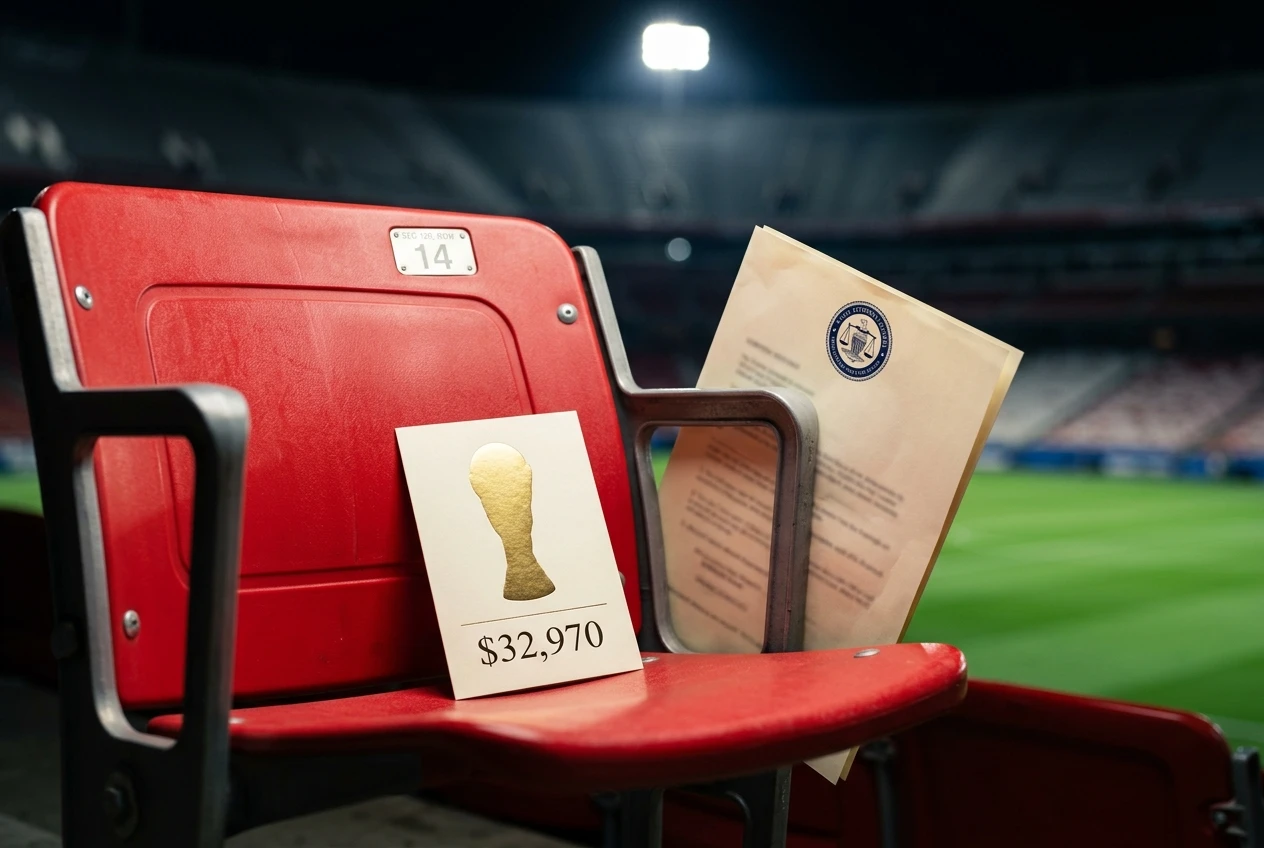
The subpoena, served jointly by James and Davenport, covers the eight matches scheduled at MetLife Stadium in East Rutherford, New Jersey. That slate includes group-stage fixtures, a quarter-final, a semi-final, and the final itself. Tickets for those games range from $380 for the cheapest seats up to $32,970 for the most expensive seat at the final, according to the joint statement from the New York Attorney General’s office.
James anchored the legal framing to New York’s consumer-protection statute, citing what her office calls deceptive practices in seat allocation. Davenport’s office is running its arm of the probe through New Jersey’s Consumer Fraud Act, which carries treble damages and per-violation civil penalties.
FIFA has turned buying a ticket to the World Cup into a gauntlet of confusion, fake scarcity, and impossibly high prices, all at the expense of consumers and hardworking New Jerseyans.
That came from the New Jersey AG in Wednesday’s joint statement. The investigation also pulled in New York City’s Department of Consumer and Worker Protection (DCWP, the city agency that enforces local consumer-protection law), whose commissioner, Samuel A.A. Levine, called reports of misleading seat-location claims and artificial price inflation “deeply troubling.”
How Dynamic Pricing Reached the World Cup for the First Time
FIFA confirmed in September 2025 that it would use what it labels “variable pricing” for the 2026 tournament. Under that system, the price of a ticket moves with demand the way an airline seat does. The 1994, 1998, 2002, 2006, 2010, 2014, 2018, and 2022 World Cups all used fixed-tier pricing announced before sales opened.
Between October 2025 and April 2026, prices rose for more than 90 of the 104 scheduled matches. Across the three main ticket categories, average prices climbed roughly 34%, with the steepest jumps falling on knockout-round games and the U.S.-hosted final-round fixtures.
The final illustrates the spread. FIFA’s earliest Category 1 list price for the July 19 fixture sat at $10,990. By late May, the best available seat on FIFA’s own platform carried a $32,970 sticker, a tripling of the original entry point. On FIFA’s resale marketplace, the cheapest final ticket in mid-May went for $9,200, more than eight times the cheapest 2022 final ticket in Doha.
Knockout-round matches at MetLife show the same shape. Semi-final tiers opened in the high four figures and have moved higher with each price window. FIFA’s stated rationale is that variable pricing captures real demand and routes resale revenue back into the tournament’s coffers rather than to scalpers operating outside its system.
The AGs do not dispute that logic in principle. Their argument, drawn from the published subpoena summary, is that FIFA failed to disclose at the point of sale that prices would keep moving, that seat categories could be re-cut after purchase, and that the prime seats in each tier might be siphoned into a higher-priced bucket without notice.
The Front Category Switch and the Seat Downgrade Complaints
The complaint that lit the fuse for the New York and New Jersey probe involves seats, not prices. During first-phase sales, FIFA’s stadium maps were divided into Categories 1, 2, 3, and 4, with Category 1 closest to the pitch. Fans who paid Category 1 prices assumed they were getting the best seats available in the venue.
In early 2026, FIFA added a new layer above each existing tier called the Front Category. The Front 1 zone was carved out of the prime rows of Category 1 and listed at a much higher price. Front 2 came from Category 2, and so on down the stack.
Buyers who had already paid for Category 1 reported being moved into rows further from the field. Several said their final allocations sat behind the goals or near the upper deck. Multiple ticket holders billed for Category 1 received seat allocations inside Category 2 zones after the Front Category change took effect.
The subpoena is built around four specific behaviors that, taken together, the offices argue cross into consumer-protection territory:
- Selling tickets without disclosing that a higher-priced tier could be carved out of the same inventory after purchase
- Reassigning paying customers to inferior locations without offering a refund or a comparable seat at the original tier
- Marketing Category 1 as the top tier while the company was already planning a premium layer above it
- Running a resale marketplace with fees on both sides of every transaction while the primary market kept moving upward
Each item maps to sections of New York’s General Business Law 349 and 350, the state’s primary deceptive-practices statutes. New Jersey’s Consumer Fraud Act covers similar ground with stiffer remedies attached on the back end.
Qatar to MetLife: A Decade of Ticket Inflation
To understand why the AGs picked this World Cup and not the last one, look at the price arc since Doha. Qatar 2022 charged a maximum of about $1,607 for a Category 1 final ticket. The cheapest group-stage seat sold for $11. Both numbers are official prices from FIFA’s 2022 sales portal.
The 2026 numbers, drawn from FIFA’s own pricing announcements and the New York AG’s findings, sit in a different universe entirely.
| Comparable Element | Qatar 2022 | USA, Canada, Mexico 2026 |
|---|---|---|
| Cheapest group-stage seat | $11 | around $60 |
| Top list price, final | around $1,607 | $32,970 |
| Resale fee, buyer side | 5% (capped) | 15% |
| Resale fee, seller side | 5% (capped) | 15% |
| Pricing model | Fixed tiers | Variable, demand-driven |
The shift from fixed to variable pricing is the structural change driving every other number in that table. Under fixed-tier pricing, a Category 4 group-stage ticket in Doha cost $11 on day one of sales and $11 on the last day. Under variable pricing in 2026, an entry-level seat for a group-stage match in Vancouver can sell at $80 in October 2025 and $135 in April 2026 with no rule change behind the move, only a change in demand inputs that FIFA has not publicly disclosed.
FIFA’s stated reason for the broader jump is that the tournament is being staged across three high-cost-of-living markets (United States, Canada, and Mexico) rather than one government-subsidized host. The 2022 tournament’s pricing benefited from a Qatari state that absorbed much of the operating cost. The 2026 edition has 16 host venues across three countries with no equivalent subsidy. That accounts for higher prices in principle. It does not, the AGs argue, account for the in-tournament price moves, the Front Category carve-outs, or the seat reassignments that happened after purchase.
The Resale Marketplace and Its 30% Round Trip
FIFA does not just run the primary sales channel for World Cup tickets. It also operates the secondary one, the FIFA Resale and Exchange Marketplace, which is the only authorized venue for transferring a 2026 World Cup ticket between fans. The marketplace exists for a reason FIFA states openly: to keep resale revenue inside the tournament rather than letting it flow to StubHub or Viagogo.
The fee structure on that marketplace is what consumer advocates have been documenting for months:
- 15% fee charged to the buyer on every transaction
- 15% fee charged to the seller on the same transaction
- 30% total transaction cost on every resale event, before tax
- 50 cents per ticket as the floor for very low-priced transactions
For comparison, the FIFA-operated resale platform at Qatar 2022 capped fees at 5% or 50 cents per ticket, whichever was greater. The 2026 fee on the seller side alone is six times the equivalent 2022 figure. The full FIFA resale marketplace policy page spells out the fee schedule line by line.
Mid-May data from FIFA’s resale dashboard, captured before the subpoena landed, showed the cheapest available final ticket on the marketplace listed at $9,200. Some seller asks for premium final seats sat above $1 million. None of those numbers are FIFA’s primary prices. All of them sit on FIFA’s platform, with FIFA collecting 30 cents of every dollar that changes hands on the way in and out.
The subpoena does not name the resale marketplace as a separate target, but the four-behavior framework in the AGs’ statement reaches the platform’s economics directly. If a primary buyer is forced onto the secondary market because they were downgraded out of their original seat, the 30% round-trip fee is what they pay to put themselves back where they thought they already were.
What State Consumer-Protection Law Can Reach
The legal question running underneath this subpoena is whether a Switzerland-based association, transacting through a Delaware subsidiary, can be held to New York and New Jersey consumer-protection statutes for sales made to residents of those states. The short answer from precedent is yes.
State AGs have used the same body of law against Ticketmaster, StubHub, and various concert promoters for the same family of conduct: bait-and-switch, undisclosed fees, and price-tier manipulation after purchase. New York’s General Business Law 349 in particular has been the basis for repeated successful state actions against ticketing platforms over the past decade.
FIFA’s exposure runs along two paths. The first is the subpoena response itself. If the organization stonewalls, the AGs can move to enforce in state court, which would produce sworn testimony from FIFA executives about who set prices, when, and on what basis. The second is the civil-penalty math. New Jersey’s Consumer Fraud Act allows treble damages, which on a top-tier final ticket sold under deceptive conditions produces a per-buyer exposure approaching $99,000 before attorney fees and per-violation civil penalties stack on top.
The tournament’s opening match is set for June 11 at Estadio Azteca in Mexico City. The eight matches at the New Jersey venue run from June 13 through the July 19 final. The subpoena clock and the tournament clock are now running in parallel.
If FIFA produces records cleanly, the investigation could resolve before the final whistle in East Rutherford. If FIFA fights production, the case lasts longer than the World Cup itself, which is exactly the kind of headline the organization spent the last decade trying to avoid after the 2015 U.S. Department of Justice indictments hollowed out its previous leadership.


Bariatric Surgery Delivers 5x the Weight Loss of Ozempic in NYU Study

Olive Oil and Lemon Shot Every Morning: What Science Actually Shows

Wisconsin Confirms Five Mpox Cases as US Total Climbs to 535

Six Questions Sleep Researchers Use to Tell If You’re Getting Enough

ACS Adds Shield Blood Test to Colorectal Cancer Screening Guideline

New York, New Jersey Subpoena FIFA Over World Cup Ticket Pricing

Lamar Jackson Calls Ravens Coaching Change a ‘Breath of Fresh Air’

Hurricanes Shut Out Canadiens 4-0, One Win From Stanley Cup Final

Naomi Osaka’s Eiffel Tower Dress Hands Kevin Germanier a Roland Garros Runway

Donkey Kong 64 Joins Switch Online June 4 After 26-Year Wait

Mitchell Matches Kobe in Game 7 Rout, Cavaliers Reach East Finals

Shai Gilgeous-Alexander Wins Second Straight MVP With 83 of 100 First-Place Votes

Xperia 1 VIII Holds Price, Xiaomi 17 Max Loads Up: Week 20 Phone News

Colt Emerson Debuts, Mariners Get Swept by Padres in Vedder Cup

Brent at $111 Hides the Hormuz Damage Hitting Fed and Asia

Jaylen Brown Calls Stephen A. Smith the Face of Clickbait Media

Rousey Finishes Carano in 17 Seconds and Hands Netflix Its MMA Opening

LIRR Strike Hits Third Day as 250,000 Commuters Face a Tougher Manhattan Run

Nebraska Softball Tops GCU, Lands Program’s First Home Super Regional

Santa Marta’s Fossil Fuel Exit Plan Puts Scotland’s Drilling U-Turn on the Clock
-

 TECHNOLOGY3 years ago
How to Adjust a Bulova Watch Band – An Easy Guide
-

 FINANCE3 years ago
Tax Planning for Every Season: Guide to Maximizing Your Tax Benefits
-

 Education3 years ago
African Ministers New Education Plan
-

 News3 years ago
Fred Pentland: Athletic Bilbao’s English mentor who changed the essence of Spanish football
-

 BUSINESS3 years ago
What is Entrepreneurial Operating System? A Comprehensive Guide to EOS
-

 Education3 years ago
Innovate Your Learning Journey with Technology and Enhance Education
-

 News3 years ago
Russians formally out of World Athletics Championships
-

 BUSINESS3 years ago
Top 9 Most Expensive American Cities to Rent an Apartment