
News
Pixel Watch 5 Found in the Ocean Points to a Bigger Chip Leap

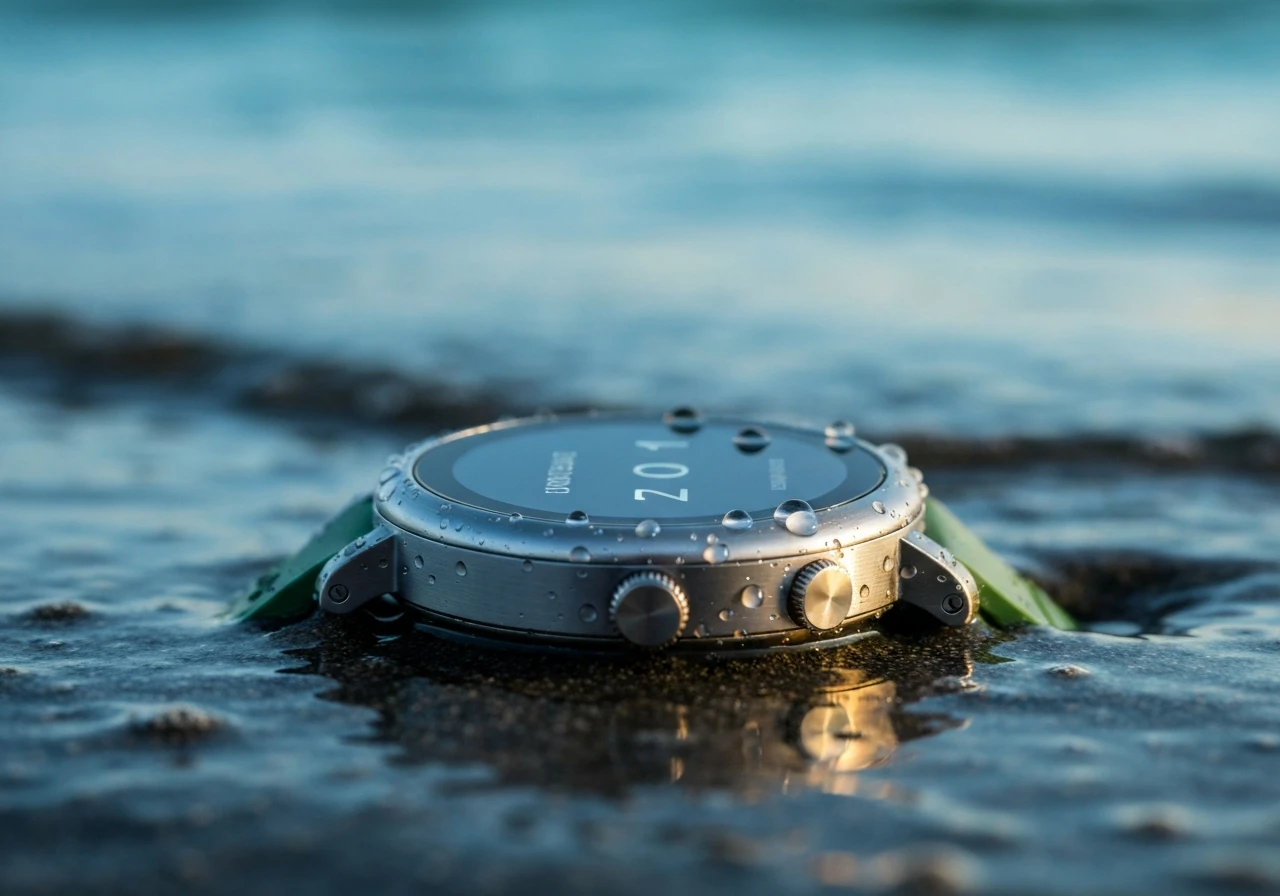
A scuba diver near the Caribbean island of St. Martin pulled a working Pixel Watch 5 off the seabed, and the photos a video-game executive posted of it have become the strangest Google leak of the year. The 45mm watch still showed the correct time in a low-power state, its back plate clearly stamped with a model name Google has not announced or released.
The find tells us almost nothing about the software, because the battery is dead. It does confirm that Google’s next watch hardware is finished and already in the wild, months before the company plans to show it.
How a Scuba Diver Surfaced Google’s Next Watch
Randy Pitchford, founder of game studio Gearbox and the creative lead behind the Borderlands series, posted two hands-on images to X over the weekend. He wrote that a friend found the watch a few days earlier while scuba diving near St. Martin, and that the reverse of the device named it as an unreleased Google model.
Pitchford’s own reflection sits in the metal of one shot, which is part of why the photos read as genuine rather than staged. There is no obvious sign of editing, no mismatched lighting, and no rendered-looking edges. For a leak with no supply-chain paper trail behind it, that small reflection is doing a lot of authentication work.
What the diver pulled up is also a small engineering story. A smartwatch that spent days in salt water has no business switching on at all, yet this one held a low-power clock. You can study the underwater watch photos posted to X and see a device that looks barely touched by the sea.
Pitchford later said he was in contact with the owner and arranging the watch’s return, which points to the likeliest origin: a Google employee testing pre-release hardware who lost it on a dive. It is the same accident that produced the famous iPhone-left-in-a-bar leak years ago, only this time the bar was the ocean floor.
Why the Dead Battery Hides More Than It Reveals
For all the attention, the photos give away very little. The screen never lit beyond a dim clock, so there is no glimpse of a new watch face, no settings menu, and no software build number to date the device. The exterior, meanwhile, looks identical to the model already on shelves.
Here is what the images actually establish, and what they leave open:
- Confirmed: the name “Pixel Watch 5” is printed on the case back, alongside Google branding and heart-sensor markings.
- Confirmed: a 45mm size class, matching the larger of the two current options.
- Confirmed: the case, crown, and domed-glass profile mirror the existing design, so no visible redesign is coming.
- Unknown: the chip inside, the software version, battery capacity, and any new sensors, none of which a dead device will surrender.
So the viral object is mostly a confirmation that the product exists and carries that name. The part worth caring about is the part the salt water sealed shut.
Snapdragon Wear Elite Sits Under the Hood
Google has already hinted at the one component most likely to define the next watch. The company has described its next-generation Wear OS silicon as a platform that, in its words, opens fresh ground for performance and battery life. The chip it is pointing at arrived in March.
Opens new possibilities, delivering the performance, battery life and connectivity essential for the next generation of Wear OS.
That tease, attributed to Google, lines up almost word for word with what Qualcomm unveiled at Mobile World Congress (MWC, the wireless industry’s annual Barcelona trade show) in early 2026.
From 4nm to 3nm
The Pixel Watch 4, launched in August 2025, runs the Snapdragon W5 Gen 2, a chip built on a 4nm process with four Cortex-A53 cores. The successor platform moves to a 3nm process node and, for the first time on a Wear OS chip, a big.LITTLE layout: one 2.1GHz performance core paired with four 1.95GHz efficiency cores. Qualcomm claims up to 5x higher single-core CPU performance and as much as 7x faster graphics.
| Attribute | Snapdragon W5 Gen 2 (Pixel Watch 4) | Snapdragon Wear Elite (next gen) |
|---|---|---|
| Process node | 4nm | 3nm |
| CPU layout | Four Cortex-A53 cores | One 2.1GHz core plus four 1.95GHz cores |
| Single-core gain | Baseline | Up to 5x |
| Graphics | Baseline | Up to 7x faster |
| On-device AI | Limited | Hexagon NPU, billion-parameter models |
| Battery life | Baseline | About 30% longer |
Connectivity and Battery
The new platform also widens what a watch can talk to. Qualcomm lists Wi-Fi 6, Bluetooth 6.0, ultra wideband (UWB, the short-range tech behind precise device finding), satellite messaging, and 5G RedCap among its radios. Despite the performance jump, the company says the chip can stretch battery life by roughly 30% over the prior generation and refill half a charge in ten minutes. Those numbers, not the case back, are what would make a Pixel Watch 5 worth the upgrade. The full Snapdragon Wear Elite platform specifications spell out the rest.
Gemini Moves From the Phone to the Wrist
The headline feature of that silicon is not the clock speed. It is a dedicated neural processing unit (NPU, the chip block that runs AI models) built around Qualcomm’s Hexagon design, capable of running models up to a billion parameters directly on the device. On a watch, that is the hardware floor for a useful, always-listening Gemini.
Google has spent the past year pushing its Gemini assistant deep into its product line, and the wrist is the logical next surface. An on-device NPU means a watch can summarize, transcribe, and answer without round-tripping every request to a phone or the cloud, which is the difference between a gimmick and something you would actually use on a run.
- Billion-parameter models running locally on the watch’s NPU.
- Real-time responses without a tethered phone for many tasks.
- Lower latency for voice and dictation, the features people give up on first.
The same strategy is already visible elsewhere. Google’s effort to put Gemini in front of billions of consumer devices shows how central the assistant has become to its hardware pitch, and a watch is the smallest screen yet to carry it.
Samsung and Motorola Run the Same Engine
This is where the ocean find stops being a Google story. The next-generation chip is not exclusive to Pixel. Samsung has confirmed that its next Galaxy Watch will run the same platform, and Motorola is using it for Project Maxwell, the AI companion concept it teased earlier in the year.
That shared engine matters because it sets the competitive baseline for the whole Wear OS field at once. When three vendors build on identical silicon, the differences come down to software, sensors, and design rather than raw speed. Apple, working off its own chips and a separate supplier strategy driving its flagship watch, is the only major holdout from the common stack.
For buyers, it means the 2026 wave of Android watches will feel more alike under the hood than ever, and the pitch shifts to who does the most with the same parts.
Google’s August Window for the Pixel Watch 5
The diver’s timing is the last clue worth reading. Finished, employee-tested hardware circulating in May fits Google’s established release rhythm rather than breaking it.
- August 20, 2025: Google announced the Pixel Watch 4 at its Made by Google event in New York, priced from $349.
- October 9, 2025: the watch reached US shelves, roughly seven weeks after reveal.
- Mid-2026: pre-release units like the St. Martin watch are exactly what you would expect to leak ahead of a late-summer announcement on the same cadence.
The brand has shown it will experiment at the cheaper end too, as its budget fitness-band push under the Fitbit name demonstrated, but the flagship watch tends to anchor the fall lineup. None of the new chip’s gains are confirmed for the Pixel model specifically; Google has only said the platform is essential to its next watch, and the hardware in the photos is silent on which version it carries. The Wear OS software platform will tie it all together whenever the reveal lands.
If Google holds to its August window, a new watch arrives within weeks of a Galaxy Watch built on the same chip. The salt-water survivor already tells us the hardware is done; the open question is how much of Gemini the company is willing to trust to a battery this small.






Spotify Running Mode hits Android and revives its old tempo experiment

Galaxy Tab S12 Ultra Renders Keep the Notch Fans Hate

Novato Spinning Round House Sells With Six Neighbors for $3.3 Million

Crop Tour Finds Indiana and Nebraska Corn Yields Lagging 2025

Best Buy 60th sale brings Android deals back to its roots

American Airlines reverses seatback screen bet years too late

Iran Hormuz Strikes Force Gulf Oil Onto Costlier Paths

Plague Tale Prequel Day One Joins Game Pass Wave 2 as Witcher Exits

NBA 2K27 opens The City to everyone and rewrites career eras

iOS 26.6.1 Patches 29 Flaws as AI Forces Faster Apple Updates

Double Fine Cuts 23 Jobs Weeks After Xbox Independence

John Hight Exits Wizards After Digital Reckoning Hits

Day-One Big Walk Lifts PS Plus August Beyond Recycled AAA

Curtis Mead’s Red Sox Debut Ends With Fractured Wrist

Red Sox Squander Hot Streak Chance in 4-3 Loss to Athletics

Moesch and Dressel Rewrite Night One at 2026 U.S. Nationals

Boutte’s Quiet Camp Takeover Forces Patriots Receiver Choices

Take-Two CEO Pushes Netflix Subs for GTA 6 Extended Look

Halo Campaign Evolved Skulls Meet Death Barriers That Kill the Hunt

Wildlands Free Update Hands Players the Tools They Already Invented
-

 TECHNOLOGY3 years ago
How to Adjust a Bulova Watch Band – An Easy Guide
-

 News3 years ago
Fred Pentland: Athletic Bilbao’s English mentor who changed the essence of Spanish football
-

 FINANCE3 years ago
Tax Planning for Every Season: Guide to Maximizing Your Tax Benefits
-

 Education3 years ago
African Ministers New Education Plan
-

 BUSINESS3 years ago
What is Entrepreneurial Operating System? A Comprehensive Guide to EOS
-

 Education3 years ago
Innovate Your Learning Journey with Technology and Enhance Education
-

 BUSINESS3 years ago
Top 9 Most Expensive American Cities to Rent an Apartment
-

 News3 years ago
Russians formally out of World Athletics Championships