
FINANCE
Wall Street Dumped a Trillion in Tech and Bought Peanut Butter
Wall Street dumped nearly $1 trillion in tech Friday, with the Nasdaq closing off 1% after plunging 4% at midday. The money went into Smucker and Home Depot.

The Wall Street tech sell-off on Friday, June 5 looked like a heart attack on the way down and a near-miss on the way back. The Nasdaq Composite slid more than 4% by lunchtime, handed back nearly $1 trillion in equity value across the megacap tech complex, then clawed most of it back to close off just 1%. By the bell, the only thing most traders agreed on was that the day was strange: the chips were crushed, the staples surged, and the reason nobody could name was the calendar.
The trigger that almost everyone was waiting for landed before lunch. A 172,000 May nonfarm payrolls print, well above forecasts, killed the idea that the Federal Reserve was about to cut rates any time soon. Two-year Treasury yields jumped to 4.16%, the 10-year hit 4.54%, and the money that left the chip complex didn’t go into bonds. It went into Smucker, Home Depot, Sherwin-Williams and the rest of the dullest corners of the market, a rotation made for a week in which SpaceX is set to price the largest initial public offering in history.
A $1 Trillion Midday V
Friday was the worst session for U.S. equities since October, per the Associated Press. The S&P 500 sank 2.6%, its biggest one-day drop since October 10, and ended a nine-week winning streak. The Dow Jones Industrial Average fell 1.4% to 50,866.78, while the Nasdaq composite lost 4.2% intraday and closed at 25,709.43, off 1,121.53 points. The S&P 500 finished at 7,383.74, down 200.57 points on the day, and was still up 7.9% for 2026 heading into the week.
The intraday path is what made the day feel like a near-miss. Per Fortune, the Nasdaq’s chart drew a clean V: down more than 4% around noon, then recovering sharply into the close. The S&P 500 lost 2.6% on the day but was a fraction away from green by the final hour. The recovery was strong enough to leave the index up for the year, and yet the tape underneath was anything but calm.
Tech shares did the heavy lifting on the way down. The S&P 500’s losers list reads like an AI infrastructure index: Nvidia fell 6.2%, Broadcom dropped 7.9%, and Micron Technology slid 13.3%, the biggest single-name loser in the S&P 500, per the AP. Meta lost 5.5% on a report it was weighing a new stock offering to fund AI infrastructure spending, and Lululemon slumped 8.6% after trimming its revenue and profit guidance.
Friday at a glance:
- S&P 500: fell 2.6%, its worst day since October 10
- Nasdaq Composite: down more than 4% by midday, closed off 1%
- Dow Jones: fell 1.4% to 50,866.78
- Marvell: dropped 10% in a day after jumping 10% on its S&P 500 inclusion
- Micron: slid 13.3%, the biggest S&P 500 loser on the session
The Parabolic 7 Meets Its Reckoning
The chip trade that powered the first five months of 2026 had a name by June, and Friday is the day it cracked. Strategist Ben Emons of Highline Asset Management coined the “Parabolic 7” for a basket of seven semiconductor and AI-hardware names that have vastly outperformed both the Magnificent 7 and the SOX index since mid-2025, per 247wallst.com. The group, amplified on social media by Bloomberg’s Joe Weisenthal, had turned a chip index into a near-100% move in a matter of weeks by the time Friday’s selling hit, per Fortune.
The names were crowded, levered, and richly rewarded in 2026 going into the sell-off, per 247wallst.com: SanDisk up 623% year to date, Micron up 273%, Marvell up 243%. Marvell then opened Friday by dropping 10% in a day, a round trip from a 10% pop the prior session when news broke that it was joining the S&P 500, per Fortune. Micron’s 13.3% slide was the worst in the S&P 500, per the AP, and Intel, AMD, Broadcom and Dell were all lower in lockstep, a sign the trade was being unwound at the basket level rather than on stock-specific news.
The seven names in the Parabolic 7:
- SanDisk (SNDK): up 623% YTD through Tuesday
- Micron Technology (MU): up 273% YTD through Tuesday
- Marvell Technology (MRVL): up 243% YTD through Tuesday
- Broadcom (AVGO): part of the basket per Highline’s Emons
- Advanced Micro Devices (AMD): part of the basket per Highline’s Emons
- Intel (INTC): part of the basket per Highline’s Emons
- Dell Technologies (DELL): part of the basket per Highline’s Emons
Peanut Butter, Paint and the Rotation Nobody Calls Selling
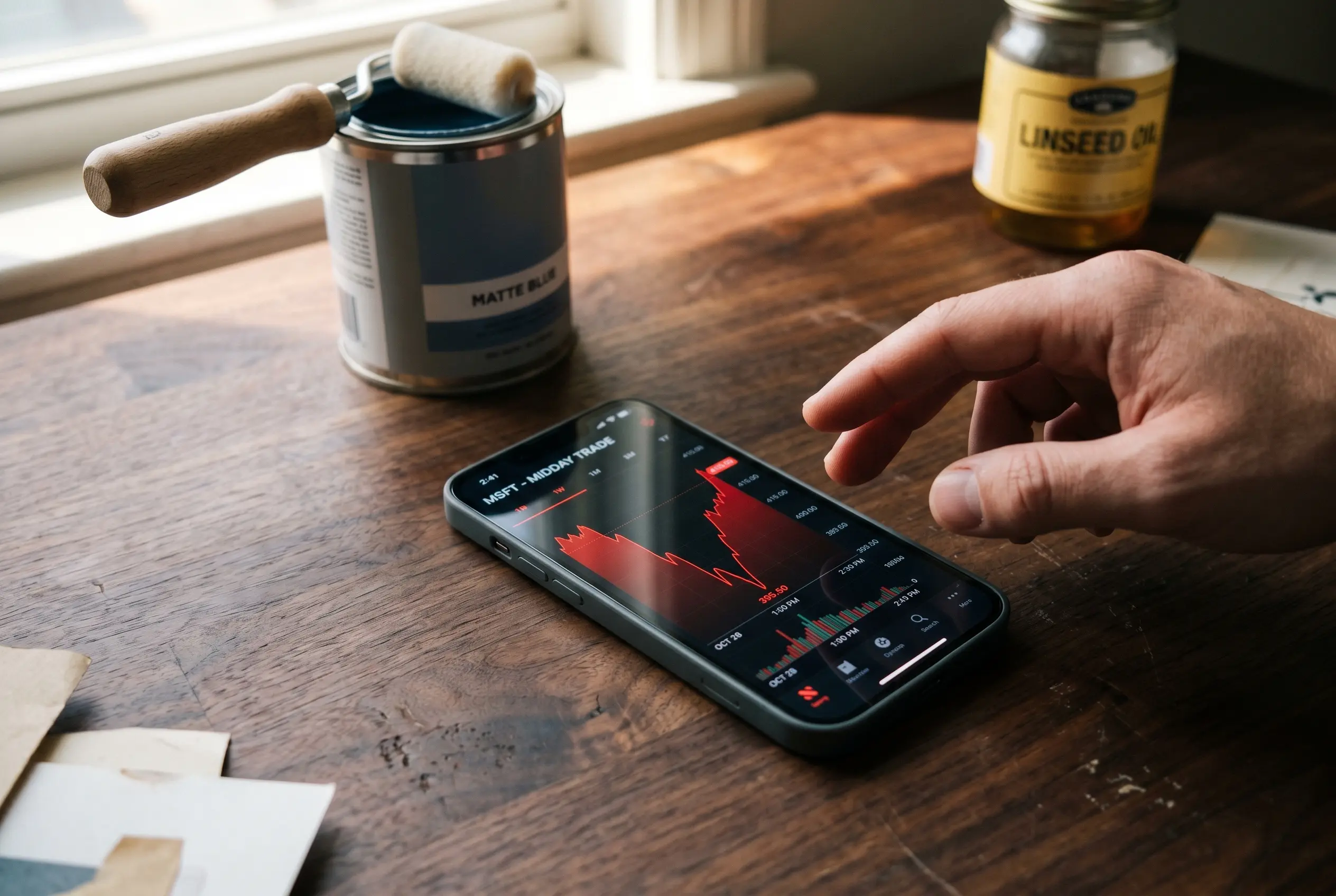
The other side of Friday’s tape was almost surreal. Per Fortune, the market rotated into “peanut butter and paint”: Smucker jumped double digits, Home Depot and Sherwin-Williams led, and real estate, staples and utilities all closed up, the classic ballast against tech froth. The J.M. Smucker Company makes jam, peanut butter and jelly. Sherwin-Williams makes paint. Home Depot sells the paint roller. The picture is that literal.
The bid was real and it was broad. Treasuries barely moved, per Fortune, so this was not a flight from risk. It was a rotation within U.S. equities, out of the year’s most crowded names and into the year’s most unwanted, the consumer staples, home improvement and paint names that had been left for dead while chips ran to a 100% gain in weeks. Richard Steinberg, senior global market strategist at Focus Partners Wealth, framed the move to the Wall Street Journal.
You’re seeing money flow into consumer names that have been unwanted and unloved.
Founder ETFs’ Michael Monaghan told Fortune the day looked less like a rush for the exits and more like buyers simply stepping back, with prices falling faster than the volume on the tape would have suggested. That distinction matters for what comes next: a tape where bids vanish produces the V-shape Friday produced, and a tape where bids vanish into a CPI print and a record IPO produces a much harder setup for the chips that need a fresh bid to recover.
The Capital Magnet That’s About to Land
The jobs report landed first, and it landed hard. Per the AP, the U.S. added 172,000 jobs in May, a surprise to the upside that pushed the market-implied odds of a Fed rate hike this year above 60%, with little to no chance of a cut. The Federal Reserve’s next policy meeting is June 16 to 17, and it will be Kevin Warsh’s first as chair. Long-end yields jumped: the 10-year Treasury rose to 4.54% from 4.50%, the 2-year to 4.16% from 4.04%.
Funds do not usually sit in their most crowded, highest-beta positions into an inflation reading that can move the Fed’s path, and two of those readings land this week. Wednesday brings the May CPI, Thursday brings the May PPI, per Fortune’s calendar. Trimming the chips before the print is risk management, not a thesis change.
The bigger pull sits in front of the chips in the rearview. SpaceX is set to price June 11 and trade June 12, in what Yahoo Finance and Bloomberg report is shaping up to be the largest initial public offering of all time, topping Saudi Aramco’s $29.4 billion 2019 debut. The deal is offering 555.6 million shares at a fixed price of $135 each, which would raise about $75 billion and value the company at about $1.8 trillion. Per Fortune, the order book is already oversubscribed, with multiple $10 billion-plus orders in. The cash has to come from somewhere, and the most crowded chip book on the Street is the obvious donor. OpenAI and Anthropic have both now confidentially filed their S-1s; Anthropic confirmed its own confidential submission to the SEC on June 1, 2026, per Anthropic’s own announcement of its confidential S-1 filing, and CNBC reported on the same day that Anthropic’s last private round valued it at $965 billion on a $47 billion revenue run rate. The capital that has to make room for those deals this fall is sitting in the Parabolic 7 right now, per SpaceX’s $135 share price and the $75 billion raise, and per BNP’s analysis of the IPO cash drain.
Brian Jacobsen, chief economist at Annex Wealth Management, framed it for Fortune as an Icarus trade with the wings melting, with Alphabet’s rare capital raise the first warning shot and SpaceX the shiny new toys pulling money out of the chip complex.
Annex Wealth Management’s Brian Jacobsen called the tech run an Icarus trade with the wings melting: Alphabet’s rare capital raise was the first warning, and SpaceX the ‘shiny new toys’ pulling money out.
Oil Slips as Iran and the U.S. Trade Strikes
Oil went the other way, and the reason it did tells you how the market is reading the Iran file. Per Fortune, even after President Donald Trump said the U.S. “must respond” to the downing of a U.S. Army Apache helicopter near the Strait of Hormuz, crude fell about 3% to roughly $88, as the energy secretary said traffic through the Strait was picking up meaningfully. Brent had settled at $93.09 on Friday’s close per the AP, well below its post-war peak, and the print of the energy secretary’s comments pulled it lower into the new week.
The incident itself is contested. Per the AP, the Army AH-64 Apache went down after colliding with an Iranian drone off the coast of Oman, according to a U.S. official, with the crash still under investigation. Trump initially blamed Iran in a social media post; Iran’s foreign minister said foreign forces near its territory “are at constant risk.” Within 24 hours, the U.S. and Iran had traded airstrikes around Bandar Abbas, Qeshm Island, Bahrain, Kuwait and Jordan, the first serious exchange since a fragile two-month ceasefire, per the Apache collision and the U.S. and Iranian strikes that followed and per the futures slide and oil jump after the U.S. strikes. The market read the diplomatic channel as more open than the kinetic one, and oil fell.
The Bumpy Path to Friday’s Debut
The recovery into this week has been real, if uneven. Per CNBC, by Tuesday South Korea’s tech-heavy Kospi had jumped more than 8%, European tech stocks were clawing back a fraction of Friday’s losses, and U.S. stock futures tied to the Nasdaq 100 were last seen up 0.7%.
The positioning under the bounce is a divided one. Per a Monday note from Citi seen by CNBC, Friday’s tape left positioning in U.S. equities “incrementally healthier” but explicitly “bifurcated,” with $14.7 billion in new shorts, the largest weekly short build of 2026, sitting alongside $4.78 billion in new longs. The same note flagged that 72% of Nasdaq longs were still in profit. Edwards Asset Management, which runs $3 billion, told clients it still targets the S&P 500 at 7,700 by year-end, while Citi raised its own year-end target to 8,100 from 7,700, implying close to 10% upside. Per Nasdaq futures rebounding into the AI IPO week, both forecasts are predicated on SpaceX pricing well, OpenAI and Anthropic clearing the SEC, and a Fed that is willing to stay on the sidelines through the back half of the year.
The Parabolic 7’s near-100% run from the winter lows sets up a brutal tape if any of those three legs slip. SpaceX prices after the close on Wednesday and trades Friday morning, and the order book closes hours before the May CPI print lands, so the inflation number and the largest IPO in history are arriving into the same window, on a week the Fed’s new chair is days from his first meeting.
Frequently Asked Questions
What was the ‘Parabolic 7’?
The “Parabolic 7” is a basket of seven semiconductor and AI-hardware stocks coined by Highline Asset Management strategist Ben Emons, per 247wallst.com, and amplified on social media by Bloomberg’s Joe Weisenthal. The names are SanDisk, Marvell, Micron, Intel, Dell, AMD and Broadcom. Going into Friday’s sell-off, SanDisk was up 623% year to date, Micron up 273% and Marvell up 243%, per 247wallst.com, and the chip index the basket tracks had run up nearly 100% in a matter of weeks, per Fortune.
When does SpaceX go public and how big is the deal?
SpaceX is set to price June 11, 2026 and trade June 12, 2026, per Yahoo Finance and Bloomberg. The deal is offering 555.6 million shares at a fixed $135, which would raise about $75 billion and value the company at about $1.8 trillion, the largest IPO of all time. Per Fortune, the order book is already oversubscribed with multiple $10 billion-plus orders in. SpaceX will trade on Nasdaq under the symbol SPCX.
Why did Smucker, Home Depot and Sherwin-Williams rally on the day tech sold off?
Per Fortune, the market rotated from the year’s most crowded trade, the chip complex, into the year’s most unwanted names, consumer staples and home-related retailers. Smucker jumped double digits, Home Depot and Sherwin-Williams led, and real estate, staples and utilities all closed up. Treasuries barely moved, so the move was a rotation within U.S. equities rather than a flight from risk.
What does the U.S.-Iran strike exchange mean for oil?
Per Fortune, crude fell about 3% to roughly $88 even after President Trump said the U.S. “must respond” to the downing of a U.S. Army Apache helicopter near the Strait of Hormuz, as the energy secretary said traffic through the Strait was picking up meaningfully. Per the AP, Brent settled at $93.09 on Friday’s close. The U.S. and Iran then traded airstrikes around Bandar Abbas, Qeshm Island, Bahrain, Kuwait and Jordan, but the market read the diplomatic channel as more open than the kinetic one.
What catalysts hit the market this week?
Three. The May CPI lands Wednesday and the May PPI on Thursday, per Fortune. SpaceX prices June 11 and trades June 12, per Yahoo Finance and Bloomberg, the largest IPO of all time. The Federal Reserve’s June 16-17 policy meeting follows, and per the AP it will be Kevin Warsh’s first as chair, with the market now pricing better than a 60% chance of a Fed rate hike by year-end.






Judge Strips Google’s Last App Store Friction After Epic Demo

Fold 8 Success Makes Its Dusty Hinge Costlier Than Ever

Silver Lake Workday Talks Test PE Appetite for AI-Hit Software

Wholesale Prices Flat but Wage Lag Keeps Households Squeezed

Teen E-Motos Draw Hells Angels Label and Risk Legal Ebike Gains

Apple’s Siri Pay-Per-Use Plan Rewrites News Licensing Rules

Cramer Calls Cisco Plunge a Buy as AI Orders Surge

Play Points Platinum Quietly Cuts Pixel 11 Prices Again

Quincy Gas Station Sold the $1.04 Billion Powerball Ticket

Microsoft Scraps Failed Copilot Features in Forced App Merge

ZA/UM Lays Off 32 Staff as Zero Parades Wins Reviews, Not Players

EA’s New In-Game Ad Platform Skips the Games That Need It Most

Mortgage Rates Climb to 6.55%, the Highest Level in Nearly a Year

Colby Covington Stuns Tsarukyan as Askren Retires in Tears at RAF 11

Netflix Heads Into Earnings With Its 2022 Playbook Already Spent

Spain’s Diaspora-Rooted Squad Wins Over New York Ahead of the Final

NHL’s Monday Matinee Push Puts Capitals Fans on the Clock

DeChambeau’s Two-Shot Penalty Rewrites the Open’s Weekend Draw

Guardians Rout Twins With Seven Homers, Leave Joe Ryan One Shy of Record

England Beats France 6-4 to Claim World Cup Bronze Medal
-

 TECHNOLOGY3 years ago
How to Adjust a Bulova Watch Band – An Easy Guide
-

 News3 years ago
Fred Pentland: Athletic Bilbao’s English mentor who changed the essence of Spanish football
-

 FINANCE3 years ago
Tax Planning for Every Season: Guide to Maximizing Your Tax Benefits
-

 Education3 years ago
African Ministers New Education Plan
-

 BUSINESS3 years ago
What is Entrepreneurial Operating System? A Comprehensive Guide to EOS
-

 Education3 years ago
Innovate Your Learning Journey with Technology and Enhance Education
-

 News3 years ago
Russians formally out of World Athletics Championships
-

 BUSINESS3 years ago
Top 9 Most Expensive American Cities to Rent an Apartment