
FINANCE
Oil’s Price Shock Collides With Wall Street’s AI Spending Boom
An oil shock from Red Sea tanker strikes is pushing Treasury yields higher just as Alphabet’s AI capex guidance climbs to $205 billion.

Brent crude topped $100 a barrel Thursday for the first time since May, and by Friday the aftershocks had reached bond yields, megacap earnings and a South Korean trading halt. S&P 500 futures slipped 0.13% and Nasdaq-100 futures fell 0.44% early Friday, while Dow futures sat almost flat, a quiet pause after a session that erased more than 500 Dow points.
Treasury yields jumped Thursday for two reasons at once. Brent’s spike revived inflation fears, and Alphabet’s widening AI spending guidance added fresh borrowing needs to a bond market already absorbing a hyperscaler buildout measured in hundreds of billions of dollars.
A Fifth Losing Day in Six
Thursday was rough by any measure. The Dow Jones Industrial Average dropped more than 500 points, about 1%, its fifth negative day in six sessions. The S&P 500 fell 1.2% and the Nasdaq lost 2.2%, both indexes’ worst single day since June 23.
Two megacap earnings reports did outsized damage. Tesla tumbled nearly 15%, its worst day since March 10, 2025, after a second-quarter earnings miss that deepened questions about a widening cash crunch behind its record deliveries. Alphabet fell 7% the same session, its steepest drop since May 7, 2025, after raising its already enormous AI capital spending plans.
By Friday morning, the selling had spread across Asia and deepened as the day wore on. Japan’s Nikkei 225 fell 2.79% and the Topix slipped 1%. South Korea’s Kospi opened down 1.8% and kept sliding until it had lost more than 5%, triggering a sell-side sidecar that froze program trading for five minutes. The small-cap Kosdaq fell 4.95%, and Australia’s S&P/ASX 200 lost 0.95%.
| Market | Session | Move |
|---|---|---|
| Dow Jones Industrial Average | Thursday close | Down about 1%, fifth negative day in six |
| S&P 500 | Thursday close | Down 1.2%, worst day since June 23 |
| Nasdaq | Thursday close | Down 2.2%, worst day since June 23 |
| Nikkei 225 | Friday, Asia | Down 2.79% |
| Kospi | Friday, Asia | Down more than 5%, sidecar halt triggered |
| Hang Seng Index | Friday, Asia | Down 1.33% |
| CSI 300 | Friday, Asia | Down 1.4% |
Europe’s open was mixed. Britain’s FTSE 100 was seen opening 0.17% lower while France’s CAC 40 and Germany’s DAX pointed 0.22% and 0.19% higher. Italy’s FTSE MIB was down 0.21%, and Stoxx 50 futures hovered near the flatline. SAP was the bright spot, climbing 3% in premarket trading after the German firm, the world’s largest non-U.S. software company, reported its cloud order backlog jumped 27% year over year to 22.9 billion euros ($26.1 billion).
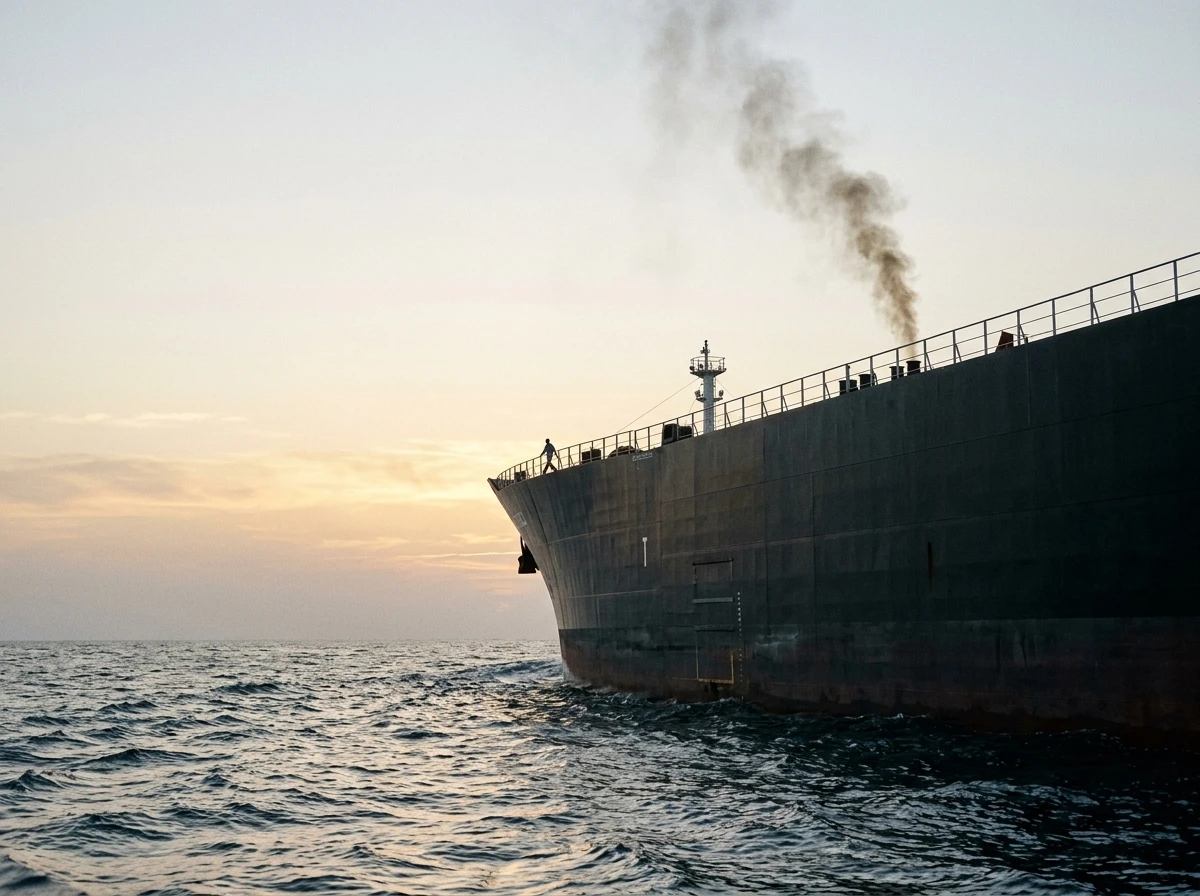
How Two Tankers Rattled a Hundred-Dollar Oil Market
What Saudi Arabia Has Confirmed, and What It Hasn’t
Yemen’s Houthis, the Iran-backed group that has harassed Red Sea shipping since 2023, said Wednesday they struck two Saudi oil tankers with drones and missiles, the first such attack since the group threatened a naval blockade against Saudi Arabia.
Saudi Arabia confirmed a strike on one refined-products tanker, the Encelia. The UK Maritime Trade Operations agency said the vessel’s master reported being hit by an unknown projectile that started a fire onboard, with no casualties or environmental damage reported.
What We Know:
- Saudi Arabia’s government confirmed a strike on one tanker, the Encelia, with a fire that crews were fighting and no reported casualties.
- Shipping tracker Kpler recorded Strait of Hormuz crossings down 31% day over day to nine vessels, and Bab el-Mandeb transits down 34% to 29, on July 21.
What’s Unconfirmed:
- The Houthis’ claim that they struck two tankers, not one; outlets tracking the incident said they could not independently verify it.
- Any direct Iranian coordination of the strike, though President Trump said the U.S. would hold Tehran responsible for future Houthi attacks on shipping.
Oil’s Ceiling Keeps Rising
The attack landed inside a bigger, older fight. U.S. Central Command said it had completed a twelfth consecutive night of strikes against Iran. At least seven vessels changed course to avoid the Bab el-Mandeb Strait entirely, the Institute for the Study of War said in an update.
Benjamin Jones, global head of research at Invesco, wrote that the strikes raised the risk that Saudi Arabia’s East-West pipeline, its usual workaround for bypassing the Strait of Hormuz, could face its own disruption if the Red Sea route empties out. He wrote that crude is likely to hold “near or above $100 per barrel over the coming months” as long as the disruptions and tensions persist.
While current positioning does not guarantee that oil will continue rising, it does mean that the market entered the latest escalation poorly positioned for an upside surprise. And when sentiment and positioning are extremely bearish, even a modest deterioration in supply expectations can produce an outsized price response.
Adam Turnquist, chief technical strategist at LPL Financial, wrote that assessment as Brent gained about 7% Thursday to close at $100.69, its first close above $100 since May 26. West Texas Intermediate rose roughly 6% the same day and traded little changed near $92.26 in Friday’s Asia session.
Oil was not the week’s only supply shock. Just after midnight ET Friday, the Trump administration imposed new tariffs of 10% to 12.5% on 60 trading partners over alleged forced-labor violations, replacing a temporary 10% global tariff. The new duties cover 99.4% of U.S. trade, the Office of the U.S. Trade Representative said, and the agency told CNBC it could not estimate how much revenue they would generate.
Alphabet Just Raised Its AI Bill to $205 Billion
Alphabet’s quarter looked strong by almost every measure except the one investors fixated on. Revenue rose 24% year over year to $119.8 billion, beating the roughly $116.9 billion analysts expected, and Google Cloud revenue jumped 82%. Adjusted earnings of $2.85 a share fell just short of the $2.89 Wall Street had forecast.
What sank the stock was capital spending. Alphabet raised its full-year 2026 capex guidance to a range of $195 billion to $205 billion, up from the $180 billion to $190 billion it projected in April, which was itself already an increase from the $175 billion to $185 billion floated in February.
Chief Financial Officer Anat Ashkenazi told analysts the increase “is primarily due to an acceleration in the delivery of capacity to meet growing demand.” She added that Google remains in what she called “a supply-constrained environment,” with demand still running strong across the business.
The spending is now outrunning the cash coming in. Alphabet’s trailing 12-month free cash flow fell 20% year over year to $53.3 billion, and the second quarter alone produced negative free cash flow for what appears to be the first time in the company’s history.
To help cover the gap, Alphabet’s own securities filing shows it raised over $85 billion of debt across six currencies in the past year, pushing its total debt balance above $100 billion. Operating cash flow remains large, at $174 billion over the trailing 12 months as of March, but the gap between spending and cash generation is why Alphabet is leaning on both bond and equity markets to keep building.
Alphabet is not spending alone. The four largest hyperscalers spent a combined $129.8 billion on capital projects in the first quarter, up 81% year over year, and UBS expects the group’s full 2026 spending to rise 76% to $673 billion.
| Period | Figure | Source |
|---|---|---|
| Alphabet 2026 capex guidance, February | $175 billion to $185 billion | Company guidance |
| Alphabet 2026 capex guidance, April | $180 billion to $190 billion | Company guidance |
| Alphabet 2026 capex guidance, July | $195 billion to $205 billion | Company guidance |
| Four largest hyperscalers, Q1 2026 combined capex | $129.8 billion, up 81% year over year | UBS estimate |
| Hyperscaler group, full-year 2026 forecast | $673 billion, up 76% | UBS estimate |
Bond Yields Catch the Same Fever
The 10-year Treasury yield sat flat at 10-year yields holding at 4.705% in Asia trading Friday, and the 30-year held at 5.175%. Both jumped Thursday as Brent crossed $100 and mild weekly jobless claims data further dimmed hopes of a Federal Reserve rate cut.
Jose Torres, senior economist at Interactive Brokers, wrote in a Friday note that investors are contending with higher inflation expectations from surging oil alongside mounting borrowing needs tied to the AI spending boom. He warned that “heavy credit demand associated with funding monumental technological ambitions” is adding upward pressure on rates.
The oil-inflation link is not just a U.S. story. Japan’s core inflation rate rose to 1.6% in June, its first increase since March, as higher energy costs began spilling into the broader economy. The producer price index there hit 7.1% in June, the highest reading since March 2023, even as government subsidies kept consumer energy prices from rising as fast.
Intel’s Rally Collides With a Seoul Chip Selloff
Chip stocks split hard between two hemispheres Friday. In Seoul, SK Hynix fell 3.5% after Bloomberg reported the chipmaker had fully used up its 2.5% cap on converting Korea-listed shares into U.S. depositary receipts during its $26.5 billion American offering on July 10, according to the Korea Securities Depository. Exhausting the cap halts arbitrage trading, leaving investors unable to close a gap that has seen SK Hynix’s U.S.-listed shares trade at a premium of up to 51% over its Seoul stock.
- Samsung Electronics – fell nearly 4% in Seoul.
- SoftBank Group – dropped 7.5% in Tokyo.
- Advantest and Tokyo Electron – fell more than 6% and 4.5%, respectively, while Renesas lost 4%.
- Intel – moved the opposite way, rallying about 9% after its sharpest quarterly revenue growth in almost 15 years.
Intel’s second-quarter revenue reached $16.1 billion, up 25% from a year earlier, and adjusted earnings of 42 cents a share beat estimates. The rally lands as Intel also fights to hold server-chip ground against AMD and Nvidia’s new Vera CPU push into server chips.
Boston Beer, maker of Twisted Tea, added 2% after second-quarter revenue of $568.3 million edged past the $566.7 million analysts polled by FactSet expected. The brewer also reaffirmed full-year earnings guidance of $8.50 to $10.50 a share, above the Street’s $9.38 estimate.
Singapore’s Wealth Fund Already Saw the Storm Coming
Singapore’s sovereign wealth fund was bracing for a rockier world before this week’s chaos hit. GIC’s 20-year annualized real rate of return fell to 3.4% in fiscal year 2025/2026, down from 3.8% a year earlier and the lowest mark since fiscal 2019/2020’s 2.7%, according to CNBC, citing broadcaster CNA. It was the third straight year of declining returns.
GIC called the environment one of “profound uncertainty” and said it took less risk with resilience in mind, consistent with its mandate to preserve the reserves’ purchasing power. Chief Executive Lim Chow Kiat said the fund is refreshing its investment framework to navigate what he called a “fundamentally changed” world.
GIC is one of the entities that manages Singapore’s national reserves, alongside Temasek Holdings. Its caution looks different from the picture at BlackRock, the world’s largest asset manager, which just reported a private markets push toward a record $15 trillion in assets.
Thursday’s slide left the major U.S. averages on pace for weekly declines. The Dow has shed 0.8% this week, the S&P 500 0.7%, and the Nasdaq 1.5%, with Friday’s mixed futures offering no clear signal before the opening bell.
Frequently Asked Questions
What triggered the trading halt on South Korea’s Kospi?
A sell-side sidecar activated automatically when the Kospi 200 futures index fell 5% or more for at least a minute, freezing program trading for five minutes. It is a circuit-breaker built to slow algorithm-driven selling during sharp swings, not a full market closure.
What is GIC and whose money does it manage?
GIC is Singapore’s sovereign wealth fund, one of the entities that manages the city-state’s foreign reserves alongside Temasek Holdings. It does not disclose the size of its portfolio, reporting performance only through a rolling 20-year real-return figure.
Will Alphabet’s AI spending keep rising into 2027?
Alphabet has said it expects 2027 capital expenditures to increase significantly compared with 2026, according to its own securities filings, suggesting the current run of capex increases is unlikely to mark the peak.


Geekbench 7 Launches and Erases Three Years of Scores

Google’s Selfie Video Sign-In Arrives as Deepfake Fraud Surges

Samsung’s New Galaxy Z Fold 8 Undercuts Its Own Ultra

Kroger and Brookshire’s Recall Over 19 Million Eggs for Salmonella

Mortgage Rates Hit an 11-Month High as Oil Fears Bite

Oil’s Price Shock Collides With Wall Street’s AI Spending Boom

Parsley and Cilantro Emerge as Cyclospora Suspects in North Carolina

Walmart Dresser Recall Reveals a Wider Furniture Safety Sweep

Apple’s iOS 27 Speed Fixes Echo Its 2018 Playbook

Cheshire Medical Center Cyclospora Cluster Exposes a Wider Outbreak

Star Wars: Galactic Racer Is a Roguelite Racer With a Podracing Skin

Sega’s $49.99 Sonic Classic and Modern Bundles Hit Switch in October

Colombia Edge DR Congo as Muñoz Books World Cup Knockout Place

Warriors Take Yaxel Lendeborg, the Oldest Pick in the 2026 NBA Draft

Douze Dixièmes Closes Five Months After MIO: Memories in Orbit

Warhammer Horus Heresy Super-Heavy Tanks Share a Plastic Chassis

Pokémon GO Developer Niantic Rebrands as Scopely Explore

Persona 4 Revival Hands All Anime Cutscenes to Studio MAPPA

Doom Studio id Software Cuts Half Its Staff in Xbox Layoffs

Jaylen Brown Traded to 76ers for Paul George and Four Draft Picks
-

 TECHNOLOGY3 years ago
How to Adjust a Bulova Watch Band – An Easy Guide
-

 News3 years ago
Fred Pentland: Athletic Bilbao’s English mentor who changed the essence of Spanish football
-

 FINANCE3 years ago
Tax Planning for Every Season: Guide to Maximizing Your Tax Benefits
-

 Education3 years ago
African Ministers New Education Plan
-

 BUSINESS3 years ago
What is Entrepreneurial Operating System? A Comprehensive Guide to EOS
-

 Education3 years ago
Innovate Your Learning Journey with Technology and Enhance Education
-

 News3 years ago
Russians formally out of World Athletics Championships
-

 BUSINESS3 years ago
Top 9 Most Expensive American Cities to Rent an Apartment