
Health
Kroger and Brookshire’s Recall Over 19 Million Eggs for Salmonella
A Texas producer’s own barn testing caught salmonella in 19 million-plus Kroger and Brookshire’s eggs before anyone got sick, unlike the last two major egg recalls.

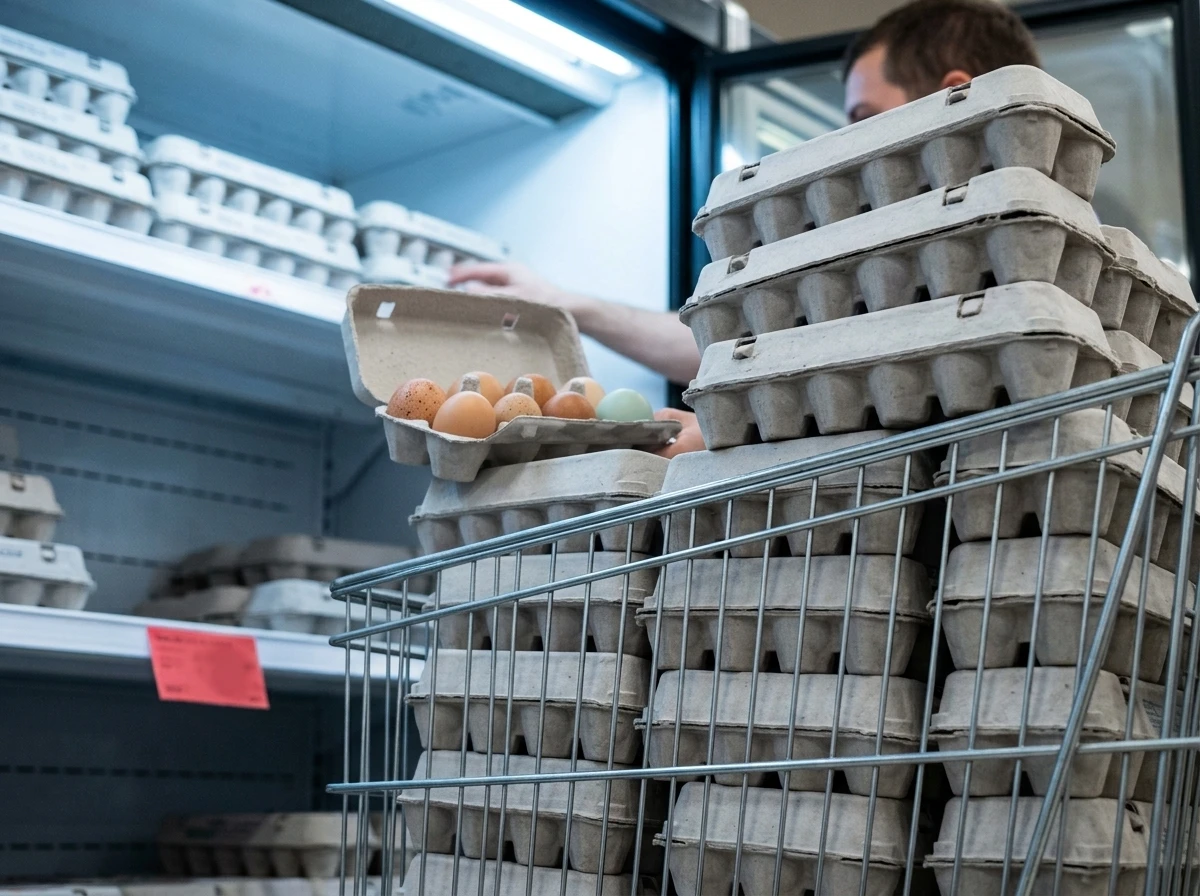
Midwest Poultry Services pulled 1,589,577 dozen eggs, more than 19 million individual eggs, off shelves in six states this week after its own farm testing flagged possible Salmonella Enteritidis on two Texas operations. The Food and Drug Administration posted the recall Wednesday. No illness has been linked to a single one of those eggs.
That zero is doing more work than it looks like. The last two times a shell egg recall of comparable scale made national news, in 2010 and again in 2024, people were already sick before anyone pulled a carton.
Kroger, Simple Truth and Four Other Labels Are Affected
The recalled eggs shipped from Midwest Poultry Services farms in Texas between June 6 and July 3, then moved through the FDA’s posted recall notice to Kroger stores in Texas and Louisiana, Brookshire Grocery stores across six states, and smaller retailers the notice does not name. White shell and cage-free brown shell eggs are both included, in medium, large, extra-large and jumbo sizes.
| Brand | Product Examples | Package Sizes |
|---|---|---|
| Kroger | Large, medium, extra-large, jumbo shell eggs | 12, 18, 30, 60 count |
| Simple Truth | Cage-free brown shell eggs | 12, 18, 24 count |
| Brookshire’s | Large, extra-large, jumbo shell eggs | 6, 12, 18, 36, 60 count |
| Country Morning | Large, medium, extra-large, jumbo shell eggs | 12, 18, 2.5 dozen |
| Sunups | Medium shell eggs | 2.5 dozen |
| Foodservice bulk | Grade AA and Grade A bulk, including TICTAC-labeled cases | 15 to 30 dozen bulk |
No other Midwest Poultry Services products are part of the recall, the company said.
Is Your Carton Part of the Recall?
Only cartons carrying a specific plant code and date range are affected. If your carton does not match both a code and a best-by window below, it is not part of this recall.
- Plant code – P-1950 or 0840962, printed in date-coding ink on the left or right side of the carton
- Best-by date – between July 20 and August 17, 2026
- Julian date – a three-digit number between 157 and 184, also stamped near the plant code
Anyone holding a matching carton should not eat the eggs. Toss them or take them back to the store for a full refund, the notice says.
Testing Caught This Before a Hospital Did
Midwest Poultry Services says it found the contamination risk through what it called proactive environmental monitoring and root cause analysis on its own Texas farms, not through a tip from investigators chasing sick customers. The company has stopped shipping fresh eggs from those two farms.
When we learned of a possible issue with egg safety, we began diverting eggs to a breaking plant where they would be pasteurized to kill any foodborne pathogens.
Midwest Poultry Services told ABC News in a statement that its safety practices are “rooted in our values and built into how we operate on every farm, every day.”
That kind of routine barn testing exists because of federal rule 21 CFR Part 118, finalized in 2009, which requires large shell egg producers to run a written Salmonella Enteritidis prevention plan and test their poultry house environment for the bacteria. FDA guidance on the rule’s compliance dates shows it phased in for farms with 50,000 or more laying hens in 2010, then extended to farms with 3,000 to 50,000 hens two years later. Farms below that 3,000-hen line are exempt entirely.
2010 and 2024 Show How This Usually Plays Out
Shell egg recalls do not usually start this way. In August 2010, Wright County Egg and Hillandale Farms in Iowa recalled a combined 550 million eggs only after a multistate outbreak was already spreading, one that eventually sickened an estimated 1,939 people with no deaths. “We would certainly characterize this as one of the largest shell egg recalls in recent history,” the FDA’s Sherri McGarry said on a call at the time. She added that the egg safety rule was still in a phase-in approach and that measures existed that could have prevented the outbreak had they applied earlier that year.
In 2024, Wisconsin’s Milo’s Poultry Farms recalled all of its shell eggs after the CDC traced a salmonella outbreak back to the farm and FDA testing confirmed the bacteria in its packing facility and laying house. By then, the CDC’s outbreak notice counted 65 illnesses across nine states and 24 hospitalizations.
| Year | Producer | Scale | Illnesses at Recall | How It Surfaced |
|---|---|---|---|---|
| 2010 | Wright County Egg & Hillandale Farms (Iowa) | About 550 million eggs | 1,000-plus, later near 1,939 | Traced back after an active outbreak |
| 2024 | Milo’s Poultry Farms (Wisconsin) | All cartons, all dates | 65 in nine states | CDC traced illnesses to the farm first |
| 2026 | Midwest Poultry Services (Texas) | 1,589,577 dozen, 19M-plus eggs | None reported | Company’s own barn testing |
In the rule’s first full year applying to medium and large farms together, FDA inspectors found violations at about 40% of the egg farms they checked in 2011, though only around 3% were serious enough to trigger formal agency action. The system was never airtight. But this week’s recall is what it looks like when the testing requirement does what it was built to do.
The egg recall also lands in a summer when the FDA has plenty else on its plate. The agency is still pointing to a retracted Cyclospora test tied to Taylor Farms lettuce, and it closed out a separate case involving a moringa powder recall over salmonella just weeks earlier.
A Six-State Recall Lands on a Still-Jittery Egg Market
The recall’s footprint, Texas, Louisiana, Oklahoma, Arkansas, New Mexico and Mississippi, sits on top of an egg market that has spent the past 18 months lurching between shortage and glut. Retail egg prices hit a record $6.23 a dozen in March 2025 after avian flu wiped out tens of millions of laying hens, then fell to $2.19 by May 2026 as flocks rebuilt.
That recovery is fragile. Bird flu returned to commercial poultry flocks in 12 states in June 2026, according to USDA’s Animal and Plant Health Inspection Service, and the wave spans laying hens, broilers and turkeys concentrated in the Midwest and South. USDA still projects egg prices will end 2026 down 30.4% from last year, but analysts warn fresh flock losses could push prices modestly higher within six to eight weeks.
Salmonella and avian flu are unrelated threats to the same product. One is a bacterial contamination risk tied to barn hygiene; the other is a virus that forces entire flocks to be euthanized. But both keep landing on the same shelves in the same states, at a moment when the egg supply chain has little slack left to absorb another shock.
What to Do With Eggs Already in Your Fridge
Check the carton against the plant code, Julian date and best-by window above before you do anything else. A match means the eggs go in the trash or back to the store, not into a pan.
Salmonella symptoms, including diarrhea, fever, cramps and sometimes bloody stool, typically appear eight to 72 hours after eating contaminated food and resolve within about a week for otherwise healthy adults. Infants, older adults and anyone with a weakened immune system face a higher risk of complications, including dehydration and infections that spread beyond the gut.
Frequently Asked Questions
How Does This Recall Compare to the Biggest Egg Recalls in US History?
It is far smaller than the two largest. The 2010 Wright County Egg and Hillandale Farms recall pulled about 550 million eggs, and a 2018 Rose Acre Farms recall pulled roughly 200 million. At just over 19 million eggs, the Midwest Poultry Services recall still ranks among the larger shell egg actions of the past decade, but nowhere near the top two.
Does Every Egg Farm Have to Test for Salmonella?
No. Federal rule 21 CFR Part 118 requires a written Salmonella Enteritidis prevention plan and environmental testing only for farms with 3,000 or more laying hens. Smaller operations fall outside the rule entirely.
What if I Already Ate the Eggs and Feel Fine?
Symptoms usually show up within 8 to 72 hours of eating contaminated food. If that window has passed with no symptoms, illness is unlikely. People in higher-risk groups, including infants, older adults and those with weakened immune systems, should still watch for delayed symptoms and call a doctor if any appear.
Is This Recall Related to Bird Flu?
No. This recall involves Salmonella Enteritidis, a bacteria tied to farm and barn conditions. Avian flu is a virus that kills laying hens outright and has separately driven US egg supply swings since 2022. The two are unrelated pathogens that happen to be hitting the same product category at the same time.
Why Are Eggs Especially Linked to Salmonella Enteritidis?
The FDA has identified Salmonella Enteritidis as among the leading bacterial causes of foodborne illness in the United States, and shell eggs as a primary source of human infections with that specific strain, which is why the agency built a dedicated testing rule around egg farms rather than folding eggs into general food safety rules.


Walmart’s $50 Million Opioid Settlement Closes Case Without Admission

California Sues Over $120 Million Morro Bay Wind Lease Buyout

Gilead Bixlenvo FDA Nod Opens Single Pill Path for Complex HIV Cases

Meta’s $18B Kids Deal Forever Shields Data Used to Spot Under-13s

Lettuce Outbreak Drove Record Cyclospora Spike Across 20 States

Amazon Shaves $20 Off M6 Mac Mini Before It Even Ships

SpaceX Louisiana Port Tests Debt Markets on Orbital AI Scale

Microsoft High Lifts Indexes as Small Caps Crack Support

Apple Replays 2015 Saturday Midnight Preorder for iPhone 18 Pro

Updated COVID Shots Clear FDA but Access Friction Hits High-Risk Groups

Take-Two CEO Pushes Netflix Subs for GTA 6 Extended Look

Quake Gets 19 Free Maps From MachineGames Quake Club

Destiny 2 Fans Unlock Vaulted Maps After Live Service Ends

Wildlands Free Update Hands Players the Tools They Already Invented

Quordle Monday Delivers Gavel Crush Speed Ethos Cleanly

Stripe Bid Shows PayPal Moat Cracked After Years of Slide

Tyson’s Five-Year Utah Plant Falls to Cattle Shortage Reckoning

Silver Lake Workday Talks Signal Private Floor for Software

Kennedy Lewis Takes Majority Control of The Greenbrier in $500M Deal

Best Buy Marks 60 Years With Sale That Echoes Its Audio Shop Roots
-

 TECHNOLOGY3 years ago
How to Adjust a Bulova Watch Band – An Easy Guide
-

 News3 years ago
Fred Pentland: Athletic Bilbao’s English mentor who changed the essence of Spanish football
-

 FINANCE3 years ago
Tax Planning for Every Season: Guide to Maximizing Your Tax Benefits
-

 Education3 years ago
African Ministers New Education Plan
-

 BUSINESS3 years ago
What is Entrepreneurial Operating System? A Comprehensive Guide to EOS
-

 Education3 years ago
Innovate Your Learning Journey with Technology and Enhance Education
-

 News3 years ago
Russians formally out of World Athletics Championships
-

 BUSINESS3 years ago
Top 9 Most Expensive American Cities to Rent an Apartment