
LIFESTYLE
Walmart Dresser Recall Reveals a Wider Furniture Safety Sweep
Walmart’s recalled EnHomee dresser was one of five tip-over hazards CPSC flagged the same week, and history shows most recalled furniture stays in homes.

The Consumer Product Safety Commission recalled 16,809 EnHomee 9-Drawer Fabric Dressers sold on Walmart.com this week for violating a federal law written specifically to stop children from being crushed by tipping furniture. It was not the only dresser that failed that test.
On the same day the agency posted the EnHomee recall, it also flagged four other dresser lines, sold on Walmart and Amazon, including one carrying Walmart’s own house brand, for the identical defect. History with this exact hazard suggests the bigger problem is not the recall notice itself. It is what happens after it, when most of these dressers simply stay put.
A Nine-Drawer Dresser Fails a Three-Year-Old Law
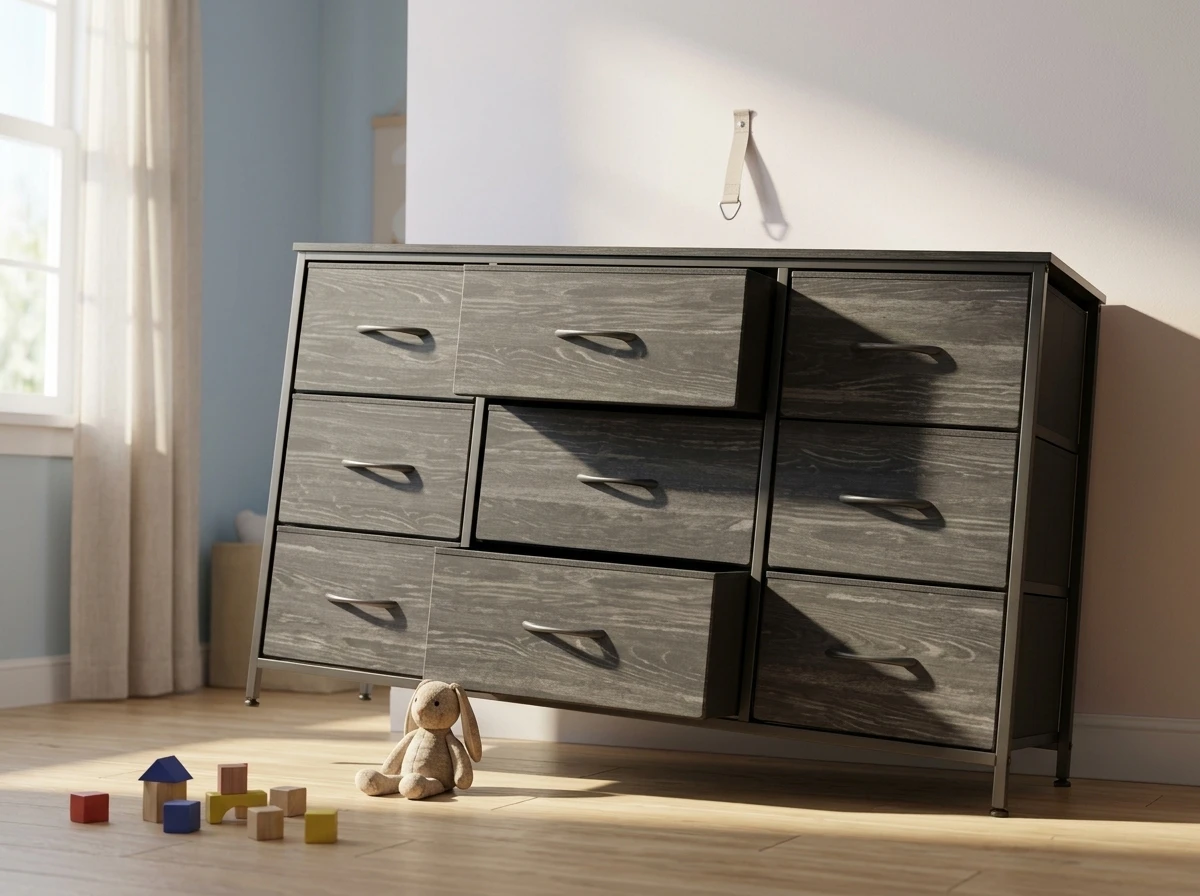
The recalled EnHomee dresser was sold on Walmart.com by third-party seller Raybee-Direct between September 2023 and March 2026 for about $80, in white, brown, gray and black, with nine fabric drawers on a metal frame. Only units ordered before March 30, 2026, are covered.
The CPSC’s recall notice says the dresser is unstable if not anchored to the wall, creating tip-over and entrapment risks serious enough to kill a small child. No injuries have been reported so far. The dresser was manufactured in China by Xuzhou Mingquanhe Household Co., Ltd. and imported by Changsha Yiman Keji Youxian Gongsi, which does business as Raybee-Direct.
Consumers are told to stop using an unanchored unit immediately and move it out of reach of children. To get a refund, Raybee-Direct requires a photo proving the dresser has been destroyed, sent to RaybeeRecall@outlook.com. At $80 a unit, the recalled batch represents roughly $1.3 million in sales over two and a half years, a modest line item for Walmart’s marketplace but not a small number of bedrooms.
Four More Dressers Failed the Same Week
The EnHomee notice did not stand alone. CPSC records from the same stretch show at least four more clothing storage units cited for the identical stability failure, spread across both of the country’s biggest online marketplaces.
| Dresser Line | Sold Through | Company Named in the Recall |
|---|---|---|
| EnHomee 9-Drawer Fabric Dresser | Walmart.com | Raybee-Direct |
| 12-Drawer Fabric Dresser | Amazon.com | Romorgniz |
| 7-Drawer Dresser | Amazon.com | Hasuit Direct |
| Mainstays 9-Drawer Fabric Dresser | Walmart stores and Walmart.com | Walmart (house brand) |
A fifth line, the Wade Logan Annyka 9-Drawer Fabric Dresser, was cited in the same batch of recall postings tied to the 12-drawer Amazon dresser, imported by Ningbo Jiangdong Peter International Trading. Every one of the five was cited for the same violation of the same law.
The Mainstays entry matters most. Mainstays is Walmart’s own private label, sold directly by the retailer rather than through a third-party storefront. A recall of that line undercuts any read of this story as purely a marketplace policing problem. Walmart’s own furniture failed the identical test.
EnHomee Has Failed This Test Before
EnHomee is not new to CPSC’s recall list. A separate EnHomee-branded dresser, a 13-drawer fabric model sold under the name EnHomee Direct, was recalled earlier for the same tip-over and entrapment defect. About 11,200 of those units were pulled, built by a different Chinese factory, Changzhou Jiaxuan Intelligent Furniture Co., Ltd.
Two dresser lines, two manufacturers, one brand name, one hazard. That pattern is common in low-cost import furniture, where a marketplace storefront brand can sit on top of whichever factory fills the order that quarter. It also means a recall notice tied to one factory does nothing to stop the next one from shipping the same defect under the same name.
Who Answers When a Marketplace Listing Fails?
Walmart’s marketplace works the way Amazon’s does. Third-party sellers list and ship their own products, and Walmart hosts the transaction. When something goes wrong, the seller or importer, not Walmart, is usually the company CPSC names as the recalling firm, which is exactly what happened with Raybee-Direct.
That structure has produced a busy year. Walmart-linked marketplace recalls in 2026 have also covered extension cords, baby swim floats, cookware and treadmills, several tied to Chinese sellers who were slow to respond or refused a recall outright, forcing CPSC to issue direct public warnings instead of standard voluntary recalls. The pattern extends beyond furniture and beyond Walmart. Just this year, Honda recalled 99,000 vehicles over airbags that could fire on children, and a separate Publix recall pulled frozen blueberries tied to a dozen E. coli cases. Recalls tied to child safety are not rare this year. They are routine.
Why Congress Wrote the STURDY Act
The law the EnHomee dresser violated has a short history. President Biden signed the STURDY Act, short for Stop Tip-overs of Unstable, Risky Dressers on Youth, into law on December 29, 2022. CPSC then adopted ASTM F2057-23 as a mandatory federal safety standard, requiring dressers to survive tests that simulate a child up to 60 pounds climbing on open drawers, on carpet, under real-world stress. The rule became mandatory for newly manufactured units on September 1, 2023.
Congress moved because of a body count. A CPSC commissioner’s own statement tied the rule to nearly 200 child deaths between January 2000 and April 2022 from furniture tipping over. The EnHomee dresser started selling that same September, the exact month compliance became mandatory. Its entire commercial life, from first sale to recall, ran inside a window when the law required exactly the stability it did not have.
The Toll Behind the Stability Rule
- 217 deaths from tip-overs of furniture, TVs and appliances were reported to CPSC between January 2013 and July 2023.
- 79 of those fatalities involved chests, bureaus or dressers specifically, and 38 involved children.
- Almost 200 child deaths between 2000 and 2022 were the trigger CPSC cited when it moved to make the standard mandatory.
- A child is treated in an emergency room every 53 minutes for a tip-over injury, according to CPSC’s most recent national tally.
CPSC also found that Black children accounted for a disproportionate share of tip-over deaths relative to their share of the child population, a disparity the agency called out directly in its own reporting.
Furniture and TV tip-overs remain a significant safety hazard in American households.
CPSC Chair Alex Hoehn-Saric said that in a report showing 17,800 people are injured annually in tip-over incidents, with children under 18 accounting for 44 percent of those injuries.
Most Recalled Furniture Never Leaves the House
This is where the EnHomee story stops looking like an isolated Walmart problem and starts looking like a design flaw in how recalls work at all. Furniture recalls have one of the worst completion rates of any consumer product category, and the industry has already run this experiment at massive scale.
IKEA’s 2016 recall covered 29 million Malm and related chests and dressers after child deaths tied to the line. Three years later, a Consumer Reports investigation using CPSC data estimated the actual return rate at roughly 2 percent, below what CPSC itself considers the industry average of about 8 percent. Most recalled dressers, in other words, simply stayed exactly where they were.
Nobody expects 16,809 EnHomee units to disappear from bedrooms because a recall notice went up. Anchoring, not disposal, is the remedy that actually protects a child in a home where the dresser stays. A handful of steps make the difference:
- Stop using the dresser immediately if it is not already anchored to a wall.
- Move it to a room or space children cannot access until it is anchored or removed.
- Contact Raybee-Direct and request the recall instructions before disposing of the unit.
- Photograph the dresser once it has been broken down, since Raybee-Direct requires proof of disposal for a refund.
- Check any replacement dresser for the stability warning label and hangtag required on units built after September 2023.
Walmart has not issued its own public statement on the recall as of this week.
Frequently Asked Questions
Is Walmart recalling the EnHomee dresser, or is Raybee-Direct?
Raybee-Direct, the third-party importer that listed the dresser on Walmart.com, is the company of record in CPSC’s recall notice. That is different from the Mainstays dresser recalled the same week, which is Walmart’s own house brand, meaning Walmart itself is the recalling company for that line.
Does the STURDY Act cover dressers already in people’s homes?
No. The mandatory stability standard applies only to clothing storage units manufactured after September 1, 2023. Older dressers already sitting in bedrooms are not required to meet the new test, which is why anchoring remains the main protection for furniture bought before that date.
How many children are hurt by tip-overs each year?
CPSC’s most recent multi-year estimate found roughly 11,000 children were treated in emergency rooms annually for tip-over injuries from 2016 through 2018, a separate figure from the broader all-ages injury count tied to furniture, TVs and appliances combined.
What should I do if I cannot dispose of the dresser right away?
Anchor it to the wall using a bracket or strap kit rated for the dresser’s weight, or move it into a space children cannot reach until you can complete the refund process. CPSC’s guidance treats anchoring as an acceptable interim step, not a substitute for acting on the recall.
How can I tell if a dresser meets the current federal standard?
Units built after September 1, 2023 are required to carry a warning label and hangtag confirming they were tested against the mandatory stability standard. A dresser without either marking, especially an inexpensive imported model, is worth checking against CPSC’s recall database before it goes anywhere near a child’s room.


Walmart’s $50 Million Opioid Settlement Closes Case Without Admission

California Sues Over $120 Million Morro Bay Wind Lease Buyout

Gilead Bixlenvo FDA Nod Opens Single Pill Path for Complex HIV Cases

Meta’s $18B Kids Deal Forever Shields Data Used to Spot Under-13s

Lettuce Outbreak Drove Record Cyclospora Spike Across 20 States

Amazon Shaves $20 Off M6 Mac Mini Before It Even Ships

SpaceX Louisiana Port Tests Debt Markets on Orbital AI Scale

Microsoft High Lifts Indexes as Small Caps Crack Support

Apple Replays 2015 Saturday Midnight Preorder for iPhone 18 Pro

Updated COVID Shots Clear FDA but Access Friction Hits High-Risk Groups

Take-Two CEO Pushes Netflix Subs for GTA 6 Extended Look

Wildlands Free Update Hands Players the Tools They Already Invented

Destiny 2 Fans Unlock Vaulted Maps After Live Service Ends

Quake Gets 19 Free Maps From MachineGames Quake Club

Quordle Monday Delivers Gavel Crush Speed Ethos Cleanly

Stripe Bid Shows PayPal Moat Cracked After Years of Slide

Tyson’s Five-Year Utah Plant Falls to Cattle Shortage Reckoning

Silver Lake Workday Talks Signal Private Floor for Software

Kennedy Lewis Takes Majority Control of The Greenbrier in $500M Deal

Best Buy Marks 60 Years With Sale That Echoes Its Audio Shop Roots
-

 TECHNOLOGY3 years ago
How to Adjust a Bulova Watch Band – An Easy Guide
-

 News3 years ago
Fred Pentland: Athletic Bilbao’s English mentor who changed the essence of Spanish football
-

 FINANCE3 years ago
Tax Planning for Every Season: Guide to Maximizing Your Tax Benefits
-

 Education3 years ago
African Ministers New Education Plan
-

 BUSINESS3 years ago
What is Entrepreneurial Operating System? A Comprehensive Guide to EOS
-

 Education3 years ago
Innovate Your Learning Journey with Technology and Enhance Education
-

 News3 years ago
Russians formally out of World Athletics Championships
-

 BUSINESS3 years ago
Top 9 Most Expensive American Cities to Rent an Apartment