
Health
Cheshire Medical Center Cyclospora Cluster Exposes a Wider Outbreak
Nine confirmed cyclospora cases at a New Hampshire hospital show Taylor Farms recalled lettuce reached far beyond the five states already under federal warning.

Nine people who ate lettuce from the cafeteria salad bar at Cheshire Medical Center in Keene, New Hampshire, have laboratory-confirmed cyclosporiasis, state health officials said Thursday. Dartmouth Health, which owns the hospital, says 16 people, including 10 employees, were exposed.
No federal warning list ever named New Hampshire. The lettuce came from Taylor Farms, the supplier at the center of a recall that has sickened thousands of people since May, but the advisory handed to consumers pointed hundreds of miles away, toward Taco Bell counters in five Midwestern states. Cheshire’s cluster shows the contamination moved through an entirely different channel, institutional food service, in a region nobody was told to watch.
Sixteen Exposed, Nine Confirmed at One Cafeteria
New Hampshire’s Department of Health and Human Services (DHHS) says the nine confirmed patients all ate lettuce served at the Cheshire Medical Center cafeteria. Dartmouth Health’s own count runs higher: 16 people showing symptoms or known exposure, ten of them hospital employees, though only nine have tested positive so far.
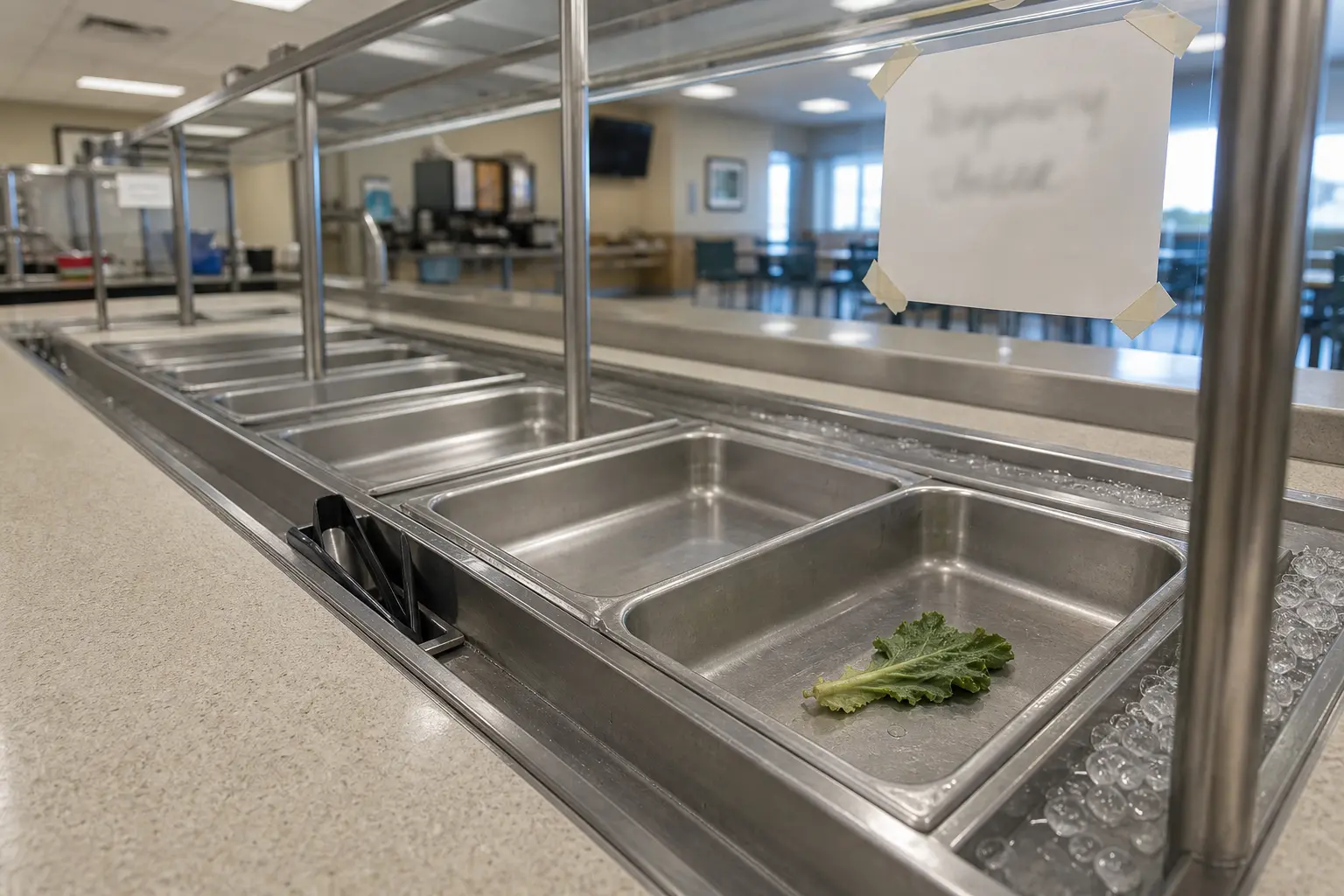
The hospital pulled every salad bar option, not just the recalled product, and says it began reporting cases to DHHS as soon as they surfaced. No admitted patient has contracted the parasite while staying at Cheshire, the hospital said.
DHHS is telling anyone who ate lettuce at the cafeteria between the beginning of June and July 20 to watch for severe or persistent watery diarrhea and get evaluated for Cyclospora. A local wrinkle adds to the uncertainty: six earlier cyclosporiasis cases in New Hampshire this year were never linked to the national outbreak until this cluster surfaced.
- Confirmed: Nine people who ate cafeteria lettuce have laboratory-verified cyclosporiasis, per DHHS.
- Confirmed: Dartmouth Health has identified 16 people exposed, including 10 employees.
- Confirmed: The salad bar is shut down and the recalled lettuce is gone from service.
- Unconfirmed: Whether the remaining seven exposed people will test positive.
- Unconfirmed: Whether the six earlier, unlinked New Hampshire cases connect to this cluster.
- Unconfirmed: The exact point in Taylor Farms’ supply chain where contamination occurred.
Cyclospora symptoms, when they show up, tend to follow a pattern: watery diarrhea, loss of appetite, weight loss, stomach cramps, nausea, fatigue and a low-grade fever. Onset usually starts within a week of exposure, but it can take two weeks or longer.
The Advisory Never Mentioned New Hampshire
The consumer-facing warning that most of the country read about targeted five states. The FDA’s outbreak investigation page covers Indiana, Kentucky, Michigan, Ohio and West Virginia, all tied to shredded iceberg lettuce served at Taco Bell locations. Taylor Farms’ recall, once it expanded, reached food service customers and Walmart’s Marketside brand across 27 states.
Keene sits nowhere near that Midwest corridor. Cheshire Medical Center is a rural community hospital, and its exposure came through a cafeteria supply contract, not a fast-food counter. That distinction matters for anyone trying to map where this outbreak actually reaches.
| Cluster | Setting | Location | Cases | Source Channel |
|---|---|---|---|---|
| Taco Bell multistate cluster | Fast-food restaurants | Indiana, Kentucky, Michigan, Ohio, West Virginia | 1,644 reported ill, 94 hospitalized | Shredded iceberg lettuce, Taylor Farms de Mexico |
| Michigan statewide count | Community-wide exposure | Michigan | 7,664 cases, 160 hospitalized as of July 23 | Part of the same regional cluster under investigation |
| Cheshire Medical Center | Hospital cafeteria salad bar | Keene, New Hampshire | 9 confirmed, 16 exposed, 10 employees | Recalled Taylor Farms lettuce served at the salad bar |
Put side by side, the numbers show a national event with local shapes nobody predicted in mid-July. A rural New Hampshire hospital and a set of Midwestern drive-thrus are drawing from the same recalled supply chain.
Investigators Are Chasing Four Outbreaks, Not One
Coverage of this summer’s surge has mostly treated it as a single event. That framing is off. Consumer Reports found the FDA is investigating four separate cyclospora outbreaks at the same time, with multiple smaller clusters likely running in parallel.
The national numbers back that up. A CDC Health Alert Network notice counted 1,645 confirmed domestic cases as of July 13, with more than 5,100 additional reports awaiting confirmation. That is roughly six times the 249 cases confirmed by the same date in 2025.
- 4,173 confirmed cases nationwide since May 1, with roughly 7,400 more awaiting lab confirmation, per CDC’s most recent surveillance update.
- 34 states have reported cases so far this season.
- Six times last year’s pace, when only 249 cases had been confirmed by this point in July.
- 141 hospitalizations and zero deaths among cases with clinical detail on file.
The CDC’s own notice concedes the real toll is bigger than any of those figures. Cyclosporiasis is “often underdiagnosed and underreported”, the agency wrote, meaning the true number of illnesses is likely higher than what has been reported.
I do want to point out that the number of infections is likely to increase as providers and patients become aware of the outbreak and do more testing.
Dr. Benjamin Chan, New Hampshire’s state epidemiologist, said that Thursday, explaining why Cheshire’s count of nine could still grow in the coming weeks.
A Recalled Lettuce Sample That Was Not Actually Positive
The Taylor Farms recall has been complicated by its own testing drama. Late on a Sunday in mid-July, the FDA said a shredded iceberg lettuce sample from Taylor Farms de Mexico had falsely tested positive for Cyclospora. The sample was not from lettuce already tied to the outbreak. It came from a separate shipment collected during routine import inspections.
The agency said that mistake changed nothing about the underlying case against the supplier. Officials pointed to what they called overwhelming epidemiological data supporting the recall regardless of the lab error.
In its own newsroom statement, Taylor Fresh Foods said the FDA had apologized for the error and that, at that point, the agency had not identified a single positive product test result for Cyclospora. The company said it is no longer sourcing iceberg lettuce grown in central Mexico for the rest of the growing season and has experts on site investigating.
Donald Schaffner, chair of Rutgers University’s food science department, said the recall was “the right thing” for Taylor Farms to do regardless of the lab confusion, and credited the FDA for owning its mistake publicly.
The Hospital’s Own Workforce Among the Exposed
Cheshire Medical Center is the only hospital in Cheshire County, a 115-bed nonprofit community hospital built in 1973 and folded into the Dartmouth Health network. Ten of the sixteen people exposed are staff members, not visitors passing through.
That detail sets this cluster apart from the fast-food version of the story. The employees who normally care for sick patients became part of the exposed population themselves, pulled into testing and monitoring while still expected to staff the floor.
Dartmouth Health has stressed one piece of good news: no admitted patient contracted cyclosporiasis while receiving care at Cheshire. The exposure stayed confined to the cafeteria, not the wards. But for a single-hospital county, even a temporary strain on the workforce carries weight that a chain restaurant swapping suppliers does not.
Lettuce Keeps Finding Its Way Into Summer Outbreaks
Cyclosporiasis is not new to American summers. The CDC treats May 1 through August 31 as the annual cyclosporiasis season every year, because case counts reliably climb during warm-weather months.
Previous outbreaks have traced back to a short list of repeat offenders in the produce aisle.
- Raspberries, in some of the earliest documented U.S. cyclosporiasis clusters
- Fresh basil and cilantro, tied to outbreaks in past years
- Snow peas, implicated in an earlier multistate cluster
- Lettuce, now blamed twice in under a decade, first in 2018’s McDonald’s outbreak and again this summer
That 2018 outbreak sickened 511 people across 16 states, traced to a Fresh Express salad mix containing romaine lettuce and carrots supplied only to McDonald’s. The CDC declared it over that September. Case totals nationally have also been climbing for years outside of single outbreaks, according to Consumer Reports’ review of CDC data: 537 cases in 2016 rose to 4,463 by 2023, the last full year with comparable figures.
New Hampshire’s Testing Window Runs Through Late July
DHHS’s guidance covers anyone who ate lettuce at Cheshire’s cafeteria from the start of June through July 20. Because symptoms can take up to two weeks to appear, people who ate there near that final date have time yet to develop an illness and should still watch for it.
Cyclosporiasis is not deadly, Dartmouth Health said, though it can cause serious gastrointestinal distress. Left untreated, DHHS said symptoms can last for weeks and relapse, though most people with normal immune function recover without help.
The salad bar at Cheshire Medical Center remains empty for now, and the state’s confirmed count of nine is not likely to be the last word.
Frequently Asked Questions
How Is Cyclosporiasis Diagnosed?
Diagnosis requires a stool sample tested specifically for Cyclospora, since it is not part of routine parasite screening at most U.S. labs. Because the parasite sheds intermittently, a single negative sample does not rule it out, and doctors often need several samples collected on different days, sometimes using PCR testing for a clearer result.
What Is the Treatment for Cyclospora Infection?
The CDC’s clinical guidance names trimethoprim-sulfamethoxazole (TMP-SMX, sold as Bactrim, Septra or Cotrim) as the standard treatment, typically one double-strength tablet twice a day for seven to ten days. People with sulfa allergies are sometimes switched to ciprofloxacin or nitazoxanide instead.
What Foods Have Caused Cyclosporiasis Outbreaks Before?
Federal investigators have previously traced U.S. cyclosporiasis clusters to raspberries, basil, cilantro, snow peas and lettuce. Lettuce is now responsible for two separate national outbreaks in less than a decade.
Can Cyclospora Spread From Person to Person?
No. Unlike many foodborne pathogens, Cyclospora generally does not spread directly from one person to another. Infection requires ingesting food or water already contaminated with the parasite.
Is It Safe to Eat Salad Bar Lettuce Right Now?
Recalled Taylor Farms iceberg products should be discarded immediately, and Cheshire Medical Center’s salad bar remains closed as a precaution. Cooking produce to 158 degrees Fahrenheit kills the parasite, and health officials still recommend rinsing fresh produce under running water even when it is labeled prewashed.
Disclaimer: This article is for informational purposes only and does not substitute medical advice; anyone with symptoms consistent with cyclosporiasis should contact a licensed health care provider, and figures cited reflect official data available as of publication.


Walmart’s $50 Million Opioid Settlement Closes Case Without Admission

California Sues Over $120 Million Morro Bay Wind Lease Buyout

Gilead Bixlenvo FDA Nod Opens Single Pill Path for Complex HIV Cases

Meta’s $18B Kids Deal Forever Shields Data Used to Spot Under-13s

Lettuce Outbreak Drove Record Cyclospora Spike Across 20 States

Amazon Shaves $20 Off M6 Mac Mini Before It Even Ships

SpaceX Louisiana Port Tests Debt Markets on Orbital AI Scale

Microsoft High Lifts Indexes as Small Caps Crack Support

Apple Replays 2015 Saturday Midnight Preorder for iPhone 18 Pro

Updated COVID Shots Clear FDA but Access Friction Hits High-Risk Groups

Take-Two CEO Pushes Netflix Subs for GTA 6 Extended Look

Wildlands Free Update Hands Players the Tools They Already Invented

Destiny 2 Fans Unlock Vaulted Maps After Live Service Ends

Quake Gets 19 Free Maps From MachineGames Quake Club

Quordle Monday Delivers Gavel Crush Speed Ethos Cleanly

Stripe Bid Shows PayPal Moat Cracked After Years of Slide

Tyson’s Five-Year Utah Plant Falls to Cattle Shortage Reckoning

Silver Lake Workday Talks Signal Private Floor for Software

Kennedy Lewis Takes Majority Control of The Greenbrier in $500M Deal

Best Buy Marks 60 Years With Sale That Echoes Its Audio Shop Roots
-

 TECHNOLOGY3 years ago
How to Adjust a Bulova Watch Band – An Easy Guide
-

 News3 years ago
Fred Pentland: Athletic Bilbao’s English mentor who changed the essence of Spanish football
-

 FINANCE3 years ago
Tax Planning for Every Season: Guide to Maximizing Your Tax Benefits
-

 Education3 years ago
African Ministers New Education Plan
-

 BUSINESS3 years ago
What is Entrepreneurial Operating System? A Comprehensive Guide to EOS
-

 Education3 years ago
Innovate Your Learning Journey with Technology and Enhance Education
-

 News3 years ago
Russians formally out of World Athletics Championships
-

 BUSINESS3 years ago
Top 9 Most Expensive American Cities to Rent an Apartment