
News
Apple’s 15% External Cut Still Faces Its Own Zero Admission
Apple files for 15% standard, 10% partner and 5% small-business cuts on external app purchases, while admitting necessary costs near zero under Ninth Circuit rules.

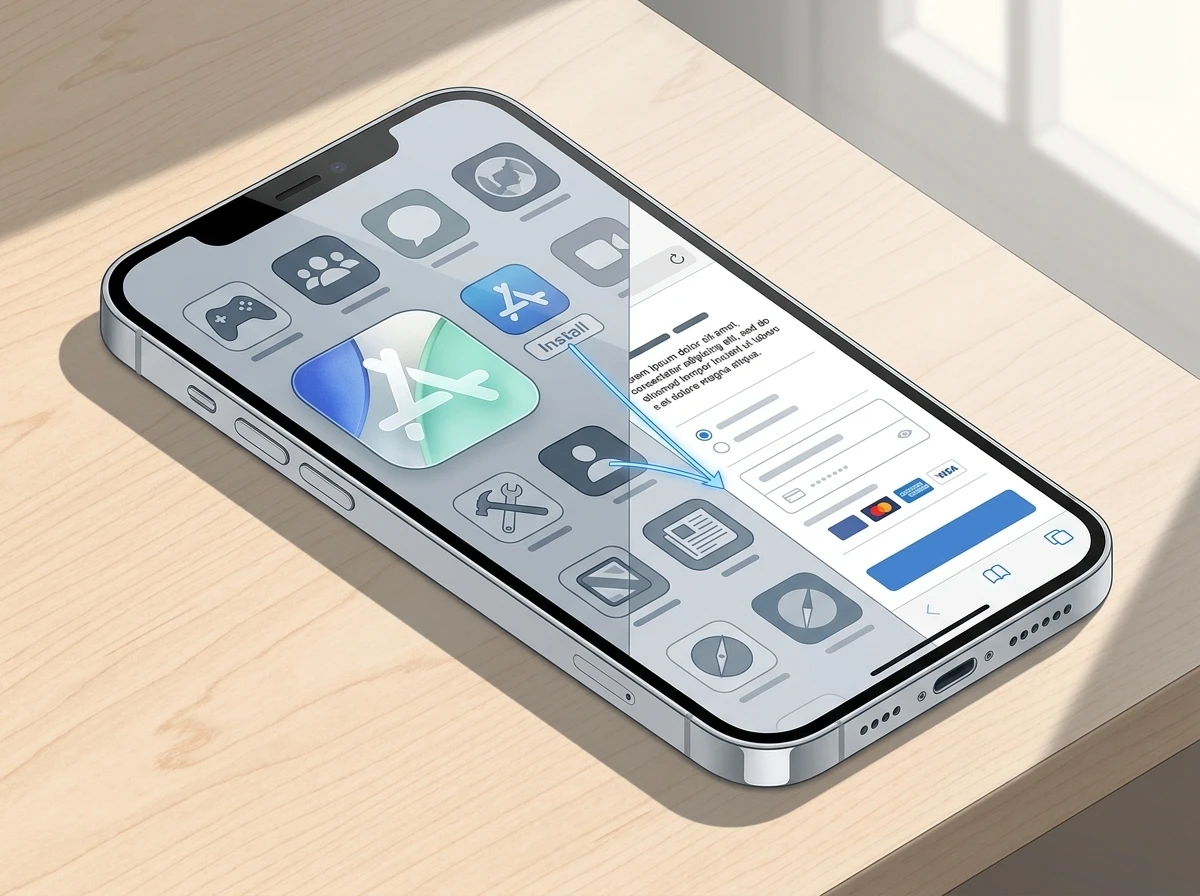
Apple asked a federal judge on Thursday for commissions of 15% on standard purchases completed through external links inside iOS apps, with lower tiers of 10% and 5% for certain programs, after the Supreme Court refused to pause the lower-court process in its long fight with Epic Games.
The filing in the U.S. District Court for the Northern District of California lays out the rates Apple says are reasonable compensation for its tools and intellectual property. It arrives while the same company tells the court that the Ninth Circuit’s own “necessary costs” test would support a commission near zero.
Three Tiers Replace the Old Flat Cut
Apple’s remand proffer proposes a clean structure for U.S. linked-out transactions:
| Tier | Proposed Rate | Who Pays It |
|---|---|---|
| Standard apps | 15% | Apps that pay the usual 30% on in-app purchases |
| Partner programs and renewals | 10% | Video Partner, News Partner, Mini Apps Partner, and subscription renewals |
| Small Business Program | 5% | Developers under the $1 million annual proceeds threshold |
The company submitted expert evidence, including analysis from economist Dennis Carlton, claiming that large numbers of efficient developers accounting for most App Store revenue could still link out profitably at these levels. That, Apple argues, would create competitive pressure on its own in-app purchase system.
Small-business eligibility tracks the existing program that already offers a reduced commission rate of 15% on paid apps and in-app purchases for developers who stay under $1 million in proceeds the prior year.
The Contempt Order That Forced the Numbers
The proposal did not appear in a vacuum. It is the direct product of a contempt finding that stripped Apple of its preferred external fee.
- September 2021: Judge Yvonne Gonzalez Rogers issues the original injunction requiring Apple to allow developers to steer users to external payment options.
- Post-injunction period: Apple responds with a 27% commission on external purchases plus tight rules on how links could be presented.
- April 30, 2025: The same judge finds Apple in willful contempt, bars any commission on linked-out purchases, and refers matters for possible criminal investigation.
- December 2025: The Ninth Circuit upholds the contempt finding but rules that a total ban on commissions went too far; Apple may recover costs genuinely necessary for coordinating external links, but no more.
- June 30, 2026: Supreme Court grants certiorari on the contempt question.
- August 11-13, 2026: District court denies a stay; Supreme Court rejects Apple’s bid to pause the fee-setting process; Apple files the proffer.
Since the April 2025 order took effect, Apple has collected nothing when a user taps an external link and completes a purchase on the web. That zero-commission interim is what the new filing seeks to end.
Apple’s Filing Admits the Cost Floor Is Near Zero
Here is the internal tension that turns a routine rate filing into something sharper. In the same document that asks for 15%, Apple states that the Ninth Circuit defined “necessary costs” so narrowly that they are de minimis relative to linked-out revenue.
The resulting “necessary costs” are de minimis in relation to linked-out transaction revenue and do not support a commission above 0%.
That language appears in Apple’s own preliminary statement. The company then pivots: it argues the court should not be limited to incremental costs of link coordination. Instead, it should allow compensation for the broader value of Apple’s IP-protected tools, technologies and services, provided the rate is not “prohibitive.” Apple says its proposed rates meet that test and still leave room for developers to profit by leaving the in-app purchase system.
The irony is built into the paper. Apple simultaneously concedes the cost standard would yield essentially nothing and asks the judge to adopt a value-based structure that starts at 15%.
Epic’s Immediate Rejection and the Developer Stakes
Epic Games did not wait. Its official newsroom account posted within hours:
“Apple’s filing is in, and Apple admitted that under the Ninth Circuit’s definition of ‘necessary costs’ they would charge 0% for purchases made via linkouts to the web. Apple proposed linkout fees of 15% for standard apps and 5% for Small Business Program apps. Epic believes these fees are far outside of the bounds of the Ninth Circuit’s guidance on permissible fees, and we have roughly 60 days to file our opposition supported by expert witnesses.”
That post, seen tens of thousands of times, frames the next phase. Epic will file its own expert evidence arguing the rates remain prohibitive or simply unauthorized under the remand instructions.
For developers the practical choice is already clear. A standard app paying 30% inside the store can cut that in half by linking out, yet still owes Apple 15% plus whatever a payment processor charges. Small developers drop to 5%. Subscription businesses get the 10% renewal rate. Whether users actually complete the extra taps, and whether Apple’s UX and trust advantages keep most traffic inside IAP, will decide if the “competitive pressure” Apple promises materializes.
Crowd reaction on X and developer forums splits along familiar lines. Some treat any cut from 30% or the old 27% as progress. Others point to free apps that pay only the annual developer fee and ask why paid transactions outside the store should subsidize the platform at all. The zero-cost admission has become the sharpest talking point, used to argue that 15% is platform rent rather than cost recovery.
Google’s Higher Benchmark and Apple’s Partner Discounts
Apple repeatedly compares its proposal to Google Play. In the filing it states that Google charges linked-out rates of 20% standard, 15% for special programs, and 10% for subscription renewals, and notes that Epic agreed to those rates in its Google settlement.
Google’s own public materials describe a broader shift. Its Google Play policies for US developers already allow external links and alternative billing under the Epic injunction, with service-fee reporting set to begin later in 2026. A March 2026 Android blog post outlined a new lower service fees model that decouples billing fees from platform service fees and introduces still lower rates in key markets.
Those parallel fights matter. The same week Apple filed its numbers, the broader Android side continued opening distribution. Related coverage on this site has tracked how courts have already stripped Google’s remaining app store friction removed and how Google Play opening to rival stores is reshaping Android distribution after the Epic deal collapsed and reformed.
Apple’s partner programs (Video, News, Mini Apps) sit at 10% under the proposal, the same band it uses for subscription renewals. That discount structure rewards developers already inside Apple’s preferred commercial relationships and gives the company another lever to keep high-value content closer to its own systems.
The Judge Still Holds the Pen
Judge Gonzalez Rogers now has Apple’s proffer and will receive Epic’s opposition. The Ninth Circuit told the district court to set a commission based on costs genuinely and reasonably necessary for coordinating external links, or to modify the injunction so that only non-prohibitive commissions are allowed. Apple is arguing hard for the second path and for a definition of value that goes well beyond incremental link costs.
Meanwhile the Supreme Court will hear the underlying contempt question in the term that begins in October. Apple’s September 14 brief deadline is already on the calendar. A ruling that the contempt finding itself was improper could unwind the entire fee-setting exercise. Until then the district court process continues.
For now the practical reality on iOS is still the post-contempt zero-commission regime. Developers can link out without writing Apple a check. Apple’s new numbers are a bid to replace that temporary vacuum with a permanent tiered cut that starts at half the classic App Store rate and ends, for the smallest developers, at one-sixth of it. Whether that structure survives Epic’s experts and the judge’s reading of “necessary” will decide how much of the old 30% world actually ends.
The filing itself already supplied the sharpest critique: under the appellate court’s cost language, the number that covers Apple’s direct outlays is essentially zero. Everything above that is a claim about platform value, not a bill for the link.


Stripe Bid Shows PayPal Moat Cracked After Years of Slide

FDA Class I Tag Hits Finished Egg Recall Weeks Later

Berkshire’s Alphabet Surge Marks Abel’s Cash Deployment Shift

Aston Martin Bets 150 Valen V12s Will Print the Cash

Walmart Took Most of the Recalled Lettuce Behind Cyclospora Wave

Silver Lake Workday Talks Signal Private Floor for Software

Zuckerberg’s AI Letter Joins a Wave of Tech Manifestos

Pixel 11 Takes Battery Edge as Galaxy S26 Keeps the Power Lead

Trump Economy Faces Reckoning as Sentiment and Sales Slide

Apple’s 15% External Cut Still Faces Its Own Zero Admission

ZA/UM Lays Off 32 Staff as Zero Parades Wins Reviews, Not Players

EA’s New In-Game Ad Platform Skips the Games That Need It Most

Mortgage Rates Climb to 6.55%, the Highest Level in Nearly a Year

Colby Covington Stuns Tsarukyan as Askren Retires in Tears at RAF 11

Netflix Heads Into Earnings With Its 2022 Playbook Already Spent

Spain’s Diaspora-Rooted Squad Wins Over New York Ahead of the Final

NHL’s Monday Matinee Push Puts Capitals Fans on the Clock

DeChambeau’s Two-Shot Penalty Rewrites the Open’s Weekend Draw

Guardians Rout Twins With Seven Homers, Leave Joe Ryan One Shy of Record

England Beats France 6-4 to Claim World Cup Bronze Medal
-

 TECHNOLOGY3 years ago
How to Adjust a Bulova Watch Band – An Easy Guide
-

 News3 years ago
Fred Pentland: Athletic Bilbao’s English mentor who changed the essence of Spanish football
-

 FINANCE3 years ago
Tax Planning for Every Season: Guide to Maximizing Your Tax Benefits
-

 Education3 years ago
African Ministers New Education Plan
-

 BUSINESS3 years ago
What is Entrepreneurial Operating System? A Comprehensive Guide to EOS
-

 Education3 years ago
Innovate Your Learning Journey with Technology and Enhance Education
-

 News3 years ago
Russians formally out of World Athletics Championships
-

 BUSINESS3 years ago
Top 9 Most Expensive American Cities to Rent an Apartment