
News
California Sues Over $120 Million Morro Bay Wind Lease Buyout
California files suit claiming the $120 million Golden State Wind deal illegally redirects lease funds to Gulf oil and gas while stranding state clean-energy.

California Attorney General Rob Bonta and the California Energy Commission filed a lawsuit challenging the buyout of the Golden State Wind offshore lease on Friday in U.S. District Court for the Northern District of California. The suit targets a $120 million Interior Department deal that ends the Morro Bay project and requires matching investment in Gulf Coast oil and gas.
The 80,418-acre Lease OCS-P 0564 was set to deliver up to 2 gigawatts, enough for about 1.1 million homes. Golden State Wind, a joint venture involving Ocean Winds (EDP Renewables and ENGIE) and Reventus Power, paid roughly that sum at the 2022 auction plus $30 million in bid credits for local workforce and community benefits.
Those credits tied the federal lease to California ports, training programs and fishing communities. The complaint treats their loss as part of the same injury as the canceled acreage itself.
The Suit Names Interior, Justice and the Developer
Defendants include the Department of the Interior, Bureau of Ocean Energy Management, Department of Justice, Secretary Doug Burgum, and Golden State Wind LLC. California seeks to vacate the April 27 agreement and block similar deals for remaining leases.
The Trump Administration’s backroom buyout with Golden State Wind to stop offshore wind development in favor of gas and oil drilling is, unfortunately, a classic playbook for them to line the pockets of their Big Oil donors.
Rob Bonta, California Attorney General, official statement
CEC Chair David Hochschild added that the state will not let the actions turn back the clock on clean energy. In May the commission issued a subpoena for buyout documents. A June notice of intent to sue preceded the complaint.
The sequence shows a deliberate build: document demand first, formal notice second, then the filing once the full paper trail was in hand. Interior declined comment citing litigation. Golden State Wind did not respond to earlier requests.
Naming both the agencies and the developer lets the court address the agreement as a whole rather than as separate agency and private acts. That framing matters for the injunction California wants against any parallel California lease exits.
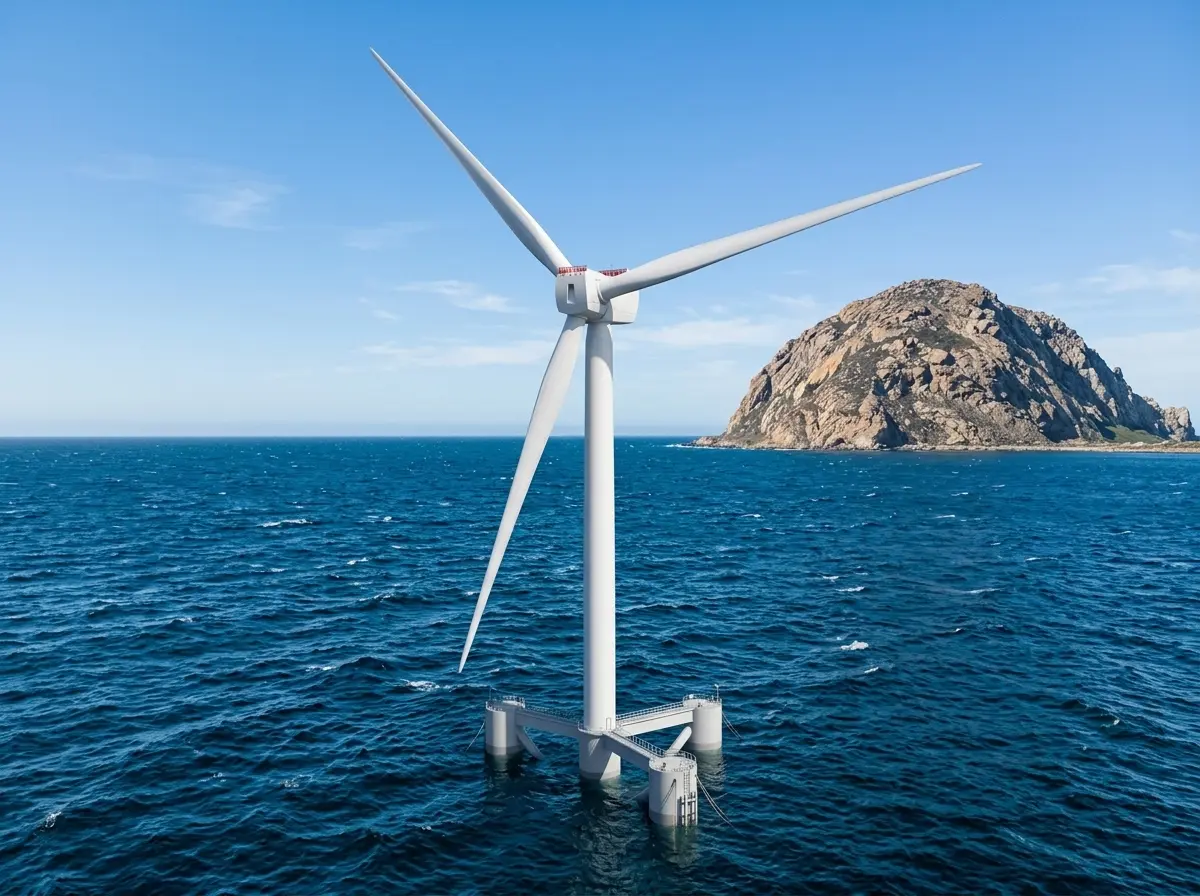
How the $120 Million Gulf Coast Swap Works
Under the agreement announced by Interior, Golden State Wind voluntarily ends the lease after investing an equal amount in U.S. oil and gas assets, energy infrastructure or LNG projects along the Gulf Coast. Only then does it reclaim the fees via dollar-for-dollar reimbursement for the lease from the Judgment Fund.
The company also agreed not to pursue new U.S. offshore wind projects. Interior Secretary Burgum said the 2022 leases were viable only with massive subsidies and that the deals resolve national security concerns while shifting capital to baseload power.
Ocean Winds North America CEO Michael Brown called the outcome constructive and said the priority remains disciplined capital allocation for reliable energy.
The mechanics run in order. The developer first commits matching capital to Gulf fossil or LNG assets. Interior then treats the lease exit as settled. The Judgment Fund returns the original lease money. The no-new-wind pledge closes the loop so the firm cannot recycle the cash into another offshore bid.
| Developer / Deal | Amount | Leases Affected | Redirect Target |
|---|---|---|---|
| Golden State Wind (Apr 2026) | $120 million | Morro Bay (OCS-P 0564) | Gulf oil, gas, LNG |
| Invenergy (Jun 2026) | $765 million | 4 leases incl. Morro Bay | Midwest gas plants, West geothermal |
| RWE (Aug 2026) | $1.22 billion | 3 leases incl. Humboldt | Conventional energy / LNG stake |
| TotalEnergies (Mar 2026) | ~$928 million | 2 East Coast leases | Rio Grande LNG, Gulf oil/gas |
Administration totals now approach $4 billion across at least a dozen leases. All require fossil or conventional reinvestment.
Golden State Wind is the smallest line on that table, yet it sits inside the same template as the billion-dollar exits. Matching spend, Judgment Fund repayment, and a bar on future U.S. offshore wind appear in each case.
Why California Calls the Deal Unlawful
The detailed complaint for declaratory relief argues the arrangement violates multiple statutes and the Constitution.
- Outer Continental Shelf Lands Act guardrails: no public hearing, no five-year suspension period, no coordination with the California governor, and failure to follow lease relinquishment rules that give the state input.
- Judgment Fund Act and Antideficiency Act: the Fund covers actual or imminent litigation settlements, not fabricated controversies over a stop-work order that was never issued.
- Appropriations and Spending Clauses: once lease fees entered the Treasury they required congressional appropriation; the executive cannot refund them dollar-for-dollar for non-OCS fossil projects.
- APA arbitrary-and-capricious review plus NEPA and Coastal Zone Management Act: the cancellation ignored California’s reliance interests after years of joint planning and DoD consultation that already cleared the area.
California says the “settlement” resolves claims Golden State Wind never brought against an action Interior never took. The national-security pretext followed prior court blocks of similar stop-work orders.
Each count targets a different control on executive power. OCSLA and the coastal statutes protect state process. The Fund and appropriations claims police how money leaves the Treasury. APA and NEPA claims test whether the record supports the switch from wind to Gulf reinvestment.
Taken together, the complaint treats the buyout as an end-run around rules that would have forced public process, governor coordination, and a real case or controversy before any repayment.
Ports, Bonds and the Jobs California Already Banked On
California has poured more than $100 million into port readiness, transmission planning and stakeholder work for floating offshore wind. Proposition 4 climate-bond money added hundreds of millions more, with over $225 million allocated to waterfront upgrades at Humboldt, Long Beach and other sites.
- 2 GW planned at Morro Bay alone.
- 25 GW statewide target by 2045 under the CEC strategic plan, or about 13 percent of electricity supply.
- $30 million in bid credits for workforce training, supply chain and fishermen’s associations now at risk.
- Nearly 174,750 jobs the state says broader buyouts could cost, drawing on economic studies of the Humboldt and Morro Bay areas.
Those outlays assumed the federal leases would proceed. Canceling them strands the infrastructure and the local benefits written into the 2022 auction terms.
Port berths, cranes and transmission studies do not move to the Gulf when a lease ends. The state money stays tied to California waterfronts that no longer have a federal project to serve. The bid credits for workforce and fishermen’s groups face the same problem: the lease that funded them is the one being extinguished.
The 25 GW target by 2045 depends on floating turbines suited to deep water. Losing Morro Bay’s 2 GW slice and watching Humboldt-linked deals exit shrinks the near-term path to that share of supply.
A National Pattern of Lease Exits
- March 2026: TotalEnergies deal near $1 billion for two East Coast leases; seven Northeastern states sue over the Judgment Fund use.
- April 27 2026: Golden State Wind and Bluepoint Wind agreements totaling about $885 million; CA issues subpoena then notice of intent.
- June 2026: Invenergy $765 million for four leases including another Morro Bay tract; CA expands challenge notices.
- August 2026: RWE $1.22 billion for three leases including Humboldt; California files the Golden State Wind complaint.
Crowds on X noted the taxpayer scale and the shift of coastal project capital inland or to the Gulf. The deals followed court losses on earlier suspension attempts, turning buyouts into the cleaner path for both sides seeking exit or policy change.
BOEM’s page on the project now states that Lease OCS-P 0564 cancellation terms take effect once the required investments are shown.
The calendar itself is part of the story. East Coast exits came first. California notices followed the April agreements. The complaint landed after the Humboldt-linked RWE deal, when the pattern was no longer isolated.
Seven Northeastern states already attacked Judgment Fund use in the TotalEnergies matter. California’s filing extends that fight to the West Coast leases and asks for forward-looking relief, not only a rewind of one contract.
The Judgment Fund Turns Lease Fees Into Reimbursement
The swap hinges on a narrow reading of when the Judgment Fund may pay. California says the Fund exists for real or imminent suits, not for a stop-work dispute that never ripened into an order or a claim.
Once the 2022 lease money entered the Treasury, ordinary appropriations rules applied. The complaint argues the executive cannot create a dollar-for-dollar refund path simply by labeling the exit a settlement and pointing the developer toward Gulf oil, gas or LNG.
That design also explains the matching-investment step. Reimbursement arrives only after the equal Gulf outlay is shown. The lease fees therefore reappear on the far side of a fossil reinvestment, not as a plain return of unused rent.
Burgum’s public case stresses subsidies, national security and baseload power. The complaint answers that those policy goals still must travel through OCSLA process, NEPA review and congressional control of the purse. Skipping those steps, California says, is what makes the Fund route unlawful.
Matching Gulf Spend Redraws Where the Capital Lands
Every deal in the administration’s roughly $4 billion set carries the same redirect condition. Money that bid for Pacific or Atlantic wind must reappear in Gulf oil and gas, LNG, Midwest gas plants or other conventional assets before the Judgment Fund repays the lease cost.
| Measure | California stake | Buyout side |
|---|---|---|
| Direct state port and planning outlays | More than $100 million | Not reimbursed by the deals |
| Proposition 4 waterfront allocations | Over $225 million | Tied to ports that lose projects |
| Golden State Wind lease and credits | $120 million plus $30 million credits | Repaid only after Gulf match |
| Broader job risk cited by the state | Nearly 174,750 jobs | Capital shifts inland or to the Gulf |
The table shows the imbalance. California’s sunk port and bond money stays on the coast. The developer’s lease cash can leave, match in the Gulf, and return through the Fund. Local workforce and fisheries credits have no parallel recovery path.
Brown’s note on disciplined capital allocation fits the developer view of an orderly exit. Bonta’s statement frames the same cash movement as a preference for oil and gas donors. The court must decide whether the statutes allow that movement at all.
For remaining California lessees, the redirect rule is the practical threat. If the Golden State Wind model stands, any later exit would again condition repayment on fossil or conventional reinvestment elsewhere.
Two California Leases Still Stand
After the Invenergy and RWE exits, two federal leases off California remain active. The state has signaled it will fight further cancellations the same way. The Golden State Wind case asks the court to enjoin similar agreements with any other California lessees.
Floating technology suited to the steep West Coast shelf was supposed to supply steady power and port manufacturing jobs. The $120 million swap and its larger cousins test whether those plans survive a shift in federal energy priorities and the novel use of settlement funds to make it stick.
An injunction limited to one developer would leave the other active leases exposed to the same template. California therefore seeks relief that reaches any comparable agreement touching the California coast, so the two surviving leases are not picked off one by one under the same Fund-and-match structure.


Walmart’s $50 Million Opioid Settlement Closes Case Without Admission

California Sues Over $120 Million Morro Bay Wind Lease Buyout

Gilead Bixlenvo FDA Nod Opens Single Pill Path for Complex HIV Cases

Meta’s $18B Kids Deal Forever Shields Data Used to Spot Under-13s

Lettuce Outbreak Drove Record Cyclospora Spike Across 20 States

Amazon Shaves $20 Off M6 Mac Mini Before It Even Ships

SpaceX Louisiana Port Tests Debt Markets on Orbital AI Scale

Microsoft High Lifts Indexes as Small Caps Crack Support

Apple Replays 2015 Saturday Midnight Preorder for iPhone 18 Pro

Updated COVID Shots Clear FDA but Access Friction Hits High-Risk Groups

Take-Two CEO Pushes Netflix Subs for GTA 6 Extended Look

Halo Campaign Evolved Skulls Meet Death Barriers That Kill the Hunt

Wildlands Free Update Hands Players the Tools They Already Invented

Destiny 2 Fans Unlock Vaulted Maps After Live Service Ends

Quake Gets 19 Free Maps From MachineGames Quake Club

Quordle Monday Delivers Gavel Crush Speed Ethos Cleanly

Stripe Bid Shows PayPal Moat Cracked After Years of Slide

Tyson’s Five-Year Utah Plant Falls to Cattle Shortage Reckoning

Silver Lake Workday Talks Signal Private Floor for Software

Kennedy Lewis Takes Majority Control of The Greenbrier in $500M Deal
-

 TECHNOLOGY3 years ago
How to Adjust a Bulova Watch Band – An Easy Guide
-

 News3 years ago
Fred Pentland: Athletic Bilbao’s English mentor who changed the essence of Spanish football
-

 FINANCE3 years ago
Tax Planning for Every Season: Guide to Maximizing Your Tax Benefits
-

 Education3 years ago
African Ministers New Education Plan
-

 BUSINESS3 years ago
What is Entrepreneurial Operating System? A Comprehensive Guide to EOS
-

 Education3 years ago
Innovate Your Learning Journey with Technology and Enhance Education
-

 News3 years ago
Russians formally out of World Athletics Championships
-

 BUSINESS3 years ago
Top 9 Most Expensive American Cities to Rent an Apartment