
Health
Updated COVID Shots Clear FDA but Access Friction Hits High-Risk Groups
Moderna, Pfizer and Novavax-Sanofi XFG shots approved for 65+ and younger high-risk patients; insurance and ACIP uncertainty may limit uptake as cases rise.

The Food and Drug Administration approved updated 2026-2027 COVID-19 vaccines targeting the XFG strain this week from Moderna, Pfizer-BioNTech and Novavax-Sanofi. The shots are cleared for all adults 65 and older and for younger people who have at least one underlying condition that raises the risk of severe disease, with exact age cutoffs varying by product.
Doses are expected in pharmacies, hospitals and clinics in the coming days as schools reopen and respiratory viruses begin their seasonal climb. Public health specialists say the vaccines still matter most for preventing hospital stays, yet questions around insurance coverage and stalled federal recommendations could slow uptake among the groups that need them most.
Four Shots Match the XFG Strain
XFG is a recombinant Omicron lineage that dominated much of the prior season. The FDA’s Vaccines and Related Biological Products Advisory Committee voted in May to recommend a monovalent XFG composition for the new formulas. Companies said the updated shots generated immune responses against XFG and several related circulating lineages.
A monovalent design concentrates the immune response on a single target rather than splitting it across several strains. That choice followed the committee’s reading of which lineage had carried the most recent season and which related sublineages were already circulating beside it.
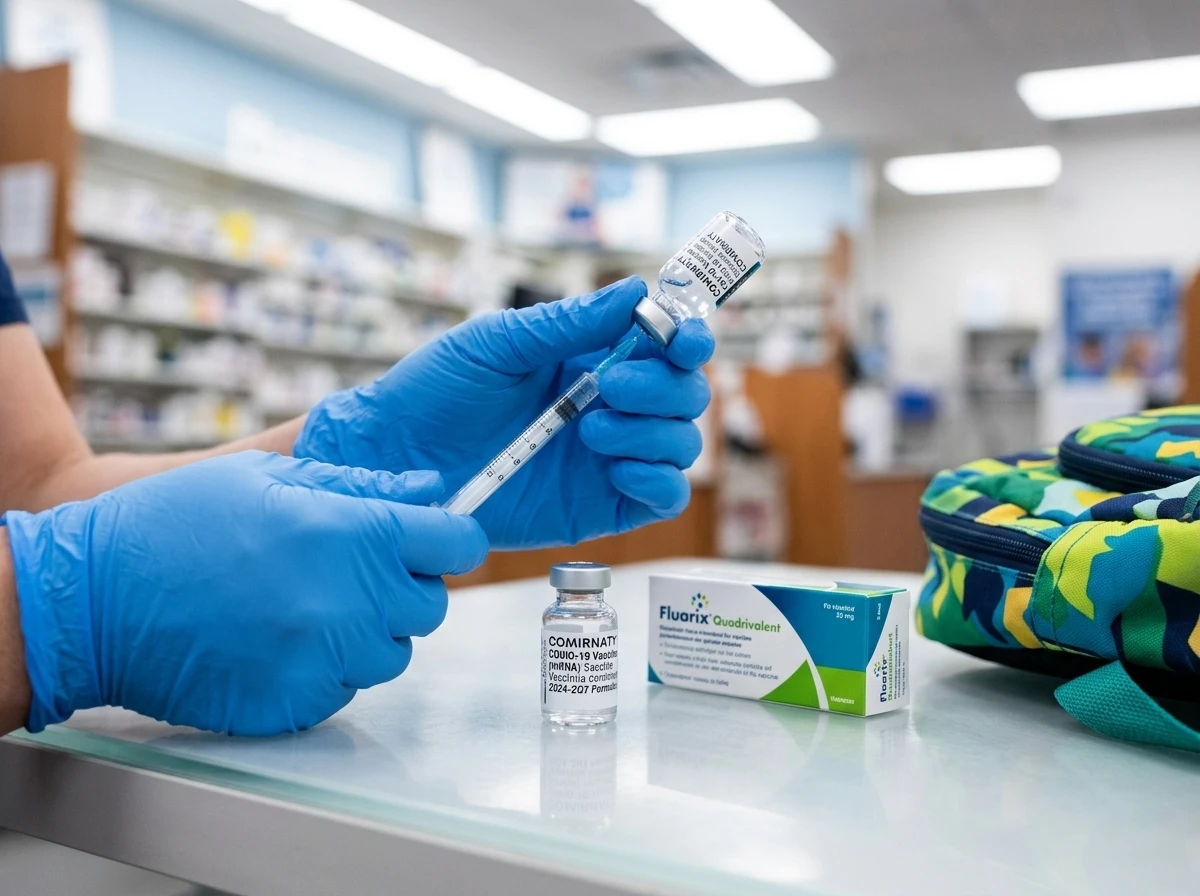
Moderna received approval for both Spikevax and the lower-dose mNEXSPIKE. Pfizer and BioNTech cleared an updated Comirnaty. Novavax and Sanofi cleared the protein-based Nuvaxovid. Moderna’s CEO Stéphane Bancel noted that COVID-19 still drove up to 2.3 million outpatient visits and 250,000 hospitalizations in the United States last year alone.
Pfizer and BioNTech said shipping will begin immediately. Moderna and the Novavax-Sanofi partnership expect product available in coming days. The protein-based shot gives providers a non-mRNA choice for patients who prefer it or have had reactions to earlier mRNA doses.
- May: The advisory committee voted for a monovalent XFG composition.
- This week: The FDA cleared updated formulas from all three manufacturers.
- Coming days: Pharmacies, hospitals and clinics expect stock to arrive.
Who Can Get Which Product
Eligibility stays narrower than the universal recommendations of earlier pandemic years. Every product covers adults 65 and older. For younger ages the bar is an underlying condition that increases severe COVID risk, and the minimum age differs.
| Product | Manufacturer | Ages for High-Risk | All Ages 65+ |
|---|---|---|---|
| Spikevax | Moderna | 6 months-64 years | Yes |
| mNEXSPIKE | Moderna | 12-64 years | Yes |
| Comirnaty | Pfizer-BioNTech | 5-64 years | Yes |
| Nuvaxovid | Novavax-Sanofi | 12-64 years | Yes |
The spread of minimum ages means a high-risk child under 5 has only one labeled mRNA option, while adolescents 12 and older can receive any of the four products. Clinics stocking more than one brand therefore need clear age checks at the counter.
The CDC lists dozens of conditions that raise severe COVID risk. They include cancer, moderate-to-severe asthma, chronic lung or kidney or liver disease, diabetes, heart conditions, obesity, pregnancy, immunocompromising conditions, and certain disabilities. Older adults remain the highest-risk group; more than 81 percent of COVID-19 deaths have occurred in people over 65.
The Coverage Gap Behind the Approvals
Most private insurers, Medicare Part B and Medicaid historically cover vaccines once the CDC’s Advisory Committee on Immunization Practices recommends them. A federal judge stayed Health Secretary Robert F. Kennedy Jr.’s appointments to ACIP earlier this year, leaving the panel in legal limbo and some recommendation pathways uncertain. Public health specialists still expect most plans to cover the shots because preventing hospitalization saves money, but the lack of a fresh, clear ACIP vote creates friction for some pharmacies and plans.
That friction shows up at the point of sale. A pharmacy may hold product and still need plan-by-plan confirmation before it can promise a zero-dollar claim. Medicare Part B and Medicaid have long treated recommended vaccines as covered benefits, yet adjudication systems still look for current ACIP language that the stay has delayed.
The CDC Bridge Access Program that supplied free vaccines to uninsured and underinsured adults ended in August 2024. State and local health departments may fill some gaps, yet capacity varies. Uninsured adults and those whose plans impose cost-sharing now face a practical barrier that did not exist in prior seasons.
What we know
- FDA approvals and product labels are final for the listed ages and high-risk criteria.
- Manufacturers have product ready or shipping.
- Co-administration with flu or RSV vaccines is considered safe for eligible people.
What’s unconfirmed
- Exact insurance adjudication timelines for every plan this week.
- Whether every state immunization program will stock free doses for the uninsured.
- Final ACIP language once the legal stay lifts or is resolved.
Dr. Peter Chin-Hong, an infectious diseases specialist at the University of California, San Francisco, told ABC News he remains hopeful insurers will cover the vaccine because it prevents serious illness. Dr. William Schaffner of Vanderbilt University Medical Center stressed that the shots work best at keeping people out of the hospital and intensive care unit.
Four Groups Doctors Still Flag First
Chin-Hong highlighted four populations he still sees most often in the hospital: adults 65 and older, people who are very immunocompromised, pregnant women, and the very young, especially those ages 6 months to 23 months. Immunity from prior infection or vaccination wanes. Updated matching reduces the chance of severe outcomes even if it does not stop every infection.
- Adults 65 and older account for the large majority of deaths and hospitalizations.
- Immunocompromised patients often mount weaker responses and benefit from the current strain match.
- Pregnancy raises risk of severe disease for mother and complications for the infant.
- Infants and toddlers under 2 years have limited prior exposure options and higher hospitalization rates when infected.
Schaffner noted that COVID continues to mutate like influenza, so annual updates remain the practical approach. The better the match to circulating virus, the more effective the protection against severe disease.
Those four groups overlap with the labeled indications in different ways. Every product already covers adults 65 and older without further conditions. Pregnancy and many immunocompromising diagnoses appear on the CDC risk list that opens eligibility for younger patients. Infants as young as 6 months can receive Spikevax when a qualifying condition is present, which covers the lower end of the age band Chin-Hong flagged.
Availability and Getting Flu Shots at the Same Time
Pharmacies, hospitals and clinics expect stock within days. Public health specialists say it is safe to receive a COVID vaccine in the same visit as a flu shot or an RSV vaccine for those who qualify. One arm for each or both in the same arm with a short separation works. Schaffner said some people prefer to space them, but he worries a postponed vaccine often becomes a missed vaccine.
Nuvaxovid’s protein-based non-mRNA option uses a recombinant spike nanoparticle plus Matrix-M adjuvant and stores at standard refrigerator temperatures. That can simplify logistics for some clinics.
Dual-vaccine clinic days let eligible patients finish both seasonal shots in one stop. The same-visit approach matters most for older adults and others who already face transportation or scheduling barriers.
Cases Are Rising From a Low Base
CDC respiratory data as of August 28 showed overall acute respiratory illness seeking care still very low nationally, yet COVID-19 activity is increasing. Wastewater and modeling point to possible larger summer rises in regions that saw quieter winters. Sequencing volumes have been low, which limits precise real-time variant shares, but XFG and related lineages remain the focus of the new formulas.
More than 1.2 million Americans have died from COVID-19 since the pandemic began. The absolute numbers of severe cases are far lower than 2020-2022 peaks, yet the disease still produces hundreds of thousands of hospital stays in a typical year. The new shots give high-risk patients a closer antigenic match heading into fall and winter.
COVID-19 remains a serious public health threat, responsible for up to 2.3 million outpatient visits and 250,000 hospitalizations in the U.S. last year alone. Our updated COVID-19 vaccines help protect those at high risk of severe disease.
Stéphane Bancel, Chief Executive Officer, Moderna
Pharmacies are already preparing dual-vaccine clinics. The practical test will be whether high-risk patients can walk in, confirm coverage without delay, and leave protected before the next wave of cases arrives.
Why Strain Matching Still Protects High Risk Patients
Prior infection and earlier vaccination leave residual immunity, but that protection fades. A closer antigenic match aims the response at the spike features now common in circulating virus, which is the practical lever left once broad population exposure has already occurred.
Schaffner’s comparison to influenza captures the operating model. Each season’s update does not promise to block every infection. It aims to lower the share of infections that become hospital stays, intensive care admissions, or deaths, especially in the groups that already fill those beds.
Last year’s burden figures illustrate the stakes even after the worst pandemic peaks passed:
- Up to 2.3 million outpatient visits tied to COVID-19 in the United States.
- About 250,000 hospitalizations in the same period.
- More than 81 percent of COVID-19 deaths still concentrated in people over 65.
For immunocompromised patients who mount weaker responses, and for adults 65 and older who account for most severe outcomes, that incremental match is the difference the labels are built around. The approvals do not reopen universal use for healthy younger adults; they concentrate supply and counseling time on the patients specialists still see in the hospital.
How Clinics Sort Product Choice and Timing
Four approved products create choice at the counter, yet the age bands and storage profiles are not identical. Spikevax alone reaches high-risk infants from 6 months. Comirnaty opens at 5 years for high-risk children. Both mNEXSPIKE and Nuvaxovid start at 12 years for the high-risk indication. All four cover every adult 65 and older.
| Factor | mRNA products | Nuvaxovid |
|---|---|---|
| Platform | Spikevax, mNEXSPIKE, Comirnaty | Protein nanoparticle plus Matrix-M |
| Storage note | Standard mRNA cold chain | Standard refrigerator temperatures |
| Role for patients | Default option in many pharmacies | Non-mRNA alternative after prior reactions |
Refrigerator-stable protein doses can ease inventory for smaller clinics that lack deep-freeze capacity. Larger pharmacy chains will likely stock at least one mRNA brand and, where demand exists, the protein option beside it.
Timing remains a counseling point. Same-day co-administration with flu or RSV shots is considered safe for eligible people. Patients who want separation can schedule it, but specialists warn that a delay often turns into a missed dose just as respiratory activity begins its seasonal climb.
Frequently Asked Questions
What strain do the 2026-2027 COVID vaccines target?
They are monovalent vaccines formulated against the XFG recombinant Omicron lineage that the FDA selected as the preferred composition after its advisory committee vote in May. The companies reported immune responses also covering related circulating lineages such as XFG.1.1 and others.
Can healthy adults under 65 get the new COVID vaccine?
Under the current FDA approvals, healthy people ages 5 to 64 without a listed underlying condition are not included in the labeled indications. Eligibility for that age range requires at least one condition that places them at higher risk of severe outcomes. Adults 65 and older qualify regardless of other conditions.
Is it safe to get the COVID vaccine and flu shot together?
Yes. Specialists advise that simultaneous administration is safe and effective for eligible people. The vaccines can go in different arms or the same arm separated by a short distance. Spacing them is also fine if preferred, though delaying one raises the chance it is never received.
Will insurance cover the updated COVID vaccines at no cost?
Most private plans, Medicare Part B and Medicaid have covered ACIP-recommended vaccines with no cost-sharing in prior seasons. Specialists expect similar coverage this year, but the ACIP legal stay creates some uncertainty for adjudication. The federal Bridge Access free program for uninsured adults ended in 2024, so uninsured patients should check state or local health department options.
Disclaimer: This article is news reporting and analysis based on publicly available FDA approvals, company statements and CDC materials as of late August 2026. It is for informational purposes only and does not constitute medical advice, a recommendation to vaccinate or not vaccinate, or guidance on any individual’s health decisions. Readers should consult their own physician, pharmacist or other qualified healthcare professional about personal eligibility, risks, benefits and timing before receiving any vaccine. Figures on hospitalizations, deaths, variant shares and coverage status reflect the cited sources at the time of writing and may change with new data or policy updates.


Walmart’s $50 Million Opioid Settlement Closes Case Without Admission

California Sues Over $120 Million Morro Bay Wind Lease Buyout

Gilead Bixlenvo FDA Nod Opens Single Pill Path for Complex HIV Cases

Meta’s $18B Kids Deal Forever Shields Data Used to Spot Under-13s

Lettuce Outbreak Drove Record Cyclospora Spike Across 20 States

Amazon Shaves $20 Off M6 Mac Mini Before It Even Ships

SpaceX Louisiana Port Tests Debt Markets on Orbital AI Scale

Microsoft High Lifts Indexes as Small Caps Crack Support

Apple Replays 2015 Saturday Midnight Preorder for iPhone 18 Pro

Updated COVID Shots Clear FDA but Access Friction Hits High-Risk Groups

Take-Two CEO Pushes Netflix Subs for GTA 6 Extended Look

Halo Campaign Evolved Skulls Meet Death Barriers That Kill the Hunt

Wildlands Free Update Hands Players the Tools They Already Invented

Destiny 2 Fans Unlock Vaulted Maps After Live Service Ends

Quake Gets 19 Free Maps From MachineGames Quake Club

Quordle Monday Delivers Gavel Crush Speed Ethos Cleanly

Stripe Bid Shows PayPal Moat Cracked After Years of Slide

Tyson’s Five-Year Utah Plant Falls to Cattle Shortage Reckoning

Silver Lake Workday Talks Signal Private Floor for Software

Kennedy Lewis Takes Majority Control of The Greenbrier in $500M Deal
-

 TECHNOLOGY3 years ago
How to Adjust a Bulova Watch Band – An Easy Guide
-

 News3 years ago
Fred Pentland: Athletic Bilbao’s English mentor who changed the essence of Spanish football
-

 FINANCE3 years ago
Tax Planning for Every Season: Guide to Maximizing Your Tax Benefits
-

 Education3 years ago
African Ministers New Education Plan
-

 BUSINESS3 years ago
What is Entrepreneurial Operating System? A Comprehensive Guide to EOS
-

 Education3 years ago
Innovate Your Learning Journey with Technology and Enhance Education
-

 News3 years ago
Russians formally out of World Athletics Championships
-

 BUSINESS3 years ago
Top 9 Most Expensive American Cities to Rent an Apartment