
FINANCE
Asian Stocks Split as Nikkei, KOSPI Hit Records on US-Iran Deal
Japan’s Nikkei 225 surged to 71,477 and South Korea’s KOSPI hit 8,976.55 on the US-Iran deal, while Hong Kong’s Hang Seng fell to an 11-month low.

Asia’s stock markets split on Thursday, June 18, 2026, with Japan’s Nikkei 225 and South Korea’s KOSPI pushing to fresh records on a US-Iran framework deal. Hong Kong’s Hang Seng slid to an 11-month low under an internet stock selloff and Beijing’s tightened grip on cross-border money flows. The Nikkei climbed nearly 2 percent to 71,477.0 points, and the KOSPI rose nearly 1 percent to a record 8,976.55 points, both intraday marks, as chipmakers and AI-linked names led the region.
The Hang Seng fell 1.8 percent to its weakest level since July 2025, dragged lower by Alibaba, Tencent, Baidu and Xiaomi. Spot gold added 1.52 percent to $4,322.47 an ounce as the IEA warned of a 2027 oil surplus.
The Deal That Reshuffled Asia
Reports on Thursday said U.S. President Donald Trump and his Iranian counterpart had remotely signed a memorandum of understanding to end their nearly four-month war. The preliminary agreement, per the Investing.com dispatch on the day’s market moves, sets out to reopen the Strait of Hormuz and clears the way for 60 days of negotiation on a fuller accord. Iran’s nuclear program is the central point of focus in those talks. Both sides had not yet released the full text of the deal as of the Asian close.
Trump warned earlier on Wednesday that the U.S. could resume attacks on Iran if it does not comply with the deal. A formal signing ceremony is expected in Switzerland on June 19, 2026, according to the same reports. The agreement is set to lift the U.S. naval blockade of Iranian ports and halt fighting on all fronts.
Ships are starting to move, many loaded up with Oil, out of the Strait of Hormuz. They are going along the Southern ‘Highway,’ which is totally safe, secure, and pristine.
Trump wrote those words in a post on Truth Social, hours before arriving in France for the Group of Seven summit, per a separate report on the post. The post captured a more bullish view than his Wednesday warning that the U.S. could resume attacks on Iran if it does not comply with the deal. For Asia, the deal’s biggest immediate economic punch lands through energy. The Iran deal sending Brent below $80 shows how the same news is reshaping the oil curve.
Japan and South Korea Take the Lead
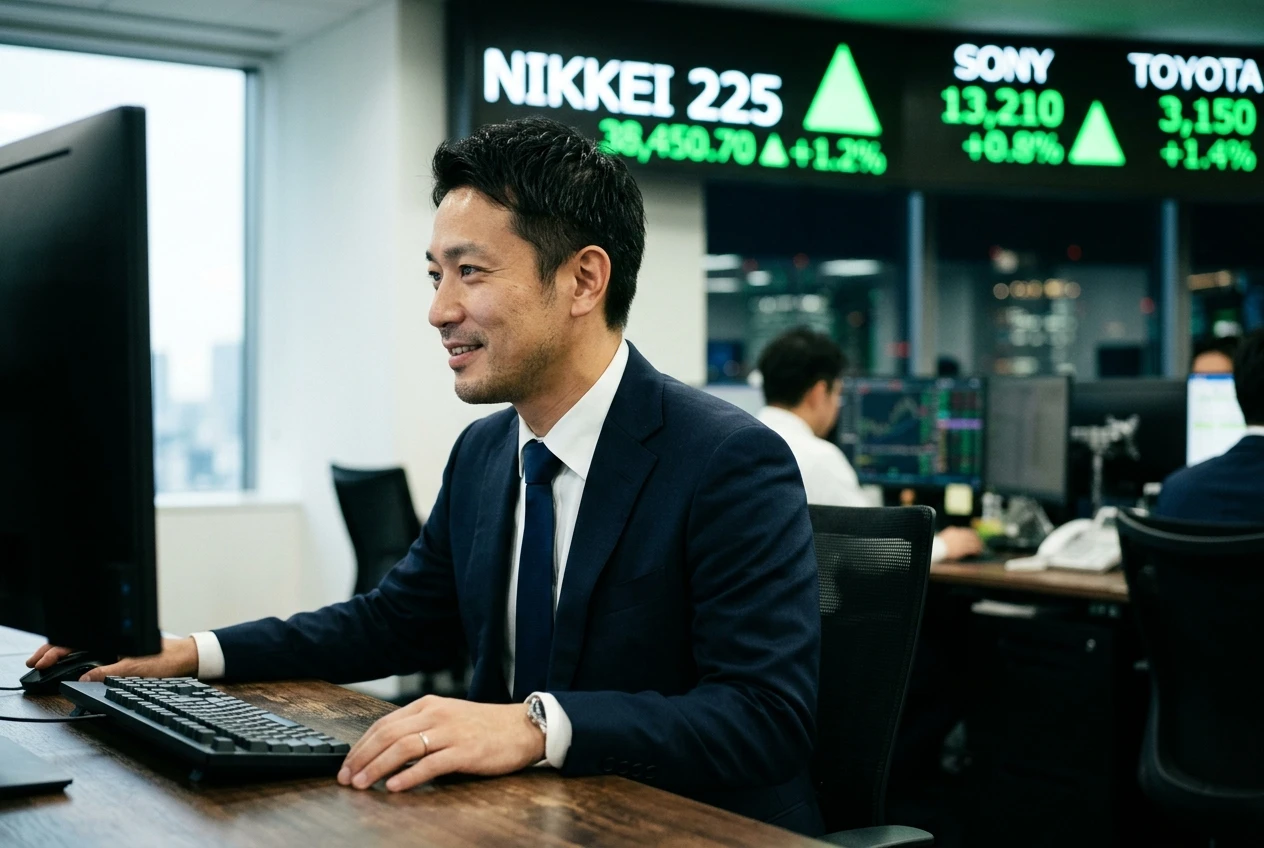
Japan’s Nikkei 225 was the best performer in Asia on Thursday, surging nearly 2 percent to a record 71,477.0 points. The broader Topix index also gained 2 percent to a fresh all-time peak, with the rally broad-based across the 225-member average. South Korea’s KOSPI added nearly 1 percent to a record 8,976.55 points, the latest in a string of records this year as AI and memory chip demand reshape the index. Chip component makers Murata Manufacturing and Ibiden were the top gainers on the Nikkei, while SoftBank Group rose 3 percent after recent losses. The Tokyo moves came in step with U.S. futures, with S&P 500 futures gaining 0.72 percent and Nasdaq futures up 1.18 percent in Asian trade.
Here is how the major Asia-Pacific gauges moved on Thursday.
| Index | Move | Level |
|---|---|---|
| Nikkei 225 (Japan) | nearly 2% | 71,477.0 (record) |
| Topix (Japan) | +2% | record |
| KOSPI (South Korea) | nearly 1% | 8,976.55 (record) |
| Hang Seng (Hong Kong) | -1.8% | 11-month low |
| S&P/ASX 200 (Australia) | -0.5% | — |
| Straits Times (Singapore) | +0.2% | — |
| Nifty 50 futures (India) | +0.6% | — |
| CSI 300 (China) | +0.1% | — |
| Shanghai Composite (China) | -0.4% | — |
SK Hynix Powers the Seoul Surge
SK Hynix jumped 5 percent to a fresh record on Thursday after the company said it had shipped samples of its next-generation HBM4E high-bandwidth memory chip to major customers, per the SK Hynix HBM4E sample announcement. The South Korean chipmaker said the 12-layer HBM4E delivers data transfer speeds of up to 16 gigabits per second per pin and more than 20 percent better power efficiency than the prior generation. HBM, or high-bandwidth memory, is the rare class of chip that AI model builders cannot do without, and SK Hynix is Nvidia’s primary supplier. The sample shipment is the first commercial step for HBM4E, the successor to the HBM4 chips set to power Nvidia’s Vera Rubin AI accelerator in the second half of 2026.
The HBM trade lifted the broader region. In Japan, chip component makers Murata Manufacturing and Ibiden were the top gainers on the Nikkei 225, riding the same AI hardware momentum that carried Seoul. SoftBank Group, a tech conglomerate with deep AI exposure, added 3 percent after recent losses.
Top chip-sector movers in Japan and South Korea on June 18, 2026:
- SK Hynix (South Korea): HBM memory, +5% to record
- Murata Manufacturing (Japan): chip components
- Ibiden (Japan): chip components
- SoftBank Group (Japan): AI conglomerate, +3%
The rotation is a regional one, with chipmakers in Japan, South Korea and Taiwan absorbing the AI and hardware trade in recent weeks. Capital is moving away from Hong Kong’s internet-heavy index, where the same AI exposure looks thinner. The HBM4E sample shipment and Korean memory stocks trace the same chip trade that lifted Seoul and Tokyo.
Hong Kong’s Internet Heavyweights Slide
Hong Kong’s Hang Seng fell 1.8 percent on Thursday to its weakest level since July 2025, a fresh 11-month low, with local internet and technology stocks leading the slide. Alibaba Group, Tencent, Baidu and Xiaomi all fell between 1 percent and 3 percent as investors rotated into AI and hardware-exposed names elsewhere in Asia. The shift in capital is visible in the breadth: chipmakers in Japan, South Korea and Taiwan have absorbed the regional AI and hardware trade in recent weeks. Hang Seng tech, which tracks the city’s largest internet names, is paying the price for the rotation.
The damage spread to financial stocks with wealth and brokerage exposure. Insurers AIA and Prudential nursed deep losses so far in June, the reports said. Local brokerages and wealth managers took the heaviest hits from a tightening of mainland capital flows into the city.
Not all Hong Kong names bled. AI-related stocks outperformed: Zhipu, which trades as Knowledge Atlas Tech Joint Stock, jumped 15 percent, and rival MiniMax Group added 9.6 percent. Hong Kong’s broader index composition, weighted toward internet and platform names, means the same stocks keep falling faster than the headline gauge. The crackdown and the AI rotation are two different stories, and they both point in the same direction for the city’s brokerages. Hong Kong’s brokerages and wealth managers depend on mainland capital flows, leaving them doubly exposed to the current squeeze.
Beijing’s crackdown on cross-border investment has tightened the flow of mainland capital, the traditional support for the city’s brokerages and wealth managers. Hong Kong’s financial plumbing is paying a price for both ends of the trade, with mainland flows down and global money rotating elsewhere.
Why Hong Kong Missed the Rally
Two pressures hit Hong Kong at the same time. First, a rotation: chipmakers in Japan, South Korea and Taiwan have absorbed most of the regional AI and hardware trade in recent weeks, drawing money away from the Hang Seng’s internet-heavy roster. Second, a policy headwind: Beijing’s crackdown on mainland investments into Hong Kong has reduced the flow of capital from wealthy mainland investors that has long propped up the city’s financial stocks.
The crackdown’s victims are visible in the same names that have defined the city’s wealth complex. Wealth management and brokerage stocks have been the worst hit, with insurers AIA and Prudential nursing deep losses in June. Hong Kong’s role as a bridge between mainland money and global markets is narrowing, with mainland capital flows down from their recent peaks. Mainland capital is the marginal buyer that has historically smoothed the city’s drawdowns, and its absence leaves the index more exposed to fund outflows during risk-off sessions.
The Fed’s Hawkish Shadow
Asia’s rally came despite a sobering lead-in from Wall Street. On Wednesday, June 17, 2026, the Federal Reserve held its benchmark rate steady at 3.5 percent to 3.75 percent, the level it has occupied since December 2025, but released a more hawkish dot plot that flagged the possibility of a 2026 rate hike. The S&P 500 fell 1.21 percent on the day, and the Nasdaq lost 1.34 percent, though both indexes had set intraday records before the Fed’s release. The new Fed chair Kevin Warsh, sworn in on May 22, 2026, framed the projections as a calibration of inflation risks, with 17 of 18 officials seeing upside risks to their inflation forecast. The median 2026 federal funds rate projection rose to 3.8 percent, up from 3.4 percent in March, a hawkish flip from a level that implied a rate cut.
Regional markets shrugged it off. S&P 500 futures rose 0.72 percent and Nasdaq futures added 1.18 percent in Asian trade on Thursday, suggesting U.S. investors were ready to look past the Fed’s signal. Asian rate-sensitive sectors, from property to utilities, mostly held up despite the dot plot’s hawkish tilt. How the Fed’s hawkish dot plot moved the Kospi traces the same shift in expectations.
The near-term calendar now stacks with catalysts that the dot plot makes more consequential. The Bank of England meets on Thursday, with markets widely expecting a hold at 3.75 percent, and Switzerland’s central bank is also set to hold at 0 percent. The IEA said on Wednesday that the global oil market could move into a substantial supply surplus by 2027, a separate reminder that the rate and the commodity cycles are not moving in the same direction. The day’s record closes in Tokyo and Seoul leave a high bar for Friday’s session.
Where the Rest of Asia Closed
Australia’s S&P/ASX 200 fell 0.5 percent, weighed down by commodity names. Singapore’s Straits Times Index edged up 0.2 percent. India’s Nifty 50 futures gained 0.6 percent as falling oil prices fuelled optimism about the country’s economic recovery, while China’s CSI 300 added 0.1 percent and the Shanghai Composite slipped 0.4 percent on softer factory activity data.
In currency markets, the dollar eased 0.03 percent against the yen to 160.61 after touching 160.79 overnight, its strongest level since July 2024. The dollar index rose 0.17 percent to 100.26. Spot gold climbed 1.52 percent to $4,322.47 an ounce, with the IEA’s warning of a 2027 supply surplus adding to the bullish mood in commodities. WTI crude has already fallen to around $80 a barrel, easing the cost burden on energy importers across the region, from Tokyo to New Delhi.
Frequently Asked Questions
What does the US-Iran framework deal include?
The memorandum of understanding calls for an end to hostilities in the Middle East, the reopening of the Strait of Hormuz, and the lifting of the U.S. naval blockade of Iranian ports. Both sides will then enter 60 days of talks to negotiate a more comprehensive agreement, with Iran’s nuclear program as the central issue.
Why did Asian stocks diverge so sharply on June 18, 2026?
Chip-heavy markets in Japan and South Korea rallied on AI memory demand and a reprieve from oil-price risk, while Hong Kong’s internet-led index fell on a rotation into AI hardware names elsewhere and Beijing’s crackdown on cross-border investment. The KOSPI hit a record 8,976.55 points and the Nikkei 225 hit 71,477.0, but the Hang Seng dropped 1.8 percent to an 11-month low.
When will the US-Iran deal be formally signed?
Both countries have said a formal signing ceremony will be held in Switzerland on June 19, 2026. U.S. Vice President JD Vance is expected to attend, and the agreement’s text is expected to be released on Friday or later.
What is HBM4E and why is it moving Korean stocks?
HBM4E is the fifth generation of high-bandwidth memory, a class of chip used in AI accelerators to move large datasets quickly. SK Hynix, the primary supplier to Nvidia, said it had shipped samples of its 12-layer HBM4E to major customers on Thursday, with 16 Gbps per pin and 20 percent better power efficiency than the prior generation.
How did the Fed’s June 17 decision affect Asia?
The Federal Reserve held its benchmark rate at 3.5 to 3.75 percent on Wednesday, but a more hawkish dot plot that flagged a possible 2026 rate hike pushed the S&P 500 down 1.21 percent and the Nasdaq down 1.34 percent. Asian markets brushed it off on Thursday, with S&P 500 futures gaining 0.72 percent and Nasdaq futures adding 1.18 percent.
Disclaimer: This article is for informational purposes only and does not constitute investment advice. Market figures are accurate as of publication on June 18, 2026. Readers should consult a qualified financial professional before making any investment decisions.






Halo Campaign Evolved Skulls Meet Death Barriers That Kill the Hunt

Spotify Running Mode Returns After the 2015 Experiment Failed

Amazon AWS Hits Fastest Growth in Years as AI Spend Pays Off

Amazon Bets Platform Beats Models in the AI Race

Apple C2 Modem Edges Into iPhone 18 Pro After Qualcomm Drop

Google Earth Adds Nano Banana 2 to Reimagine Real Places

Apple Upgrade Turns Phones Into Monthly Utility Bills

Asha Sharma Bets Xbox Growth on Console and Four C’s

MacBook Ultra Design Follows Apple’s Familiar Cascade Path

TAG Heuer Carrera x Team Ikuzawa Revives 1970s Roadmaster Stopwatch DNA

Pokémon GO Developer Niantic Rebrands as Scopely Explore

Jaylen Brown Traded to 76ers for Paul George and Four Draft Picks

Doom Studio id Software Cuts Half Its Staff in Xbox Layoffs

Nintendo Switch Online Adds Four Classics and One Japan-Only Title

Jordan Henderson Hospitalized After Wrist Injury at the Azteca

Mexico’s World Cup Run Ends at Azteca as England Hold On 3-2

Meta’s Muse Image Lets Anyone Use Your Instagram Photos in AI

Louis Vuitton Beats Molly Tea in China, Triggers Cultural Backlash

Pink Bearista Cup Returns July 13 as Starbucks Pink Vibes Drops

Samsung Sets Galaxy Unpacked for July 22 in London With a Wider Fold
-

 TECHNOLOGY3 years ago
How to Adjust a Bulova Watch Band – An Easy Guide
-

 News3 years ago
Fred Pentland: Athletic Bilbao’s English mentor who changed the essence of Spanish football
-

 FINANCE3 years ago
Tax Planning for Every Season: Guide to Maximizing Your Tax Benefits
-

 Education3 years ago
African Ministers New Education Plan
-

 BUSINESS3 years ago
What is Entrepreneurial Operating System? A Comprehensive Guide to EOS
-

 Education3 years ago
Innovate Your Learning Journey with Technology and Enhance Education
-

 News3 years ago
Russians formally out of World Athletics Championships
-

 BUSINESS3 years ago
Top 9 Most Expensive American Cities to Rent an Apartment