
FINANCE
Iran Deal Sends Brent Below $80, But Inventories Tell a Different Story
Brent fell below $80 on the US-Iran peace deal. But Cushing sits near its 20-million-barrel operational floor and the IEA’s 400-million-barrel release is largely spent.

Brent crude settled below $80 a barrel on Tuesday for the first time since the Iran war began, as traders celebrated a US-Iran framework deal that promises to reopen the Strait of Hormuz by Friday. US West Texas Intermediate futures fell alongside it. The international benchmark has shed roughly a fifth of its wartime peak in five trading days on little more than a deal text no one outside two negotiating rooms has read.
The trouble is the rest of the oil market. Commercial crude stockpiles in the United States have drawn down for seven straight weeks. Cushing, the delivery hub for West Texas Intermediate futures, is sitting a hair above the level at which tank operators say the pipes start seizing. Marine insurers have not lowered war-risk premiums in step with the futures rally. And an executive at one of the world’s largest independent tanker operators told the Financial Times this week that operators could still wait weeks before letting their ships back through the Strait. The futures market has priced in peace. The physical market has not yet seen it.
A Deal Built on Weekend Optimism
Brent crude futures fell 5% to close at $78.96 a barrel on Tuesday, the first time the international benchmark has closed below $80 since March. West Texas Intermediate futures lost 5.8% to settle at $76.05. Both contracts reacted to a Sunday announcement that Washington and Tehran had reached a framework deal that would extend a ceasefire by 60 days and reopen the Strait of Hormuz to all shipping.
President Donald Trump told reporters arriving at the G7 summit in Évian-les-Bains, France that the deal has been signed and that the Strait of Hormuz would “completely reopen” on Friday, free of Iranian tolls. A formal signing ceremony is scheduled for Friday in Geneva. Trump wrote on social media that he was “fully authoriz[ing] the toll free opening of the Strait of Hormuz” and that “Ships of the World” should “start your engines.” Brent, which had traded around $70 a barrel before the war and peaked near $120 during it, has now given back most of its wartime gain on that single line. Yet the two governments have given conflicting accounts of what is actually in the memorandum. “Nobody has seen any text,” Amos Hochstein, who advised former President Joe Biden on energy, told CNBC on Tuesday. “So if there’s an agreement that was reached three days ago, it is a bit odd that we haven’t seen it.” The Strait of Hormuz, through which around 20% of the world’s oil and liquefied natural gas normally passes, has been effectively closed since shortly after US and Israeli strikes on Iran began on 28 February. Brent falling below $80 on the US-Iran framework deal reflects the headline; the inventory and tanker picture below it has barely moved.
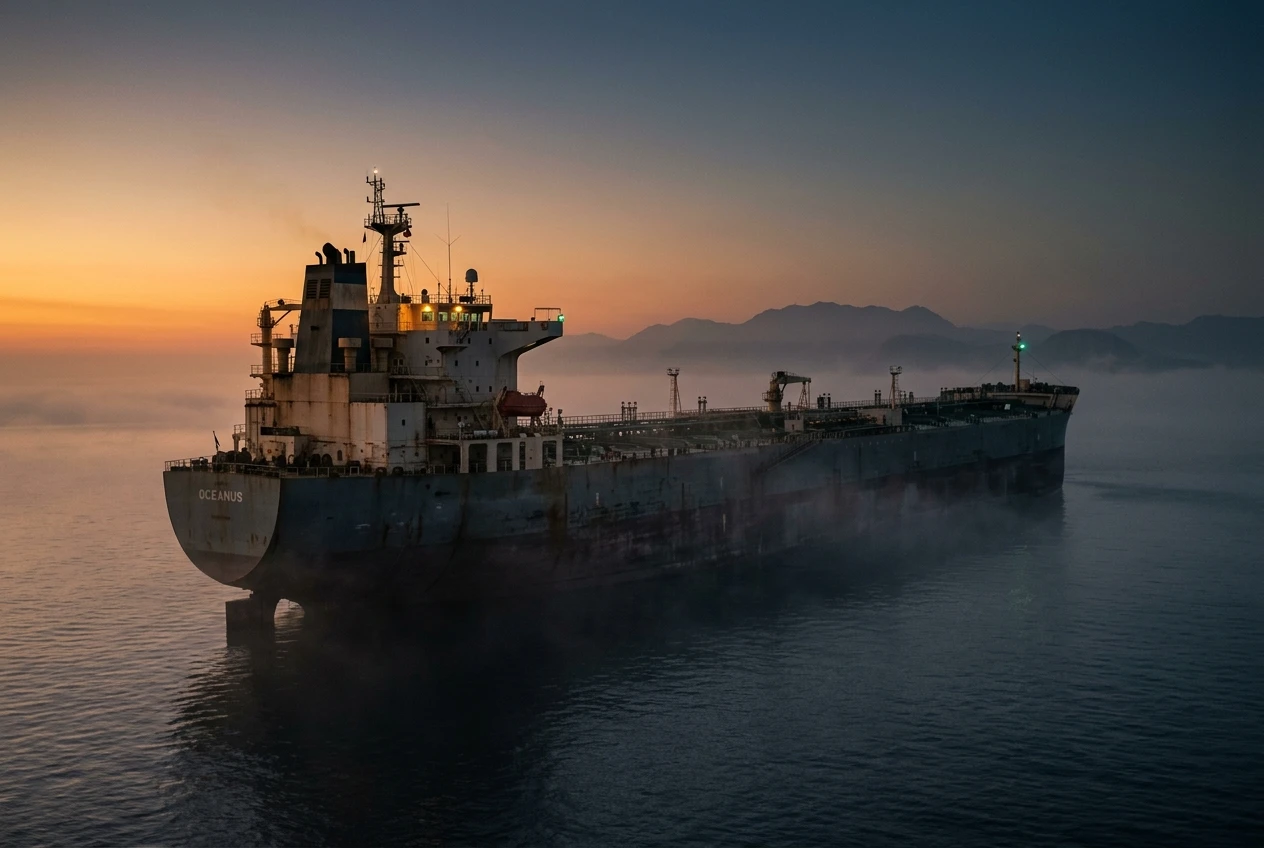
Inventory Levels the Market Can’t Ignore
The Brent rally has been pulling against a stockpile backdrop that has not improved in months. US commercial crude inventories excluding the Strategic Petroleum Reserve fell by 7.2 million barrels to 426.5 million barrels in the week ended June 5, the US Energy Information Administration said, putting stocks about 5% below the five-year average for the time of year. The decline marked the seventh consecutive weekly draw.
The American Petroleum Institute’s tally runs deeper across a longer window. API data show that the last nine weeks alone have shaved 52 million barrels off US crude inventories, with the latest weekly estimate showing another 6.75 million barrel drop in the week ending May 29. The drawdowns have not been limited to commercial tanks. Eight million barrels left the US Strategic Petroleum Reserve in the same week, bringing the reserve to 357.1 million barrels, its lowest level since January 2024 and 368 million barrels below maximum capacity. Cushing, the Oklahoma delivery hub for WTI futures, sat at roughly 21 million barrels by early June, down from 23.68 million a year earlier, with Wall Street Journal reporting that “at roughly 20 million barrels, tank operators begin running into a variety of complications.” the EIA inventory report showing a seventh straight weekly draw underlines how steady the bleeding has been. The relief the futures market is pricing assumes those tanks will refill quickly. None of the source data show them doing so.
The IEA’s members agreed in March to release a record 400 million barrels from strategic reserves to cushion the supply shock. The agency now calls the Hormuz closure “the largest oil supply disruption in history,” with more than a billion barrels of supply already lost. The same agency warned earlier this month that inventories are being depleted at a record pace, and that the strategic releases “can’t last forever.” Goldman Sachs has noted that global oil stocks are approaching an eight-year low and that, while the bank does not expect inventories to reach minimum operational levels this summer, the speed of depletion and supply losses in some regions remain a concern. The macro footprint of those draws is already visible: European energy costs fed into a 6.5% jump in US producer prices in May, the largest yearly gain since November 2022, and the ECB rate hike against Iran-war inflation arrived last week as the first major central-bank response.
The futures market has been leaning on a quiet offset: China’s crude imports are estimated to have fallen by about 4 million barrels a day to lows not seen in a decade, as Beijing drew on its own record-high stockpiles to meet demand and halted the aggressive stockpiling of recent years. Global demand may have fallen by between 3 million and 4 million barrels a day as Asian petrochemical refineries cut activity to weather the crisis. That demand destruction has done real work keeping Brent below where the supply math would otherwise point, even before the Iran deal.
Oil inventories at a glance
- 426.5 million barrels – US commercial crude stocks, week ended June 5, about 5% below the five-year average.
- 52 million barrels – total US crude drawdown across the last nine weeks (API).
- 21 million barrels – Cushing, Oklahoma stocks, just above the 20-million-barrel level at which tank operators say complications begin.
- 400 million barrels – IEA members’ emergency release agreed in March.
- More than 1 billion barrels – cumulative supply already lost from the Hormuz closure, per the IEA.
The Cascade That Has to Run First
Even with a signed deal on Friday, oil does not flow on a tweet. The sequence that has to run starts with marine insurers, who have shown no appetite to cut premiums in step with the futures rally. War-risk cover for Persian Gulf shipping climbed from roughly 0.1% of vessel value to around 1% as hostilities escalated, according to S&P Global data, and remains as much as 30 times above pre-conflict levels in some segments. Many underwriters have invoked seven-day cancellation clauses in their war-risk policies, allowing them to withdraw cover at short notice and reissue at sharply higher rates if conditions deteriorate.
Until insurers are willing to write cover again at workable rates, most large tanker operators are staying put. Jotaro Tamura, chief executive of Mitsui OSK Lines, told the Financial Times on Tuesday that many operators could wait weeks before letting their tankers resume transit. The Japanese Shipowners’ Association said on Monday that 38 Japanese-linked vessels were still stranded in the strait, and a spokesperson said the body wanted to “wait a little longer for more concrete information” about the deal that is supposed to be signed in Switzerland on Friday. The strait itself is only about 21 miles wide at its narrowest point, which concentrates the risk for any one hull crossing it. war-risk premiums running up to 30 times pre-conflict levels explain why the world’s biggest shipowners are still holding position.
Even after insurance clears, the next steps take time on their own. Andrew Lipow of Lipow Oil Associates said mines would first need to be cleared from the waterway, a process that could run from a few weeks to up to six months, and that restarting oil production and getting ship loading back to normal levels could take additional weeks. The Vortexa senior market analyst Xavier Tang laid out the order succinctly: “If the US-Iran deal is completed and insurance companies are willing to insure the vessels, ballast tanker transits would increase, followed by the restart of crude production and then the restart of refineries.” Anoop Singh, global head of shipping research at Oil Brokerage Ltd., told Bloomberg: “We’re not seeing any big shipowners changing their stance at this point. They’re staying put for now.” The physical chain has four distinct links, and none of them has begun to turn yet.
The cascade that has to run before oil flows normally
- Marine insurers resume affordable war-risk cover for Persian Gulf transit (current premiums as much as 30 times pre-conflict levels).
- Mine-clearance vessels complete the passage work; Lipow Oil Associates estimates that step alone could run from weeks to six months.
- Shut-in Gulf crude production restarts and ships load at pre-war rates.
- Refineries, many running below capacity, ramp back up to pull that crude.
Why the Physical Market Won’t Follow
Exxon Mobil’s senior vice president Neil Chapman said on May 28 that the world is closer to a price spike than most of the trading screen suggests. He put a number on it: physical Brent crude cargoes could shoot to $150 to $160 a barrel once inventories hit all-time lows in the coming weeks. “When the price gets to a certain level, demand destruction brings it back into balance,” he said.
We’re approaching unheard of inventory levels. I mean really, really low levels. You can debate whether that’s going to hit, those really, really low levels, in two weeks or three weeks. Once you get to that point, then you’ll see price shoot up.
Chapman, speaking at a Bernstein conference in New York on May 28, framed the call as a near-term certainty tied to a dateable threshold rather than a forecast. Brent futures for July delivery, the nearest contract, closed under $94 a barrel that Thursday on the same Hormuz-reopening hopes now driving Brent below $80. That gap between the futures curve and Chapman’s physical-cargo price is the futures-versus-physical split now defining the market. Phillip Nova analyst Priyanka Sachdeva, quoted by Bloomberg, said the gap is structural: “While the conflict may have come to an end and oil flows through the Strait of Hormuz may gradually return to normal, the damage already done cannot be reversed overnight.” Sachdeva pointed to both physical damage to oil infrastructure and the economic strain on oil-importing economies that ran elevated energy bills for months. analysts warning of a physical-market price spike describe the same risk from multiple desks.
Other analysts are less alarmist but still cautious. Energy Aspects noted at the start of June that even with a signed deal, tanker traffic would take a while to return to pre-war levels. Goldman Sachs has said it does not expect global inventories to hit minimum operational levels this summer, even as it flagged the speed of depletion. The IEA’s own May 2026 Oil Market Report recorded that global observed oil inventories drew by 129 million barrels in March and a further 117 million barrels in April, the kind of pace that exhausts cushions faster than refills can rebuild them. The futures market has celebrated the deal because the deal is news; the physical market is waiting to see what the deal does to ship loading windows, mine-clearance timelines, and refinery run rates. Those are not yet visible from a trading screen.
The Voices Pricing the Other Outcome
Exxon is not alone. Chevron chief executive Mike Wirth said in early June that the pressure on physical prices has not yet shown up in the benchmarks, but it is coming.
Over the next few weeks, we’re likely to see those pressures flow through more directly to physical prices, and there’s more upwards pressure that I would expect as we get into June and certainly into July.
Wirth’s framing matches Jeff Currie’s, who is the chief energy strategist at Carlyle Group. Back in May, Currie warned that by July, parts of the world would face what he called minimum operational levels of crude supply because storage withdrawals to bridge the Hormuz crisis have left Asia close to a binding floor. The combination is not subtle: one major oil company CEO pointing at June and July for upward pressure on physical prices, and a former Goldman Sachs commodities chief now at Carlyle pointing at July for minimum operational levels of crude. Currie’s “minimum operational level” is the same threshold the Wall Street Journal flagged at Cushing, the level below which tank operators run into mechanical and logistical complications rather than just financial ones.
None of those voices is calling the futures rally wrong in the near term. Brent closing below $80 on a framework deal with a Friday signing ceremony is exactly what news-driven futures do. What they are calling out is the bridge between the signing ceremony and the first normal oil cargo: a bridge that has to cross marine insurers, mine-clearance vessels, stranded tankers, dormant Gulf production, and refineries running below capacity. Mitsui OSK Lines’ Tamura said operators could wait weeks before resuming transit, and Exxon SVP Chapman said it could be two to three weeks before inventories reach the levels that force physical prices to react. The futures market has discounted those weeks. The physical market has not yet seen them pass.
Frequently Asked Questions
Why did oil prices drop below $80 after the US-Iran framework deal?
Brent crude fell 5% to $78.96 a barrel on Tuesday after Washington and Tehran announced a framework deal that would extend a ceasefire by 60 days and reopen the Strait of Hormuz. President Trump said the strait would “completely reopen” on Friday and that a signing ceremony is scheduled for Friday in Geneva. Brent, which had peaked near $120 during the war and traded around $70 before it, gave back most of its wartime gain on the news.
What does “minimum operational levels” mean for oil inventories?
It is the floor below which storage tanks and pipelines stop functioning reliably, rather than just running low. Carlyle Group’s Jeff Currie said in May that parts of the world could face these levels by July as countries have drawn down stockpiles to bridge the Hormuz crisis. The Wall Street Journal reported that Cushing, the WTI delivery hub, begins running into “a variety of complications” at roughly 20 million barrels of stocks, and Cushing sat at about 21 million barrels in early June.
When will tanker traffic through the Strait of Hormuz return to normal?
Not immediately. Marine insurers are still pricing war-risk cover as much as 30 times above pre-conflict levels, and many operators are staying put. Mitsui OSK Lines chief executive Jotaro Tamura told the Financial Times that operators could wait weeks before letting their tankers resume transit. Lipow Oil Associates’ Andrew Lipow said mine clearance alone could take anywhere from a few weeks to six months.
How could oil prices still rise if the strait reopens?
Exxon senior vice president Neil Chapman said on May 28 that physical Brent cargoes could spike to $150 to $160 a barrel once inventories hit all-time lows. Chevron chief executive Mike Wirth said the pressure on physical prices will likely show up “as we get into June and certainly into July.” Both are pointing at the time it takes insurers, mines, production, and refineries to come back online, a window the futures market has largely priced through.
How much oil has the Hormuz closure actually cost the market?
The IEA calls it the largest oil supply disruption in history, with more than a billion barrels of supply lost so far. S&P Global Commodity Insights has estimated that cumulative supply losses will exceed 1.5 billion barrels by the end of June if the situation had remained unchanged. IEA members have so far released 400 million barrels from strategic reserves to cushion the impact.






Spotify Running Mode hits Android and revives its old tempo experiment

Galaxy Tab S12 Ultra Renders Keep the Notch Fans Hate

Novato Spinning Round House Sells With Six Neighbors for $3.3 Million

Crop Tour Finds Indiana and Nebraska Corn Yields Lagging 2025

Best Buy 60th sale brings Android deals back to its roots

American Airlines reverses seatback screen bet years too late

Iran Hormuz Strikes Force Gulf Oil Onto Costlier Paths

Plague Tale Prequel Day One Joins Game Pass Wave 2 as Witcher Exits

NBA 2K27 opens The City to everyone and rewrites career eras

iOS 26.6.1 Patches 29 Flaws as AI Forces Faster Apple Updates

Double Fine Cuts 23 Jobs Weeks After Xbox Independence

Day-One Big Walk Lifts PS Plus August Beyond Recycled AAA

John Hight Exits Wizards After Digital Reckoning Hits

Curtis Mead’s Red Sox Debut Ends With Fractured Wrist

Red Sox Squander Hot Streak Chance in 4-3 Loss to Athletics

Moesch and Dressel Rewrite Night One at 2026 U.S. Nationals

Boutte’s Quiet Camp Takeover Forces Patriots Receiver Choices

Take-Two CEO Pushes Netflix Subs for GTA 6 Extended Look

Halo Campaign Evolved Skulls Meet Death Barriers That Kill the Hunt

Wildlands Free Update Hands Players the Tools They Already Invented
-

 TECHNOLOGY3 years ago
How to Adjust a Bulova Watch Band – An Easy Guide
-

 News3 years ago
Fred Pentland: Athletic Bilbao’s English mentor who changed the essence of Spanish football
-

 FINANCE3 years ago
Tax Planning for Every Season: Guide to Maximizing Your Tax Benefits
-

 Education3 years ago
African Ministers New Education Plan
-

 BUSINESS3 years ago
What is Entrepreneurial Operating System? A Comprehensive Guide to EOS
-

 Education3 years ago
Innovate Your Learning Journey with Technology and Enhance Education
-

 News3 years ago
Russians formally out of World Athletics Championships
-

 BUSINESS3 years ago
Top 9 Most Expensive American Cities to Rent an Apartment