
News
AirTag 2 Hits Near Lows Just as Travel Season Peaks
Apple AirTag 2 singles hit $25 and four-packs $89, near record lows, adding longer Precision Finding and airline bag-sharing tools ahead of peak travel.

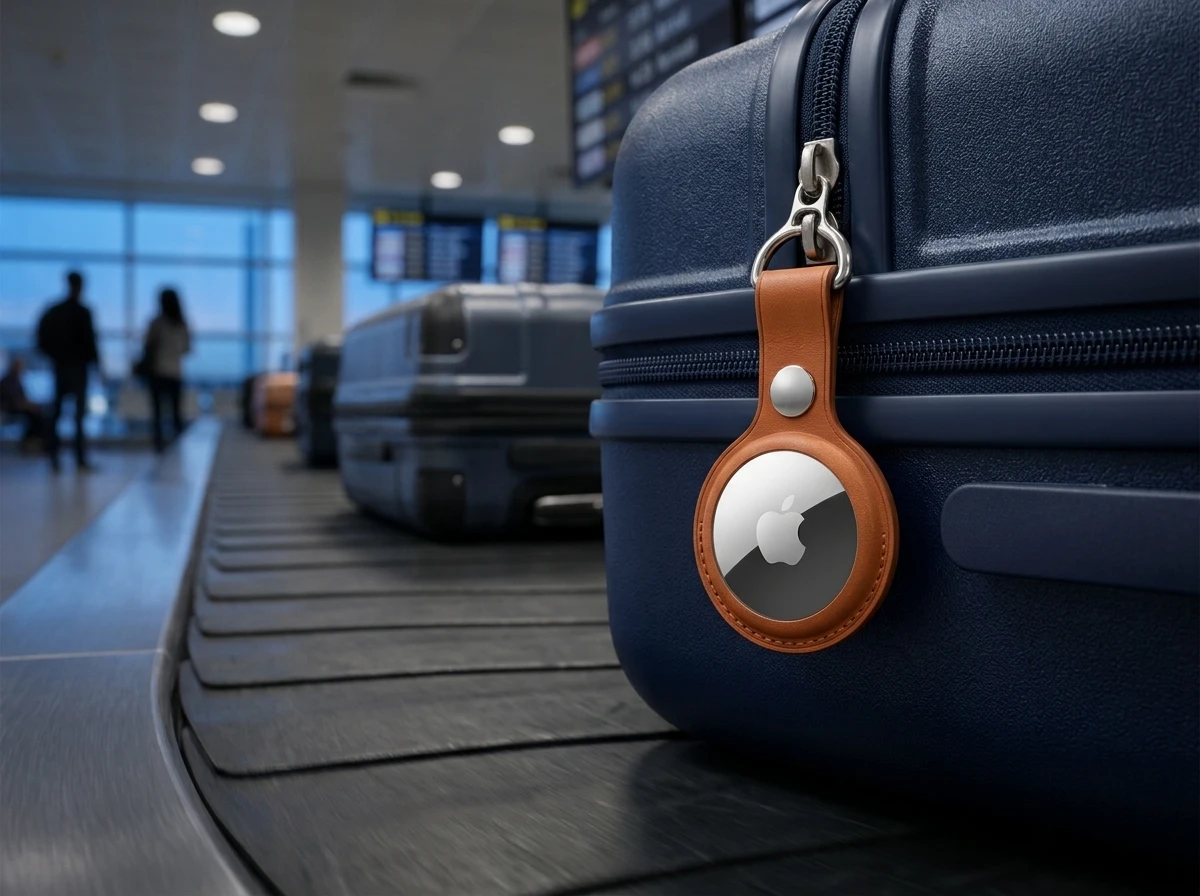
Amazon has cut the second-generation Apple AirTag to $25 for a single and $89 for a four-pack, prices that sit at or within a dollar of the lowest marks tracked since the January debut. The discounts land as summer travel volumes climb and airlines continue expanding tools that pull Find My location data into baggage systems.
CNN Underscored flagged the markdowns on August 17 as among the rare cuts available on the new trackers. For travelers who still pack without a disc in every bag, the timing turns a modest hardware sale into practical risk reduction.
What the Current Amazon Prices Are
A single AirTag 2 lists at $29 and is selling for $25, a roughly 14 percent cut that CNN Underscored called the second-best discount seen so far. The four-pack drops from $99 to $89, or just over $22 apiece, matching the all-time low first hit during Prime Day and repeated in late July and mid-August.
| Configuration | MSRP | Current Amazon | Notes |
|---|---|---|---|
| Single AirTag 2 | $29 | $25 | Second-best price tracked |
| Four-pack | $99 | $89 | Matches record low |
| Per-unit four-pack | $24.75 | ~$22.25 | Best value for multiple bags |
Price trackers such as CamelCamelCamel show the four-pack bottomed at $89 earlier in August after sitting near $93. Deal sites including 9to5Toys confirmed the same $25/$89 pair in mid-August, noting free Prime shipping on the single once the cart clears $35. These are not deep clearance numbers, yet new Apple accessories rarely stay discounted for long.
Earlier windows were thinner. After Apple’s January launch announcement, the trackers held full price for months before the first meaningful cuts appeared around Prime Day. Shoppers who watched earlier Prime Day 2026 tracker pricing saw the four-pack first reach $89 then; the return of that floor makes the current window worth acting on if the items are already on a list.
The Upgrades That Separate AirTag 2 From the Original
Apple kept the coin-sized form factor, replaceable battery, IP67 rating and $29 starting price. The internal changes target how quickly and how far you can locate an item once it is nearby.
The second-generation Ultra Wideband chip, the same family used in the iPhone 17 lineup and recent Apple Watch models, powers Precision Finding. Apple states the feature now guides users from up to 50 percent farther away than the first generation through haptic, visual and audio cues. CNN Underscored described the practical reach as approximately 100 feet. An upgraded Bluetooth chip also extends the basic proximity range.
The speaker is 50 percent louder, so the chime can be heard from up to twice as far. Precision Finding arrives on Apple Watch for the first time on Series 9 or later and Ultra 2 or later. The Find My network itself remains the crowdsourced backbone: nearby Apple devices anonymously relay location only to the owner.
- Precision Finding range expanded up to 50 percent farther with the new UWB chip
- Speaker volume 50 percent louder, audible up to 2x farther
- Apple Watch support for Precision Finding on recent models
- Share Item Location temporary links accepted by more than 50 airline partners
- Same accessories work; free engraving still available on Apple’s site
The current AirTag product page lists the requirements: iOS 26 or later on a compatible iPhone, with expanded Precision Finding needing recent UWB-capable models. Older first-generation units continue to work on the same network but lack the range and volume gains.
Why the Travel Calendar Turns a Small Discount Into Leverage
Lost luggage remains a low-probability, high-frustration event. Global mishandling sits around 6.3 bags per thousand passengers according to industry data, and most delayed bags return within 48 hours. The costly cases are the ones that become permanently lost.
Apple’s Share Item Location feature lets an owner generate a temporary, secure link that authorized airline staff can open inside systems such as SITA WorldTracer. The location updates dynamically, access ends when the bag is recovered or after seven days, and the owner can revoke it at any time. Apple has partnered with more than 50 airlines for direct acceptance of those links.
SITA analysis of Share Item Location after the first year of integration showed a 90 percent reduction in “truly lost” bags when passengers enabled sharing, plus a 26 percent drop in recovery time for delayed bags. Twenty-nine airlines were already using the integration inside WorldTracer at the time of the December 2025 report, with more expected.
When consumer technology and aviation infrastructure are connected in the right way, the results can be transformative. Travelers feel more confident, airlines make better decisions earlier, and the entire recovery process becomes more predictable.
Nicole Hogg, SITA’s portfolio director for baggage, said those words when the numbers were released. The upgraded AirTag 2 does not invent that pipeline, but the longer Precision Finding range and louder speaker make it easier to confirm a bag’s exact spot once you or ground staff are in the same building, while the network handles the long-haul visibility.
CNN Underscored senior deals editor Rikka Altland wrote that she recently had luggage go missing on a return flight and wished she had placed a tracker inside. She planned to use the current offer for future trips. That personal friction matches the broader pattern: the hardware cost is now low enough that the expected value of avoiding even one multi-day chase often exceeds the price of the disc.
How Travelers Already Put Trackers Inside Bags
On X, recent posts show owners watching blue dots move through foreign terminals, screenshotting storage-room locations for airline desks, and sometimes waiting days even after the airline knows exactly where the bag sits. One common thread describes a checked bag pulled off a connection and left in an Atlanta storage room; showing the Find My screen turned a multi-day wait into next-flight delivery. Others report the opposite frustration: the tracker proves the bag is safe, yet retrieval still lags.
Those anecdotes sharpen the second-order point. The network gives the passenger information the airline previously controlled alone. Share Item Location formalizes that hand-off so staff can act inside their own systems instead of relying on a passenger waving a phone. The louder chime and farther Precision Finding then help once the bag is in the same terminal or hotel.
- Clip one inside a suitcase exterior pocket or between packing cubes so it stays with the bag if the tag is removed
- Add a second to a personal item or backpack that rides in the cabin
- Keep one on a keyring or in a camera bag for day trips after landing
- Use the free engraving option on Apple’s store if multiple family members carry similar bags
Battery life remains about a year on the standard CR2032 cell. Replacement takes seconds with a coin. The same FineWoven key rings and third-party holders that fit the original AirTag fit the new one.
Who Benefits Most From Buying at These Prices
Frequent flyers who check bags more than a few times a year gain the clearest edge. Families splitting across multiple suitcases can cover a full set with one four-pack for under $90. People who already own first-generation AirTags can add the newer units to high-value bags while keeping older ones on keys or less-critical items; the network treats them the same for long-range location.
Android users still sit outside the full Precision Finding experience, though the basic Find My network relays work only for Apple-device owners. Cross-platform unwanted-tracking alerts exist, yet the deepest features remain iPhone-centric. Anyone primarily on Android may prefer trackers built for Google’s Find My Device network instead.
The deal is less compelling for buyers who already have a full set of gen-2 units or who never check bags. For everyone else, the combination of near-floor pricing and peak-season timing removes the usual “wait for a deeper cut” calculation that applies to larger Apple hardware.
Practical Limits and What Still Has Not Changed
AirTags do not replace airline baggage tracking or insurance. They add an independent data source. Precision Finding still needs a compatible UWB iPhone or Watch nearby; walls, water and metal can shrink the stated range. The speaker helps indoors but will not cut through a sealed cargo hold.
Privacy design remains object-only. AirTags do not store location history on the device, communication is end-to-end encrypted, and unwanted-tracking alerts fire on both Apple and some Android phones when an unknown tag travels with someone. Frequent identifier rotation and the ability to disable sharing keep the system aimed at lost items rather than people.
Stock and pricing can shift daily. The $25 and $89 figures reflected listings at the time of the CNN Underscored report and corroborating deal coverage in mid-August 2026. Shoppers should confirm the live Amazon price and seller before checkout. Similar seasonal windows have appeared around seasonal deal roundups like the Fourth of July picks and back-to-school events; the pattern is short, repeated cuts rather than permanent lower MSRP.
At $25 or $22 per unit in the four-pack, the second-generation AirTag now costs little more than a couple of airport meals while carrying the range, volume and airline-sharing improvements that arrived in January. For anyone about to check a bag, that is the window that is open.


Shelby’s $42.9 million Daytona Coupe cashes the bet that beat Ferrari

AI forces Apple into third security drop in three weeks

Lamborghini banks 2027 revenue with sold-out Revuelto SV

Apple’s Labor Day Habit Locks iPhone 18 Pro September Dates

Frogwares Ships Sinking City 2 After Years of Air Raids

AirTag 2 Hits Near Lows Just as Travel Season Peaks

McLaren Pop Art F1 GTR Hits $34.6 Million and Resets the Tier

Spotify Playlist Notes Bring Back Liner Notes for Streaming

AirPods Max 2 hit $429 and finally close the value gap

Star Citizen private demo of Siege of Orison still wiped the devs

Spain’s Diaspora-Rooted Squad Wins Over New York Ahead of the Final

Guardians Rout Twins With Seven Homers, Leave Joe Ryan One Shy of Record

Rainout Gives Red Sox Two Shots at a Franchise-Record Win Streak

Caitlin Clark Skips the WNBA 3-Point Contest for a Third Straight Year

Double Fine Cuts 23 Jobs Weeks After Xbox Independence

John Hight Exits Wizards After Digital Reckoning Hits

Day-One Big Walk Lifts PS Plus August Beyond Recycled AAA

Red Sox Squander Hot Streak Chance in 4-3 Loss to Athletics

Curtis Mead’s Red Sox Debut Ends With Fractured Wrist

Moesch and Dressel Rewrite Night One at 2026 U.S. Nationals
-

 TECHNOLOGY3 years ago
How to Adjust a Bulova Watch Band – An Easy Guide
-

 News3 years ago
Fred Pentland: Athletic Bilbao’s English mentor who changed the essence of Spanish football
-

 FINANCE3 years ago
Tax Planning for Every Season: Guide to Maximizing Your Tax Benefits
-

 Education3 years ago
African Ministers New Education Plan
-

 BUSINESS3 years ago
What is Entrepreneurial Operating System? A Comprehensive Guide to EOS
-

 Education3 years ago
Innovate Your Learning Journey with Technology and Enhance Education
-

 News3 years ago
Russians formally out of World Athletics Championships
-

 BUSINESS3 years ago
Top 9 Most Expensive American Cities to Rent an Apartment