
Gaming
Star Citizen private demo of Siege of Orison still wiped the devs
CIG tried to show the intended Siege of Orison on internal servers and instead delivered bugs.

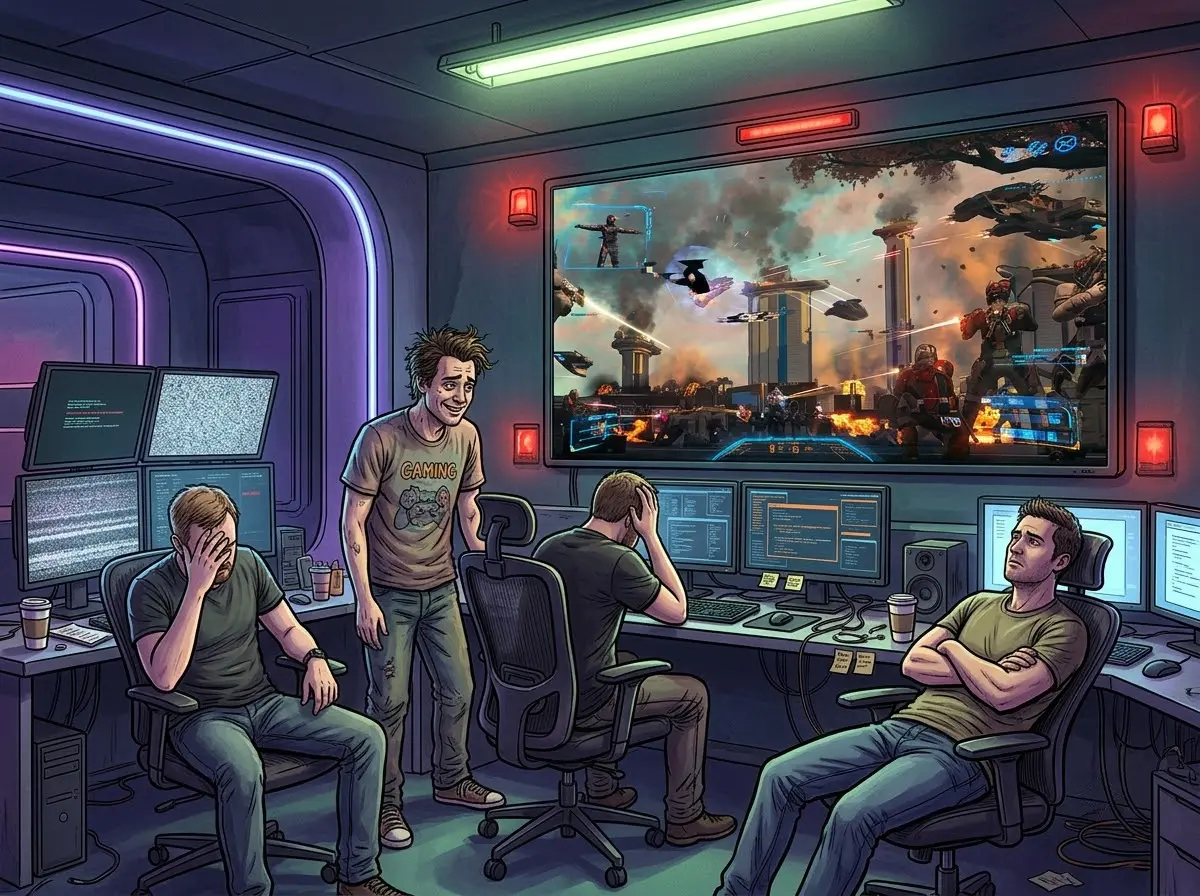
Cloud Imperium Games put four developers on a private internal build of Siege of Orison on August 5 to show players “how it’s supposed to work.” Ninety minutes later the party wiped, one developer told another to kill himself (then added “in game”), and content director Jared Huckaby told the host to wrap the show.
The stream was meant as a morale fix for a mission delayed again into Alpha 4.10. What landed instead was the community’s most unfiltered look at the game’s foundations in months.
That gap between intent and result is what gave the broadcast its weight. A closed build with a tiny party was supposed to remove every usual alibi. It did not. The session instead became a live stress test of design claims that had already slipped once into a later patch.
Four devs, one private server, one wipe
Jared Huckaby opened the official Star Citizen Live VOD by explaining the choice. The public test universe build was a mess, so the team would run the intended design on internal servers with Max, Elliot, Loek and newly hired content manager Olli.
“What we decided to do today is show you the intended design,” Huckaby said. The goal was simple: let players see the mission functioning the way designers wanted before it hit wider testing.
It did not. Framerates dipped. AI stood around. Desync hit hard. Inventory and weapon loops broke. Mission scripting stalled. By the end the encounter locked the group out entirely. After roughly ninety minutes the four wiped. The room went quiet.
Elliot told Olli to kill himself. Awkward laughter followed until he clarified the order was in-game. Huckaby then walked over, announced they were out of time, and delivered the line that closed the broadcast: “It’s your show, wrap it up.” Olli tried to salvage the moment by saying he had fun. His face and voice said otherwise. A few closing words later the stream ended.
The sequence mattered because each failure stacked on the last. Performance issues made combat harder to read. Stuck AI emptied the fight of pressure. Desync turned basic movement into a liability. When the mission then locked after the wipe, the group could not even reset and try again on camera. The demo ran out of both progress and clock at the same time.
Viewers watching the VOD saw that cascade without the usual layer of post-production. There was no cutaway, no second take, and no host monologue long enough to reframe the wipe as a minor hiccup. The silence after the wipe did more of the storytelling than any slide deck could have.
What broke on the closed build
Players who watched the full session and later posted breakdowns on Reddit and the official forums listed the same problems that have dogged Star Citizen for years, now appearing with only four people on a private server.
| Issue observed | Where it hit | Why it stung |
|---|---|---|
| Sub-optimal framerates | Throughout the platforms | No live-server load to blame |
| Inattentive or stuck AI | Nine Tails encounters | Core combat loop for the event |
| Desync and teleporting | Movement and shooting | Private instance still failed |
| Weapon reload loops / inventory bugs | FPS loadouts | Basic loop broken mid-fight |
| Mission lockout after wipe | End of session | Could not even restart cleanly |
One high-engagement post on X summed up the reaction many longtime backers felt: the studio took hundreds of millions and still could not deliver a coherent multicrew mission on its own internal build. The private-server setting killed the usual defense that “it’s just the public servers.”
Each row in that list undercuts a different comfort argument. Framerate trouble on a closed instance weakens the claim that population alone is the culprit. Inattentive Nine Tails undercut the combat fantasy the event exists to sell. Desync inside a private party space weakens the promise that instancing would wall off interference. Broken reload and inventory loops hit the most basic FPS verbs. The final lockout meant the demo could not even model a clean failure and retry.
Taken together, the failures were not exotic edge cases. They sat in the everyday verbs of move, shoot, loot, and restart. That is why the closed-build setting cut so deep. The stream was supposed to isolate the design from live-service noise. What players saw instead was the design still colliding with itself.
Olli’s first big spotlight goes sideways
Olli Hull, better known as Olli43, joined Cloud Imperium in June 2026 as a content manager after years as a popular Star Citizen YouTuber. The hire was sold as a bridge to the community. Putting him on the host chair for this particular demo put that goodwill under immediate pressure.
Viewers noted the interpersonal edge in the room. Elliot’s tone toward Olli drew particular comment. Huckaby’s final instruction landed like a public shanking of the person responsible for the show. Sympathy threads for Olli appeared quickly on Reddit; others called the whole exchange evidence of a strained culture that the stream accidentally put on camera.
The new hire now carries the association of the most-discussed Star Citizen Live in recent memory, for reasons no one wanted.
The optics were harsh in part because the role was meant to signal openness. A familiar community voice in the host chair was supposed to lower the temperature and translate designer intent into plain language. Instead the same chair became the place where the wipe, the joke that needed a clarification, and the early shutoff all landed in public.
None of that requires assuming malice in the room. Live demos are brittle. Four people under performance pressure will sound clipped. Even so, tone travels farther than intent once a clip leaves the studio. The goodwill Olli was hired to carry now has to travel with the VOD attached.
Why this version of Siege of Orison mattered
Siege of Orison first appeared years earlier as a dynamic event on the floating platforms of Crusader. Players fought Nine Tails to retake corporate platforms. It was popular enough that CIG kept returning to it.
The 2026 rebuild moved the event into instanced FPS encounters tied to the new instancing technology. That tech was supposed to give controlled, party-friendly spaces free of persistent-universe interference. Alpha 4.9 prioritized bug fixes and pushed Siege of Orison and instancing into 4.10. The Live stream was the first extended public look at the “intended” version on a closed build.
- 2012-2022: Original dynamic Siege of Orison event cycles in live builds.
- July 2026: Feature and instancing moved from earlier plans into Alpha 4.10 after stability work.
- Late July 2026: Evocati and early PTU waves begin testing the instanced version; reports of animation, party and server issues surface.
- August 5, 2026: Star Citizen Live private-server demo ends in wipe and early shutoff.
- Mid-August 2026: 4.10 still targeting later release while instancing and mission bugs continue to be worked.
The private demo was supposed to prove the new foundation was solid enough to show. Instead it confirmed the same classes of problems still lived in the code even without public-server load.
The rebuild’s pitch was control. Instancing would let designers stage Nine Tails fights without the chaos of a full persistent shard. Party-friendly spaces would keep friends together. The closed build should have been the cleanest possible version of that pitch. When animation, party flow, performance, and mission scripting still failed there, the rebuild’s central claim took the hit, not merely a busy public server.
That is also why the delay path matters. Alpha 4.9 had already absorbed stability work and slid the feature. The Live stream then asked players to trust that the intended design was still worth the wait. Ninety minutes later, the wait looked less like polish time and more like unfinished fundamentals.
How the private instance removed old alibis
For years, public stumbles could be waved away with load, meshing, or population. The August 5 format closed those exits on purpose. Four developers. One internal build. A mission framed as the intended design. When the same bug classes still appeared, the argument shifted from “the live servers are hard” to “the build is not ready to show.”
That shift is mechanical, not emotional. A private instance should reduce contention, simplify replication targets, and limit the number of player-driven edge cases. If framerates still dip, AI still stalls, and desync still warps movement under those conditions, the remaining causes sit closer to content scripting, entity setup, and core combat loops. Players who posted breakdowns were reacting to that narrowed blame window.
- Small party size cut the usual population defense.
- Internal servers cut the public-mesh defense.
- “Intended design” framing cut the “unstable PTU branch” defense.
- Mission lockout after the wipe cut the “at least it recovers cleanly” defense.
The stream did not invent those problems. It removed the scenery that used to hide them. That is why a single failed demo traveled farther than another patch-note apology would have.
The honesty some players actually wanted
Not every reaction was pure salt. One Reddit thread that broke down the bugs also carried a different note: “You accidentally gave the community the most honest look at Star Citizen in months.”
That split ran through the forums and LowSodium communities. Some longtime backers called the stream disheartening after fourteen years of patience. Others said a polished, edited video would have been more dishonest. A few argued the awkward human moments at least felt real.
- Private-server failure removes the “it’s just meshing / population” excuse for many observers.
- Interpersonal tone on stream became its own story, separate from the bugs.
- Some players prefer the unfiltered footage to another carefully cut showcase.
- Fear that CIG will now pull back from live gameplay demos and lean harder on marketing control.
The funding numbers make the stakes plain. Official RSI stats list more than $1.036 billion raised from roughly 6.67 million registered Star Citizens. The project remains the highest-crowdfunded game ever. Ships still sell for thousands of dollars. Squadron 42 continues its own long path. Every public stumble now lands against that ledger.
Honesty, in this framing, is not the same thing as progress. An unfiltered wipe can still be a failed demo. What some backers valued was the absence of a curated highlight reel that would have implied a smoother state than the closed build could sustain. The cost of that honesty is obvious too: trust erodes when the unedited version looks this rough after so much money and time.
| Signal players weighed | How the stream landed |
|---|---|
| Technical readiness | Core loops failed with only four people online |
| Communication style | Unscripted tone became a second controversy |
| Process trust | Delay into 4.10 now reads as unfinished work, not fine-tuning |
| Future visibility | Fear of fewer live gameplay showcases |
What the funding ledger does to every stumble
Crowdfunding at this scale changes the meaning of a bad stream. A studio that has raised more than $1.036 billion from roughly 6.67 million registered accounts cannot treat a wiped internal demo as a small content mishap. The same ledger that funds years of iteration also funds years of scrutiny. Ships selling for thousands of dollars sharpen that scrutiny further. Buyers are not only waiting on features; they are measuring public evidence that those features work.
Squadron 42’s long path sits in the same frame even when the Live show is about the persistent universe. One project’s visible stumble becomes another reminder that schedules slip and vertical slices can still break on camera. The community does not need a new scandal to make that link. The funding total already supplies the contrast.
That contrast is why the “intended design” framing backfired so cleanly. The phrase promised a ceiling of quality above the messy public test universe. The session delivered a floor that looked familiar. Against a nine-figure crowdfunding story, familiarity is not neutral. It reads as unfinished business still unpaid.
What the wipe leaves on the table
Alpha 4.10 is still expected to bring the instanced Siege of Orison to wider testing once the current issues are judged ready. Internal sessions after the Live stream have continued to surface animation, respawn, party-join and performance problems. No one at CIG has issued a formal post-mortem on the August 5 broadcast.
The practical risk some players already name is quieter: if live gameplay showcases keep going this poorly, the studio may decide the safer path is fewer of them. That would cut the one remaining channel that still lets outsiders see the real state of the build.
For now the VOD sits on YouTube. The wipe, the silence, the “in game” clarification and the final “wrap it up” are all still there for anyone who wants the unedited version of how the intended design looked on the day the developers tried to show it.
Until a stabler build appears in wider testing, that recording remains the clearest public reference for what the closed instance could and could not do. The next patch notes may list fixes. The stream already listed the problems in motion, in order, and without a cut.


Shelby’s $42.9 million Daytona Coupe cashes the bet that beat Ferrari

AI forces Apple into third security drop in three weeks

Lamborghini banks 2027 revenue with sold-out Revuelto SV

Apple’s Labor Day Habit Locks iPhone 18 Pro September Dates

Frogwares Ships Sinking City 2 After Years of Air Raids

AirTag 2 Hits Near Lows Just as Travel Season Peaks

McLaren Pop Art F1 GTR Hits $34.6 Million and Resets the Tier

Spotify Playlist Notes Bring Back Liner Notes for Streaming

AirPods Max 2 hit $429 and finally close the value gap

Star Citizen private demo of Siege of Orison still wiped the devs

Spain’s Diaspora-Rooted Squad Wins Over New York Ahead of the Final

Guardians Rout Twins With Seven Homers, Leave Joe Ryan One Shy of Record

Rainout Gives Red Sox Two Shots at a Franchise-Record Win Streak

Caitlin Clark Skips the WNBA 3-Point Contest for a Third Straight Year

Double Fine Cuts 23 Jobs Weeks After Xbox Independence

John Hight Exits Wizards After Digital Reckoning Hits

Day-One Big Walk Lifts PS Plus August Beyond Recycled AAA

Red Sox Squander Hot Streak Chance in 4-3 Loss to Athletics

Curtis Mead’s Red Sox Debut Ends With Fractured Wrist

Moesch and Dressel Rewrite Night One at 2026 U.S. Nationals
-

 TECHNOLOGY3 years ago
How to Adjust a Bulova Watch Band – An Easy Guide
-

 News3 years ago
Fred Pentland: Athletic Bilbao’s English mentor who changed the essence of Spanish football
-

 FINANCE3 years ago
Tax Planning for Every Season: Guide to Maximizing Your Tax Benefits
-

 Education3 years ago
African Ministers New Education Plan
-

 BUSINESS3 years ago
What is Entrepreneurial Operating System? A Comprehensive Guide to EOS
-

 Education3 years ago
Innovate Your Learning Journey with Technology and Enhance Education
-

 News3 years ago
Russians formally out of World Athletics Championships
-

 BUSINESS3 years ago
Top 9 Most Expensive American Cities to Rent an Apartment