
Health
HHS Adds FDA Tech and Drugs Deputies to Lock In AI and Review Power
HHS eyes new FDA deputy roles for technology including AI and for drugs, with Jared Seehafer leading the tech candidate list under nominee Heidi Overton.

The Department of Health and Human Services is planning two new deputy commissioner posts at the Food and Drug Administration, one covering technology and the health-AI intersection and the other focused on drugs, according to sources familiar with the matter. No final decisions or formal announcements have been made. Jared Seehafer, already a senior advisor in the Office of the Commissioner, is the leading candidate for the technology role.
The new posts would report to Heidi Overton, President Donald Trump’s pick for FDA commissioner, once the Senate confirms her.
Two New Deputy Posts Report Straight to the Commissioner
CNBC first reported the plan on August 25, with Reuters confirming the outlines from sources. One deputy would oversee technology, including the agency’s own AI tools and its review of AI-enabled medical products. The other would handle drugs. The agency already fields several deputies, among them an acting deputy for food.
HHS officials would name the new leaders in what some inside the administration see as a way to tighten influence over the FDA. Overton still requires Senate confirmation. HHS did not respond to comment requests.
| Role | Focus | Status / Leading Name |
|---|---|---|
| Deputy Commissioner for Technology | Internal AI ops + AI-enabled products | Planned; Jared Seehafer leading candidate |
| Deputy Commissioner for Drugs | Drug strategy and cross-center work | Planned; no public candidate named |
| Acting Deputy for Food | Human foods program | Existing; permanent unclear after Diamantas shift |
| Commissioner | Overall agency | Heidi Overton nominated; Kyle Diamantas acting |
The structure would sit atop an agency that has already lost thousands of staff and cycled through multiple center directors in 2026.
Direct reporting to the commissioner would place both new deputies outside the traditional center-director chain. That design matters after repeated turnover at CDER and CBER. It also pairs a still-unnamed drugs lead with a technology candidate already working inside the Office of the Commissioner.
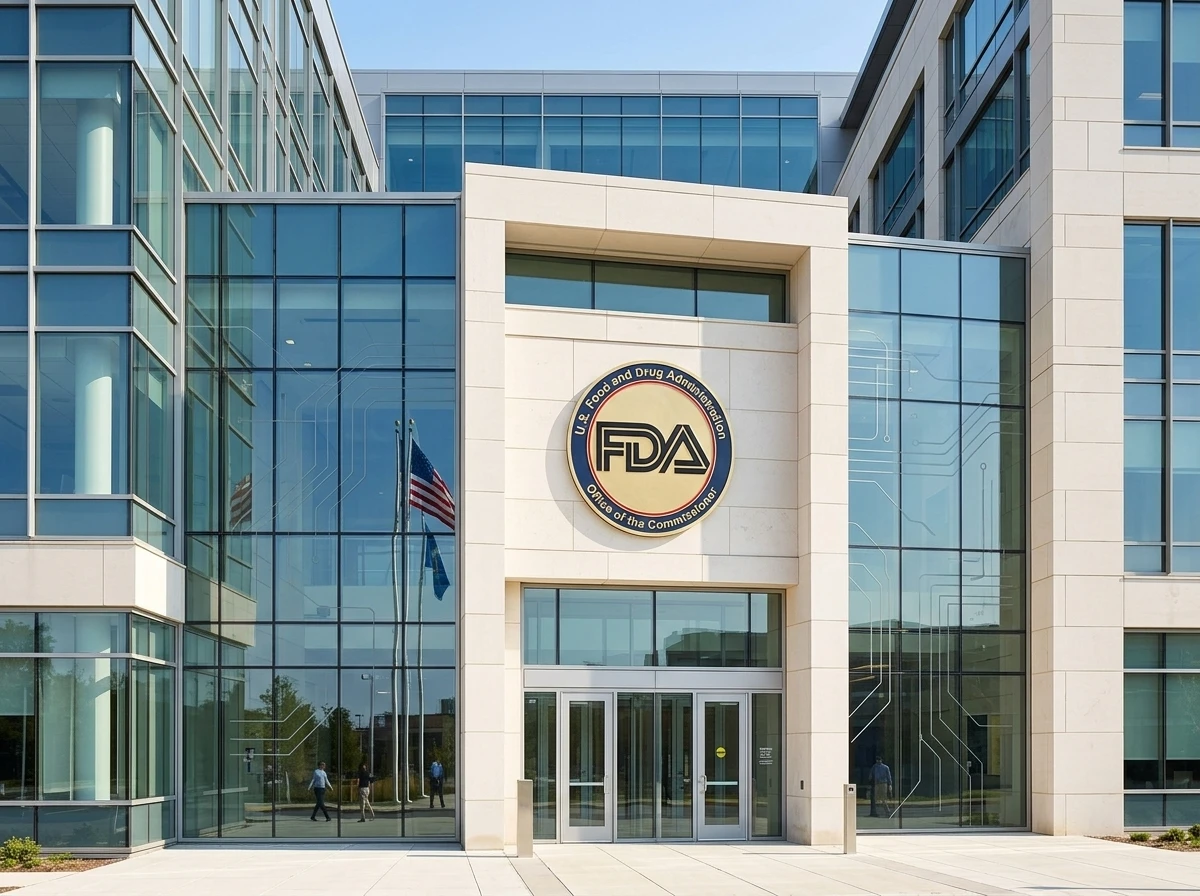
Seehafer’s Path From Enzyme to the Commissioner’s Office
Seehafer co-founded and served as CEO of Enzyme, a Y Combinator-backed life-sciences compliance software firm later acquired by Greenlight Guru. He is a 15-year veteran of medical device regulatory strategy, with prior roles leading spinal-cord stimulator programs at St. Jude Neuromodulation (now Abbott), UI/UX work on Medtronic’s first hybrid closed-loop insulin pump, and regulatory submissions for Amgen combination products including Neulasta Onpro and Repatha Pushtronex.
- MS in Medical Device Engineering, University of Southern California
- BA in Molecular Biology
- RAPS Regulatory Affairs Certification (RAC)
- Represented more than two dozen companies before the FDA and foreign regulators while at Enzyme
- Joined FDA as Senior Advisor, Office of the Commissioner, in 2025 after the Enzyme exit
He has publicly described his professional aim as speeding time-to-market for innovative medical technology without compromising safety. Colleagues on X noted he has already taken a lead on the agency’s AI efforts since arriving. No specific candidate has surfaced for the drugs deputy post.
The same résumé that spans device hardware, combination-product filings, and compliance software also tracks the dual brief the technology post would carry. Internal tooling and external AI-enabled product review both reward someone who has sat on the sponsor side of submissions and later built software meant to ease them.
Overton Steps In After Makary’s Exit and Heavy Staff Losses
Trump named Overton, currently deputy director of the White House Domestic Policy Council, on August 18-19. She is a physician with an MD from the University of New Mexico (2015) and a PhD in clinical investigation from Johns Hopkins. She previously directed health policy at the America First Policy Institute and served as a White House fellow in the first Trump term. Trump called her a “ROCKSTAR” who works with HHS Secretary Robert F. Kennedy Jr. on the Make America Healthy Again agenda.
Marty Makary resigned as commissioner in May 2026 after 13 months, following clashes over flavored vapes, an abortion-pill safety study, and high-profile drug reviews. Kyle Diamantas, previously deputy commissioner for food, has served as acting commissioner since then. He is the first lawyer in the role. Multiple reports put net staff losses above 3,000 positions across 2025-2026, with center leadership turning over repeatedly.
- May 2026: Makary resigns; Diamantas becomes acting commissioner
- May 2026: Further center-director departures at CDER and CBER
- August 18, 2026: FDA issues GenAI medical-device discussion paper
- August 18-19, 2026: Trump nominates Overton
- August 25, 2026: CNBC reports planned new deputy roles
Recent product decisions have kept the agency in the spotlight: accelerated approval for Replimune’s melanoma drug Tudriqev after earlier rejections, a later reversal allowing UniQure to file for accelerated approval on its Huntington’s treatment after first demanding a sham-surgery trial, and a three-month review extension for Capricor’s Duchenne muscular dystrophy candidate after an advisory committee voted 9-3 against approval.
| Product | Sponsor area | Agency move |
|---|---|---|
| Tudriqev | Melanoma | Accelerated approval after earlier rejections |
| UniQure Huntington’s candidate | Rare neurology | Reversal allowing accelerated-approval filing |
| Capricor DMD candidate | Rare muscle disease | Three-month extension after 9-3 advisory vote against |
Those files landed while the agency was already short of experienced reviewers and cycling center directors. The pattern helps explain why a dedicated drugs deputy, reporting straight to the commissioner, is under discussion now rather than later.
The Technology Deputy Owns Both Internal AI and Product Review
The new technology deputy would oversee the FDA’s internal use of AI and its evaluation of AI-enabled medical products. The agency has already expanded Elsa, its generative AI tool for staff tasks such as document summarization and drafting. In May 2026 it launched Elsa 4.0 with custom agents, quantitative analysis, secure web search, and OCR, while consolidating more than 40 data sources into the HALO platform.
- Elsa 4.0: Available to all staff; adds voice-to-text, chart creation, custom agents
- HALO: Single platform replacing 40+ application and submission systems
- GenAI paper: Released August 18; comments due October 19, 2026
Last week the FDA released a discussion paper on generative AI devices. Acting Commissioner Kyle Diamantas said artificial intelligence is transforming medicine and that the United States must lead in shaping how the technology is developed and used safely. CDRH Director Michelle Tarver called for a regulatory approach that keeps pace with digital health innovation. The paper itself outlines a possible two-axis risk framework and competency assessment modeled loosely on physician training, plus postmarket monitoring options for foundation models and agentic systems. It is discussion only, not draft guidance, and solicits public input under docket FDA-2026-N-7874.
Artificial intelligence is transforming medicine, and the United States must lead in shaping how this technology is developed and used safely and responsibly.
Kyle Diamantas, Acting FDA Commissioner, August 18, 2026 FDA announcement
Seehafer’s industry background in regulatory software and device submissions positions him to connect the internal modernization track with external product review.
The comment window on the GenAI paper runs into mid-October. Whoever holds the technology deputy title by then would inherit both the public docket and the staff tools already rolling out under Elsa and HALO. That overlap is the practical case for one official covering both lanes.
What the Drugs Deputy Would Confront
The drugs deputy would sit at the center of cross-center strategy after a stretch of reversals and extensions. Crowd discussion on X immediately flagged the post’s potential reach over compounded drugs, GLP-1s and peptides. The role could also absorb some of the coordination load that previously fell to center directors who have left.
Diamantas, while acting, has overseen course changes on several rare-disease and oncology files. The permanent drugs deputy would inherit that portfolio under Overton and report alongside the technology counterpart. Food leadership remains fluid after Diamantas moved up; an acting food deputy already exists.
Industry voices on X described dedicated deputies for technology and drugs as a practical response to the agency’s scope. One longtime regulatory-affairs observer called the split a “no-brainer” given AI expansion and the need for strategic drug coordination.
Because no leading name has been floated for the drugs post, the vacancy itself shapes early expectations. Sponsors watching compounded drugs, GLP-1s, and peptides will parse any eventual pick for signals on enforcement posture and review speed. The technology lane already has a front-runner; the drugs lane does not.
Staffing Reality and the Confirmation Clock
Any new structure will operate with fewer experienced reviewers than two years ago. Reports of rehiring efforts exist, yet institutional knowledge left with the departures. Overton’s confirmation hearing will test how senators view her limited large-organization management experience and her prior writings on abortion medication and pediatric gender care. She has been deeply involved in the administration’s recent executive order on childhood vaccine schedules.
The two new deputies are designed to report directly to her once confirmed. That reporting line, combined with Seehafer’s existing AI lead role, would give the incoming commissioner ready levers on both the agency’s internal tooling and the external product pipeline.
For now the plan remains informal. Sources emphasize that nothing is final. The next concrete steps are Overton’s Senate process and any formal HHS or FDA announcement of the new titles and names.
Recent File Reversals Raise the Stakes for Drugs Leadership
The three high-profile files already in public view show why cross-center drug coordination has become a live management issue. Accelerated approval for Tudriqev followed earlier rejections. UniQure won a path to file after the agency first insisted on a sham-surgery trial. Capricor’s candidate drew a three-month extension once advisors voted 9-3 against approval.
Each decision required judgment that cut across oncology, neurology, and rare-disease review cultures. With CDER and CBER directors departing in the same season, that judgment has concentrated higher in the building. A drugs deputy reporting to the commissioner would formalize a channel that acting leadership has already been forced to use.
- Replimune’s Tudriqev: earlier rejection, then accelerated approval
- UniQure’s Huntington’s program: sham-surgery demand dropped, filing path opened
- Capricor’s DMD candidate: advisory no-vote, then multi-month extension
None of those outcomes alone creates a deputy post. Together with staff losses above 3,000 and repeated center-director turnover, they supply the operational backdrop HHS officials are weighing.
Confirmation Timing Will Decide When the Posts Lock In
Overton’s nomination landed on August 18-19, the same window as the GenAI discussion paper. CNBC’s report on the deputy plan followed six days later. The sequence leaves the new titles dependent on a confirmation that has not yet begun in public hearings.
Until the Senate acts, Diamantas remains the public face of both the AI paper and the rare-disease file shifts. The agency site still carries his acting-commissioner profile. Seehafer can keep leading AI work as a senior advisor, yet the formal technology deputy title waits on Overton’s arrival.
Senators are expected to press her management depth, her writings on abortion medication and pediatric gender care, and her role in the childhood vaccine schedule order. Those threads sit outside the deputy-structure question, yet they control the calendar for it. A prolonged confirmation keeps both posts informal; a swift one lets HHS name names while the GenAI comment period is still open.
The acting commissioner Kyle Diamantas profile on the agency site still lists him in the top seat while the White House waits on confirmation.


Iowa Farmer Built Resilience for 16 Years Then Tariffs Hit Hard

HHS Adds FDA Tech and Drugs Deputies to Lock In AI and Review Power

Nvidia Earnings Carry a Built-In Sell-the-News Trap

HP Licenses Huawei Wi-Fi Patents Despite the Entity List

Poland Named in $131B F-15 Deal Echoes Apache Path

Sewer Scavengers Near Penn Station Repeat a Decades-Old NYC Pattern

Second Muni Fatigue Crash Exposes Surface Line Gaps

Chick-fil-A Chicken and Waffles Closes Its 80-Year Loop

Musk Data Centers Leave a Mississippi Family’s Historic Land Empty

OpenAI Data Center Chief Exits as Stargate Strategy Shifts

Double Fine Cuts 23 Jobs Weeks After Xbox Independence

Day-One Big Walk Lifts PS Plus August Beyond Recycled AAA

John Hight Exits Wizards After Digital Reckoning Hits

Curtis Mead’s Red Sox Debut Ends With Fractured Wrist

Moesch and Dressel Rewrite Night One at 2026 U.S. Nationals

Red Sox Squander Hot Streak Chance in 4-3 Loss to Athletics

Boutte’s Quiet Camp Takeover Forces Patriots Receiver Choices

Take-Two CEO Pushes Netflix Subs for GTA 6 Extended Look

Halo Campaign Evolved Skulls Meet Death Barriers That Kill the Hunt

Wildlands Free Update Hands Players the Tools They Already Invented
-

 TECHNOLOGY3 years ago
How to Adjust a Bulova Watch Band – An Easy Guide
-

 News3 years ago
Fred Pentland: Athletic Bilbao’s English mentor who changed the essence of Spanish football
-

 FINANCE3 years ago
Tax Planning for Every Season: Guide to Maximizing Your Tax Benefits
-

 Education3 years ago
African Ministers New Education Plan
-

 BUSINESS3 years ago
What is Entrepreneurial Operating System? A Comprehensive Guide to EOS
-

 Education3 years ago
Innovate Your Learning Journey with Technology and Enhance Education
-

 News3 years ago
Russians formally out of World Athletics Championships
-

 BUSINESS3 years ago
Top 9 Most Expensive American Cities to Rent an Apartment