
News
Second Muni Fatigue Crash Exposes Surface Line Gaps
Video shows a San Francisco Muni driver nodding off before a July 31 L-Taraval rear-end crash, the second fatigue case in under a year on unprotected surface tracks.

Onboard video released this week shows a San Francisco Muni operator appearing to nod off for roughly 20 seconds before his L-Taraval light rail vehicle rear-ended another train near the Zoo on July 31. The San Francisco Municipal Transportation Agency said its initial determination is operator error caused by fatigue. No one was injured.
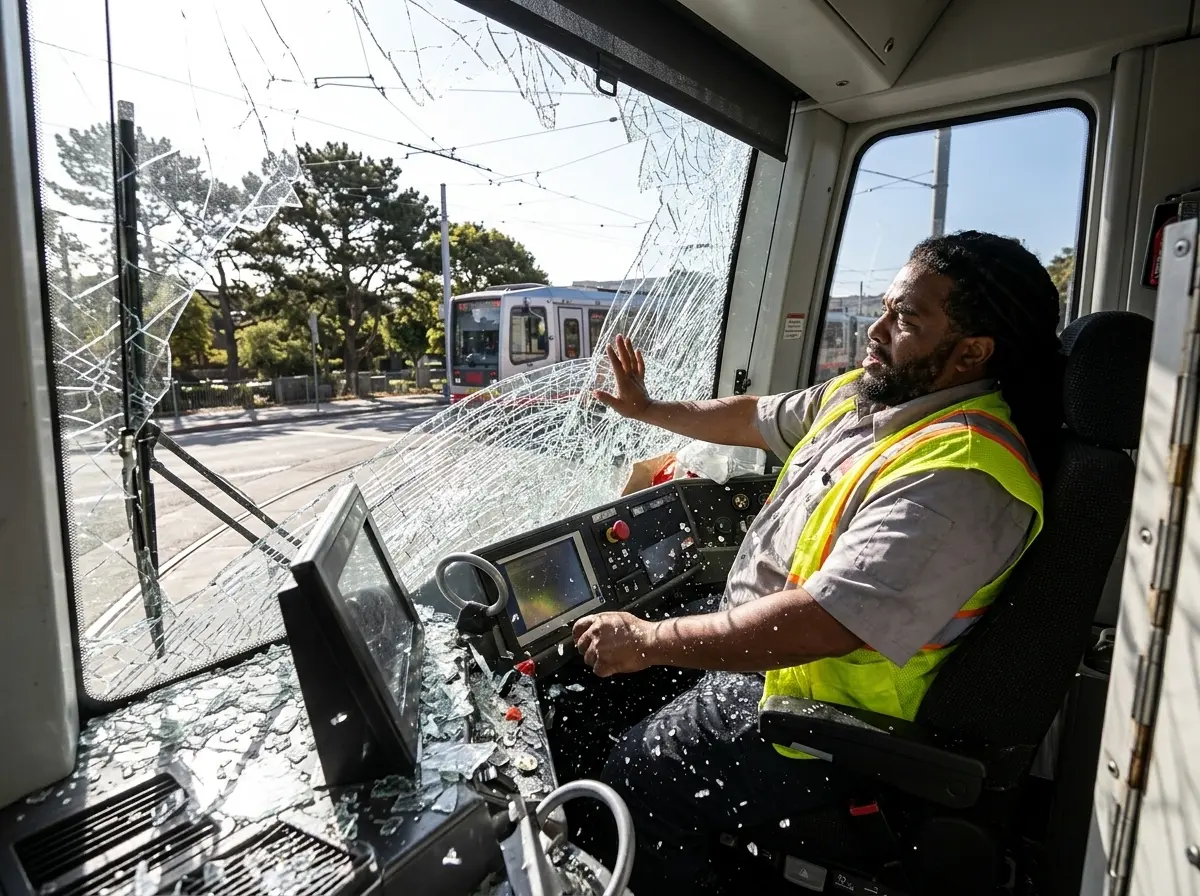
The footage, first obtained by NorCal Bodycam and shared with local outlets, captures the driver scratching his head, then letting his hand drop as the train rolls forward. He jolts awake at impact. The crash shattered the front windshield around 8:30 a.m. near 47th Avenue and Wawona Street.
The Crash Caught on Camera Near the Zoo
Both trains were on the L-Taraval terminal loop, where cars layover and turn between runs. SFMTA and fire officials initially described the consists as empty of passengers. Later accounts from NBC Bay Area and CBS San Francisco reported two passengers aboard the striking train who exited after it stopped. The agency stated no injuries occurred.
SFMTA Director of Transportation Julie Kirschbaum called the event unacceptable in a statement. Vehicle and infrastructure problems have been ruled out. The formal investigation continues with the California Public Utilities Commission. The operator is on non-driving status.
The L Taraval collision delay summary lists a westbound service switchback at Sunset Boulevard from 8:37 to 11:35 a.m. that morning, with bus shuttles filling the gap.
- Time and place: ~8:30 a.m. July 31, 47th Ave and Wawona St, Outer Parkside
- Trains: Two L-Taraval light rail vehicles in the terminal loop
- Outcome: Windshield shattered, operator non-driving, no reported injuries
- Cause (initial): Operator fatigue after equipment ruled out
SFMTA Points to Fatigue and Adds Rest Time
Kirschbaum’s statement framed passenger and operator safety as the top priority and promised swift action once the probe ends. The agency said it has already increased random video reviews of operations and allocated additional rest time on all operator shifts.
This type of incident is simply unacceptable. While the formal investigation of the collision is ongoing, vehicle and infrastructure issues have been ruled out, and the initial determination for the incident is operator error caused by fatigue.
Julie Kirschbaum, SFMTA Director of Transportation
Staff also receive routine training and the fatigue-awareness campaigns that began after the earlier case. Riders interviewed locally voiced concern about tight shifts. One passenger, Peter Dignadice, said drivers can get tired under those conditions. District 4 Supervisor Alan Wong called the crash unacceptable yet described it as a limited incident while seeking clarity on whether it is isolated or systemic.
Last September the Same Fatigue Warning Flashed
This was the second time in less than a year that onboard cameras caught a Muni operator appearing to doze at the controls. On Sept. 24, 2025, an N-Judah train exited the Sunset Tunnel, accelerated to nearly 50 mph through a curve, blew a stop at Duboce Avenue and Noe Street, then stopped abruptly. Passengers were thrown forward or out of seats. One report cited a concussion.
SFMTA’s investigation then also landed on operator fatigue. The driver went to non-driving status. The agency launched a fatigue-awareness education campaign and began talks with Siemens, the light-rail vehicle maker, on software that could limit speeds at specific curves. Average Muni light-rail speeds sit far lower, in the 8-to-10 mph range on many segments.
| Incident | Date | Line and location | Speed or impact | Passengers / outcome | Agency finding |
|---|---|---|---|---|---|
| N-Judah high-speed run | Sept. 24, 2025 | Sunset Tunnel exit to Duboce | ~50 mph, overshot stop | Crowded morning train; riders thrown, one concussion report | Operator fatigue |
| L-Taraval rear-end | July 31, 2026 | 47th Ave / Wawona loop near Zoo | Rear collision, windshield shattered | Two passengers or empty (accounts differ); no injuries | Operator fatigue (initial) |
The education push and software exploration did not stop the second camera-documented case nine months later.
Surface Tracks Run Without Automatic Brakes
Muni Metro uses automated train control underground to manage speed and spacing. Surface segments such as the L-Taraval loop rely on manual operation and physical deadman switches. When an operator loses alertness there, no automated system slows or stops the train.
Hoodline reporting on the July crash and operating guidelines notes that surface segments lack automatic backstops. Whether speed-cap software or collision-avoidance tools will reach terminal loops and other street-running stretches remains open. A 2022 Embarcadero rear-end involving passenger trains injured seven and sent five to hospitals, showing surface collisions are not new.
The L-Taraval itself only returned to full service in September 2024 after a five-year track and overhead overhaul. The empty or lightly loaded layover cars involved in July were following the normal Vicente-47th-Wawona-46th turnaround path.
Hours Caps and the Unfinished CPUC Review
California Public Utilities Commission rules limit light-rail operators in safety-sensitive roles to 12 consecutive hours, or 12 hours inside a 16-hour spread, with at least eight consecutive off-duty hours before a shift. After the September N-Judah event the CPUC opened a formal review of SFMTA fatigue-management policies to check whether scheduling problems were systemic.
A 2013 municipal audit had already flagged chronic operator shortages and high absenteeism that forced heavy use of unscheduled overtime and raised fatigue concerns inside the agency. Later reporting noted many operators commute long distances from outside San Francisco after being priced out of the city; some described sleeping in cars rather than driving home exhausted. The drivers’ union has pushed for higher pay and rest facilities.
Industry baseline exists in the APTA fatigue management program standard, which sets requirements for rail agencies to reduce fatigue-related impairment through policies, monitoring and fitness-for-duty measures. SFMTA’s added random video checks and rest-time allocations sit inside that broader frame, yet the second incident arrived while the CPUC review was still open.
Crowd reaction on X treated the education campaign as insufficient once video of the July crash circulated. Commenters pointed to the pattern itself and questioned whether awareness training alone can close gaps on manual surface lines.
Voters Face a Muni Tax Vote After Two Sleep Incidents
The timing lands as San Francisco voters prepare to decide a November parcel-tax measure meant to shore up Muni operations. The Stronger Muni for All proposal would levy annual charges based on property type and square footage, starting at $129 for most single-family homes under 3,000 square feet, $249 for multifamily bases, and $799 for non-residential, with add-ons for larger buildings and inflation adjustments through 2042. Revenue estimates run about $150 million a year for service, aimed at a multi-hundred-million-dollar structural deficit.
Official ballot materials outline the proposed parcel tax rates and terms. Supporters including Mayor Daniel Lurie argue dedicated funding prevents service cuts that would hit working families and clog streets. Critics say operating costs have risen even as trips fell and call for efficiency fixes first.
Two fatigue videos in under a year supply fresh safety questions for that debate. SFMTA continues its probe and the added rest and review steps. The operator remains off driving duty. Surface automation questions and the CPUC process stay unresolved.
The July 31 crash produced shattered glass and a service delay but no injuries. The pattern that produced it is now on the public record twice.


Iowa Farmer Built Resilience for 16 Years Then Tariffs Hit Hard

HHS Adds FDA Tech and Drugs Deputies to Lock In AI and Review Power

Nvidia Earnings Carry a Built-In Sell-the-News Trap

HP Licenses Huawei Wi-Fi Patents Despite the Entity List

Poland Named in $131B F-15 Deal Echoes Apache Path

Sewer Scavengers Near Penn Station Repeat a Decades-Old NYC Pattern

Second Muni Fatigue Crash Exposes Surface Line Gaps

Chick-fil-A Chicken and Waffles Closes Its 80-Year Loop

Musk Data Centers Leave a Mississippi Family’s Historic Land Empty

OpenAI Data Center Chief Exits as Stargate Strategy Shifts

Double Fine Cuts 23 Jobs Weeks After Xbox Independence

Day-One Big Walk Lifts PS Plus August Beyond Recycled AAA

John Hight Exits Wizards After Digital Reckoning Hits

Curtis Mead’s Red Sox Debut Ends With Fractured Wrist

Moesch and Dressel Rewrite Night One at 2026 U.S. Nationals

Red Sox Squander Hot Streak Chance in 4-3 Loss to Athletics

Boutte’s Quiet Camp Takeover Forces Patriots Receiver Choices

Take-Two CEO Pushes Netflix Subs for GTA 6 Extended Look

Halo Campaign Evolved Skulls Meet Death Barriers That Kill the Hunt

Wildlands Free Update Hands Players the Tools They Already Invented
-

 TECHNOLOGY3 years ago
How to Adjust a Bulova Watch Band – An Easy Guide
-

 News3 years ago
Fred Pentland: Athletic Bilbao’s English mentor who changed the essence of Spanish football
-

 FINANCE3 years ago
Tax Planning for Every Season: Guide to Maximizing Your Tax Benefits
-

 Education3 years ago
African Ministers New Education Plan
-

 BUSINESS3 years ago
What is Entrepreneurial Operating System? A Comprehensive Guide to EOS
-

 Education3 years ago
Innovate Your Learning Journey with Technology and Enhance Education
-

 News3 years ago
Russians formally out of World Athletics Championships
-

 BUSINESS3 years ago
Top 9 Most Expensive American Cities to Rent an Apartment