
AUTOMOBILE
India’s E85 Ethanol Launch Runs on a Hormuz Emergency
India launched E85 ethanol fuel at 48 stations on World Environment Day, three months into the Hormuz closure that stripped over 40% of its crude oil supply.

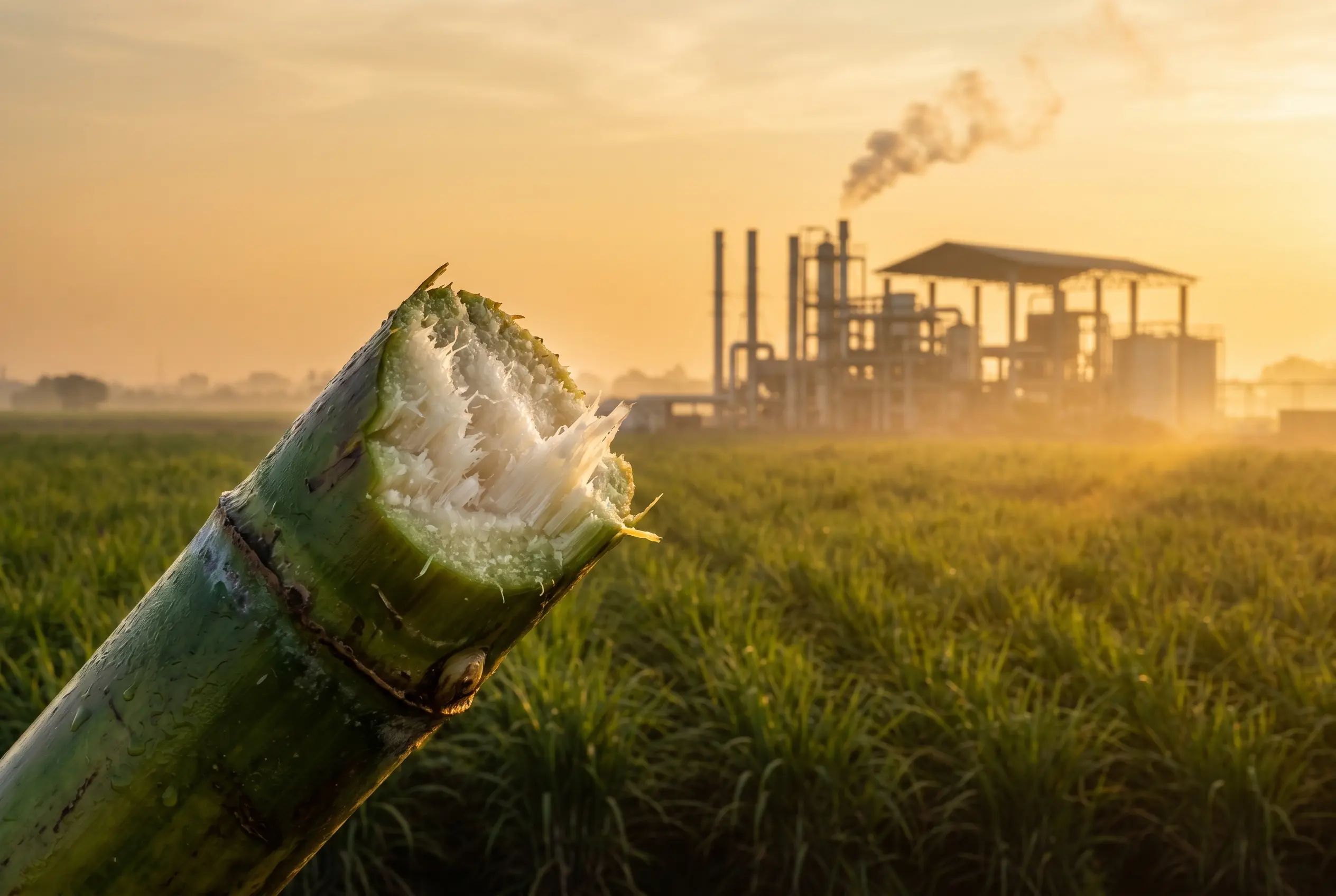
India launched its E85 ethanol fuel (an 85% ethanol blend for flex-fuel vehicles) at 48 state-owned pumps on World Environment Day, June 5, 2026, with Petroleum Minister Hardeep Singh Puri describing it as a domestic substitute for crude that the Strait of Hormuz closure has been cutting off since late February. The country imports 88% of its crude oil, and roughly half of that volume once arrived through the strait.
Maruti Suzuki’s WagonR, introduced the same week as India’s first E85-compatible passenger car, and Hero MotoCorp’s debut flex-fuel motorcycle gave the program its first consumer vehicles.
Why the Strait of Hormuz Made This Moment
On February 28, 2026, US and Israeli airstrikes on Iran triggered the closure of the Strait of Hormuz, through which roughly 20% of the world’s seaborne oil had flowed. Tanker traffic collapsed to below 10% of normal capacity within weeks; Fatih Birol, chief of the International Energy Agency (IEA), described the result as “the largest supply disruption in the history of the global oil market.” Analysis by the Observer Research Foundation (ORF), a New Delhi policy think tank, traced how over 60% of India’s household liquefied petroleum gas (LPG) is imported, with 90% of those imports transiting the strait. Cooking-gas depots faced queues within days; households in some districts switched to kerosene and wood as stopgaps.
The government responded with a cluster of emergency measures: excise duty cuts on motor fuels, a Natural Gas Control Order rationing industrial supply, directions to state refiners to maximize LPG output and redirect cooking gas from industrial to household users, and bilateral negotiations with Iran for safe passage of Indian-flagged vessels. Indian refiners simultaneously boosted purchases of Russian crude, which does not transit the strait, to record highs under available US waivers.
None of those measures restored the lost volume. India had lost over 40% of its crude flows since the conflict began, and oil marketing companies (OMCs) were absorbing the gap between import costs and pump prices the government held artificially low, bleeding up to Rs 1,000 crore a day. By early June, OMCs had raised fuel prices four times in under a month, the first increases after a two-month freeze, and were still underwater. BMI, a Fitch Ratings unit, revised India’s GDP growth forecast to 6.7% for fiscal 2026/2027, down from 7.7% the prior year. The rupee fell to an all-time low against the dollar, and foreign investors pulled more than $20 billion from Indian equities in the first four months of 2026, already surpassing the full-year record. The Dallas Federal Reserve Bank estimated the Hormuz closure would lower global real GDP growth by an annualized 2.9 percentage points in Q2 2026.
The ethanol program offers the one thing emergency crude purchases from Russia cannot: fuel that never needed a sea lane.
What Got Launched on World Environment Day
E85 is being sold simultaneously as an environmental milestone and a supply-security hedge. NITI Aayog, the government’s planning body, formally classifies flex-fuel vehicles (FFVs) running on high ethanol blends including E85 as Zero-Emission Vehicles (ZEVs), aligning the program with India’s climate commitments. The environmental performance claim is specific: E85 produced from fully domestic feedstock can reduce greenhouse gas (GHG) emissions by up to 61% compared with conventional petrol and generates near-zero particulate matter.
Both the WagonR flex-fuel and the Hero MotoCorp motorcycle can run on any blend from E20 to E100, so an FFV driver filling up at an ordinary station during periods when E85 is unavailable loses no functionality. Both manufacturers have been working under regulatory expectations that automakers develop FFV variants as the government scales blending targets.
The blending program’s numbers heading into the E85 launch:
- 20% current ethanol blending rate in petrol, achieved five years ahead of schedule, up from 1.53% in 2014
- Rs 1.84 lakh crore in foreign exchange saved by the blending program since 2014
- 302 lakh metric tonnes of crude oil imports displaced by ethanol blending to date
- Rs 20 per litre expected price advantage of E85 over conventional petrol
The 20% milestone arrived five years ahead of India’s original blending schedule. The next government target, 26% by 2030-31, runs alongside the new E85 FFV track, adding a second demand channel on top of the existing blending mandate.
The Rs 20 Gap and What It Depends On
Consumer economics is the program’s practical lever. At roughly Rs 20 per litre below conventional petrol, E85 creates an incentive for FFV buyers and, at that discount, lets owners recover the marginally higher vehicle cost within a reasonable number of fill-ups, according to government-cited studies. Puri stated at the launch that “consumer economics is the most important factor,” citing data suggesting FFV owners can reach cost parity with conventional-vehicle owners quickly if E85 pricing holds.
In the beginning, we will have about 50-100 dispensing station outlets in Delhi-NCR, Mumbai, Pune, and Nagpur corridor. These will expand to 500 by December this year, and approximately, God willing, to 5,000 outlets across major cities by end of next year.
Puri made those remarks at the Maruti Suzuki WagonR launch earlier in the week.
That Rs 20 differential isn’t fixed. The government sets purchase prices for domestic ethanol based on feedstock type: sugarcane-derived, grain-derived, and rice-derived ethanol each carry separate floor prices, tied to commodity availability and crop-year procurement decisions. If global crude prices fall significantly as the Middle East conflict eventually eases, the margin between E85 and petrol narrows, potentially at the moment the program most needs consumer adoption to have built momentum.
Bureau of Indian Standards (BIS) has established E85 as the monofuel specification for flex-fuel vehicles, giving the automotive and petroleum sectors a fixed technical standard to engineer toward rather than a moving blend target. That single specification is the scaffolding the rollout requires.
Farmers as India’s New Energy Suppliers
The minister’s description of Indian farmers shifting from “Annadatas” (food providers) to “Urjadatas” (energy providers) matches a shift in agricultural economics already underway. India’s ethanol supply chain has moved well beyond its sugarcane base, and the transition has reshaped crop economics across the country’s northern heartland.
Maize didn’t feature as an ethanol feedstock until supply year 2021-22. By 2023-24, maize-based ethanol output had surged to 2.86 billion litres, a ninefold increase, accounting for 42% of India’s total ethanol production that year. The government accelerated the shift through five-year supply contracts with cooperative procurement bodies, giving corn farmers a guaranteed industrial buyer alongside their traditional feed and starch markets.
How the three main feedstocks compare on conversion efficiency:
| Feedstock | Ethanol Yield | Supply Pathway |
|---|---|---|
| Broken rice / FCI rice | ~420 litres per tonne | Food Corporation of India (FCI) surplus stocks |
| Maize (corn) | ~380 litres per tonne | Open market and MSP procurement contracts |
| Sugar syrup (sugarcane) | 300-320 litres per tonne | Sugar mills, integrated with sugar production |
The US Department of Agriculture’s (USDA) India biofuels market analysis puts the country’s installed distillery capacity approaching 22 billion litres by 2026, with utilization rates running between 55 and 72%. Sugarcane remains the preferred overall feedstock: mills can generate ethanol as a byproduct of sugar operations using molasses and bagasse without abandoning their core sugar business.
Government officials project that if half of all new two-wheelers and four-wheelers become FFV-compliant, annual ethanol demand rises by 400 crore litres. On current distillery capacity figures, the sector can absorb that demand without new construction, assuming feedstock supply is consistent, which it hasn’t always been.
The Feed-Water Tension
Moving from 20% blending toward 26% by 2030-31, while simultaneously feeding an E85 channel on top, requires ethanol volumes that no single feedstock can consistently supply. The constraints that complicated the E20 program compound at higher targets.
Water Intensity and Fertilizer Pressure
Rice-based ethanol production consumes approximately 10,790 litres of water per litre of output when cultivation is included. That figure sits uncomfortably against an agricultural system already dealing with groundwater stress in many of India’s major cities. The same conflict driving India’s ethanol push has also curtailed fertilizer exports from the Gulf region, which accounts for 30-35% of global urea trade; India ranks among the top recipients of that supply. Rising fertilizer input costs add directly to the expense of growing the sugarcane and maize the ethanol program depends on.
Key supply-side constraints the program has already navigated once and will face again at higher volumes:
- Sugarcane diversion to ethanol was restricted during 2022-23 and 2023-24 when tight domestic sugar stocks prompted government intervention; distilleries shifted sharply toward grain inputs both seasons
- Government-stockpiled rice available for ethanol remains quantity-capped, with caps reviewed per procurement cycle to protect the public distribution system
- Maize acreage expanded so aggressively in response to procurement incentives that farm-gate prices in some districts fell to roughly half the minimum support price (MSP), squeezing the farmer incomes the program was designed to strengthen
The Khandsari Battle
The draft Sugarcane (Control) Order, 2026 is reshaping the rural supply chain in ways the government has not prominently publicized. The order brings khandsari units, the small-scale traditional raw-sugar makers concentrated in Uttar Pradesh, under the same regulatory framework and Fair and Remunerative Price (FRP) minimum requirements as large integrated sugar mills. Khandsari operators argue the FRP floor is financially unworkable for them, since their sugar-recovery rates run lower than those of large mills. Farmer organizations in western Uttar Pradesh have been protesting. The order’s practical effect is a further consolidation of the cane supply chain toward large mill-distillery complexes that can produce both sugar and ethanol at industrial scale, which is the producer profile the government needs onside for the blending targets it is attempting.
From 48 Pumps to 5,000
Today’s 48 E85 outlets sit in the metros where FFVs will sell first and political visibility is highest: Delhi-NCR, Mumbai, Pune, and Nagpur. The government targets 500 by December 2026 and 5,000 across major cities by December 2027. Smaller towns and tier-3 markets follow if the metro phase delivers.
Brazil’s flex-fuel vehicle program took the better part of two decades to establish the network and consumer habit that makes it work today. India is compressing that timeline at a moment when a supply emergency has provided political cover for the investment. Both debut vehicles are the program’s first commercial entries; the larger auto industry is watching their sales numbers before committing to its own FFV rollout. Other manufacturers face the same calculation: the economics of an FFV line only close once E85 availability is predictable enough to sustain a consumer base.
At December’s 500-pump mark, E85 gets its first honest throughput data.





Judge Strips Google’s Last App Store Friction After Epic Demo

Fold 8 Success Makes Its Dusty Hinge Costlier Than Ever

Silver Lake Workday Talks Test PE Appetite for AI-Hit Software

Wholesale Prices Flat but Wage Lag Keeps Households Squeezed

Teen E-Motos Draw Hells Angels Label and Risk Legal Ebike Gains

Apple’s Siri Pay-Per-Use Plan Rewrites News Licensing Rules

Cramer Calls Cisco Plunge a Buy as AI Orders Surge

Play Points Platinum Quietly Cuts Pixel 11 Prices Again

Quincy Gas Station Sold the $1.04 Billion Powerball Ticket

Microsoft Scraps Failed Copilot Features in Forced App Merge

ZA/UM Lays Off 32 Staff as Zero Parades Wins Reviews, Not Players

EA’s New In-Game Ad Platform Skips the Games That Need It Most

Mortgage Rates Climb to 6.55%, the Highest Level in Nearly a Year

Colby Covington Stuns Tsarukyan as Askren Retires in Tears at RAF 11

Netflix Heads Into Earnings With Its 2022 Playbook Already Spent

Spain’s Diaspora-Rooted Squad Wins Over New York Ahead of the Final

NHL’s Monday Matinee Push Puts Capitals Fans on the Clock

DeChambeau’s Two-Shot Penalty Rewrites the Open’s Weekend Draw

Guardians Rout Twins With Seven Homers, Leave Joe Ryan One Shy of Record

England Beats France 6-4 to Claim World Cup Bronze Medal
-

 TECHNOLOGY3 years ago
How to Adjust a Bulova Watch Band – An Easy Guide
-

 News3 years ago
Fred Pentland: Athletic Bilbao’s English mentor who changed the essence of Spanish football
-

 FINANCE3 years ago
Tax Planning for Every Season: Guide to Maximizing Your Tax Benefits
-

 Education3 years ago
African Ministers New Education Plan
-

 BUSINESS3 years ago
What is Entrepreneurial Operating System? A Comprehensive Guide to EOS
-

 Education3 years ago
Innovate Your Learning Journey with Technology and Enhance Education
-

 News3 years ago
Russians formally out of World Athletics Championships
-

 BUSINESS3 years ago
Top 9 Most Expensive American Cities to Rent an Apartment