
News
iPhone 18 Pro’s Price Hike Is Collateral in an AI Chip War
Apple’s iPhone 18 Pro may cost $300 more this fall as DRAM prices triple, the same AI-driven chip crunch that just handed SK Hynix record profits.

Apple’s iPhone 18 Pro will almost certainly cost more this September, and the reason has little to do with new features. The DRAM chip inside every iPhone 17 Pro costs Apple about $39 today. The equivalent part for the iPhone 18 Pro could run $145, according to Wall Street Journal reporting and estimates from research firm TechInsights.
That climb, nearly fourfold on a single component, has nothing to do with Apple’s design choices. It traces back to a global memory shortage that AI datacenters created by buying up the world’s silicon wafers, and Apple is far from the only company eating the bill. Valve, Microsoft and Raspberry Pi already have.
iPhone 18 Pro’s Bill of Materials Is Exploding
Apple is walking into September with a lot riding on it: a smaller Dynamic Island, a variable aperture main camera, the first C2 modem on a Pro iPhone, and its first foldable phone arriving short on supply at launch. That does not explain why the Pro lineup is about to get so much more expensive.
The iPhone 18 Pro is expected to keep the same 12GB of RAM as its predecessor. It is not gaining memory. It is paying far more for the memory it already has.
| Cost Driver | iPhone 17 Pro (current) | iPhone 18 Pro (estimated) |
|---|---|---|
| Starting price | $1,099 | $1,299 to $1,399 |
| 12GB DRAM cost to Apple | About $39 | About $145 |
| 256GB storage cost to Apple | About $13 | About $51 |
| Total estimated bill of materials | About $582 | About $726 |
| Estimated gross margin | About 47% | 44% or lower |
Those figures come from TechInsights component analysis cited by the Wall Street Journal, and they do not even include the camera. Supply chain analyst Ming-Chi Kuo estimates the new variable aperture camera system costs Apple roughly 50% more than the current one, which is why some estimates push the starting price to $1,399. Apple has not confirmed any of it.
Apple’s other September gamble sits inside the foldable, whose liquid metal hinge represents a separate multi-year engineering bet, entirely unrelated to the memory math driving the Pro lineup’s price.
How an AI Datacenter Boom Broke the Memory Market
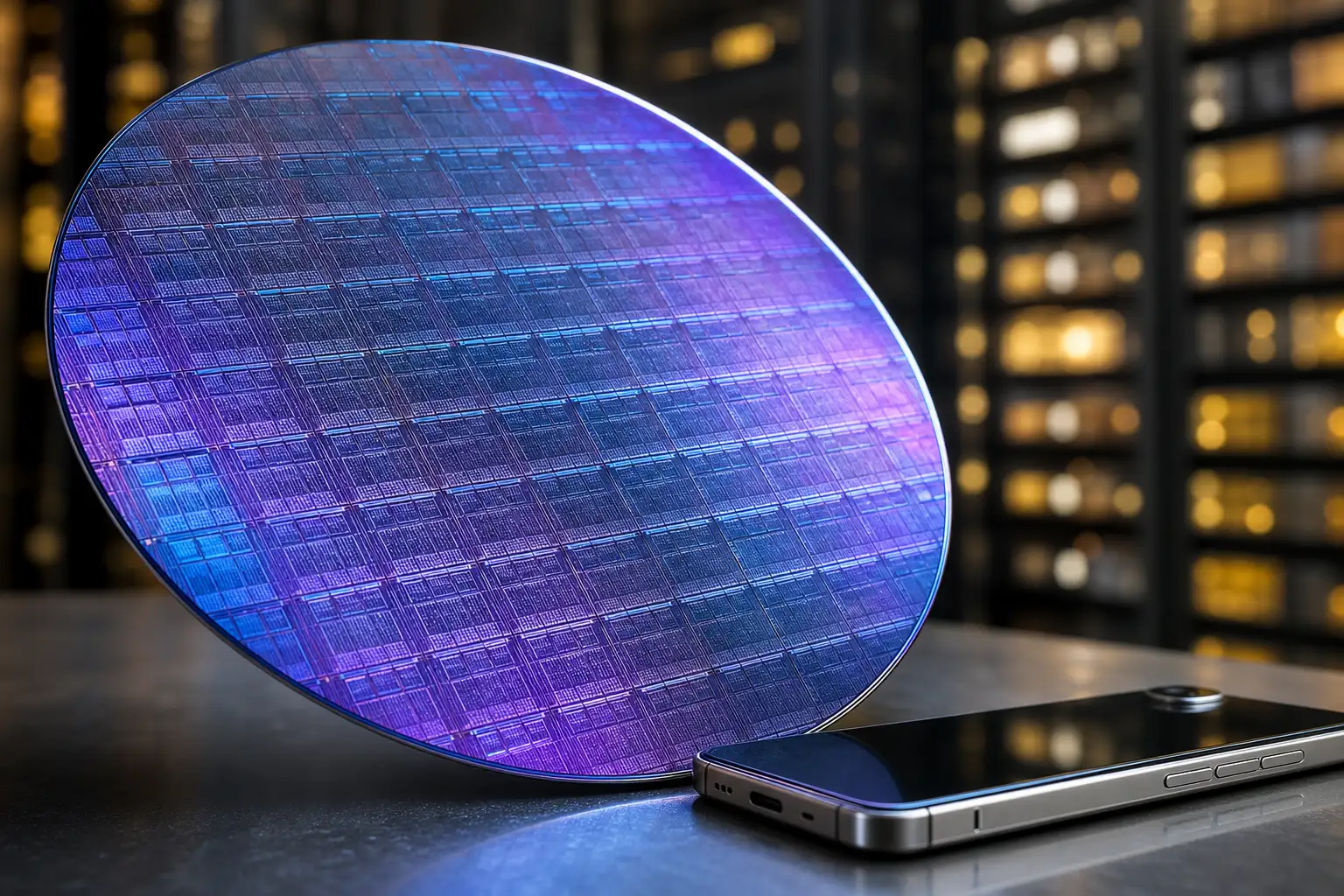
The short version: Samsung, SK Hynix and Micron control more than 95% of the world’s DRAM production, and all three have spent the past year redirecting factory space away from ordinary phone and laptop memory toward high bandwidth memory, the specialized chip stacked inside Nvidia’s AI accelerators.
HBM needs three to four times more wafer capacity per usable bit than the low power DRAM found in a smartphone, and every wafer sent to an AI server is a wafer that does not become memory for a phone, laptop or camera. Data centers now consume an estimated 70% of global memory chip output.
Research firm IDC does not describe this as a normal boom and bust cycle. Its analysis of the shortage found that memory can represent 10 to 20% of a flagship phone’s total component cost, which is exactly why a DRAM price spike turns into a retail price spike so fast.
TrendForce’s own tracking backs that up. The research firm’s second-quarter pricing survey projected conventional DRAM contracts rising 58 to 63% quarter over quarter, with NAND flash climbing even faster. Suppliers keep prioritizing server orders over the modules that go inside consumer gadgets.
Chipmakers Post Record Profits While Everyone Else Absorbs the Cost
Here is where the story stops being about Apple at all. The same shortage squeezing iPhone margins has turned into the best year on record for the three companies causing it.
SK Hynix posted first quarter revenue of 52.58 trillion won, or roughly $35.55 billion, with net profit up 398% year over year and a net margin of 76.7%. That is according to SK Hynix’s own SEC filing detailing quarterly revenue growth of nearly 200% year over year.
Samsung has captured 38% of the DRAM market. Micron pulled entirely out of its consumer Crucial memory business to focus on enterprise and GPU grade chips, and its stock jumped more than 19% in a single day in May, pushing its market capitalization past $1 trillion.
- SK Hynix – net margin of 76.7% in the first quarter, its highest on record.
- Micron – fiscal third quarter revenue of $41.46 billion, more than quadrupling year over year.
- Samsung – 38% DRAM market share and preliminary earnings expected to top prior records.
Apple, meanwhile, is staring at a shrinking margin on its best selling phone. That is the actual shape of this story: a handful of chip suppliers pulling record profit out of a shortage that everyone downstream, from Cupertino to a gaming handheld maker in Seattle, has to price around.
Steam Decks, Raspberry Pis and Surfaces Already Paid This Bill
Apple is late to this particular reckoning. Other hardware makers already raised prices this year and named the same culprit.
- Valve – raised Steam Deck OLED prices by as much as $300 in May, pushing the 1TB model from $649 to $949.
- Raspberry Pi – added $100 to the 16GB Raspberry Pi 5 as DRAM contract prices climbed.
- Microsoft – raised prices across its Surface lineup in April, months before Apple touched a single iPhone.
- Apple itself – already raised Mac and iPad prices by $100 to $500 on June 25, with iPhone pricing still to come.
Valve’s own explanation for the Steam Deck hike doubles as the cleanest summary of what is happening across the entire industry right now.
Steam Deck itself hasn’t changed; these new prices reflect the current state of component costs and other global logistical challenges across the industry as a whole.
Valve posted that statement on its Steam Hardware announcement confirming the price increase in May. The Steam Deck did not get a new chip or a new screen. It got more expensive memory.
Kuo Predicted Apple Would Hold the Line. It Didn’t.
Back in March, Ming-Chi Kuo told followers that Apple planned to keep iPhone 18 Pro prices unchanged. His reasoning was that Apple would use the chaos in the memory market to its advantage, absorbing higher costs to gain share while rivals raised prices or cut specs. He pointed to the $599 iPhone 17e and MacBook Neo as proof Apple could hold the line.
That forecast did not survive the second quarter. Micron’s fiscal third quarter results, revenue quadrupling to $41.46 billion according to a report on Micron’s earnings lifting outlook for Samsung and SK Hynix, landed the same week Apple raised Mac and iPad prices for the first time in years.
Apple CEO Tim Cook was asked directly which products would see increases and when.
We’re still working through that.
Cook gave that answer to the Wall Street Journal in June, acknowledging Apple was not immune to soaring memory costs without naming a device or a number. Apple has also reportedly lobbied Washington for a waiver to source DRAM from CXMT, a Chinese memory maker on a Pentagon blacklist, hoping to open a supply line outside the Samsung, SK Hynix and Micron chain. Korean analysts have publicly doubted it would move the needle in time for September.
Should You Buy an iPhone 17 Pro Right Now?
Yes, for most buyers the iPhone 17 Pro remains the stronger financial decision heading into September. It costs $1,099 today, carries nearly identical real world performance to what the iPhone 18 Pro will offer, and won’t be touched by the memory driven price increase expected to add up to $300 to Apple’s next Pro model.
The iPhone 17 Pro Max still runs $1,199. Apple has not raised iPhone prices yet, which means today’s numbers are the last ones locked in before whatever the September event brings.
The upgrades coming to the iPhone 18 Pro, a smaller Dynamic Island, the variable aperture camera, satellite connectivity through the new C2 modem, are real. None of them are worth $200 to $300 to someone who already owns a recent Pro iPhone. For anyone still holding an older model and eyeing an upgrade, buying last year’s phone before the price shift lands is the more defensible move, and it likely will be for as long as this memory shortage runs.
Frequently Asked Questions
When will Apple confirm iPhone 18 Pro pricing?
Apple typically confirms iPhone pricing only at its September launch event, and this year is expected to follow that pattern. Every figure in this story, from $1,299 to $1,399, is a supply chain or analyst estimate. Apple has not announced iPhone 18 Pro pricing.
Will the standard iPhone 18 avoid this price increase?
Possibly, at least for now. The base iPhone 18 has been pushed to a spring release instead of launching alongside the Pro models this September, which puts it on a different memory supply contract timeline than the one driving current Pro model estimates.
Are Android phones facing the same memory driven price hikes?
Yes. IDC’s analysis found the smartphone market broadly, and Android manufacturers in particular, faces a real threat in 2026, since memory can represent 10 to 20% of a flagship’s total bill of materials. The firm expects device makers to raise prices, cut specifications, or both.
How long will memory chip prices stay this high?
Estimates vary. Counterpoint Research has pointed to the fourth quarter of 2027 as the earliest realistic relief, while a separate Kearney analysis projected the shortage could persist until at least 2030. Samsung and SK Hynix have both warned the crunch could last beyond 2027.
Can Apple just switch to a cheaper memory supplier?
Apple has reportedly lobbied Washington for a waiver to buy DRAM from CXMT, a Chinese memory maker sitting on a Pentagon blacklist. Analysts at Korea Investment and Securities were skeptical in a late June note, arguing Beijing would likely redirect CXMT’s output to Chinese firms facing their own shortage before an Apple contract.


Walmart’s $50 Million Opioid Settlement Closes Case Without Admission

California Sues Over $120 Million Morro Bay Wind Lease Buyout

Gilead Bixlenvo FDA Nod Opens Single Pill Path for Complex HIV Cases

Meta’s $18B Kids Deal Forever Shields Data Used to Spot Under-13s

Lettuce Outbreak Drove Record Cyclospora Spike Across 20 States

Amazon Shaves $20 Off M6 Mac Mini Before It Even Ships

SpaceX Louisiana Port Tests Debt Markets on Orbital AI Scale

Microsoft High Lifts Indexes as Small Caps Crack Support

Apple Replays 2015 Saturday Midnight Preorder for iPhone 18 Pro

Updated COVID Shots Clear FDA but Access Friction Hits High-Risk Groups

Take-Two CEO Pushes Netflix Subs for GTA 6 Extended Look

Destiny 2 Fans Unlock Vaulted Maps After Live Service Ends

Wildlands Free Update Hands Players the Tools They Already Invented

Quake Gets 19 Free Maps From MachineGames Quake Club

Quordle Monday Delivers Gavel Crush Speed Ethos Cleanly

Stripe Bid Shows PayPal Moat Cracked After Years of Slide

Tyson’s Five-Year Utah Plant Falls to Cattle Shortage Reckoning

Silver Lake Workday Talks Signal Private Floor for Software

Kennedy Lewis Takes Majority Control of The Greenbrier in $500M Deal

Best Buy Marks 60 Years With Sale That Echoes Its Audio Shop Roots
-

 TECHNOLOGY3 years ago
How to Adjust a Bulova Watch Band – An Easy Guide
-

 News3 years ago
Fred Pentland: Athletic Bilbao’s English mentor who changed the essence of Spanish football
-

 FINANCE3 years ago
Tax Planning for Every Season: Guide to Maximizing Your Tax Benefits
-

 Education3 years ago
African Ministers New Education Plan
-

 BUSINESS3 years ago
What is Entrepreneurial Operating System? A Comprehensive Guide to EOS
-

 Education3 years ago
Innovate Your Learning Journey with Technology and Enhance Education
-

 News3 years ago
Russians formally out of World Athletics Championships
-

 BUSINESS3 years ago
Top 9 Most Expensive American Cities to Rent an Apartment