
News
Apple’s Foldable iPhone Will Be in Short Supply at Launch, Kuo Says
Apple’s foldable iPhone will arrive in short supply, per Ming-Chi Kuo. Just 500,000 to 1 million units ready in Q3 2026, with 4-6 week waits expected.

Apple’s first foldable iPhone will go on sale in extreme short supply, with the company able to assemble only 500,000 to 1 million units in the third quarter of 2026, according to TF International Securities analyst Ming-Chi Kuo. Kuo shared the projections in a Sunday blog post, citing conversations with carriers, sales channels, and resellers. The constrained opening mirrors the iPhone X’s 2017 debut, when Apple’s suppliers could only push out an estimated under 1 million units in that year’s third quarter.
The shortfall mirrors the playbook Apple ran nine years ago with the iPhone X, when a $999 starting price and a late-October pre-order did little to dent demand. Kuo expects the foldable iPhone, sometimes called the iPhone Ultra or iPhone Fold in supply-chain chatter, to sell out the moment pre-orders open, with delivery waits stretching to four to six weeks through year’s end. Earlier reporting on Apple’s iPhone Ultra launch supply plan tracked the same Kuo numbers in real time.
Apple’s Foldable iPhone Will Be in Short Supply at Launch
Kuo’s central forecast is blunt. Apple will move between 500,000 and 1 million foldable iPhones in Q3 2026, with a total of 7 to 8 million units shipped across the second half of the year. That puts the initial quarter at roughly 10% of the year’s expected volume. The limited opening mirrors what Kuo projected earlier for 2026 foldable iPhone shipments of 3 to 5 million units, a ceiling he ties to the device’s complexity. By comparison, the analyst estimates Apple will ship 20 to 22 million iPhone 18 Pro and Pro Max units in the same Q3 window.
Kuo frames the shortage as the price of an unusually ambitious device, one whose hinge, nearly crease-free inner display, and titanium chassis push Apple’s assembly lines into unfamiliar ground. He does not treat the limited supply as a failure. The analyst expects the foldable iPhone to “sell out immediately after pre-orders open,” with delivery waits holding at four to six weeks or longer through December. “Scarce initial supply, a highly recognizable design, and an innovative user experience should all support a short-term resale premium,” Kuo wrote.
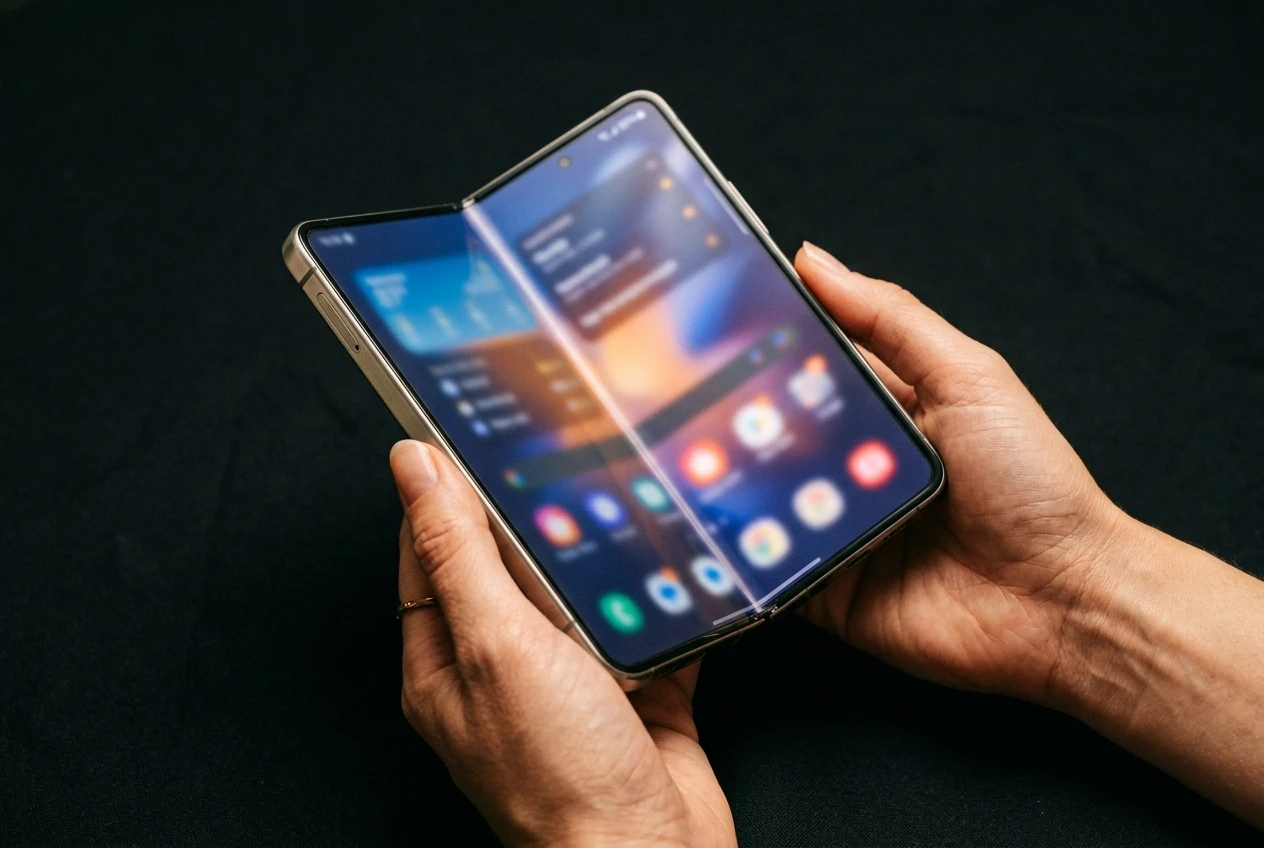
The iPhone X Playbook, Replayed in 2026
The comparison to the iPhone X is Kuo’s own. Apple unveiled the iPhone X on September 12, 2017 alongside the iPhone 8 and iPhone 8 Plus, then waited six weeks before opening pre-orders on October 27 and starting sales on November 3. The iPhone 8 and 8 Plus, by contrast, opened for pre-order on September 15 and went on sale September 22.
The foldable iPhone is highly similar to the iPhone X in this regard: both use an innovative user experience as a key selling point, while manufacturing challenges limit early production.
Kuo, of TF International Securities, wrote the assessment in a Sunday blog post laying out his industry survey. His broader case for the parallel rests on a single data point: Apple’s suppliers could only push out an estimated under 1 million iPhone X units in the third quarter of 2017, an opening quarter constrained by the OLED screen, the TrueDepth camera, and the first-ever Face ID module. The foldable’s rumored spec sheet, including a 7.8-inch inner display, a 5.5-inch outer panel, and Touch ID in place of Face ID, is a different kind of engineering headache, but it triggers the same kind of bottleneck.
What’s Driving the Manufacturing Bottleneck
The foldable iPhone’s physical shape is the central problem. Rumors point to a book-style design with a 7.8-inch inner display when unfolded and a 5.5-inch outer display when closed, a footprint Apple wants to feel like an iPad when open. Kuo’s own spec sheet calls for a folded thickness of 9 to 9.5mm and an unfolded thickness of 4.5 to 4.8mm, slimmer than the current iPhone Air at 5.6mm. That slim profile, combined with a near-invisible crease along the fold line, forces Apple to build the hinge from stainless steel and titanium alloy and to drop Face ID entirely in favor of a Touch ID side button.
The design choices are not accidental. Apple spent years chasing a crease-free inner display using a custom Samsung panel, ultra-thin glass, and a laser-drilled metal support plate to disperse stress. The hinge has been a parallel investment, with one leak pointing to liquid metal inside the joint, the payoff of Apple’s liquid metal hinge investment that has been waiting for a product like this to justify itself. None of that investment shortens the ramp. Kuo has pegged mass production of the first-generation foldable for the fourth quarter of 2026, after specs were locked in the second quarter of 2025 and the official project kicked off in the third quarter of 2025, per Kuo’s full foldable iPhone predictions.
- Initial Q3 2026 shipments: 500,000 to 1 million units
- Total second-half 2026 shipments: 7 to 8 million units
- iPhone 18 Pro/Pro Max Q3 2026 estimate: 20 to 22 million units
- Foldable iPhone starting price: $2,299 to $2,499
The bottleneck echoes 2017 in a specific way. The iPhone X used OLED for the first time in an iPhone, paired it with a notch and a TrueDepth camera, and Apple had to teach its suppliers how to build all three at once. The foldable’s hinge, crease control, and inner panel ask the same question of the supply chain: how many devices can a factory actually produce when the part is brand new?
Apple’s read of its own constraint will matter more than the spec sheet. The company’s September event will set the tone for whether buyers see the delay as scarcity or as Apple choosing not to push a half-baked product to market.
What Buyers Will Face at Launch
Kuo does not hide the practical impact. Delivery lead times could stretch to four to six weeks or longer through December, longer than the wait for any recent flagship iPhone. Resale premiums of 50% to 100% above the official price would not be out of the question, he writes, given the small Q3 inventory. Apple has not commented publicly on the device or the supply outlook, and the foldable iPhone remains unconfirmed by the company itself.
The analyst points to late 2026 and the first quarter of 2027 as the window when real demand will become clear. By then, holiday launch hype should have faded and early production issues should have eased, two temporary factors that will be easier to separate from underlying interest.
If the foldable still draws lines at that point, Apple will know it has a hit. A quieter February would suggest the launch generated buzz without building a category. Apple’s own software hints are already pointing in that direction. The iOS 27 beta includes terms like “foldState” and “angleDegrees,” along with a variable that tracks the total number of built-in displays on the host device. None of that confirms the foldable’s hardware, but it gives developers signal that a folding iPhone is in development.
The Price Behind the Wait
Kuo pegs the foldable iPhone’s starting price at between $2,299 and $2,499. The estimate aligns with Bloomberg reporter Mark Gurman’s separate forecast that Apple’s first folding phone will “cross the $2,000 threshold.” Either figure puts the foldable above any iPhone Apple has ever sold at launch and more than double the $999 starting price of the 64GB iPhone X in 2017, the first iPhone to cross the $1,000 mark once the 256GB tier reached $1,149.
Apple has not raised iPhone prices to offset memory and storage chip costs that have pushed up other product lines. Last month, Apple’s June iPad and Mac price increases lifted iPad Air by $150 to $749 and iPad Pro by $200 to $1,199, with the base MacBook Pro rising to $1,999 from $1,699. Apple’s share price fell as much as 6% the day of those increases. The iPhone line has so far been held back, in part because Apple appears to be reserving its sharpest price move for the foldable itself, a job the iPhone X also did in 2017.
The September Stage and the Wait Beyond
Apple’s next iPhone event is widely expected to land on September 8, 2026, the date Bloomberg’s Mark Gurman flagged as the most likely debut for the iPhone 18 Pro, iPhone 18 Pro Max, and the foldable.
- September 12, 2017: Apple unveils iPhone X alongside iPhone 8 and iPhone 8 Plus.
- September 15, 2017: iPhone 8 and 8 Plus pre-orders open.
- September 22, 2017: iPhone 8 and 8 Plus go on sale.
- October 27, 2017: iPhone X pre-orders finally open.
- November 3, 2017: iPhone X ships to customers.
- September 8, 2026 (expected): Apple unveils iPhone 18 Pro, Pro Max, and the foldable iPhone.
- Q4 2026 (expected): Foldable iPhone pre-orders and sales begin.
Apple’s wider 2026 iPhone rollout continues into early 2027. The iPhone Air 2, iPhone 18, and iPhone 18e are expected to follow in the first quarter of 2027, per Kuo’s survey, leaving the September event to feature only the premium tier.
Apple’s second-generation foldable is not expected to enter mass production until the second half of 2027, per Kuo’s roadmap, meaning the company has at least a year of exclusivity on its first folding iPhone before any successor arrives. For buyers weighing whether to wait, the calculus is the same one iPhone X shoppers faced in 2017: pay the early-adopter premium and wait weeks for delivery.
Frequently Asked Questions
When will Apple’s foldable iPhone go on sale?
Apple has not confirmed a sale date. Per Ming-Chi Kuo’s Sunday blog post, the foldable iPhone will likely be announced at Apple’s September event but slip its pre-order and sale dates into the fourth quarter of 2026, the same pattern Apple used for the iPhone X in 2017. Bloomberg’s Mark Gurman pegs the announcement for September 8, 2026.
How much will Apple’s foldable iPhone cost?
Kuo projects a starting price of between $2,299 and $2,499. Bloomberg’s Mark Gurman has said separately that the foldable iPhone will cross the $2,000 threshold. Either figure would make it the most expensive iPhone Apple has ever sold at launch.
How long will the wait be for the foldable iPhone?
Kuo expects delivery lead times of four to six weeks or longer through December 2026, with the device selling out the moment pre-orders open. Resale premiums of 50% to 100% above the official price are possible in that window.
Will Apple confirm the foldable iPhone before launch?
Apple has not officially confirmed the device. The strongest indirect signal comes from the iOS 27 beta, which includes references like “foldState” and “angleDegrees” and a variable for the number of built-in displays on the host device.
What’s the difference between the iPhone Fold and the iPhone Ultra?
Both names appear in current supply-chain reporting. iPhone Fold reflects its category, while iPhone Ultra reflects its positioning as a top-tier iPhone. Apple has not confirmed either name.






Spotify Running Mode hits Android and revives its old tempo experiment

Galaxy Tab S12 Ultra Renders Keep the Notch Fans Hate

Novato Spinning Round House Sells With Six Neighbors for $3.3 Million

Crop Tour Finds Indiana and Nebraska Corn Yields Lagging 2025

Best Buy 60th sale brings Android deals back to its roots

American Airlines reverses seatback screen bet years too late

Iran Hormuz Strikes Force Gulf Oil Onto Costlier Paths

Plague Tale Prequel Day One Joins Game Pass Wave 2 as Witcher Exits

NBA 2K27 opens The City to everyone and rewrites career eras

iOS 26.6.1 Patches 29 Flaws as AI Forces Faster Apple Updates

Caitlin Clark Skips the WNBA 3-Point Contest for a Third Straight Year

Rainout Gives Red Sox Two Shots at a Franchise-Record Win Streak

Double Fine Cuts 23 Jobs Weeks After Xbox Independence

John Hight Exits Wizards After Digital Reckoning Hits

Day-One Big Walk Lifts PS Plus August Beyond Recycled AAA

Curtis Mead’s Red Sox Debut Ends With Fractured Wrist

Red Sox Squander Hot Streak Chance in 4-3 Loss to Athletics

Moesch and Dressel Rewrite Night One at 2026 U.S. Nationals

Boutte’s Quiet Camp Takeover Forces Patriots Receiver Choices

Take-Two CEO Pushes Netflix Subs for GTA 6 Extended Look
-

 TECHNOLOGY3 years ago
How to Adjust a Bulova Watch Band – An Easy Guide
-

 News3 years ago
Fred Pentland: Athletic Bilbao’s English mentor who changed the essence of Spanish football
-

 FINANCE3 years ago
Tax Planning for Every Season: Guide to Maximizing Your Tax Benefits
-

 Education3 years ago
African Ministers New Education Plan
-

 BUSINESS3 years ago
What is Entrepreneurial Operating System? A Comprehensive Guide to EOS
-

 Education3 years ago
Innovate Your Learning Journey with Technology and Enhance Education
-

 News3 years ago
Russians formally out of World Athletics Championships
-

 BUSINESS3 years ago
Top 9 Most Expensive American Cities to Rent an Apartment