
FINANCE
Magnificent Seven correction hits MAGS ETF after $700B AI spending year
The Roundhill Magnificent Seven ETF fell into correction on June 23, down 11% from its May high. Strategists call the retreat a healthy rotation beyond Big Tech.

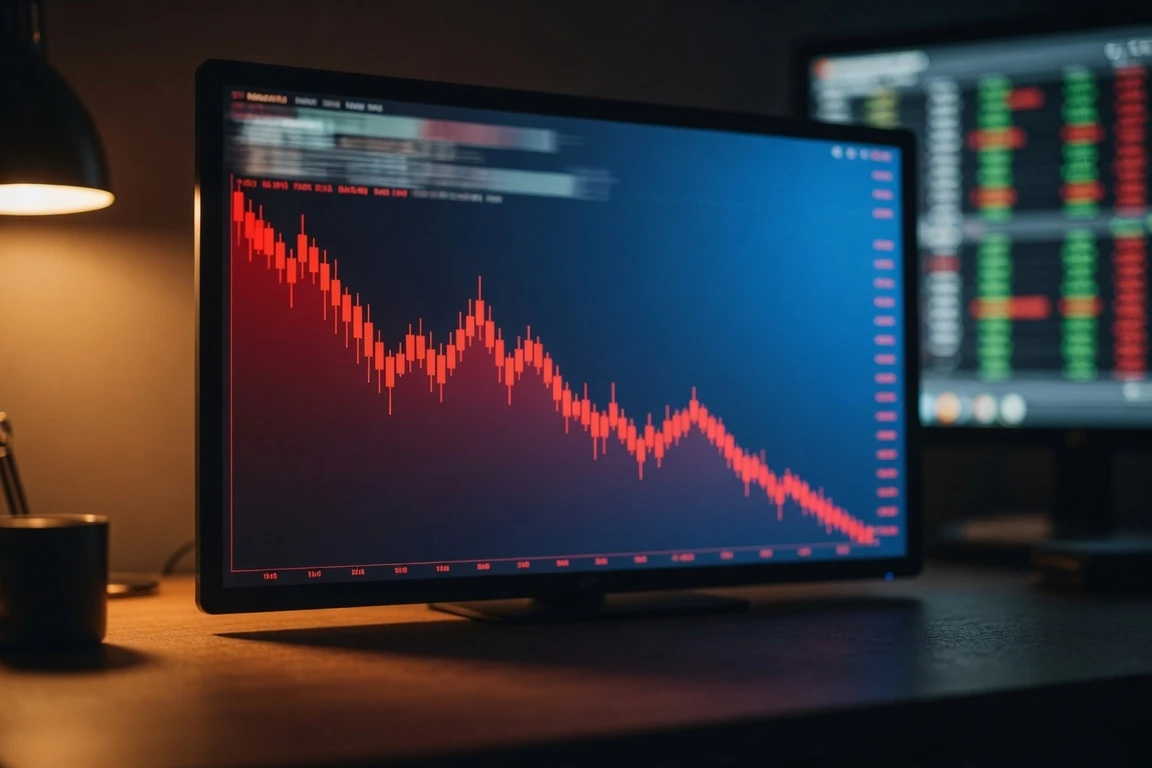
The Roundhill Magnificent Seven ETF (MAGS) slipped into correction territory on Tuesday, June 23, 2026, closing at $63.14 after a 1.4% slide. The MAGS fund is now down 11% from its May 14 record of $70.94, the steepest retreat for the cohort since April 2025.
The drop comes as Wall Street revisits the AI spending that has propelled Alphabet, Amazon, Apple, Meta, Microsoft, Nvidia and Tesla to 34% of the S&P 500’s total market cap. Two strategists argue the selloff is the market working as it should. Cullen Rogers at Wedbush Funds called it “a sign of a healthy market as investors rotate their money.” Steve Sosnick, chief strategist at Interactive Brokers, said the law of large numbers is finally catching up to the group.
MAGS Crosses the Correction Threshold
Roundhill’s MAGS, the first ETF built to give equal-weight exposure to the seven stocks, holds each name at roughly the same share. The fund’s 1.4% slide on Tuesday pushed its closing price to $63.14. That figure fell below the $63.85 level Dow Jones Market Data uses to mark a 10% retreat from peak.
From its all-time closing high of $70.94 on May 14, MAGS is down 11%. The fund has not seen a comparable drawdown since April 2025, in the middle of the Trump administration’s aggressive tariff announcements.
Sticky inflation and a more hawkish Federal Reserve pivot have acted as immediate catalysts for the selloff. The deeper question for the MAGS cohort is the AI capital spending that funded the original run. That bill is what investors are now re-pricing. The seven stocks are also moving away from their asset-light past by funding the build-out with capital that has a real cost.
The MAGS correction also breaks an unusual streak. The seven names had been pulling the S&P 500 for so long that other sectors had little room to breathe. A 10% drop from peak, in other words, is what a market looks like when it tries to find a footing outside the seven names.
- $63.14: MAGS closing price on June 23, 2026
- $70.94: MAGS all-time closing high, set May 14, 2026
- 11%: decline from peak as of June 23
- $63.85: the 10% correction threshold
- 34%: the Magnificent Seven’s weight in the S&P 500 by market cap
Inflation and a Hawkish Fed Join the AI Capex Question
Alphabet, Amazon, Meta and Microsoft are on track to spend a combined $700 billion on their AI businesses this year. That single number is now the line investors are watching to see whether the spend produces the returns they expect. Sticky inflation and a hawkish Federal Reserve pivot have layered on top of the capex question. The MAGS correction is the visible result of all three forces hitting the same names.
In recent weeks, Amazon and Nvidia have issued new debt and Alphabet has issued equity to keep up with the capital demands of AI. The MAGS names are also moving away from their asset-light past by building the data centers their AI systems need.
Sosnick said the market is now demanding fiscal discipline from the AI spenders. The MAGS correction, on that reading, signals that the market is asking the AI cohort to deliver returns on its capital spending. The seven stocks remain well-positioned AI players with first-mover advantage, but the era of unconditional support is over.
The law of large numbers works against these companies. Investors who want exposure to the “Magnificent Seven” have likely already invested in them. It takes a lot of work now to get fresh money into these stocks.
Steve Sosnick, chief strategist at Interactive Brokers, told MarketWatch the seven stocks face a tougher fundraising environment than at any point in the AI cycle. The recent debt and equity issuance shows the cohort is now funding the build-out with capital that has a real cost.
A Selloff in the Same Names Can Be a Healthy Sign
Cullen Rogers, portfolio manager at Wedbush Funds, told MarketWatch the selloff is what a healthy market is supposed to look like. The “Mag Seven has had a tremendous run,” he said, but investors are now looking past the obvious winners to what comes next in the AI stack. the correction that hit the MAGS ETF may be the cleanest signal yet that the rotation has begun.
Rogers pointed to “second and third derivative AI plays” like memory stocks as the new beneficiaries of attention. The focus has shifted from the companies making AI investments to the companies that turn those investments into revenue. “This isn’t a rush for the exit,” Rogers said. “But it makes a lot of sense to look into the next layers where applications and eventually monetization will occur.”
The math behind the rotation is stark. The Mag 7’s combined market cap exceeds $22 trillion, with the remaining 66% of the S&P 500 split across 493 other constituents, per Forbes’ June concentration analysis. the Mag 7’s 34% share of the S&P 500 is the gap the rotation is meant to narrow. The trillion-dollar Friday rotation out of tech was the first concrete proof that money was moving.
Sosnick’s caution cuts the other way. The current Mag 7 remain well-positioned AI players with first-mover advantage. “But there’s nothing saying that the current winners are the long-term winners,” he said. “The best AI company could yet to be formed.”
The Damage Spread Beyond the Magnificent Seven
Tuesday’s session was not a Mag 7 event alone. The Nasdaq composite closed off 2.2% and the S&P 500 fell 1.4%, dragged lower by Micron Technology, whose market value recently moved over $1 trillion and which slid 13% on the day. the broader market slide on June 23 spread well past the seven names, with the memory stocks taking the worst of it.
The chip layer absorbed the heaviest losses. Intel, Nvidia, Oracle and Tesla each fell 4% or more, following steep losses in big tech on Monday. Micron’s slide was the clearest signal that the AI trade’s center of gravity is shifting from the spenders to the suppliers and beyond. MAGS fund details and equal-weight methodology show how tightly the fund is wired to the seven names, which is why the broader spillover shows up so clearly in its daily moves.
Global markets caught the same shockwave. South Korea’s Kospi dove 10%, with Samsung Electronics as the prime weight. Brent crude settled at $77.08 a barrel, the lowest settlement price since Feb. 27, the day before the U.S.-Israeli war with Iran started.
| Instrument | Category | June 23, 2026 move |
|---|---|---|
| MAGS | ETF (Mag 7 equal weight) | -1.4% |
| Nasdaq Composite | U.S. large-cap tech index | -2.2% |
| S&P 500 | U.S. large-cap index | -1.4% |
| Micron Technology | Memory chip | -13% |
| Intel, Nvidia, Oracle, Tesla | AI hardware / EV | -4% or more |
| South Korea Kospi | Regional index | -10% |
| Brent crude | Oil benchmark | -1.1%, at $77.08/barrel |
The Test Facing $700 Billion in AI Capex
The case for a rebound is straightforward. The Mag 7 still hold first-mover positions in AI infrastructure, and their combined capex is funding the very AI build-out now siphoning investor attention.
The case for more downside rests on the same number. Alphabet, Meta, Amazon and Microsoft have committed to $700 billion in 2026 AI spending, and that figure is now the line investors are watching to see whether it produces the returns they expect. The Wall Street Journal’s coverage noted that Micron reports earnings on Wednesday, June 24, and the results could offer clues on memory pricing and the AI chip outlook.
Frequently Asked Questions
What is the Magnificent Seven ETF (MAGS)?
The Roundhill Magnificent Seven ETF (ticker MAGS) is the first ETF built to track the “Magnificent Seven” technology stocks at equal weight. It holds Alphabet, Amazon, Apple, Meta, Microsoft, Nvidia and Tesla, launched on April 11, 2023, and carries a 0.29% gross expense ratio.
Why did MAGS fall into correction territory?
The ETF slipped into correction territory on June 23, 2026, closing at $63.14 after a 1.4% slide. That is 11% below the May 14 closing high of $70.94, the steepest drop for the cohort since April 2025.
How much of the S&P 500 do the Magnificent Seven make up?
The seven stocks now account for 34% of the S&P 500 by market capitalization, up from 12.4% in 2017. The remaining 66% is split across 493 other S&P 500 constituents.
Is the Magnificent Seven correction a sign of trouble?
Two strategists quoted by MarketWatch frame it differently. Cullen Rogers of Wedbush Funds called the selloff “a sign of a healthy market as investors rotate their money,” while Steve Sosnick of Interactive Brokers said the law of large numbers is working against the group.
What’s different about the AI spending driving this selloff?
The Mag 7 names are on track to spend $700 billion on AI this year, and several have already started issuing new debt and equity to fund the build-out. Alphabet, Amazon, Meta and Microsoft are also transitioning away from their asset-light past by building the data centers the AI economy needs, a model shift that has put the cohort’s return on investment under the microscope for the first time in years.
Disclaimer: This article is for informational purposes only and does not constitute financial advice. Stock market investments carry risk, including the loss of principal. Past performance is not indicative of future results. Figures are accurate as of the publication date, June 23, 2026. Consult a qualified financial professional before making investment decisions.






Spotify Running Mode hits Android and revives its old tempo experiment

Galaxy Tab S12 Ultra Renders Keep the Notch Fans Hate

Novato Spinning Round House Sells With Six Neighbors for $3.3 Million

Crop Tour Finds Indiana and Nebraska Corn Yields Lagging 2025

Best Buy 60th sale brings Android deals back to its roots

American Airlines reverses seatback screen bet years too late

Iran Hormuz Strikes Force Gulf Oil Onto Costlier Paths

Plague Tale Prequel Day One Joins Game Pass Wave 2 as Witcher Exits

NBA 2K27 opens The City to everyone and rewrites career eras

iOS 26.6.1 Patches 29 Flaws as AI Forces Faster Apple Updates

Double Fine Cuts 23 Jobs Weeks After Xbox Independence

Day-One Big Walk Lifts PS Plus August Beyond Recycled AAA

John Hight Exits Wizards After Digital Reckoning Hits

Curtis Mead’s Red Sox Debut Ends With Fractured Wrist

Red Sox Squander Hot Streak Chance in 4-3 Loss to Athletics

Moesch and Dressel Rewrite Night One at 2026 U.S. Nationals

Boutte’s Quiet Camp Takeover Forces Patriots Receiver Choices

Take-Two CEO Pushes Netflix Subs for GTA 6 Extended Look

Halo Campaign Evolved Skulls Meet Death Barriers That Kill the Hunt

Wildlands Free Update Hands Players the Tools They Already Invented
-

 TECHNOLOGY3 years ago
How to Adjust a Bulova Watch Band – An Easy Guide
-

 News3 years ago
Fred Pentland: Athletic Bilbao’s English mentor who changed the essence of Spanish football
-

 FINANCE3 years ago
Tax Planning for Every Season: Guide to Maximizing Your Tax Benefits
-

 Education3 years ago
African Ministers New Education Plan
-

 BUSINESS3 years ago
What is Entrepreneurial Operating System? A Comprehensive Guide to EOS
-

 Education3 years ago
Innovate Your Learning Journey with Technology and Enhance Education
-

 News3 years ago
Russians formally out of World Athletics Championships
-

 BUSINESS3 years ago
Top 9 Most Expensive American Cities to Rent an Apartment