
LIFESTYLE
Norovirus Outbreaks Drop, but GII.17 Strain Is Quietly Winning

Norovirus is back in the headlines as wastewater readings climb into the “high” range nationally and hikers on California’s Pacific Crest Trail come down with the stomach bug. The federal outbreak ledger, though, tells a calmer story. The Centers for Disease Control and Prevention logged 1,194 reported outbreaks between August 1, 2025 and May 7, 2026, compared with 2,534 in the same stretch a year earlier. That is a drop of more than half, and the season sits squarely inside the normal historical range.
The bigger development sits in the genetics. A mutated strain called GII.17 has displaced the variant that drove US outbreaks for two decades, and that shift helps explain why the bug keeps lingering well past its usual winter window.
The Numbers Behind the Surge Headlines
Two surveillance systems are measuring the same virus and pointing in different directions. One tracks what reaches the sewer. The other counts confirmed clusters reported by state labs. Reading them together is the only way to see what is going on.
What the Wastewater Shows
WastewaterSCAN, an academic monitoring program run by Stanford University in partnership with Emory University, still places national norovirus concentrations in its top tier. “At the national level, norovirus is still in the HIGH category due to high concentrations over the last 21 days,” said Amanda Bidwell, the program’s scientific program manager, in an email. Rates have been climbing recently in the Northeast, and the data flags a separate flare-up in the San Francisco Bay Area.
Wastewater matters here because norovirus rarely shows up in clinics. Most healthy people ride it out at home, so the sewer often sees the virus before any doctor does. You can track the trend on the program’s national wastewater surveillance dashboard.
What the Federal Outbreak Count Shows
The CDC’s NoroSTAT network (a reporting system covering 14 state health departments) paints a milder picture. This season’s tally is well below last year’s, and the agency notes the total “is within the middle 50% of outbreaks reported in the same period during the 2012-2025 seasonal years.” In plain terms, typical.
- 1,194 outbreaks reported August 1, 2025 through May 7, 2026 across the NoroSTAT states
- 2,534 outbreaks in the same window the previous season, roughly a 53% decrease
- HIGH national wastewater category over the trailing 21 days
- A count that lands inside the normal 2012 to 2025 range
“There really isn’t anything unusual about this one in California,” said Dr. Linda Yancey, an infectious disease specialist at Memorial Hermann in the Houston area, of the trail outbreaks. “They just got unlucky.” You can check the running tally on the CDC’s NoroSTAT outbreak data page.
Why GII.17 Is the Strain Reshaping the Season
The reason the same virus can feel worse while the official count falls comes down to which version is circulating. For years that was GII.4. Now it is GII.17, and the handoff has been fast.
From Niche to Dominant in Three Seasons
A CDC study published in the journal Emerging Infectious Diseases tracked the swap using CaliciNet, the national laboratory network that genotypes outbreak samples. GII.17 went from a bit player to the clear leader in three seasons.
| Season | GII.17 share of outbreaks | GII.4 share of outbreaks |
|---|---|---|
| 2022-23 | 7.5% | 48.9% |
| 2023-24 | 34.3% | 27.7% |
| 2024-25 | 75.4% | 10.7% |
By the 2024-25 season, GII.17 accounted for roughly three of every four US outbreaks. The same research, available through the CDC analysis of GII.17 predominance, also flagged a timing change: that season started in early October rather than the traditional December and peaked in January.
Why an Immunity Gap Widens the Spread
A new strain is not automatically nastier. The problem is who has seen it before. “The newer variant isn’t more contagious in and of itself,” Yancey said. “It can spread more easily because fewer people have partial immunity to it, so they will get sick and spread the virus.” Norovirus immunity is short-lived to begin with, and a strain the body barely recognizes erases even that thin protection. That is the engine behind the late-spring stubbornness, not a freak event.
Dr. Scott Roberts, associate medical director of infection prevention at Yale School of Medicine, put it plainly. “I have not seen any evidence of a new strain, but as with all viruses, evolution occurs, and unfortunately, our immunity to norovirus is not long-lasting,” he said. Seasonal travel packs strangers together, and extreme heat drives people into crowded air-conditioned rooms, both of which give the virus more chances to jump.
How Norovirus Spreads and Why Sanitizer Fails
Few viruses move as efficiently. On average, one infected person passes norovirus to as many as seven others, Yancey said, putting it in the same league as measles for raw contagiousness.
It travels several ways at once, which is why a single sick person can take down a cruise ship, a classroom, or a catered event. The common routes:
- Direct contact with someone who is sick, or touching a contaminated surface and then your mouth
- Food handled by an infected cook, especially ready-to-eat cold items like salads and sandwiches
- Water that has not been adequately treated
- Raw shellfish, particularly oysters, which filter and concentrate the virus
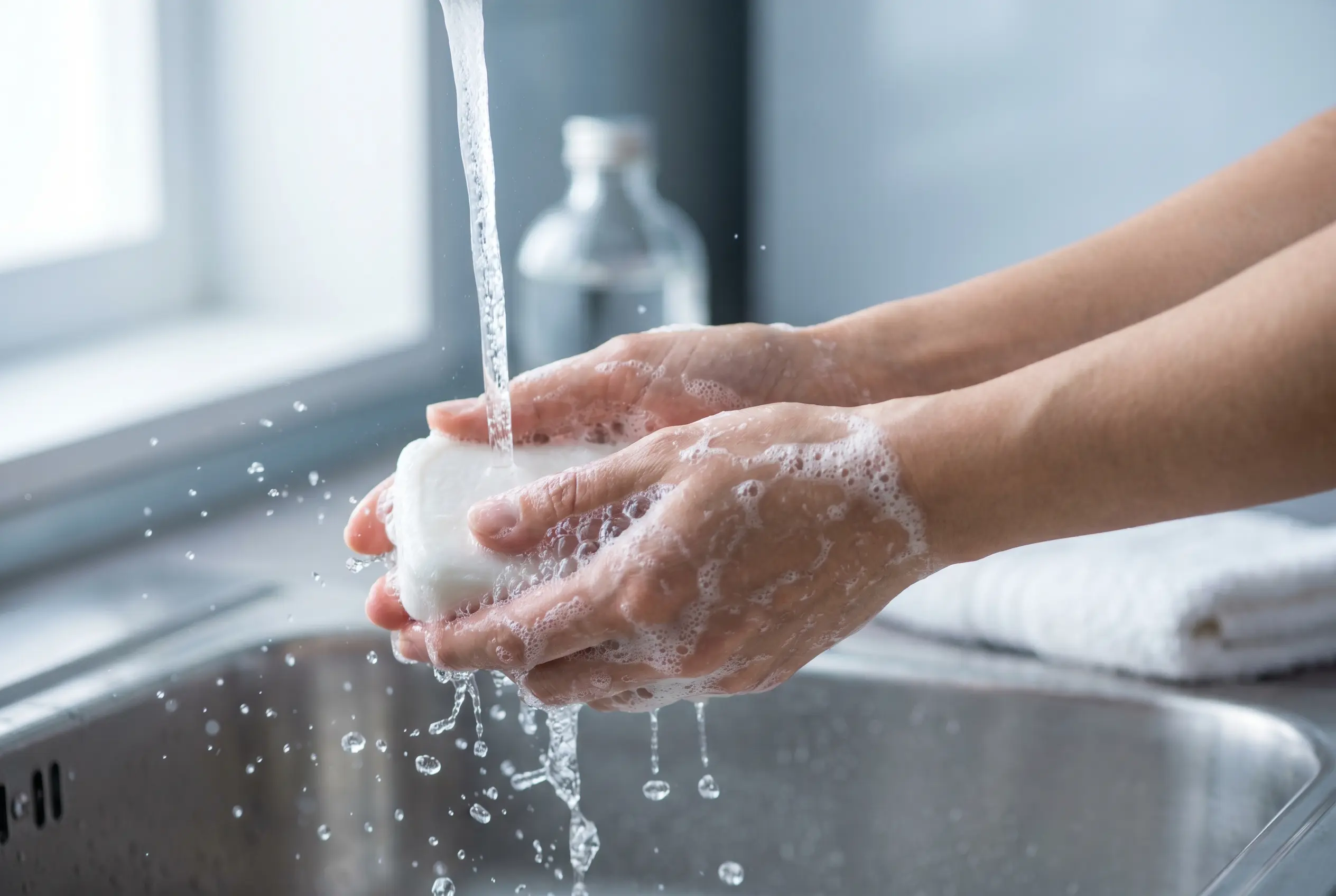
Here is the catch that trips up most people. Alcohol hand sanitizer is largely useless against norovirus because the virus lacks the outer envelope that gels are built to dissolve. Soap and water, scrubbing the virus physically off your skin, works far better. For surfaces, the CDC points to disinfectants registered with the Environmental Protection Agency (EPA) and specifically labeled to kill norovirus.
Symptoms and What Recovery Looks Like
Norovirus is the most common cause of food poisoning in the United States, and the timeline is fast. Symptoms usually begin 12 to 48 hours after exposure: vomiting, diarrhea, and stomach cramps. Some people get only one or the other, but the giveaway is the sheer force of the vomiting compared with milder stomach bugs.
Doctors rarely test for it. A stool sample can confirm the virus, but the diagnosis is almost always made on symptoms alone. Most healthy adults recover within a few days, though they can keep shedding the virus for up to two weeks after feeling fine, which is exactly how outbreaks outlast the people who started them.
There is no antiviral cure, and antibiotics do nothing against a virus. The priority is fluids. Experts recommend oral rehydration solutions over sports drinks to replace the salts and minerals lost to vomiting and diarrhea, although a drink like Gatorade can help with mild dehydration. Severe cases, especially in young children and older adults, can need intravenous (IV) fluids. Watch for the warning signs of dehydration: reduced urination, dry mouth, dizziness on standing, and crying with few or no tears. Parents tracking these symptoms in toddlers can find more detail in our guide to diarrhea and dehydration in one-year-olds.
The Vaccine That Keeps Missing Its Season
For a virus this widespread, the absence of a shot is striking. As of March 11, 2026, neither the US Food and Drug Administration (FDA), the European Medicines Agency, nor the United Kingdom had approved any norovirus vaccine, and the World Health Organization had pre-qualified none.
The closest candidate is Moderna’s mRNA-1403, an mRNA shot that trains the immune system using genetic instructions rather than a live virus. It is in a Phase 3 trial called Nova 301, designed to enroll around 25,000 people across the United States, Canada, Japan, and the United Kingdom. The program has hit turbulence. In 2025 the FDA placed a clinical hold after a single reported case of Guillain-Barre syndrome (GBS), a rare nerve disorder, and the study has struggled to catch enough infections to read out, even relocating to chase the Southern Hemisphere season before returning north.
Monitoring norovirus in wastewater is very helpful for this highly contagious virus, as there is not a lot of clinical data to describe outbreaks because most people recover at home without seeing a healthcare professional.
That observation from Bidwell cuts to the heart of the problem. A virus that hides from the clinic is hard to count, hard to study, and hard to build a trial around, which is part of why a vaccine has stayed just out of reach for so long. Hikers, cooks, and cruise passengers are still the early-warning system. The detail of this season’s national spread is laid out in our report on the latest norovirus prevention steps doctors recommend, and the strain’s local toll showed up earlier in the cluster of winter outbreaks in Mesa County, Colorado.
Frequently Asked Questions
How long does norovirus last?
Most healthy adults recover within several days. Symptoms typically begin 12 to 48 hours after exposure and ease as the body clears the virus, though you can keep spreading it for up to two weeks after you feel better.
Is norovirus contagious after symptoms stop?
Yes. People continue shedding the virus for as long as two weeks after recovery, which is a major reason outbreaks persist in schools, cruise ships, and workplaces even once the obviously sick have improved.
Does hand sanitizer kill norovirus?
No, alcohol-based hand sanitizers are largely ineffective against norovirus because it lacks the outer envelope those gels target. Washing with soap and water is far more reliable, and surfaces should be cleaned with an EPA-registered disinfectant labeled to kill the virus.
What is the best drink for norovirus dehydration?
Oral rehydration solutions are the preferred choice because they replace the salts and minerals lost through vomiting and diarrhea. Sports drinks such as Gatorade can help with mild dehydration, but severe cases may require intravenous fluids in a clinical setting.
What is the GII.17 norovirus strain?
GII.17 is a norovirus genotype that surged from 7.5% of US outbreaks in 2022-23 to about 75% in 2024-25, replacing the long-dominant GII.4. It causes similar symptoms but spreads widely because fewer people carry partial immunity to it.
Is there a norovirus vaccine available?
Not yet. As of March 11, 2026, no norovirus vaccine had been approved in the United States, Europe, or the United Kingdom. Moderna’s mRNA-1403 is in a Phase 3 trial but has faced a clinical hold and difficulty accruing enough cases.
When is norovirus season?
In the Northern Hemisphere norovirus is most common from November through May, earning the nickname “winter vomiting disease.” Outbreaks extending into late spring are not unusual, and the GII.17 strain has pushed some recent seasons to start as early as October.
Until a vaccine clears regulators, the defenses against norovirus are the same ones that worked before GII.17 had a name: soap, hot water, careful food handling, and a bottle of oral rehydration solution in the cabinet.
Disclaimer: This article is for informational purposes only and does not constitute medical advice. Norovirus and dehydration can become serious, particularly in young children and older adults; consult a qualified healthcare professional for diagnosis and treatment. Figures and surveillance data are accurate as of publication.






Spotify Running Mode hits Android and revives its old tempo experiment

Galaxy Tab S12 Ultra Renders Keep the Notch Fans Hate

Novato Spinning Round House Sells With Six Neighbors for $3.3 Million

Crop Tour Finds Indiana and Nebraska Corn Yields Lagging 2025

Best Buy 60th sale brings Android deals back to its roots

American Airlines reverses seatback screen bet years too late

Iran Hormuz Strikes Force Gulf Oil Onto Costlier Paths

Plague Tale Prequel Day One Joins Game Pass Wave 2 as Witcher Exits

NBA 2K27 opens The City to everyone and rewrites career eras

iOS 26.6.1 Patches 29 Flaws as AI Forces Faster Apple Updates

Caitlin Clark Skips the WNBA 3-Point Contest for a Third Straight Year

Rainout Gives Red Sox Two Shots at a Franchise-Record Win Streak

Double Fine Cuts 23 Jobs Weeks After Xbox Independence

Day-One Big Walk Lifts PS Plus August Beyond Recycled AAA

John Hight Exits Wizards After Digital Reckoning Hits

Curtis Mead’s Red Sox Debut Ends With Fractured Wrist

Moesch and Dressel Rewrite Night One at 2026 U.S. Nationals

Red Sox Squander Hot Streak Chance in 4-3 Loss to Athletics

Boutte’s Quiet Camp Takeover Forces Patriots Receiver Choices

Take-Two CEO Pushes Netflix Subs for GTA 6 Extended Look
-

 TECHNOLOGY3 years ago
How to Adjust a Bulova Watch Band – An Easy Guide
-

 News3 years ago
Fred Pentland: Athletic Bilbao’s English mentor who changed the essence of Spanish football
-

 FINANCE3 years ago
Tax Planning for Every Season: Guide to Maximizing Your Tax Benefits
-

 Education3 years ago
African Ministers New Education Plan
-

 BUSINESS3 years ago
What is Entrepreneurial Operating System? A Comprehensive Guide to EOS
-

 Education3 years ago
Innovate Your Learning Journey with Technology and Enhance Education
-

 BUSINESS3 years ago
Top 9 Most Expensive American Cities to Rent an Apartment
-

 News3 years ago
Russians formally out of World Athletics Championships