
Health
Rucking: The Weighted Walking Trend Worth Trying, and Why

Rucking, the practice of walking with a weighted pack on your back, turns an ordinary stroll into a strength session, and a 170-pound person can burn roughly 400 calories an hour carrying a 25-pound load, about double a normal walk. The move has spread fast across fitness feeds, yet the reason it keeps showing up has less to do with a hashtag than with what starts happening to muscle and bone in your 30s.
The gear is whatever is already in your closet. The interesting part is the load, and how a few extra pounds quietly drags a casual walk into territory that doctors have spent years telling most adults they are missing.
From Boot Camp to the Park Loop
The word comes from “rucksack,” and the activity comes from the military, where soldiers cover long distances under heavy packs. “It’s a low-impact exercise that is pretty much based on military training,” said Mathew Welch, an exercise physiologist at the Hospital for Special Surgery (HSS) in New York. The armed forces train for endurance with a fair amount of running, he noted, but they also haul heavy equipment, and that combination is where rucking began.
Stripped of the camouflage, it is almost embarrassingly simple. “Rucking is simply just walking with weight on your body, weight on your back, technically,” said Nichele Cihlar, director of training at GORUCK, a company that sells rucking gear. You put weight in a pack, you put the pack on, and you walk.
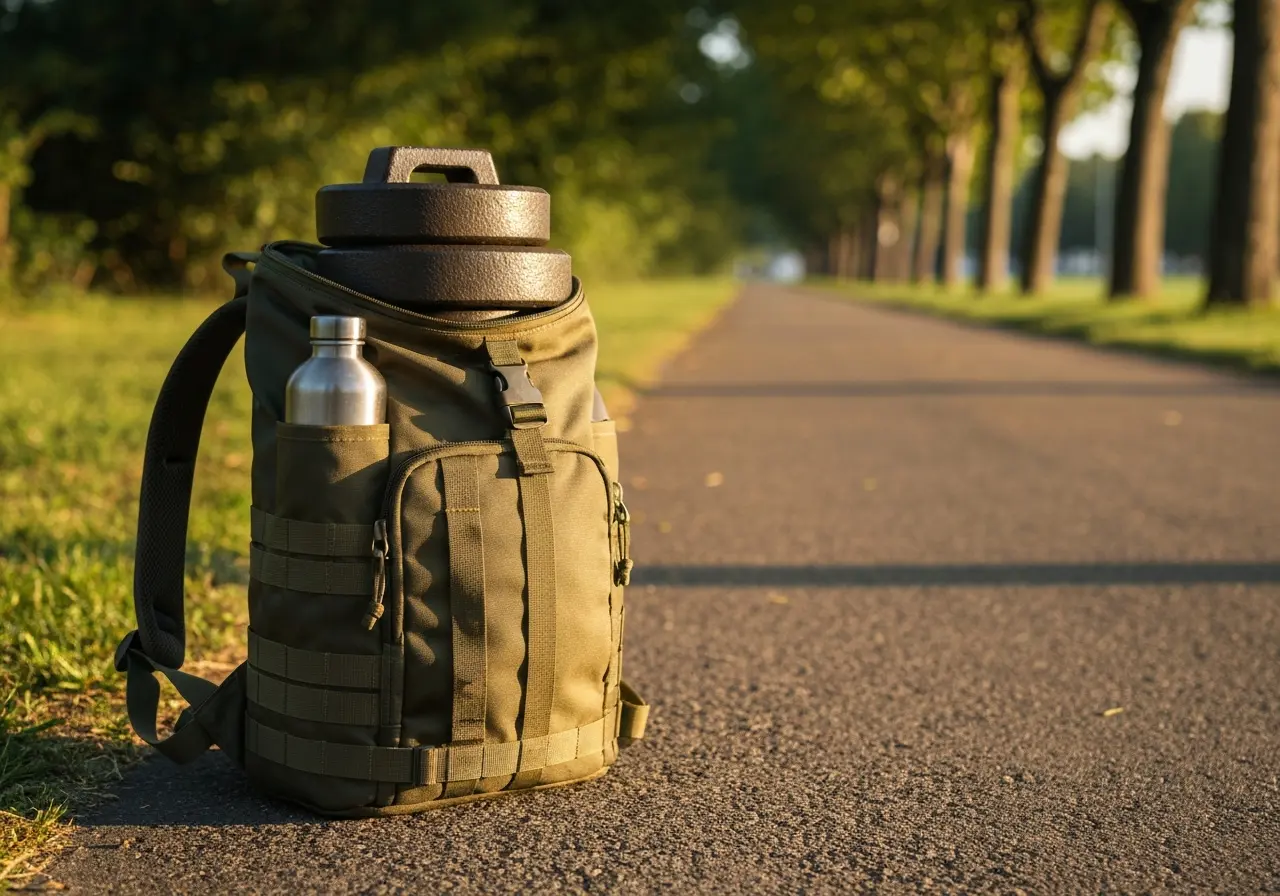
Why Weighted Walks Are Having a Moment
Plain walking is one of the most accessible workouts there is, but it sits almost entirely on the cardio side of the ledger. As people learn how much that leaves out, the appetite for adding load has grown into a small industry of its own.
The driver is age. Muscle mass starts slipping in your 30s, and bone follows a similar curve, with the decline steepening for women after menopause. Resistance training is the main lever that slows both, yet most people skip it. “Resistance training is key, especially as we age, in helping our bone health and our muscle growth because that naturally deteriorates as we get older, starting in our 30s,” Cihlar said.
That gap is the opening rucking fills. It bolts a strength stimulus onto an activity people already do, which is why it travels in the same wave as the World Health Organization’s adult activity guidance and the broader push toward weighted vests and longevity-minded training.
- 3% to 5% of muscle mass lost per decade once you pass 30, according to the Cleveland Clinic’s overview of age-related muscle loss
- 31% of adults worldwide fall short of recommended physical-activity levels, per the World Health Organization (WHO, the United Nations health agency)
- $313 million projected size of the global weighted-vest market by 2031, a sign of how far the load-bearing trend has spread beyond the gym
What the Extra Weight Does to Your Body
The case for rucking is that it works several systems at once, which is rare for something this easy to start.
Cardio Plus Resistance in One Walk
A normal walk trains your heart. A loaded walk trains your heart and your muscles on the same trip. Guidelines call for muscle-strengthening activity at least two days a week, a target research shows most people never hit, and rucking is one low-friction way to get there. It also helps “cardiac output, it’s going to help with the efficiency of your heart pumping the blood out,” Welch said, which can support lower blood pressure and a healthier resting heart rate.
Posture and Back Support
The pack pulls backward, so your body has to fight to stay upright. “The ruck is kind of pulling you back, so it really forces you to maintain your posture,” Welch said, calling it a useful counter to the hours of sitting most people log every day. Over time that loading also stresses the spine and hips in the gentle, repeated way that bone responds to.
The Mental Health Lift
Because rucking happens outside, it carries the documented mood benefits of time in daylight and fresh air. According to guidance from the national mental-health advocacy group Mental Health America, getting outdoors is linked to lower stress and better overall mood, and sun exposure helps the body make vitamin D.
You’re going to always say you never come back from a ruck in a bad mood. It gives you time to clear your head.
That was Cihlar, describing the part of the workout no monitor measures.
Rucking by the Numbers
The metabolic math is the clearest argument. Loading a pack with about 20% of your body weight roughly doubles the energy a walk costs; push toward 30% and you can roughly triple it. Crucially, you get there while keeping one foot on the ground the whole time, so the joint stress stays closer to walking than running.
| Activity (170-lb walker) | Approx. calories per hour | Energy cost vs. unloaded walk | Joint impact |
|---|---|---|---|
| Unloaded walk | ~200 | Baseline | Low |
| Ruck, 25-lb pack | ~400 | About 2x | Low |
| Ruck, ~30% body weight | Up to ~600 | Up to 3x | Low |
For comparison, running generates two to three times your body weight in ground-reaction force with every stride. Rucking delivers comparable cardiovascular work without that pounding, an appeal echoed in the U.S. Army’s own load-carriage research. A 2022 study from the Army Research Institute of Environmental Medicine, which had 30 military-age adults walk under packs loaded up to 66% of body mass, produced the metabolic-cost model behind the Load Carriage Decision Aid (LCDA, the Army’s mission-planning software).
How to Start Without Getting Hurt
You do not need a kit list. “What’s nice is you can literally start with a backpack you have in your closet and throw some magazines in it, your water bottle,” Cihlar said. Both experts prefer a purpose-built rucksack because it rides higher on the back; a standard backpack that sags low under heavy load can strain you. If you stick with a regular pack, keep it from drooping.
Weight is where most beginners overreach. “I always say start low because you can always grow from there,” Cihlar said. “You don’t want to start heavy and get discouraged.” A simple on-ramp looks like this:
- Start with 5 to 10 pounds if you do not regularly lift or exercise, then add weight as it gets easy.
- Begin at one mile and judge how you feel before going farther.
- If you already train and lift, a 20- or 30-pound plate is a reasonable starting load.
- Once a flat mile feels light, stretch to a mile and a half, or seek out hills for extra challenge.
From there the workout is yours to shape. Light pack and a short loop on a recovery day, heavier pack and an incline when you want to push, as long as you listen to your body and respect its limits.
Who Should Ease In, and Who Should Ask First
The benefits are real, and so are the caveats the trend tends to skip. Adding load to a walk amplifies whatever your form and joints already do, good or bad, so anyone with back, hip, or knee trouble should treat heavier loads cautiously and check with a clinician before strapping on serious weight.
It also helps to keep expectations honest about bone. The loading is a plus, but a 2025 randomized trial found that weighted-vest use during weight loss in older adults did not by itself reliably prevent hip bone-density loss, and researchers stress that the weight only works if you stay genuinely active with it. The tool does not do the work for you.
None of that undercuts the basic appeal. Rucking takes an exercise nearly everyone can already do and gives it a second job, the strength job most adults are missing. Load the pack light, walk a mile, and let the weight grow as your body earns it.
Frequently Asked Questions
How much weight should a beginner start with when rucking?
Start with 5 to 10 pounds if you are not a regular exerciser or weightlifter, then build from there as the load feels manageable. People who already train can begin around a 20- or 30-pound plate. The guiding rule from GORUCK’s Nichele Cihlar is to start low so you do not get discouraged.
Is rucking better than running for weight loss?
Rucking burns fewer calories per hour than running but spares your joints, because one foot stays on the ground rather than absorbing two to three times your body weight in impact each stride. For many people that lower-impact profile makes rucking easier to sustain over the long term, which matters more than any single session’s burn.
Do I need a special rucksack, or will a regular backpack work?
A regular backpack works fine to start; magazines or a water bottle make easy first weight. Experts still prefer a purpose-built rucksack because it sits higher on the back and is safer under heavier loads. If you use a standard backpack, make sure it is not sagging low on your spine.
How often should I go rucking?
There is no fixed schedule, but rucking pairs well with the standard advice to do muscle-strengthening activity at least two days a week, alongside your regular walking. Beginners can start with one short, light session and add frequency as their body adapts.
Can rucking really improve bone density?
Carrying weight loads the skeleton in a way that supports bone health, but the evidence is mixed and load alone is not a cure-all. A 2025 trial found weighted-vest use did not by itself prevent hip bone loss during weight loss, and researchers emphasize consistency and staying active for any benefit to show up.
Is rucking safe if I have a bad back or knees?
Rucking is lower impact than running, but added weight amplifies stress on existing problem areas. Anyone with back, hip, or knee issues should start with very light loads, keep good posture, and consult a qualified professional before progressing to heavier packs.
Disclaimer: This article is for informational purposes only and is not a substitute for professional medical advice. Exercise carries inherent risks, and weighted activity can aggravate existing injuries; consult a qualified physician or physical therapist before starting rucking, especially if you have bone, joint, or cardiovascular concerns. Figures and study findings are accurate as of publication.






NFL Three-Strike Safety Fouls Now Pull Coaches and Clubs In

Browns Fans Tape Protest Signs to Jim Brown Statue Over Watson

Amazon Pixel 11 Deal Erases the $100 Hike for One More Day

Elden Ring on Switch 2 Turns Its Own Worst Label Into a Portable Win

Ternus Takes the Stage With Apple’s Foldable Debut

Ikea Xbox Yxstaby Turns Controller Thumbstick Into Home Furniture

Pokémon Center Turns Past Worlds Wins Into Bundles and a Pikachu Coin

NFL Scraps Pro Bowl Game to Restore Pure Player Honor

New Twitter.now Bets the Brand Musk Left Behind

Bella Mir’s Famous First Loss Meets the Accountant Who Won

Double Fine Cuts 23 Jobs Weeks After Xbox Independence

Day-One Big Walk Lifts PS Plus August Beyond Recycled AAA

John Hight Exits Wizards After Digital Reckoning Hits

Curtis Mead’s Red Sox Debut Ends With Fractured Wrist

Moesch and Dressel Rewrite Night One at 2026 U.S. Nationals

Red Sox Squander Hot Streak Chance in 4-3 Loss to Athletics

Boutte’s Quiet Camp Takeover Forces Patriots Receiver Choices

Take-Two CEO Pushes Netflix Subs for GTA 6 Extended Look

Halo Campaign Evolved Skulls Meet Death Barriers That Kill the Hunt

Wildlands Free Update Hands Players the Tools They Already Invented
-

 TECHNOLOGY3 years ago
How to Adjust a Bulova Watch Band – An Easy Guide
-

 News3 years ago
Fred Pentland: Athletic Bilbao’s English mentor who changed the essence of Spanish football
-

 FINANCE3 years ago
Tax Planning for Every Season: Guide to Maximizing Your Tax Benefits
-

 Education3 years ago
African Ministers New Education Plan
-

 BUSINESS3 years ago
What is Entrepreneurial Operating System? A Comprehensive Guide to EOS
-

 Education3 years ago
Innovate Your Learning Journey with Technology and Enhance Education
-

 News3 years ago
Russians formally out of World Athletics Championships
-

 BUSINESS3 years ago
Top 9 Most Expensive American Cities to Rent an Apartment