
BUSINESS
Emergency Oil Releases Are Wearing Down America’s Salt Cavern Reserve
The Strategic Petroleum Reserve has dropped to 319.5 million barrels as a GAO report warns aging pumps and salt caverns can’t keep pace with repeated drawdowns.

The U.S. Strategic Petroleum Reserve sank to 319.5 million barrels in the week ending July 3, its lowest level since April 1983. Two straight administrations have drained it to fight oil price spikes, most recently the war with Iran, and the tanks themselves are wearing out.
The Wall Street Journal reports that combined Biden and Trump era emergency releases now total 352 million barrels, or nearly half the reserve’s capacity, straining the fracturing wells, leaky pumps and Gulf Coast salt caverns that were never built for this pace of use.
The Gulf Coast Tanks Are Down to 319.5 Million Barrels
The reserve fell by 6.2 million barrels in the week ending July 3, according to Department of Energy data that the Energy Information Administration tracks in its weekly ending stocks series. That is the lowest reading since April 1983, when Reagan era officials were still filling the reserve for the first time.
The stockpile sits inside 60 to 62 underground salt caverns at four sites in Texas and Louisiana, rated to hold about 714 million barrels combined. At 319.5 million, the reserve is running at less than 45 percent of that capacity.
| Date | SPR Level (million barrels) | Context |
|---|---|---|
| Dec 31, 2025 | ~411 | Year end level before the Iran war began |
| Mid March 2026 | ~415 | 60% full when the 172 million barrel release was ordered |
| Apr 24, 2026 | 397.9 | 7.1 million barrel weekly release, largest since Oct. 2022 |
| Jun 12, 2026 | 340.3 | Passes the 2023 Biden era low of 346.8 million |
| Jun 26, 2026 | 325.7 | Lowest since May 1983 |
| Jul 3, 2026 | 319.5 | Lowest since April 1983, most recent reading |
Each weekly drop gets reported like a scoreboard. What is harder to see is what pulling oil out of a salt dome actually does to the dome.
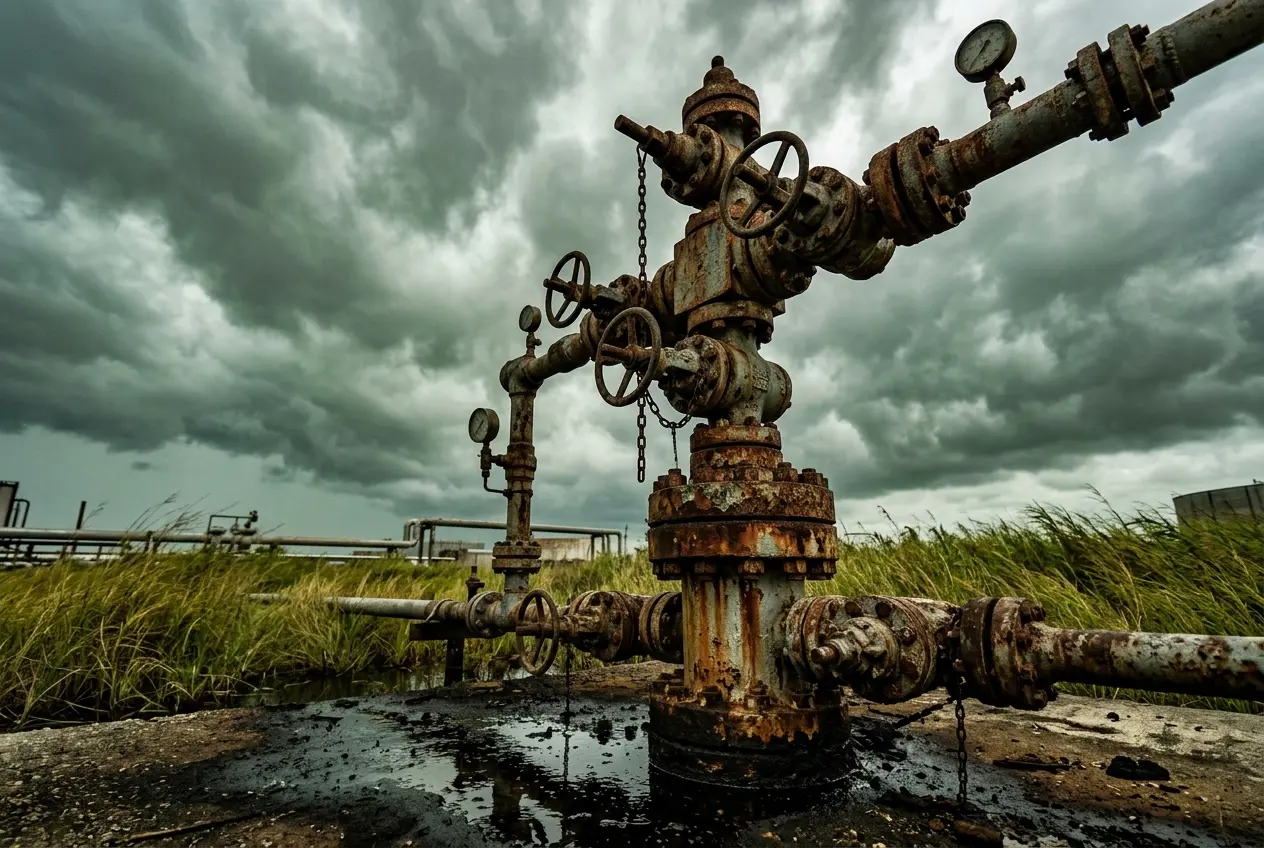
Two Administrations, One Emptying Reserve
Biden officials drained the reserve after Russia invaded Ukraine in 2022, bottoming out at 346.8 million barrels in July 2023. Trump officials are now moving faster, ordering the release of 172 million barrels as part of a 32 nation, 400 million barrel coordinated response through the International Energy Agency (IEA, the Paris based body that coordinates emergency oil stocks among consuming nations) after Iran’s closure of the Strait of Hormuz.
Traders are watching the math in real time. Oil analyst Eric Nuttall estimated the reserve was roughly 19 million barrels from minimum operating levels, warning there would soon be no safety buffer left if the Strait saw further disruption.
“The Strategic Petroleum Reserve releases, combined with releases by other governments and China reducing its exports, have prevented the Armageddon scenario of $150 oil from happening to date,” said Andy Lipow, president of Lipow Oil Associates.
Patrick De Haan, head of petroleum analysis at GasBuddy, put the milestone plainly: “No matter where you stand politically, it’s a remarkable statistic.”
Why Salt Caverns Were Only Built for Five Drawdowns
The caverns were approved under the 1975 Energy Policy and Conservation Act and engineered for roughly a 25 year service life and about five full drawdown and refill cycles, according to an American Association of Petroleum Geologists review of the reserve’s design history. Actual use has looked nothing like that plan, with 14 separate withdrawals of under 10 million barrels between 1996 and 2014 alone, and cavern shrinkage from salt creep running near 2 million barrels a year.
Siddharth Misra, an associate professor of petroleum engineering and geophysics at Texas A&M University, explained why repeated withdrawals matter physically. Removing oil drops pressure inside the cavern, and the surrounding salt begins to close in.
Like a very thick, gooey Play-Doh or taffy that’s slowly moving
Misra used that description for how salt deforms inward under pressure once fluid is pulled out. That slow squeeze can bend, crush or break the steel casings that carry oil in and out of a cavern, he said, reducing both lifespan and safety.
61 Percent of Design Capacity, and Falling
The physical strain now has a number attached to it. A Government Accountability Office (GAO, Congress’s independent watchdog agency) report found that as of December 2025, the reserve’s effective oil withdrawal capability had fallen to about 61 percent of its original design capacity, with refill capability at just 56 percent.
More than a quarter of the oil physically sitting in the caverns was temporarily unreachable because of construction work and cavern outages, the GAO’s review of the reserve’s capabilities and challenges found. Much of the equipment, including pumps, pipelines and valves installed in the late 1970s and 1980s, is running well past its intended service life.
- Big Hill, Winnie, Texas – a water pipe failure disrupted operations at the site
- Bryan Mound, Freeport, Texas – a crude oil storage tank failed less than a year earlier
- West Hackberry, Louisiana – a leaking water pipe needed repair mid drawdown in 2022
DOE’s own modernization effort, known as Life Extension 2, has run for roughly a decade at a cost of about $1.4 billion and has been slowed by delays and scope cuts, the GAO found. “Investments in the SPR are again not keeping pace with the aging reserve’s needs,” the agency warned, adding that DOE has not updated its long term strategic plan since 2016.
Congress Fights Over Who Pays for the Repairs
Money is now the fight. The House passed reconciliation package includes more than $1.32 billion to buy petroleum products for the reserve plus $218 million for maintenance and repairs. The Senate Energy and Natural Resources Committee countered with $660.5 million for purchases and the same $218 million for facility upkeep.
The Senate draft would also repeal a 2017 tax law provision forcing DOE to sell 7 million barrels of SPR crude in fiscal 2026 and 2027, a mandate that runs directly against any refill effort. That mandated selling sits on top of separate emergency releases: Congress has directed roughly 170 million barrels sold for revenue so far, with about 90 million more scheduled.
Energy Secretary Chris Wright has said he wants roughly $20 billion in funding to rebuild the stockpile toward 700 million barrels. He has framed the current drawdown in stark terms.
“It’s a reduction in our security right now because we have meaningfully less oil stored in our Strategic Petroleum Reserve, and I think it’s a reduction in confidence in the seriousness of the United States,” Wright testified.
Where experts disagree:
- Mike Sommers, president and CEO of the American Petroleum Institute, says the reserve must stay above 20 percent of capacity to remain operational and has said the industry is “raising alarm bells right now.”
- Energy Secretary Chris Wright frames the smaller reserve as an active security and credibility problem for Washington.
- The Congressional Research Service notes the U.S. is now a net petroleum exporter, no longer bound by the International Energy Program’s 90 day import cover rule, meaning current inventory could arguably be viewed as adequate by that older treaty standard.
What Happens When Washington Tries to Refill the Tank?
Refilling a reserve this size is slower than draining it. President Trump has said the released oil will be replaced with 200 million barrels over the next year, and industry analysts point to November 2026 as when exchange repayment barrels tied to the current release program are expected to start flowing back into the caverns.
The mechanics matter here. Much of the current release is structured as an exchange rather than a straight sale, meaning companies that receive SPR crude now must return the original volume plus extra barrels later. The EIA’s own accounting of the release program shows 17.5 million barrels went out between late March and late April alone under that structure, part of the 172 million barrel commitment tied to the IEA’s coordinated response.
Even a full replacement only gets the reserve back to where it stood before the war started, not to its 714 million barrel design capacity. Atlantic hurricane season runs through November, the same window officials are counting on to begin refilling the caverns they just emptied.
Frequently Asked Questions
What Is the Strategic Petroleum Reserve?
It is the federal government’s emergency crude oil stockpile, created under the 1975 Energy Policy and Conservation Act after the 1973 to 1974 Arab oil embargo. The Department of Energy stores the oil underground in salt caverns at four sites in Texas and Louisiana and can release it during major supply disruptions.
How Much Oil Is Left in the Reserve Right Now?
The reserve held 319.5 million barrels as of the week ending July 3, 2026, according to Department of Energy data, the lowest level since April 1983. That is down from roughly 415 million barrels in mid March 2026, before the current release program began.
Why Store Oil Underground in Salt Instead of Steel Tanks?
Salt domes are self sealing, meaning the plastic behavior of salt naturally closes small fractures and prevents leaks without added engineering. The Department of Energy has said underground caverns can be built for roughly a fifth of the cost of equivalent surface storage tanks, with lower operating costs as well.
Has the Government Already Started Buying Oil Back?
Yes, on a small scale. DOE awarded contracts in November 2025 for about 1 million barrels of crude, with deliveries to the Bryan Mound site running from December 2025 through January 2026, ahead of the much larger refill effort planned for later in 2026.
How Quickly Can the Reserve Actually Release Oil in an Emergency?
The system has a maximum nominal drawdown rate of about 4.4 million barrels a day across all four sites. It takes roughly 13 days from a presidential decision to release oil until that crude actually reaches the market, according to Energy Department figures.


Iowa Farmer Built Resilience for 16 Years Then Tariffs Hit Hard

HHS Adds FDA Tech and Drugs Deputies to Lock In AI and Review Power

Nvidia Earnings Carry a Built-In Sell-the-News Trap

HP Licenses Huawei Wi-Fi Patents Despite the Entity List

Poland Named in $131B F-15 Deal Echoes Apache Path

Sewer Scavengers Near Penn Station Repeat a Decades-Old NYC Pattern

Second Muni Fatigue Crash Exposes Surface Line Gaps

Chick-fil-A Chicken and Waffles Closes Its 80-Year Loop

Musk Data Centers Leave a Mississippi Family’s Historic Land Empty

OpenAI Data Center Chief Exits as Stargate Strategy Shifts

Double Fine Cuts 23 Jobs Weeks After Xbox Independence

Day-One Big Walk Lifts PS Plus August Beyond Recycled AAA

Curtis Mead’s Red Sox Debut Ends With Fractured Wrist

John Hight Exits Wizards After Digital Reckoning Hits

Red Sox Squander Hot Streak Chance in 4-3 Loss to Athletics

Moesch and Dressel Rewrite Night One at 2026 U.S. Nationals

Boutte’s Quiet Camp Takeover Forces Patriots Receiver Choices

Take-Two CEO Pushes Netflix Subs for GTA 6 Extended Look

Halo Campaign Evolved Skulls Meet Death Barriers That Kill the Hunt

Wildlands Free Update Hands Players the Tools They Already Invented
-

 TECHNOLOGY3 years ago
How to Adjust a Bulova Watch Band – An Easy Guide
-

 News3 years ago
Fred Pentland: Athletic Bilbao’s English mentor who changed the essence of Spanish football
-

 FINANCE3 years ago
Tax Planning for Every Season: Guide to Maximizing Your Tax Benefits
-

 Education3 years ago
African Ministers New Education Plan
-

 BUSINESS3 years ago
What is Entrepreneurial Operating System? A Comprehensive Guide to EOS
-

 Education3 years ago
Innovate Your Learning Journey with Technology and Enhance Education
-

 News3 years ago
Russians formally out of World Athletics Championships
-

 BUSINESS3 years ago
Top 9 Most Expensive American Cities to Rent an Apartment