
News
Google’s $920 Million Compute Deal Makes SpaceX a Cloud Landlord
Google agreed to pay SpaceX $920 million monthly for AI compute through 2029, pushing SpaceX’s rival-funded monthly revenues to $2.17 billion as it heads to its June 12 Nasdaq IPO.

Google agreed Friday to pay SpaceX $920 million a month for access to computing power through mid-2029, according to a free-writing prospectus filed Friday with the Securities and Exchange Commission. The Cloud Service Agreement covers approximately 110,000 NVIDIA GPUs, CPUs, memory, and related components, with Google paying a reduced rate through September as capacity ramps up before the full monthly payment starts in October 2026.
Combined with Anthropic’s $1.25 billion monthly deal for SpaceX’s Colossus 1 data center in Memphis, Tennessee, SpaceX is now collecting $2.17 billion a month from two companies its own IPO prospectus classifies as direct AI competitors. The company is expected to begin trading on the Nasdaq under the ticker SPCX on June 12, targeting what would be the largest initial public offering in capital markets history.
The Compute Landlord
SpaceX’s S-1 prospectus, filed publicly May 20, frames the customer arrangements plainly: the company intends to “monetize unused compute capacity in our infrastructure” and “expects to enter into additional similar services contracts.” A separate section describes a strategy providing “substantial flexibility in how we allocate and monetize capacity,” with the option to reallocate GPUs to internal use if demand for xAI’s own AI products warrants it.
The same prospectus classifies both Google and Anthropic as direct competitors. Google appears in two categories: connectivity, where Starlink competes with Google’s fiber internet services, and AI, where Grok competes against Gemini. Anthropic sits on the AI competitor list alongside OpenAI, Meta, and Microsoft.
A third external customer, Cursor, an AI code-editing startup, was disclosed in April as a tenant at SpaceX’s Memphis facilities. Terms were not publicly filed, but SpaceX’s S-1 lists that arrangement alongside the two large-scale contracts, treating the compute-service segment as a distinct line of business rather than a series of one-off deals.
SpaceX reported $18.7 billion in total 2025 revenue across rockets, satellites, and AI. The Google and Anthropic contracts together bill at $2.17 billion monthly, a rate that annualizes to more than $26 billion and would match the company’s entire 2025 revenue total in roughly nine months of payments.
Memphis and the Overbuild
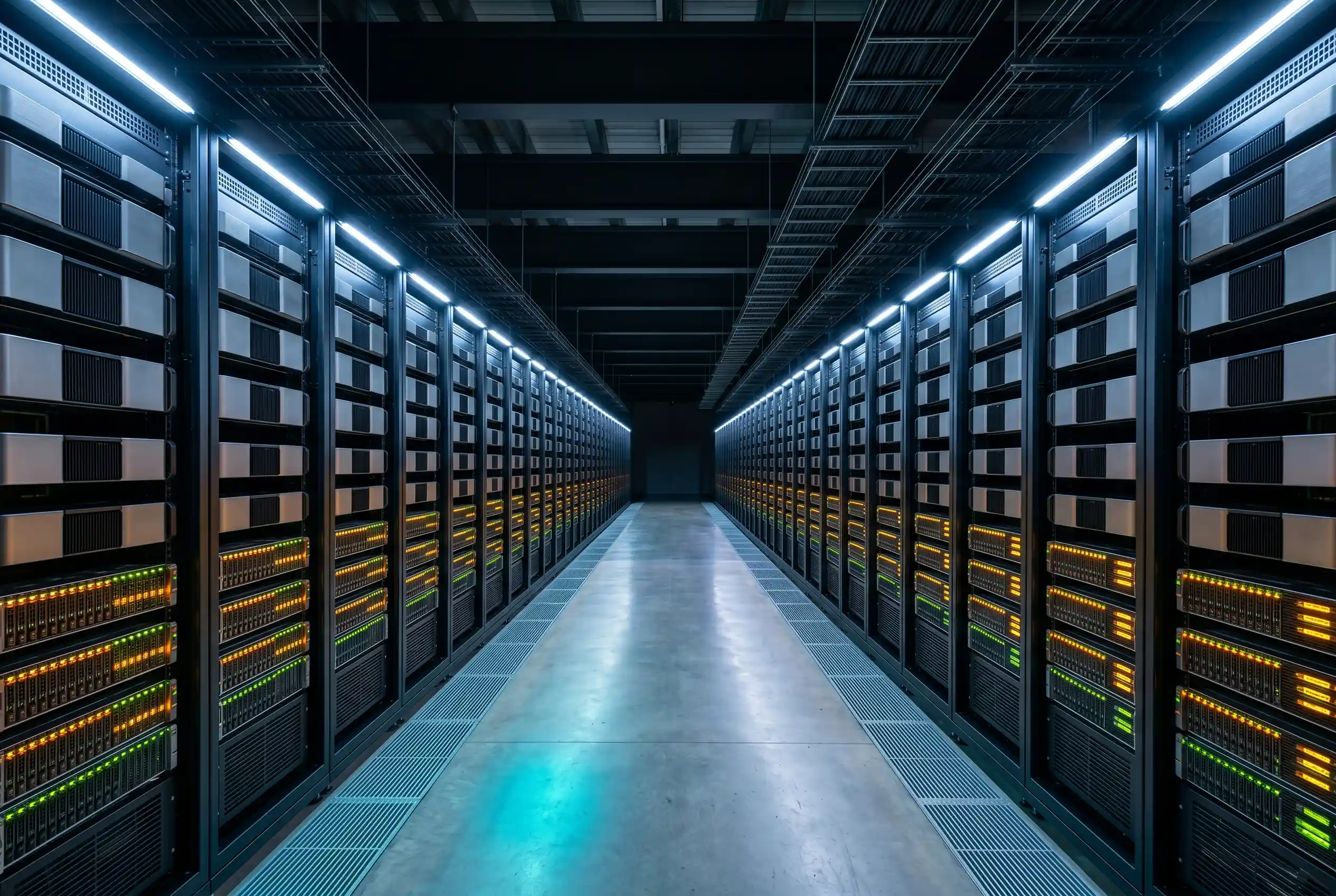
The capacity SpaceX is now renting out came from a rapid and expensive buildout. xAI, Musk’s AI company, merged into SpaceX in an all-stock transaction on February 2, 2026, after constructing Colossus 1 in a former Electrolux factory in South Memphis. The facility was built in roughly 122 days and launched in September 2024. Colossus 2 followed on Tulane Road, its site purchased in March 2025 and the facility coming online in January 2026. Musk described the combined Memphis cluster in investor materials as the world’s largest AI supercomputer by compute capacity.
SpaceX’s S-1 prospectus disclosed the construction pace:
- xAI spent $12.7 billion on AI infrastructure in 2025
- The AI division spent $7.7 billion in Q1 2026 alone, an annualized rate approaching $30 billion
- Combined nameplate power draw hit 1 gigawatt by March 2026, though the S-1 notes the figure “reflects installed capacity and does not represent actual power consumption or utilization”
The Information reported in early 2026 that xAI’s GPU fleet was running at roughly 11% model FLOPs utilization, far below the roughly 40% rivals were achieving. xAI had migrated its primary Grok training workloads to Colossus 2, leaving Colossus 1 – built at speed and enormous cost – with most of its 220,000-plus NVIDIA GPUs sitting underused. The NAACP filed a lawsuit in April accusing xAI and its subsidiary MZX Tech, LLC of illegally operating 27 methane gas turbines at Colossus 2. SpaceX’s IPO filing separately disclosed deals to acquire additional turbines worth $2.8 billion.
Anthropic became the first external tenant in early May, taking the full output of Colossus 1 across its 300 megawatts of compute. Google’s deal covers approximately 110,000 GPUs, roughly half that count. SpaceX has not identified which of its two Memphis facilities will serve Google’s contract.
Google’s Bridge Problem
Google’s explanation arrived in a statement on June 5:
Google Cloud and SpaceX are long-time partners. This is a short-term, timely agreement to ensure we have bridge capacity to meet surging customer demand for our agent platform, Gemini Enterprise, which has been even higher than we expected.
A Google Cloud spokesperson made that statement on Friday.
The Gemini Enterprise Agent Platform, Google Cloud’s subscription service for large businesses, launched in October 2025. It bundles Gemini models with enterprise-grade security and Workspace integration. Agentic AI deployments run persistent, multi-step workflows that require continuous GPU access across long time horizons, placing sustained demand on compute that is difficult to modulate quickly. Major customers including Mars, PepsiCo, BNY, and Unilever have committed to production deployments across marketing, financial research, and supply chain operations, adding enterprise workloads that Google’s existing data centers cannot fully absorb in the near term.
Alphabet, Google’s parent company, committed $180 billion to $190 billion in capital expenditures for 2026, per a disclosure filed with the SEC in April. That figure is more than double Alphabet’s $91.4 billion capex in 2025 and more than the company spent in the prior three years combined. The SpaceX bridge arrangement fills a gap in the months before that expanded infrastructure capacity comes online.
Google has been a longtime investor in SpaceX. Its stake is expected to be worth more than $100 billion once the IPO closes. The two companies are also reportedly in early talks to develop orbital data center infrastructure, with Starlink’s satellite constellation proposed as the connectivity layer. SpaceX’s prospectus identifies space-based data center satellites as a future product, with a possible launch as early as 2028.
How Do the Two Deals Compare?
The Google and Anthropic agreements share a common structure but differ on monthly rate, compute scope, and the facility each customer gets access to.
| Anthropic | ||
|---|---|---|
| Monthly fee | $1.25 billion | $920 million |
| Contract end | May 2029 | June 2029 |
| Facility | Colossus 1, Memphis | Undisclosed |
| Compute scope | Full output, 300MW+ | ~110,000 GPUs |
| Early exit after Dec. 31, 2026 | 90 days’ notice | 90 days’ notice |
Both contracts allow either party to terminate with 90 days’ notice starting January 1, 2027. A cancellation filed on that date would free a company from the arrangement by approximately April 1. Neither customer is locked in beyond the end of this year without choosing to stay.
Google’s contract includes a delivery condition the filing specifies explicitly: if SpaceX fails to provide access to the committed GPUs by September 30, Google may terminate after a one-month grace period, or accept whatever capacity SpaceX can deliver at a proportionally lower monthly fee. Google also retains full intellectual property rights over its AI models and any data processed on SpaceX’s infrastructure, per the SEC filing’s terms.
Musk had previously said publicly that Colossus 2 would remain reserved for xAI’s own operations. SpaceX has not confirmed which facility serves the Google contract.
A Record-Setting Offering
SpaceX is pricing its offering at $135 per share, selling 555.6 million Class A shares at a valuation of $1.75 trillion, targeting $75 billion in gross proceeds. Pricing is set for the evening of June 11, with first trading on the Nasdaq scheduled for June 12. Goldman Sachs is leading the underwriting syndicate alongside Morgan Stanley, Bank of America Securities, Citigroup, and JPMorgan. If the offering closes at the target raise, it would more than double Saudi Aramco’s 2019 IPO and become the largest public offering in capital markets history.
Underwriters hold a greenshoe option to purchase an additional 83.3 million shares at the same price within 30 days of the debut, potentially bringing the total raise to $86.25 billion. The offering amounts to less than 5% of outstanding SpaceX shares. Only six companies in the S&P 500 currently carry a higher market capitalization, with Nvidia topping that list at $5.2 trillion.
The compute contracts give the prospectus contracted, recurring AI revenue from named external customers at scale. SpaceX’s S-1 stated it “expects to enter into additional similar services contracts,” positioning the rental business as expandable beyond the two agreements signed to date.
SpaceX Names Its Rivals
SpaceX recorded a net loss of $4.28 billion in Q1 2026. The AI division posted an operating loss of roughly $2.4 billion in the same quarter. Starlink, the satellite internet arm, was the only profitable division, generating $3.26 billion in Q1 revenue and accounting for 69% of total company sales. SpaceX disclosed in its prospectus that it carries “a history of net losses and may not achieve profitability in the future.”
Morningstar’s analysts, in a note published June 3, called SpaceX “significantly overvalued” at the $1.75 trillion target and placed their discounted cash flow estimate at $780 billion, roughly 55% below the IPO price. The firm classified xAI’s “economic moat indeterminate” and flagged the range of uncertainty around its long-term profitability. The note added that with strong institutional demand and a tight initial float, SpaceX’s share price would “likely survive separation and may even ascend, at least for a time.”
Elon Musk will retain 82.4% of shareholder voting power after the offering through Class B shares carrying 10 times the weight of the Class A shares sold to the public. The prospectus states that “Mr. Musk will be able to control the outcome of matters requiring shareholder approval.”
The S-1 lists Google and Anthropic on the competitor page. As of June 5, both are also the company’s two largest disclosed AI compute customers by monthly billing, at a time when the AI division has yet to record an operating profit in any quarter reported in the prospectus.
SpaceX prices its offering on the evening of June 11. First trading is scheduled for the Nasdaq on June 12. The 90-day termination window for both compute contracts opens January 1, 2027.
Disclaimer: This article is for informational purposes only and does not constitute investment advice. SpaceX’s planned initial public offering carries material risks, including significant operating losses, concentrated voting control, and unproven AI infrastructure economics. Readers considering investing in any company discussed in this article should consult a licensed financial advisor. Figures cited are accurate as of publication on June 6, 2026.






Walmart’s $50 Million Opioid Settlement Closes Case Without Admission

California Sues Over $120 Million Morro Bay Wind Lease Buyout

Gilead Bixlenvo FDA Nod Opens Single Pill Path for Complex HIV Cases

Meta’s $18B Kids Deal Forever Shields Data Used to Spot Under-13s

Lettuce Outbreak Drove Record Cyclospora Spike Across 20 States

Amazon Shaves $20 Off M6 Mac Mini Before It Even Ships

SpaceX Louisiana Port Tests Debt Markets on Orbital AI Scale

Microsoft High Lifts Indexes as Small Caps Crack Support

Apple Replays 2015 Saturday Midnight Preorder for iPhone 18 Pro

Updated COVID Shots Clear FDA but Access Friction Hits High-Risk Groups

Take-Two CEO Pushes Netflix Subs for GTA 6 Extended Look

Destiny 2 Fans Unlock Vaulted Maps After Live Service Ends

Wildlands Free Update Hands Players the Tools They Already Invented

Quake Gets 19 Free Maps From MachineGames Quake Club

Quordle Monday Delivers Gavel Crush Speed Ethos Cleanly

Stripe Bid Shows PayPal Moat Cracked After Years of Slide

Tyson’s Five-Year Utah Plant Falls to Cattle Shortage Reckoning

Silver Lake Workday Talks Signal Private Floor for Software

Kennedy Lewis Takes Majority Control of The Greenbrier in $500M Deal

Best Buy Marks 60 Years With Sale That Echoes Its Audio Shop Roots
-

 TECHNOLOGY3 years ago
How to Adjust a Bulova Watch Band – An Easy Guide
-

 News3 years ago
Fred Pentland: Athletic Bilbao’s English mentor who changed the essence of Spanish football
-

 FINANCE3 years ago
Tax Planning for Every Season: Guide to Maximizing Your Tax Benefits
-

 Education3 years ago
African Ministers New Education Plan
-

 BUSINESS3 years ago
What is Entrepreneurial Operating System? A Comprehensive Guide to EOS
-

 Education3 years ago
Innovate Your Learning Journey with Technology and Enhance Education
-

 News3 years ago
Russians formally out of World Athletics Championships
-

 BUSINESS3 years ago
Top 9 Most Expensive American Cities to Rent an Apartment